



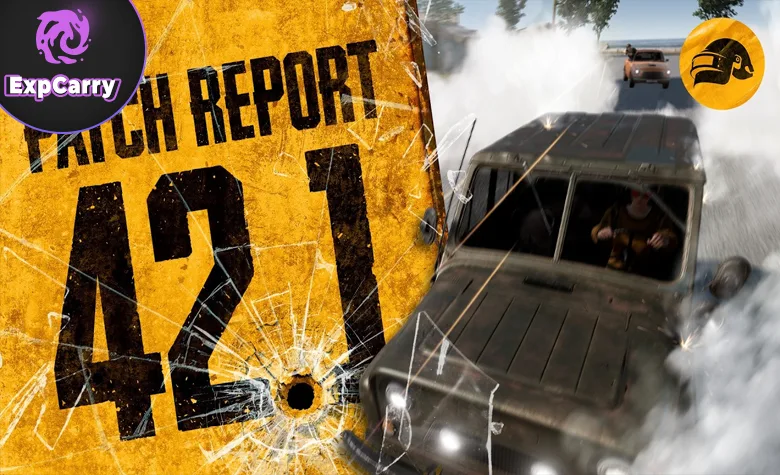
PUBG Update 42.1 is one of the most important PUBG gameplay patches of 2026 so far because it changes several systems players use in almost every match. The update is not built around one map event or one weapon adjustment. It changes smoke behavior, Blue Zone pressure, healing choices, Ranked progression, weapon spawns, SLR performance, UGC tools, PC controller support, and adds the limited-time Ally Duo beta mode for eligible RTX users.
The patch went live for PC after maintenance on June 17, 2026, while console players receive the update after maintenance on June 25, 2026. The biggest change is Interactive Smoke. Smoke is no longer only a static wall that blocks vision until it fades. Explosions and vehicle collisions can now open temporary gaps inside smoke, which means pushes, revives, rotations, road crosses, and final-circle defenses can be challenged in new ways.
This makes Update 42.1 important for every level of play. Casual squads will notice faster healing, more useful bandages, clearer voice chat UI, new smoke interactions, and extra quality-of-life changes. Ranked and esports-minded players will need to relearn Blue Zone pacing, smoke utility, long-range SLR value, RP priorities, and how to punish teams hiding behind cover or smoke screens.
PUBG Update 42.1 Release Date and Main Changes
PUBG Update 42.1 arrived first on PC, with live server maintenance on June 17 from 00:00 to 08:30 UTC. Console maintenance is scheduled for June 25 from 01:00 to 09:00 UTC. The update applies to PUBG: BATTLEGROUNDS and includes both gameplay systems and out-of-match content changes.
The main patch pillars are Interactive Smoke, Blue Zone Revamp, Ally Duo, SLR balance, healing item rebalance, Ranked Season 42 changes, UGC Racing Mode, voice chat UI improvements, PC controller support, and Black Market 2026 Workshop changes. Some features are platform-limited. Ally Duo is PC only and requires an NVIDIA GeForce RTX GPU. Console players receive the broader patch later, but not every PC feature applies in the same way.
| Feature | Change | Gameplay Impact |
|---|---|---|
| Interactive Smoke | Explosions and vehicles can temporarily disperse smoke | Smoke walls are no longer completely safe against grenades, C4, mortars, vehicles, Red Zone, and some map hazards |
| Blue Zone Revamp | Blue Zone rules, timings, safe zone sizes, and damage scaling changed | Rotations, late-game positioning, and outside-zone survival are less predictable |
| Ally Duo | Limited-time PC beta mode with Ella as an AI duo companion | Tests co-playable AI inside Sanhok matches for RTX users |
| SLR | Lower horizontal recoil, higher muzzle velocity, better sustained fire behavior | SLR becomes more stable and stronger for moving targets at range |
| Healing Items | Med kits, bandages, adrenaline syringes, painkillers, and boost healing adjusted | Inventory management and mid-fight recovery become more flexible |
| Ranked Season 42 | Season runs from Update 42.1 through 42.3 with RP changes | Placement and consecutive high finishes now matter more |
| UGC Racing Mode | Racing devices, vehicle tuning options, spare tire, and sample mode added | Creators can build custom racing and vehicle-focused modes |
Interactive Smoke Changes PUBG Combat
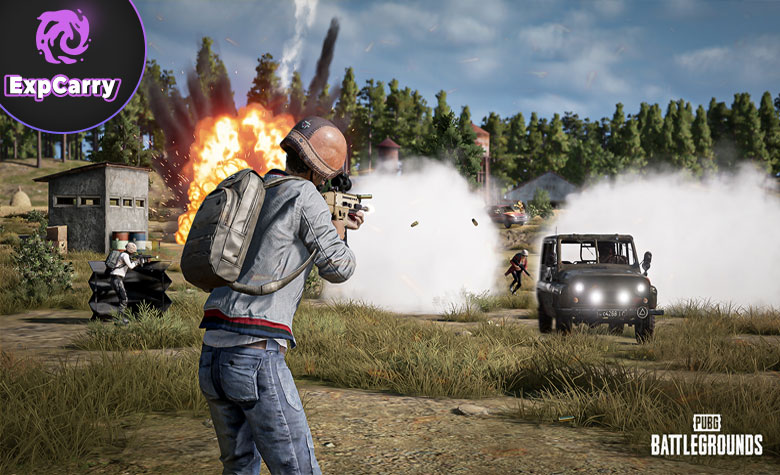
Interactive Smoke is the main reason PUBG Update 42.1 feels like a major patch. Smoke generated by Smoke Grenades and destroyed Gas Cans can now temporarily disperse when affected by specific explosions or vehicle impacts. The affected section of smoke opens for a short period, then gradually fills again if the smoke duration has not expired.
The mechanic applies to explosions from Frag Grenades, C4, Mortars, the Red Zone, and Karakin's Black Zone. Vehicle collisions can also push smoke aside, with the affected area depending on vehicle speed. The Vikendi train and Emergency Cover Flare cover objects can also disturb smoke. Only the directly affected part of the smoke is dispersed, so the entire smoke cloud does not vanish at once.
This changes several common PUBG habits. A team reviving inside smoke can now be pressured by a well-placed grenade or vehicle push. A squad crossing an open road under smoke can be exposed if a vehicle cuts through the cloud. A team using smoke to loot a crate, reset after a knock, or hide a rotation has to think about nearby explosives and vehicle angles.
The key change is counterplay. Before Update 42.1, smoke often worked as a binary tool. Either the line of sight was blocked or it was not. Now smoke becomes a contested space. It still protects players, but it can be broken open temporarily by the right tool at the right moment. That gives aggressive teams more ways to punish defensive smoke, while defensive teams must layer utility more carefully.
How Smoke Dispersal Changes Revives and Pushes
Revives are one of the clearest affected scenarios. A knocked teammate behind smoke is no longer protected only by the cloud itself. Enemy teams can throw a frag into the smoke, use C4 in a building fight, fire a mortar into a known position, or drive through a smoke line to reveal movement. The smoke will return if its duration remains active, but the temporary opening may be enough to confirm a knock, stop a revive, or force movement.
Pushes also become less automatic. In older smoke scenarios, squads could stack grenades, throw multiple smokes, and move through open terrain with reduced visibility risk. In Update 42.1, that still works, but opponents now have better tools to create short vision windows. This rewards timing. Throwing smoke too early gives enemies more time to prepare a dispersal play. Throwing it too late can leave no room to reposition.
How Smoke Dispersal Changes Vehicles
Vehicles now interact with smoke as more than transport. A fast vehicle can push smoke aside and expose part of the cloud. That gives drivers a new utility role, especially in late-game circles where teams use smoke to block sightlines around rocks, trees, compounds, and emergency cover.
The risk is obvious. Driving through smoke can reveal enemies, but it also exposes the vehicle and can place the driver inside enemy crossfire. This mechanic will be strongest when a squad coordinates it with gun pressure, grenades, or a second angle. A solo drive-through without support can become a fast death rather than a smart counter.
Blue Zone Revamp Makes Rotations More Demanding
The Blue Zone Revamp is the second major gameplay change in PUBG Update 42.1. The patch adjusts Blue Zone timing and damage values across modes to change match pacing. Dynamic Blue Zone based on remaining player count has been removed from Sanhok and Karakin in Normal Match. Blue Zone ruleset changes for Normal Match, Ranked, and Esports apply to all 8x8 maps.
In Normal Match, warning times are shortened from Phase 2 onward, while shrink durations are increased. Total match duration remains 28 minutes and 50 seconds. Early-game safe zone sizes are reduced, Phase 4 and later safe zone sizes are increased, and late-game safe zones appear slightly closer to the center than before. Red Zones, Blizzard Zones, and EMP Zones also begin earlier based on the updated timeline.
Ranked and Esports receive stronger pacing changes. Early-game and final phase durations are reduced, total match duration drops from 32 minutes and 50 seconds to 30 minutes and 10 seconds, safe zone sizes are reduced overall, and the land-priority safe zone placement adjustment is removed. Special zones now match the updated timeline, while Sandstorm duration is reduced and its movement speed is slightly increased.
The biggest survival change is damage scaling. Blue Zone damage now increases based on time spent inside the Blue Zone instead of distance from the safe area. The previous distance-based system has been removed from all modes and maps. This makes extended outside-zone play more dangerous because the punishment is tied to how long a player stays out, not only how far away they are.
Why The New Blue Zone Changes Ranked Play
Ranked players will need to rotate with less room for greedy looting and late zone plays. The shorter total match duration and reduced safe zone sizes increase the value of clean vehicle control, early scouting, compound priority, and faster decision-making. Teams that rely on late edge play can still use that style, but staying outside too long is now punished by time-based damage scaling.
The removal of land-priority placement adjustment also matters. Safe zones may create different pressure patterns than players are used to. Rotations through water-adjacent areas, bridges, awkward terrain, and open fields may become less predictable. This puts more value on utility, vehicle preservation, smoke timing, and mid-game information.
Ally Duo Adds Ella as a PC Beta Companion
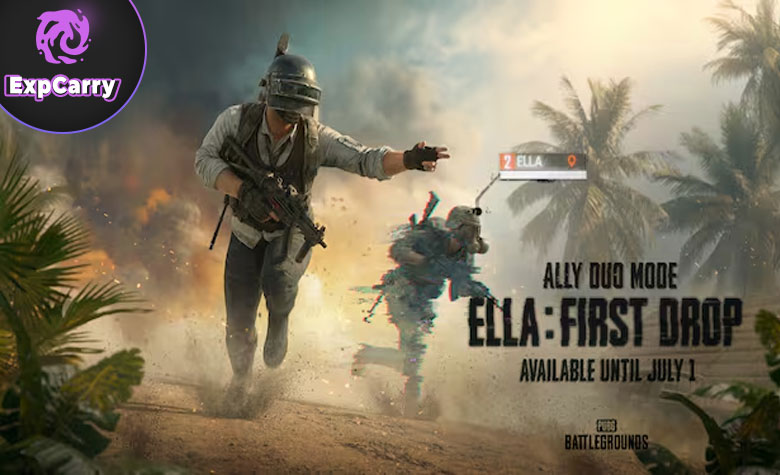
Ally Duo is a new limited-time beta mode available on PC from June 17 after live server maintenance until July 1 at 07:00 UTC. It is played through Arcade and places the player on Sanhok with Ella, an AI duo companion. Matchmaking begins as solo, then the player enters as a duo with Ella. The mode uses TPP, Duo team mode, and a maximum of 64 total participants including players, Ella, and bots.
This mode has strict technical requirements. It is only available on PCs with an NVIDIA GeForce RTX GPU. Minimum specifications are RTX 2080 Ti or 3060, 8 GB VRAM, and 16 GB RAM. Recommended specifications are RTX 4070, 12 GB VRAM, and 24 GB RAM. NVIDIA driver 555.85 or later is required, and Windows Hardware-Accelerated GPU Scheduling must be enabled.
Ally Duo is not a normal duo queue with an AI skin. It is a test of co-playable AI inside PUBG. Players can communicate with Ella through voice input, and Ella speaks Korean, Simplified Chinese, or English depending on client language. Some Sanhok features and items are disabled, spectating, death cam, and replay are disabled, and reconnecting is not supported if the player disconnects during gameplay.
The mode is important because it points toward PUBG's onboarding and AI direction. A companion who can follow, communicate, and support the player could help new or returning players learn rotations, combat spacing, looting, and survival pressure. The limitation is that Ella's knowledge is based on game information before Update 41.1, so she may not fully understand newer systems such as Tilted Grip, Hybrid Scope, and recent gameplay changes.
SLR Buff and Weapon Spawn Changes
The SLR receives a direct buff in Update 42.1. Horizontal recoil is decreased by approximately 10 percent, muzzle velocity rises from 840 m/s to 870 m/s, vertical recoil buildup during early and mid sustained fire is reduced, vertical recoil recovery is slightly increased, and the weapon's tendency to drift left during firing is reduced.
These changes make the SLR more reliable as a DMR for medium and long-range fights. Higher muzzle velocity helps against moving targets and reduces bullet drop. Lower horizontal recoil and reduced left drift make follow-up shots easier. The weapon keeps its identity as a high-damage DMR, but the patch reduces some of the control burden that previously made it less comfortable than more stable alternatives.
The VSS receives a smaller visual cleanup, with unused attachment-related visual elements removed. More importantly, several weapons are removed from world spawns: Mosin Nagant, R45, DP-28, PP-19 Bizon, P1911, and QBU. This may make the world loot pool feel cleaner, although the final impact depends on updated spawn rates and player behavior after the patch.
How The SLR Buff Affects The Meta
The SLR buff is strongest for players who can already manage DMR recoil. It does not turn the weapon into a low-skill laser, but it makes long-range tracking and fast second shots more consistent. In squads, that means more pressure on rotating vehicles, open-field crosses, and enemies trying to heal behind partial cover.
The weapon spawn removals also matter indirectly. Fewer low-priority weapons in the world pool can reduce dead finds and make looting feel more focused. However, the real meta impact will depend on how often players encounter the remaining weapons and how quickly high-level players adjust their preferred loadouts.
Ranked Season 42 Rewards and RP Changes
Ranked Season 42 runs longer than usual, from Update 42.1 through Update 42.3. PUBG says this extended season is connected to preparation for a broader Ranked Revamp. The leaderboard resets after live server maintenance, and players can check their final tier from the previous season through the Career page.
The RP system now puts more weight on final placement to better reflect survival as a core battle royale element. RP losses at higher tiers are reduced in matches where players perform well. Players can also earn extra RP through consecutive high placements. Placing in the Top 4 in two consecutive matches gives an additional 5 RP, while placing Top 1 in two consecutive matches gives an additional 10 RP. Only the highest consecutive placement RP bonus applies.
Ranked weapon skins for the AWM have been added as permanent Tier Rewards for Season 42. Ranked parachute skins, weapon skins, and medals are permanent rewards, while other obtainable rewards are available for one Ranked season. Secret Rooms are now available in Ranked on Erangel, Miramar, Rondo, and Taego, and in Custom Matches with Esports Mode on Erangel, Miramar, Rondo, Taego, Vikendi, and Deston.
The purchase method for BATTLEGROUNDS Plus has also changed. It can now be purchased with 500 G-Coin or 20,000 BP, and the 1,300 G-Coin previously included with BATTLEGROUNDS Plus has been removed. All other benefits remain unchanged.
Healing Item Rebalance Changes Inventory Choices
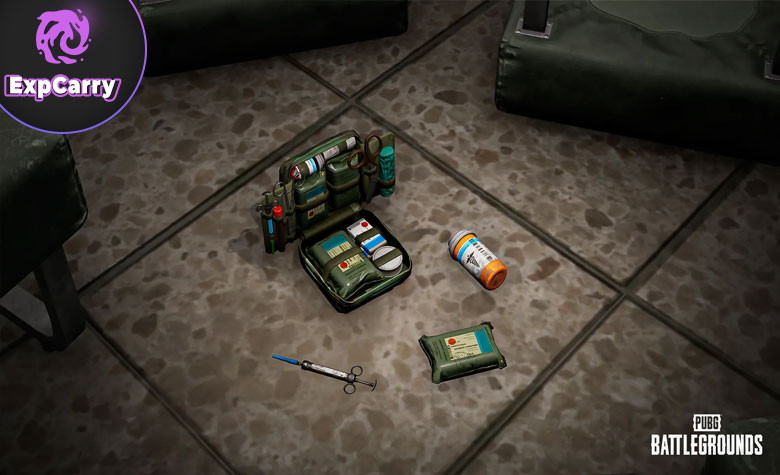
Healing items receive a broad usability pass in Update 42.1. Med kits now weigh 15 instead of 20 and use time drops from 8 seconds to 6 seconds. Bandages heal 12 instead of 10, healing duration drops from 5 seconds to 3 seconds, and usage time drops from 4 seconds to 3 seconds. Bandage healing intervals with EMT Gear are also adjusted to complete recovery more quickly.
Adrenaline Syringe weight is reduced from 20 to 10, Painkiller weight drops from 10 to 6, and Boost Gauge health regeneration now happens at shorter intervals while total healing amount remains unchanged. This makes healing more flexible, especially for players who previously ignored bandages or carried fewer boosts because of weight pressure.
The gameplay impact is practical. Players can carry more utility, recover faster in small windows, and use bandages more often instead of treating them as weak filler. In smoke-heavy fights and zone pressure scenarios, faster healing and lower item weight can make a difference between resetting and being forced into a bad peek.
Rondo LABS, UGC Racing and Extra Features
A new Blue Zone Ruleset for Rondo arrives later as an Arcade LABS mode. The PC service period is July 1 at 07:00 UTC to July 15 at 00:00 UTC. Console service runs from July 9 at 07:00 UTC to July 23 at 01:00 UTC. The mode is designed to deliver denser combat across Rondo with a shorter match timeline and a new Blue Zone ruleset.
UGC also receives Racing Mode tools. New devices include Checkpoints, Stopwatches, and Billboards. Vehicle Spawn Device options now let creators customize vehicle performance through values such as torque, RPM, and weight. A Spare Tire item and Basic Racing sample mode are also added, giving creators a clearer starting point for vehicle-focused custom content.
PC controller support is added to PUBG: BATTLEGROUNDS. Supported controllers can now be used on PC, while PlayStation DualSense and PlayStation DualShock controllers are not supported. A notification appears when an input device change is detected.
Voice Chat UI has been improved. It appears when two or more players are using voice chat, shows only active speakers, places the most recent speaker at the top when several players speak at once, and always shows the player's own mute status at the top if muted. Customization menus also receive usability improvements, including opening up to 10 Utility tab items at once through the right-click context menu.
Other Update 42.1 Changes Worth Noting
Update 42.1 also includes several smaller changes that are not as meta-defining but still matter for regular players. The Starting Plane and Supply Plane received visual improvements, Haven was added to the Intense Battle Royale map pool, smoke rendering was optimized, and several gameplay, world, UI, and skin bugs were fixed.
Some smaller gameplay adjustments also affect specific situations. Pickaxes are no longer included in Emergency Support Flare on Sanhok, and fallen motorcycles should no longer bounce or slide forward as much when dropped from certain heights. These changes will not define the whole patch, but they help clean up edge cases that could affect match flow.
Map rotations are handled through a separate Map Service Report for Update 42.1, so players should check their region's active pool before planning around specific maps. This is especially important for players who focus on Ranked, regional map availability, or specific Normal Match queues.
Black Market 2026 and Workshop Changes
Black Market 2026 returns with a Workshop structure change. The old probability structure involving Loot Caches and Prime Parcels has been removed. Update 42.1 shifts Black Market 2026 to a single Cargo system, allowing players to obtain Progressive weapon skins and other rewards directly from one Cargo format.
This is not a combat change, but it affects how players interact with the store and Workshop systems. A single Cargo structure is easier to understand than several linked layers of containers. Full Black Market 2026 details are still tied to the separate Black Market announcement, but the patch notes confirm that the Workshop probability structure has been changed for this update.
Why PUBG Update 42.1 Is One Of The Most Important 2026 Patches
Update 42.1 is important because it changes core match behavior instead of only adding content around the edges. Interactive Smoke affects revives, rotations, crate fights, compound pushes, final circles, and vehicle play. Blue Zone Revamp affects timing, route planning, outside-zone survival, and Ranked match pace. Healing changes affect looting, inventory pressure, and mid-fight recovery. The SLR buff affects long-range gunfights and DMR choice.
These systems overlap. A team rotating late into a smaller safe zone can no longer rely on old Blue Zone damage logic. A squad trying to revive in smoke can be exposed by explosives or vehicles. A player holding an SLR can punish movement more consistently. A team carrying more flexible healing can survive a faster reset after trading damage. The patch changes how decisions connect inside a match.
This is also why the patch may feel uncomfortable at first. Players have years of muscle memory around smoke safety, Blue Zone timing, loot choices, and DMR control. Update 42.1 forces players to recheck those habits. The strongest teams will adapt faster because the patch rewards active utility use, clearer timing, and better information control.
Final Thoughts
PUBG Update 42.1 is not important because it adds one headline feature. It is important because several match-defining systems now push in the same direction. Smoke is more interactive, the Blue Zone is more demanding, healing is more flexible, Ranked rewards survival more directly, and the SLR becomes a stronger long-range option. Together, these changes make PUBG less static and punish teams that rely only on old defensive habits.
The patch should be treated as a gameplay reset for regular players. Smoke utility still matters, but it must be protected and timed better. Zone play still matters, but staying out too long is more dangerous. Healing still matters, but weaker items now have more practical value. If the systems work as intended, Update 42.1 gives PUBG more tactical counterplay without removing the survival identity that makes the game different from faster shooters.