




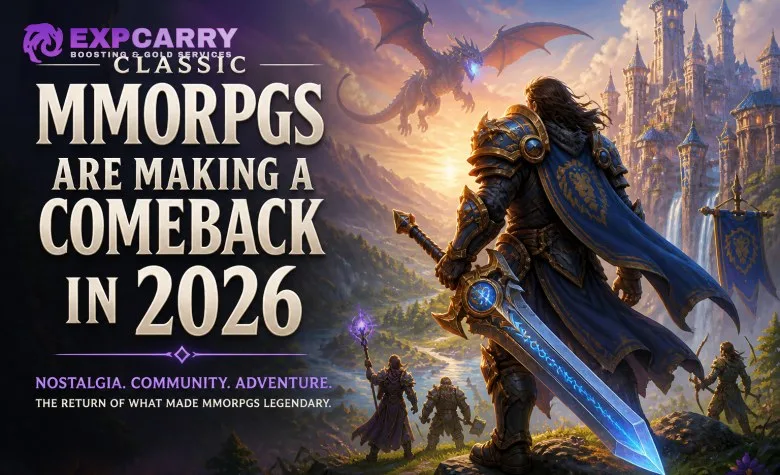
Two decades ago, few players exploring Azeroth would have predicted that this exact genre – the classic, expansive MMORPG with enormous worlds, weeks of raid preparation, and guilds that stay together for years – would experience another major revival. Yet that is exactly what is happening. Between highly populated World of Warcraft Classic servers, the return of veteran franchises such as EverQuest, and a new wave of MMORPGs deliberately embracing traditional design principles, a clear pattern is emerging: large-scale, slower-paced online role-playing games are back.
Nostalgia Alone Does Not Explain It
The obvious explanation would be nostalgia – a generation of players who grew up with these virtual worlds returning to experience familiar feelings again. Nostalgia certainly plays a role, but it does not fully explain why younger players who never experienced the original World of Warcraft era are also increasingly joining these games.
The deeper reason appears to be a reaction to the structure of modern live-service games.
Many current online titles are designed around short, isolated sessions: play a few matches, progress a battle pass, collect a reward, and move on. Classic MMORPGs work very differently. They reward time, patience, long-term progression, and above all, social relationships.
A guild finally defeating a difficult raid boss after weeks of attempts creates a sense of shared achievement that is difficult to reproduce in a twenty-minute competitive match. This type of persistent community experience seems to be something many players have been missing in recent years – sometimes without realizing it until they return to a traditional MMORPG.
The Role of the Classic Movement
Blizzard's decision to revive the original 2004 version of World of Warcraft through WoW Classic played a major role in accelerating this trend. What initially appeared to be a niche project aimed primarily at nostalgic veteran players became one of the most notable gaming revivals of recent years.
At various points, servers experienced queues lasting several hours – a phenomenon familiar from the early 2000s but one that many players would hardly have expected to see again when WoW Classic launched in 2019.
The success attracted attention throughout the gaming industry. Developers who had spent years making games faster, more accessible, and more streamlined began reconsidering slower and more demanding progression systems.
In an industry increasingly optimized around retention metrics, daily rewards, and frequent progression triggers, deliberately slower gameplay started to become a meaningful alternative rather than an outdated design choice.
New Games, Old Principles
Building on this momentum, a new generation of MMORPGs has emerged that deliberately returns to classic design principles instead of simplifying them.
Games such as Throne and Liberty and Pantheon: Rise of the Fallen emphasize challenging group content, meaningful progression, social cooperation, and worlds that are not designed to remove every obstacle from the player's path.
The community interest surrounding these design choices suggests that the trend is more than a short-lived wave of nostalgia. There appears to be genuine demand for online worlds that require commitment and reward long-term participation.
Germany as an Active MMORPG Market
The German-speaking market has traditionally maintained a particularly active MMORPG community. German guilds have long been known for structured organization, long-term participation, and consistent involvement in raid and progression-focused content.
Classic MMORPG releases also tend to generate strong interest among German-speaking players, making Germany an important market for games built around persistent worlds, group progression, and organized communities.
The combination of structured gameplay, long-term objectives, and cooperation fits particularly well with the type of player base that traditional MMORPGs are designed to support.
The Digital Entertainment Market Continues to Grow
The return of traditional MMORPGs is also taking place during a broader expansion of digital entertainment. Players are spending more time across online entertainment platforms, multiplayer games, streaming services, and other interactive digital formats.
MMORPGs benefit from this wider trend because they offer something that many shorter digital experiences cannot: persistent characters, long-term progression, evolving communities, and virtual worlds that can remain relevant to players for months or even years.
Instead of competing solely for short gaming sessions, MMORPGs can become part of a player's regular digital routine and social environment.
Conclusion
The comeback of classic MMORPGs is not simply a nostalgia trend. It represents a broader reaction to a gaming landscape that has increasingly focused on short, fragmented experiences and constant instant rewards.
Both veteran players and younger audiences appear to be rediscovering the appeal of games that reward time, patience, progression, and genuine social cooperation.
For a genre that has repeatedly been described as outdated or declining, the renewed interest in traditional MMORPG design suggests something very different: the demand for large, persistent online worlds never disappeared. Players may simply have been waiting for the right reason to return.