

New Diablo 4 players finish the campaign convinced gold is meaningless. Vendors sell junk, repairs cost pocket change, and the balance climbs without effort. Then the endgame arrives and the number starts falling in ways nobody warned them about.
The shift is intentional. Blizzard designed the early game to hand out currency and the late game to take it back, which catches out anyone who spent the first fifty hours ignoring their wallet.
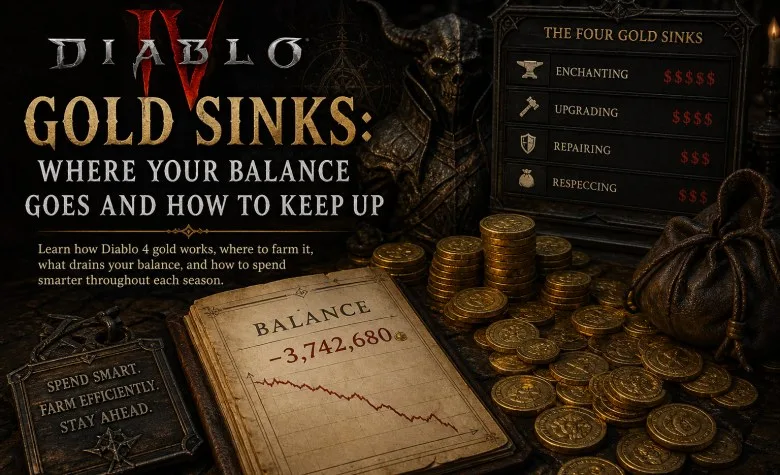
The Four Gold Sinks That Matter
Enchanting is the big one. Rerolling a single affix on a well-rolled item starts cheap and scales viciously with each attempt, and the cost curve is steep enough that chasing one specific modifier can drain millions on a single piece. Players who reroll without a target burn through everything they have.
Upgrading at the blacksmith comes second. Each rank costs gold and materials, and the final ranks on endgame gear demand serious amounts. Doing this on a piece you plan to replace next week is the most common waste in the game.
Gem crafting and socketing add up quietly. So do the respec costs once your paragon board grows, since a full rebuild late in a season is expensive enough to make players stick with a build they have outgrown.
Then there is the trade market. Player-to-player trading sets prices well above anything a vendor charges, and a single sought-after item can cost more than a week of farming.
Where the Gold Comes Back
Helltides pay well when you clear them with intent rather than wandering. Nightmare dungeons drop gold alongside everything else, and higher tiers pay proportionally. Selling rare items to vendors rather than salvaging them makes a difference over a session, though you need to know which materials you actually need first.
The most consistent method stays boring: run high-density content you can clear fast, pick up everything, and sell what you cannot use. Efficiency beats rarity here. A player farming a tier they clear in three minutes earns more than one struggling through a tier that takes twelve.
Budget Before You Reroll
A rule worth adopting: decide your enchanting ceiling before the first click. Pick a number, roll until you hit it, then stop and keep the item as it is. Players who set no limit end sessions with an empty balance and the same affix they started with.
The same applies to upgrading. Hold off on the final ranks until the item is one you intend to keep through the season, not one that happens to be your best right now.
Explore services related to this guide, selected from our Diablo IV catalog.
View All Diablo IV Services


When Players Buy Instead
Seasonal resets make this sharper. Every new season starts everyone at zero, and players who have done the climb four times already know exactly how many hours sit between them and a functional build. Some of them decide to skip it and buy Diablo 4 gold rather than repeat a farm they have already finished.
Third-party marketplaces handle a steady flow of that trade at the start of each season. The considerations are the same as anywhere else: how the gold reaches your character, what recourse exists if delivery fails, and whether the seller has a record you can check. Prices sitting far below the rest of the market usually have a reason behind them.
Season Timing Changes Everything
Gold is worth most in the first two weeks of a season, when the trade market is thin and a single good item costs a fortune. Six weeks in, supply has caught up, prices have fallen, and the same gold buys twice as much.
Players who understand this hold their currency early and spend it late. Those who rush purchases in week one pay a premium for gear that gets cheaper while they are still using it.
Keep a Gold Reserve
That applies to bought gold as much as farmed gold. Players who top up through a platform like Eldorado in week one still run dry by week three if they never set a floor.
Set a reserve you refuse to touch, large enough to cover a full respec and a repair run. Running dry mid-session forces you into decisions you would not otherwise make, like salvaging something you would have kept or skipping an upgrade at the worst moment.
Diablo's economy rewards patience more than most action games do, mainly because the sinks are designed to punish impulse. Roll with a ceiling, upgrade with intent, and spend when the market is soft rather than when the season is new.