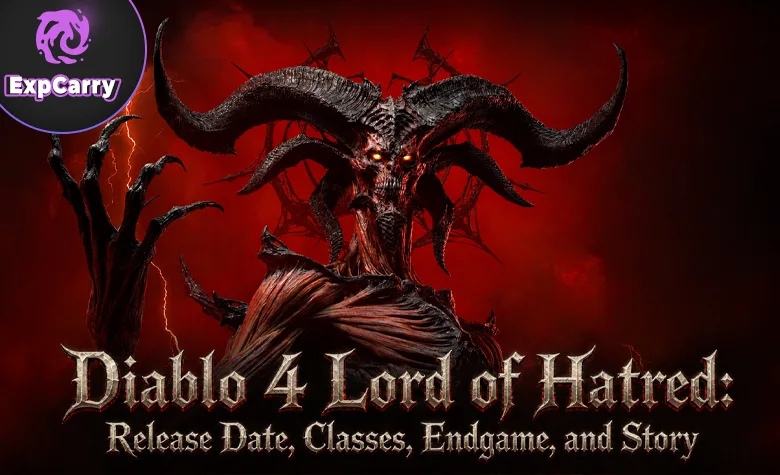
Diablo 4: Lord of Hatred is the second major expansion for Diablo IV, and Blizzard has already outlined far more than a vague teaser. The official expansion page and follow-up spotlight confirm the release date, the campaign direction, the new region of Skovos, two new classes, major endgame additions, and several progression systems arriving with the release window. That gives us a solid base to describe what Lord of Hatred includes without padding the article with guesses disguised as facts.
The short version is simple. Lord of Hatred continues the Mephisto storyline, sends players to Skovos, adds Paladin and Warlock, turns Temis into a new endgame hub, and expands the game with War Plans, Echoing Hatred, the Talisman, and the Horadric Cube. At the same time, Blizzard is shipping broader base-game updates for all players, including major Skill Tree reworks, level cap increases, and a Loot Filter. That split matters, because not everything in this release is locked behind the paid expansion.
Lord of Hatred Release Date and Expansion Scope
Lord of Hatred launches on April 28, 2026. Blizzard lists that date on the expansion page and across the official pre-purchase breakdown, so this is a locked release date rather than a broad window. The expansion requires the Diablo IV base game, while players who pre-purchase Lord of Hatred also get immediate access to Vessel of Hatred if they do not already own it.
In scope, this is a full expansion rather than a season-sized content drop. Blizzard is attaching a new campaign, two classes, a major region, new endgame systems, and fresh item and progression layers to the release. On top of that, several core updates are coming to the full game at the same time, which makes Lord of Hatred both a paid content expansion and part of a wider mechanical refresh for Diablo IV.
Mephisto Story Arc and Campaign Direction
The story remains centered on Mephisto. Blizzard says Neyrelle is still struggling to contain the Prime Evil of Hatred after earlier events, while Mephisto’s corruption spreads toward the sacred isles of Skovos. That places Lord of Hatred directly in the main Diablo IV narrative rather than treating it as a detached side chapter.
Blizzard also describes the campaign as a climactic stand against Mephisto, so this expansion is clearly meant to push the current Hatred arc much further than a seasonal side plot ever could. Whether it fully resolves the wider long-term Diablo IV story is another question, but its role as the next major escalation is already clear from the official campaign framing.
Paladin and Warlock in Diablo 4 Lord of Hatred
Lord of Hatred adds two new classes: Paladin and Warlock. Blizzard has confirmed both as part of the expansion package, and that alone tells you this is a larger class update than the typical one-class add-on many players expected. The two classes are built around very different identities, which gives the expansion a stronger thematic split than simply adding two variations of the same archetype.
Paladin early access and holy class identity
The Paladin is available through early access with any Lord of Hatred pre-purchase. Blizzard describes the class through the Wardens of Light, an order devoted to defending Sanctuary without corruption or creed. In gameplay fantasy, Paladin fills the divine armored warrior role many Diablo players expected to return sooner or later, and Blizzard is clearly using that class fantasy as a major pre-launch draw.
Paladin also matters before the full expansion even arrives, because early access lets the class enter the live game ahead of April 28. That means Lord of Hatred is already shaping class discussion and build experimentation before the expansion’s full campaign and endgame systems go live.
Warlock launch class and demon-binding playstyle
The second class is Warlock, and Blizzard has given this one a much clearer fantasy outline than a generic dark caster label. Warlocks use ritual, alchemy, and spellcraft to bend demons and Hell’s power to their will. Blizzard explicitly frames them not as servants of Hell, but as its bane, weaponizing infernal force against infernal enemies.
Warlock launches with the full expansion on April 28, 2026. Blizzard has also tied the class to archetypes built around Soul Shards and published Diablo IV Unique Items for it ahead of release, which makes it more fully defined than a class reveal with only lore attached. That contrast works well inside the expansion itself: Paladin represents holy martial power, while Warlock pushes the opposite extreme through controlled demonic mastery.
Explore services related to this guide, selected from our Diablo IV catalog.
View All Diablo IV Services

Skovos Region, Temis, and Sanctuary Lore
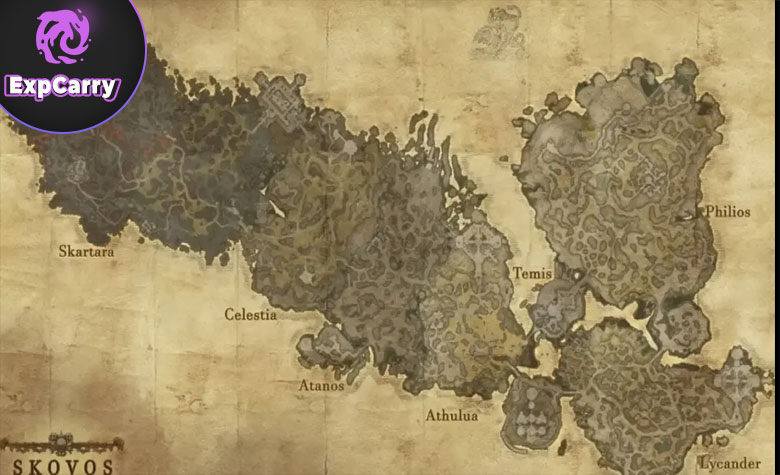
The expansion’s new region is Skovos. Blizzard describes it as an ancient land tied to the Askari, the Firstborn, the Prime Evils, and the early wars that shaped Sanctuary. That gives the zone more narrative weight than a simple new biome added for questing and farming.
The capital city, Temis, sits at the center of that setup. Blizzard presents it as a marble city filled with traces of Sanctuary’s oldest civilizations and religious history, which makes Skovos one of the most lore-heavy regions added to Diablo IV so far. Lord of Hatred is not just opening another stretch of map space. It is opening a region built to carry story, myth, and long-term progression value at the same time.
Temis as the new endgame hub
Temis is not just a campaign stop. Blizzard says the city becomes the ideal endgame hub once the Lord of Hatred campaign concludes. That matters because it confirms Skovos is meant to stay relevant after the story ends instead of turning into a beautiful but abandoned expansion zone.
In practice, that should make Temis the main staging point for post-campaign activity in the expansion. It also shows Blizzard is trying to tie the region into repeat play, not only the initial narrative push.
Endgame Systems in Lord of Hatred
Lord of Hatred adds two named endgame features Blizzard has already outlined in detail: War Plans and Echoing Hatred. Together, they show that the expansion is not just adding another boss ladder or one more seasonal gimmick. Blizzard is trying to give players more control over how they route endgame content while also adding a brutal survival test built around escalating pressure.
| System | Core idea | Why it matters |
|---|---|---|
| War Plans | Create a chain of up to five endgame activities from a larger pool | Lets players build a more targeted endgame loop around preferred rewards and modes |
| Echoing Hatred | Hyper-rare event with infinite waves, escalating difficulty, and randomized threats | Acts as a late-game endurance test with scaling rewards tied to survival |
War Plans and custom endgame routing
War Plans lets players build a playlist of up to five activities and chain them together in one route. Blizzard’s official list includes The Pit, Infernal Hordes, Helltides, Nightmare dungeons-service">dungeons-services">Dungeons, Lair Bosses, and Kurast Undercity. As players complete War Plans, they also progress a unique activity tree that touches all endgame content, including Whispers of the Dead.
That activity tree is where the system becomes more interesting. Blizzard says players can modify how content behaves, including special invasions and altered encounters. Examples already shown include a randomly spawned Butcher in Pit runs and bosses such as Duriel or Lord Zir intruding into other activities. So War Plans is not only a playlist builder. It is also a way to reshape how familiar endgame content plays.
Echoing Hatred and high-pressure survival content
Echoing Hatred is a new hyper-rare event unlocked through an extremely rare Trace of Echoes drop. Once inside, players fight through infinite waves with escalating difficulty and randomized enemy combinations. Blizzard has also said bosses can appear in varying combinations, which should make runs less predictable than a fixed scripted gauntlet.
The further you survive, the better the rewards, which positions Echoing Hatred as a high-end endurance mode rather than a standard farm lane. It is one of the clearest signals that Lord of Hatred wants to test build strength and adaptation, not only add more content to rotate through on autopilot.
Skill Tree Rework, Loot Filter, Talisman, and Horadric Cube
Lord of Hatred arrives with broader progression and itemization changes that are almost as important as the campaign itself. Blizzard has confirmed a completely overhauled and expanded Skill Tree system for every class. These changes are not expansion-exclusive. All Diablo IV players will get the reworked system, with over 40 reworked choices, 80 additional options, and greater control over how skills function. Expansion owners also get 20 extra transformative skill variants tied to Lord of Hatred.
Blizzard’s own Sorcerer example shows the scale of the change. Hydra is no longer just a skill that gets stronger through flat support nodes. Under the new system it can gain different behaviors, trigger explosions, create persistent burning zones, or even shift into Frost Hydras that interact with other Frost abilities. That is a much deeper change than simple number tuning.
Beyond Skill Trees, Lord of Hatred adds the Talisman and the Horadric Cube through the campaign. The Talisman unlocks Charms, which only become active when placed into the Talisman itself. Charms drop in different rarities, while Set Charms unlock extra Set Bonuses when multiple pieces from the same set are equipped. That makes the system more than a vague set-bonus layer. It is a new character customization track built around slotting, rarity, and set synergy.
The Horadric Cube is also more concrete than a generic crafting tease. Blizzard says it can transmute a random Affix onto Common, Magic, Rare, or Legendary items, upgrade item rarity through that process, reverse the process by removing unwanted Affixes, and even convert a Common item into a Unique of the same type. Once unlocked through the campaign, it becomes another long-term tool for shaping loot instead of just waiting for ideal drops.
The Loot Filter is part of the broader release window for all players rather than an expansion-exclusive toy. It is overdue, but it matters because Diablo IV’s item hunt works far better when players can aggressively narrow what they want to see. Lord of Hatred is not only adding more loot systems. It is also adding better control over the flood of items already in the game.
Base Game Updates Outside the Expansion
One of the more important parts of Blizzard’s messaging is that not every major improvement sits behind the expansion paywall. When Lord of Hatred launches, all players get major Skill Tree reworks, level cap increases, and the new Loot Filter. Blizzard has also stated more generally that Seasonal and Eternal characters will continue to receive base-game updates outside the expansion content.
That changes how Lord of Hatred should be judged. The paid expansion contains the campaign, Skovos, Paladin, Warlock, War Plans, Echoing Hatred, the Talisman, and the Horadric Cube, but the release window as a whole is also refreshing Diablo IV at the systemic level for players who do not buy in immediately.
Lord of Hatred Editions, Bonuses, and Access Rules
Blizzard is selling Lord of Hatred in Standard, Deluxe, and Ultimate editions, alongside the Age of Hatred Collection for new players. All standard pre-purchases include the expansion itself, Paladin early access, Vessel of Hatred, one extra stash tab, two additional character slots, and World of Warcraft decor items. Deluxe and Ultimate editions add more cosmetic rewards, while Ultimate includes the biggest bundle of extras such as 3,000 Platinum, a town portal skin, a back trophy, a mount bundle, and the Umbral Knights cross-class armor set.
The main access rule is simple: Lord of Hatred requires the Diablo IV base game. If you already own Vessel of Hatred, it is not granted again through these bundles, and edition upgrades do not re-grant items already unlocked on the account. Blizzard also notes that the expansion must be purchased on each platform where you want to play it.
Lord of Hatred in Diablo 4's 2026 Roadmap
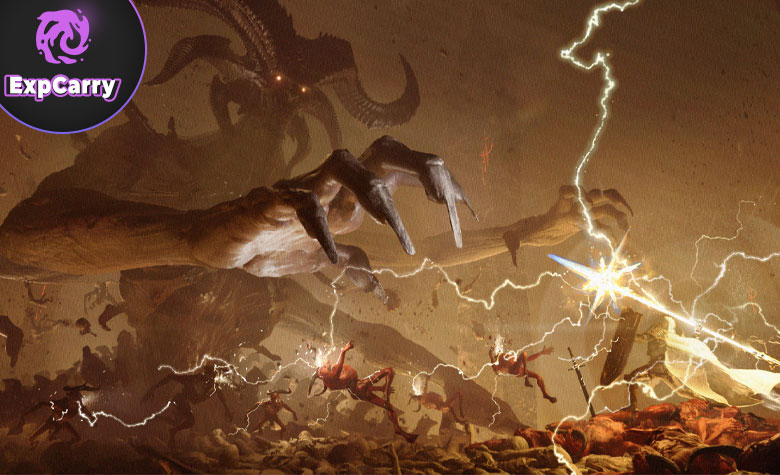
Blizzard’s 2026 messaging has treated Lord of Hatred as the centerpiece of Diablo IV’s next phase. The Diablo 30th Anniversary Spotlight used the expansion to reveal Skovos, Warlock, endgame changes, item systems, and the broader progression overhaul. Blizzard also scheduled a dedicated developer update stream for April 23, 2026 to go deeper into expansion content and the near-launch seasonal setup.
That context matters because Lord of Hatred is not being marketed as a simple story add-on. Blizzard is presenting it as the update that pushes Diablo IV forward in campaign direction, buildcraft depth, and endgame structure at the same time.
The Full Picture Around Diablo 4 Lord of Hatred
The confirmed outline is already substantial. Lord of Hatred launches on April 28, 2026. It continues the Mephisto story, opens Skovos, adds Paladin and Warlock, turns Temis into a new endgame hub, expands the late game with War Plans and Echoing Hatred, and introduces the Talisman and Horadric Cube through the campaign. At the same time, all Diablo IV players receive major Skill Tree reworks, level cap increases, and a Loot Filter.
The remaining questions are about tuning, drop rates, balance, and how durable these systems feel once players fully map them out. That is normal for any ARPG expansion. The difference here is that Blizzard has already revealed enough concrete mechanics to show that Lord of Hatred is trying to push Diablo IV forward on several fronts at once, not just add another campaign to clear and forget.
Final Thoughts
Lord of Hatred looks like the biggest attempt yet to make Diablo IV feel more complete as a long-term ARPG. The campaign pushes further into Mephisto’s war, the class roster expands in two sharply different directions, Skovos deepens Sanctuary’s older lore, and the new endgame systems are designed to make repeat play more flexible and more demanding.
The cleaner takeaway is simple: this expansion matters not only because it adds more content, but because it also changes how Diablo IV is built and played. If War Plans, Echoing Hatred, the Talisman, the Horadric Cube, and the wider Skill Tree overhaul land well in practice, Lord of Hatred could be the release that gives Diablo IV a much firmer long-term shape.