
Diablo 4 Season of Death Awakening is not turning Sanctuary into World of Warcraft, but it is moving the game further away from a pure loot-driven ARPG structure. Based on Blizzard's 3.1 PTR information, Season 14 layers more long-term systems on top of combat: Mythic Uniques 3.0, the official launch of Tower and Leaderboards, Party War Plans, Solo Self Found, crafting updates through the Horadric Cube, a higher Obol cap, Pandemonium Ruptures, Realmwalker 2.0, Deathtoll Chamber, and a Seasonal Lair Boss tied to Mythic-focused rewards.
This is still pre-launch information from the PTR cycle, so some values, rewards, and system details can change before the season goes live. Even with that caveat, the direction is clear. The season's vocabulary sounds less like a traditional Diablo reset and more like a modern live-service endgame. There are seasonal events in the open world, group planning tools, competitive rankings, weekly leaderboard rewards, prestige cosmetics, special boss materials, solo-only ladders, reputation progression, currency-farm">currency caps, item upgrade currencies, and a repeatable seasonal boss loop. Diablo 4 is still built around fast combat, loot drops, builds, classes, and dungeon runs, but Season of Death Awakening makes the surrounding structure feel closer to an MMO framework than an old-school ARPG reset.
Season of Death Awakening Builds a Live-Service Loop Around Sanctuary
The main seasonal layer is Pandemonium Ruptures. These arcane rifts appear as the boundary between Sanctuary and Pandemonium breaks open, bringing new enemies, event chains, loot opportunities, and access routes into the Deathtoll Chamber. Blizzard describes three types of Ruptures: Normal Ruptures in the overworld, Surging Ruptures that can appear in place of Helltide local events, and Colossal Ruptures in the Fields of Desecration. This is important because it moves seasonal play into a more public, map-driven format. Instead of only grinding private dungeons for better gear, players are pushed into world events that connect Helltides, boss spawning, seasonal monsters, and reward rooms.
The new Risen monster family gives that loop a stronger seasonal identity. Gravehounds can appear from Ruptures and inside the Deathtoll Chamber, while the Exarch creates an extra layer of pressure through its orb mechanic. That matters because Ruptures are not only a reward gateway. They also become a distinct encounter layer with enemies, timing, event control, and specific seasonal behavior. The more Blizzard ties enemy families, public events, and reward chains together, the more the season feels like a structured live-service activity rather than a loose modifier placed on top of normal farming.
Realmwalker 2.0 strengthens that structure. Surging Ruptures can summon a Realmwalker when completed with Mastery, while Colossal Ruptures guarantee a Realmwalker spawn. Beating the Realmwalker opens a portal to the Deathtoll Chamber, a one-room mini-dungeon that becomes one of the main reward sources of the season. The chamber can also appear inside a Nightmare Dungeon with the Rupture affix after players close enough Tears within Ruptures. That gives the system more than one access route while still keeping the seasonal chain intact.
The Deathtoll Chamber is especially important because it is the best source of Betrayer's Husks, the material required to open the Seasonal Lair Boss Hoard on Torment I and above. That creates a clear chain: run Ruptures, trigger or defeat the Realmwalker, enter Deathtoll Chamber or find it through a Rupture-affix Nightmare Dungeon, collect Betrayer's Husks, then spend them on the Corrupted Reaper reward cache.
This loop is closer to MMO encounter design than simple ARPG farming. There is an event source, a boss trigger, a dungeon step, a material gate, and a lair boss payout. Each stage feeds into the next, and each stage can be tuned as part of the seasonal economy. Diablo has always used repetition, but the difference here is structure. Season of Death Awakening does not only ask players to kill monsters until loot drops. It asks them to move through a chain of seasonal systems that resemble world events, boss materials, reward caches, and weekly live-service incentives.
The Seasonal Lair Boss Turns Mythic Farming Into a Structured Route
The Seasonal Lair Boss is the Corrupted Reaper, found at Pandemonium Threshold's entrance in Zarbinzet during the PTR. Blizzard states that this boss requires Betrayer's Husks to open its rewards cache and gives the best direct drop chances for both Mythic Uniques and Mythic Unique upgrade currency. That changes how the top-end chase is framed. In a classic ARPG, the rarest items are often tied to broad drop tables, extreme luck, or repeated boss farming with minimal structure. In Season of Death Awakening, the strongest item chase is tied to a seasonal route with its own events, chamber, boss material, and Mythic-focused reward cache.
This does not remove RNG. Diablo 4 still depends on randomness, affix rolls, drops, and build optimization. The MMO-like part is the way randomness is wrapped inside progression infrastructure. Players are not just hoping that a monster drops a purple item. They are farming a currency route, engaging with seasonal activities, opening a boss cache, progressing reputation, and using the Horadric Cube to upgrade items. That is the core shift: Diablo 4 is still an ARPG in combat, but its reward design is becoming more like a managed live-service endgame.
Mythic Uniques 3.0 Turns Loot Into a Progression System
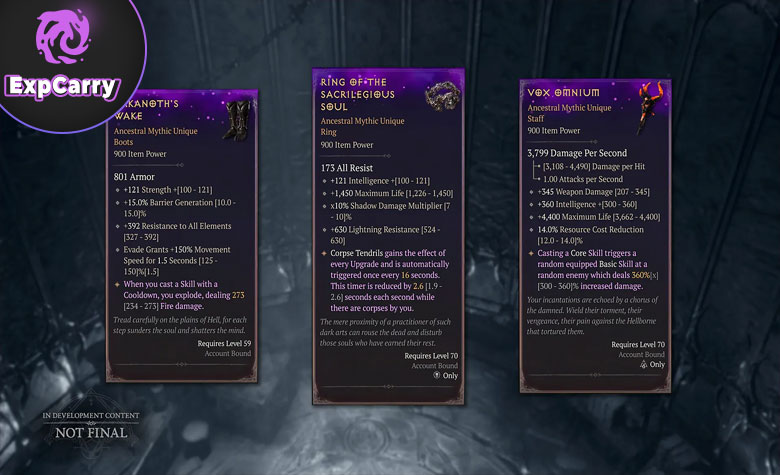
Mythic Uniques 3.0 is the biggest loot-side change in Season 14. Blizzard is changing Mythic from a fixed item rarity into a modifiable item quality. In practical terms, every Unique can become Mythic. A Unique can drop as a Mythic Unique, or it can be upgraded into one through the Horadric Cube using seasonal currency. Mythic Uniques also receive a 30 percent increase to their Unique Powers. This is a major philosophical change for Diablo 4 because Mythic no longer only means a small list of ultra-rare chase items. It becomes an upgrade state attached to the wider Unique item pool.
The system adds more agency, but it also moves Diablo deeper into live-service itemization. Players can earn Pandemonium Fragments through the Seasonal Reputation board, Resplendent Caches, and the Seasonal Lair Boss. That currency becomes part of upgrading Uniques into Mythic Uniques through the Horadric Cube. A class-specific Mythic Unique can also be earned through Season Rank, while both Seasonal and Eternal Realms get a very rare chance for a Mythic Unique when an Ancestral Unique would drop. The important limit is that players can only equip one crafted Mythic. Rare-drop Mythics still allow multiple Mythic items to be equipped, but the crafted path has a clear restriction.
This is where Diablo starts to resemble MMO gearing logic. In WoW, powerful gear often comes through currencies, upgrade tracks, weekly lockouts, boss sources, rankings, and structured progression paths. Diablo 4 is not copying that model directly, but Season of Death Awakening uses similar design language. A player can chase a Mythic drop, upgrade a Unique through crafting, farm seasonal currency, push seasonal rank, target a lair boss, and interact with leaderboard reward tiers. Loot becomes less of a single moment and more of a seasonal project.
Horadric Cube Updates Make Crafting Part of Endgame Control
The Horadric Cube updates reinforce that direction. Unique items can use Focused Reroll and Chaotic Reroll, while Unique Charms and non-Ancestral Uniques can use Unique Power Reroll. Chromatic Tuning Prisms can also provide All Resist. These changes give players more ways to work with Unique items instead of throwing away everything that misses the right combination of rolls. That is important because Season 14 expands the role of Uniques by letting every Unique become Mythic. If more items can sit at the top of the loot ladder, the crafting layer needs enough control to keep the chase from becoming pure frustration.
The risk is obvious. Some players want Diablo loot to feel immediate, explosive, and lucky. A deeper crafting structure can make the game feel more predictable, but it can also make the endgame feel more administrative. That is the same tension many MMOs face. The more systems a game adds around power, the more players can plan their progression. The more they can plan progression, the more the game can start to feel like a checklist. Season of Death Awakening is walking directly into that balance problem.
Tower, Leaderboards, Solo Self Found, and Party War Plans Add MMO-Style Identity
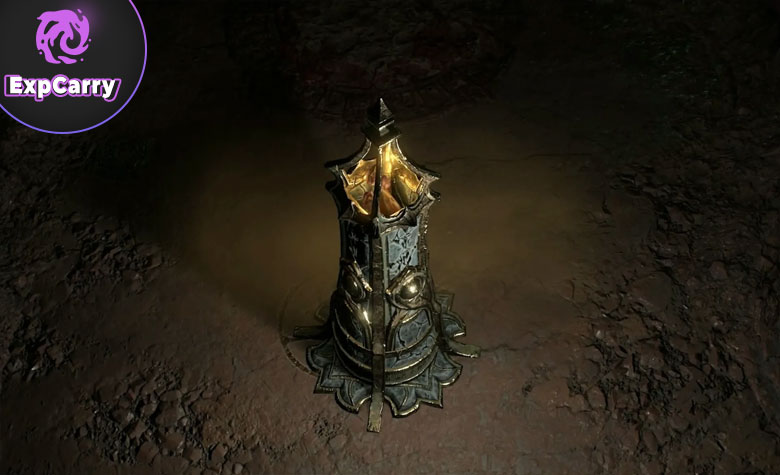
The official launch of Tower and Leaderboards is one of the clearest MMO-like moves in Season of Death Awakening. The Tower is no longer just a beta feature. Season 14 adds weekly and seasonal rewards for leaderboard completion, including Halo cosmetics, Prestige Titles, Gear Caches, and seasonal emblems that show the highest rank achieved in the previous season. Rewards are tied to participation, reaching Tower Tier 100 or higher, and leaderboard ranks such as Top 1,000, Top 500, Top 100, Top 10, and Top 1.
This changes the emotional center of Diablo 4 endgame. ARPGs have always had competitive communities, but official rankings turn build power into public identity. It is no longer only about whether a character clears content. It is about where that character sits on a visible ladder. Titles, halos, emblems, and rank rewards are MMO-style status markers. They give players a reason to return after their build is already functional, because the goal shifts from having enough power to proving that power against the rest of the season.
Solo Self Found adds the opposite lane. SSF characters are Seasonal only, can be Normal or Hardcore, cannot join parties, cannot trade, and share stash, currency, Paragon, and related systems only with other SSF characters on the same account. Free Trial, Couch Co-Op, and Dark Citadel are unavailable for SSF characters, and the SSF choice is permanent for the duration of the season. At season end, those characters revert to Eternal characters and can group or trade again. The reward is not better loot. The reward is a separate competitive space through SSF-only Tower Leaderboards and Hardcore SSF filters.
SSF by itself is not uniquely MMO-like. Solo ladders and restricted modes are also part of modern ARPG culture. The MMO-like part comes from how Diablo 4 packages that ruleset with official competitive filters, public rankings, prestige cosmetics, seasonal rewards, and visible identity. One lane is for group and trade-enabled seasonal power. Another lane is for solo legitimacy. Hardcore adds another filter. Tower ranks add visible proof. The game is no longer only asking what build you play. It is asking what ruleset your character belongs to, what ladder you compete on, and how your seasonal progress should be measured.
Party War Plans Make Group Play More Organized
Party War Plans add the social side of the same shift. In the 3.1 PTR, a party can sync War Plans by generating a shared board for the whole group. Party members must be in Temis, and creating a new party plan costs 2 Marks of El'Druin. When a player initiates the new plan vote, all party members can accept, and the initiating player's reset board is pushed to the others. The plans are synced regardless of War Plan level, Torment level, campaign completion, or similar states.
This is not raid design in the WoW sense, but it is MMO vocabulary. Party planning, shared boards, synchronized objectives, group votes, and activity progress all point toward a game that wants coordinated seasonal play to be smoother. Diablo 4 has always supported parties, but Season of Death Awakening gives parties more structure around what they are doing. Instead of several players simply running the same activity together, the system gives the group a shared plan and a shared objective route.
| Season 14 System | ARPG Function | MMO-Like Function |
| Mythic Uniques 3.0 | Expands the top-end loot chase | Turns item power into an upgrade track with currency and crafting support |
| Tower and Leaderboards | Measures build strength and clear performance | Adds public ranking, weekly rewards, prestige cosmetics, and seasonal identity |
| Solo Self Found | Creates a restricted solo challenge mode | Splits the playerbase into official competitive rulesets with separate ladder filters |
| Party War Plans | Improves grouped seasonal farming | Uses shared objectives, group voting, and synchronized planning |
| Seasonal Lair Boss | Provides a Mythic-focused boss farm | Connects event chains, chamber access, boss materials, and cache rewards |
| Higher currency caps | Reduces friction during farming | Supports longer seasonal loops and heavier progression economies |
Explore services related to this guide, selected from our Diablo IV catalog.
View All Diablo IV Services

Where Diablo Stops Being a Pure ARPG and Starts Acting Like an MMO
The comparison with World of Warcraft is useful because it shows the line Diablo 4 is approaching. WoW is built around persistent character identity, group content, weekly progression, public achievements, currencies, raid bosses, dungeon rankings, seasonal PvP and PvE ladders, cosmetics, titles, and social organization. Diablo 4 is not built around the same combat model or the same world structure, but Season of Death Awakening borrows more of the surrounding framework. The game is using seasons, leaderboards, party planning, lair bosses, upgrade currencies, competitive filters, and prestige rewards to give ARPG combat a broader MMO-style shell.
The key difference is still combat density. Diablo 4 remains an ARPG because the core moment-to-moment loop is about killing large numbers of enemies quickly, building around skills and items, clearing repeatable content, and chasing better drops. WoW's combat and encounter design are slower, more role-defined, and more dependent on group composition. Diablo does not need tanks, healers, raid lockouts, guild schedules, or fixed boss roles to feel like an MMO. It becomes MMO-like when the systems around combat start organizing players into seasonal ladders, group routes, currencies, status rewards, and long-term progression tracks.
There is also a fair counterargument. Leaderboards, crafting, solo modes, rare item upgrades, and seasonal currencies are not exclusive to MMOs. They are common in modern ARPGs as well. The MMO comparison works best when these systems are viewed together rather than separately. Season of Death Awakening does not become MMO-like because it adds one ladder or one currency. It becomes MMO-like because it stacks public identity, structured group play, seasonal event chains, prestige rewards, boss materials, upgrade paths, and competitive filters around the same ARPG combat loop.
Season of Death Awakening makes that shift clearer than previous seasons because several systems arrive at once. Mythic Uniques 3.0 changes item identity. Tower and Leaderboards formalize competition. Solo Self Found creates separate player categories. Party War Plans organize group farming. Pandemonium Ruptures and Realmwalker 2.0 create a public seasonal event chain. The Risen give that event chain its own enemy identity. Deathtoll Chamber and Corrupted Reaper give the season a boss-material economy. Horadric Cube upgrades give players more crafting control. The Obol cap moving to 25,000 supports longer farming sessions without constant cleanup. None of these systems alone would redefine Diablo 4. Together, they make the game feel more like a seasonal MMO platform built on ARPG combat.
The danger is system overload. Diablo works best when killing monsters and finding loot remain the main pleasure. If the surrounding structure becomes too heavy, players may feel like they are managing a seasonal spreadsheet instead of playing an ARPG. That is why Season 14 is a key test. Blizzard needs the MMO-like systems to give players goals, structure, and status without burying the core speed and clarity of Diablo combat under too many currencies, boards, filters, and progression layers.
Final thoughts
Diablo 4 Season of Death Awakening shows the direction Blizzard is taking with the game. The combat is still ARPG combat, the loot chase is still central, and Sanctuary is not becoming Azeroth. But the systems around that combat are becoming more MMO-like with every major update. Season 14 adds public seasonal events, structured boss routes, Mythic upgrade currency, competitive Tower rewards, official leaderboards, SSF ladders, Party War Plans, expanded crafting control, and higher currency caps. That is not a small seasonal gimmick. It is a broader live-service framework.
The important question is not whether Diablo 4 is still an ARPG. It is. The better question is how much MMO structure Blizzard can add before the game's identity changes. Season of Death Awakening suggests that Blizzard wants Diablo 4 to sit between genres: fast enough to keep ARPG players, structured enough to retain seasonal MMO-style engagement, and competitive enough to give players public goals beyond clearing content. If the balance works, Diablo 4 gets a stronger endgame identity. If it fails, the game risks becoming too managed for players who came to Diablo for direct loot, fast combat, and clean seasonal resets.