




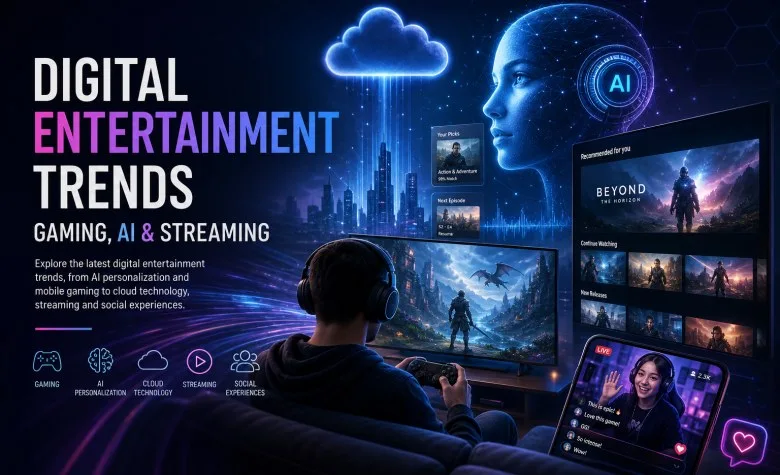
The global entertainment industry is constantly evolving, driven by rapid technological progress and changing user expectations. Modern consumers increasingly look for flexible, personalized, and interactive experiences that integrate seamlessly into their digital lives. From immersive online experiences to smarter streaming formats, the ways people spend their free time continue to change quickly.
How the Entertainment Industry Is Changing
Digital transformation has fundamentally changed how people consume media and spend their leisure time. Traditional passive entertainment is increasingly being replaced by flexible formats that give users more control over what, when, and how they consume content.
The main drivers behind this transformation include:
- Freedom from time and location. Thanks to fast mobile networks and modern devices, high-quality entertainment can be accessed almost anywhere and at any time.
- A shift from passive viewing to active participation. Modern media increasingly focuses on interaction, allowing users to influence games, shows, and other digital experiences.
- The convergence of digital and physical experiences. New technologies combine real-world environments with digital elements to create more immersive forms of entertainment.
These developments provide the foundation for some of the most important trends currently shaping the entertainment industry.
The Most Important Digital Entertainment Trends
Advances in artificial intelligence, mobile technology, and cloud infrastructure are making digital entertainment increasingly personalized and accessible.
The following table highlights some of the most important trends and their impact on users:
| Entertainment Trend | Technology Focus | Main User Benefit |
|---|---|---|
| Personalized Experiences | AI Algorithms & Big Data | Relevant content with less searching |
| Interactive Mobile Gaming | Cloud Gaming & 5G Networks | High-quality gaming on mobile devices |
| Social Gaming Events | Streaming & Live Chats | Shared experiences regardless of location |
These developments show how strongly modern technologies are changing user behavior. They create new ways to make entertainment more flexible, diverse, accessible, and engaging.
Personalized Digital Experiences
Artificial intelligence and modern recommendation systems make it possible to tailor content more closely to individual user preferences:
- Personalized recommendation systems. Streaming platforms and gaming services analyze user preferences to suggest relevant games, videos, music, and other content.
- Dynamic content adaptation. AI-powered applications can adjust difficulty levels, interfaces, recommendations, and other elements based on user behavior.
- Personalized loyalty programs. Digital entertainment platforms can offer rewards and benefits based on individual usage patterns and preferences.
This level of personalization helps users spend less time searching and more time enjoying content that matches their interests.
Interactive and Mobile Entertainment
Smartphones have become one of the main platforms for digital entertainment. Modern mobile games offer increasingly advanced graphics and gameplay, while interactive live formats allow users to participate directly in events, competitions, streams, and community activities. Cross-device streaming also makes it easier to move seamlessly between TVs, tablets, computers, and smartphones.
Mobile entertainment therefore continues to grow around convenience, accessibility, and the ability to enjoy content anywhere.
Social Entertainment and Shared Experiences
Despite the growing importance of digital platforms, social interaction remains a major part of entertainment. Modern services increasingly combine digital content with community-driven experiences.
Digital platforms support shared entertainment in several ways:
- Growth of gaming communities. Online platforms allow players around the world to organize teams, exchange strategies, share experiences, and build long-term communities.
- Shared live-streaming events. Watching esports tournaments, gaming broadcasts, or digital concerts in real time creates a stronger sense of participation and community.
- Cooperative multiplayer experiences. Shared challenges in digital worlds encourage teamwork, communication, and long-term player engagement.
The combination of gaming, streaming, and social platforms is turning modern entertainment into an increasingly connected experience.
Which Entertainment Trends Will Remain Relevant?
Looking ahead, flexibility, quality, accessibility, and user experience are likely to remain some of the most important success factors in the entertainment industry. Technologies and platforms that provide clear value while reducing friction for users have the strongest potential for long-term adoption.
Artificial intelligence, cloud technology, mobile platforms, interactive formats, and social experiences are likely to continue shaping how people consume entertainment. As these technologies develop, users can expect increasingly personalized, flexible, and connected digital experiences.