



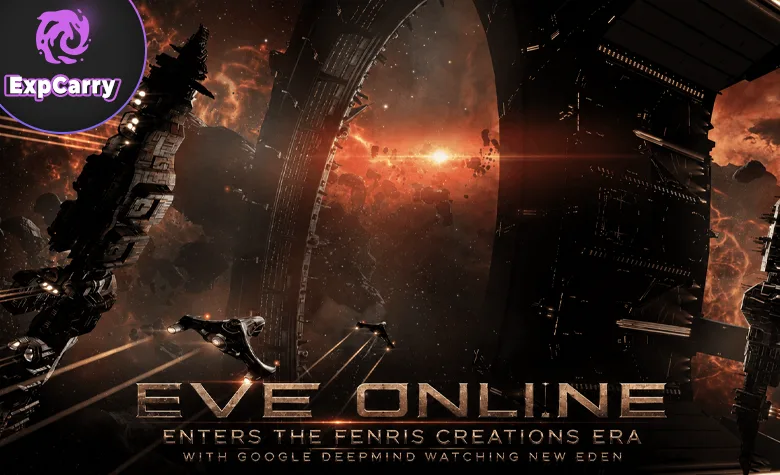
EVE Online has entered one of the strangest business chapters in its long history, which is saying something for a game where spreadsheets, betrayal, market warfare, diplomacy, and industrial-scale paranoia are normal player activities. CCP Games, the studio behind EVE Online, is now operating under the new name Fenris Creations after returning to independent ownership. At the same time, the studio has entered a research partnership with Google DeepMind, turning EVE Online into a controlled test environment for AI research focused on complex, player-driven systems.
The short version is simple: CCP Games did not disappear because EVE Online failed, and Google did not buy the MMO outright. Fenris Creations is the new name for the studio behind EVE Online, the company is independent again after its separation from Pearl Abyss, and Google has taken a minority stake connected to a DeepMind research partnership. That distinction matters, because "Google bought EVE" is the kind of headline that spreads faster than a bad null-sec rumor and is only slightly more useful than a local chat meltdown.
EVE Online, Fenris Creations, and Google DeepMind: The Actual Deal
The studio formerly known as CCP Games announced on May 6, 2026, that it will operate as Fenris Creations. The move comes as the EVE Online developer becomes independent again, with its ownership group made up of senior management and long-term investors. The transaction separating the company from Pearl Abyss is valued at $120 million, using both cash and non-cash consideration.
Fenris Creations says the change is about ownership and governance, not a creative reset. The same leadership, studios, products, and development plans remain in place. Headquarters remain in Iceland, and the teams in Reykjavik, London, and Shanghai continue operating. For EVE Online players, that means the familiar New Eden machine is still being run by the same people, not suddenly handed to a mysterious Google-branded robot overlord with a fondness for subscription spreadsheets.
| Change | What happened | What it means for EVE Online |
|---|---|---|
| Studio name | CCP Games now operates as Fenris Creations | The EVE Online developer has rebranded after returning to independence |
| Ownership | Fenris Creations separated from Pearl Abyss | The studio is governed by its own board and ownership group |
| Deal value | The transaction is valued at $120 million | The split is a major business move, not a cosmetic rename |
| Google involvement | Google took a minority stake | Google is an investor, not the full owner of EVE Online |
| DeepMind partnership | Google DeepMind will use offline EVE environments for AI research | The live EVE Online server is not being turned into an uncontrolled AI lab |
| Live game direction | Leadership, products, and plans remain unchanged | EVE Online, EVE Frontier, EVE Vanguard, and EVE Galaxy Conquest continue under Fenris Creations |
CCP Games Becomes Fenris Creations Without Resetting EVE Online
The rebrand to Fenris Creations is not being presented as a creative reboot. The company says EVE Online continues, with the same teams working on EVE Online, EVE Frontier, EVE Vanguard, and EVE Galaxy Conquest. That matters because EVE players are not famous for calmly accepting vague corporate transitions. This is a community that can turn a balance change, market shift, or alliance ping into a forensic investigation before breakfast.
The name Fenris points back to the studio's Icelandic roots and Norse myth, but the more important part is structural. Fenris Creations is now positioned as an independent company focused on long-running virtual worlds. For EVE Online, the business argument is tied directly to endurance: live service development, player-driven systems, long-term tools, and future projects inside the wider EVE universe.
There is also a practical reason for leaving the old CCP Games name behind. The CCP abbreviation has long carried awkward baggage because it can be confused with the Chinese Communist Party, a problem that becomes less funny when a global studio is trying to manage international business, travel, media coverage, and corporate partnerships. Fenris Creations gives the company a cleaner identity without dragging that confusion into every major announcement like an unwanted fleet cyno.
This also explains why the company is emphasizing continuity. The announcement repeatedly points to unchanged leadership, unchanged development plans, and no planned restructuring or layoffs. That is the message Fenris Creations clearly wants players to hear: the name on the building changes, but New Eden is not being wiped, softened, or converted into some sanitized AI demo for executives who discovered "emergent gameplay" last Thursday.
Google DeepMind Is Interested in EVE Online Because New Eden Is Already Complicated
The Google DeepMind partnership is the more explosive part of the story. DeepMind will work with an offline version of EVE Online running on a local server, using the game as a controlled environment for AI research. The stated focus includes long-horizon planning, memory, and continual learning. In less polished terms: EVE Online is useful because it is complicated, social, persistent, hostile, economic, strategic, and full of humans doing extremely human things for extremely long periods of time.
That makes EVE Online a natural AI research target. Most games offer clear win conditions and limited systems. EVE offers markets, alliances, logistics, diplomacy, mining, production, scouting, espionage, fleet warfare, long-term planning, propaganda, betrayal, and players who can weaponize boredom with alarming efficiency. If an AI model can learn anything meaningful from New Eden, it will not be because the game is simple. It will be because EVE is one of the few online worlds messy enough to resemble a real society, only with more spaceships and fewer healthy sleep schedules.
DeepMind has used games before as AI research environments, but EVE Online is different from board games, ladder games, or short-session simulations. The value is not only combat. The value is the living system around the combat: scarcity, trust, social coordination, institutional memory, risk, loss, and delayed consequences. That is the part that makes the partnership interesting and also slightly unsettling, because "AI studies EVE players" sounds like the beginning of either a research paper or a lawsuit written by a corporation alliance leader.
Offline EVE Online AI Research Is the Detail Players Should Not Miss
The most important technical detail is that the initial AI research is supposed to happen in controlled, offline versions of EVE Online that are not connected to Tranquility. That matters. Tranquility is the live EVE Online universe where the actual player economy, wars, alliances, and histories exist. An offline research environment is a controlled copy or separate test space, not the same thing as letting experimental AI models loose inside the live sandbox.
That distinction does not make every concern disappear, but it changes the conversation. If DeepMind is testing models in offline environments, the immediate risk is not "AI agents are now secretly manipulating the live market tomorrow." The real questions are more subtle: what data is used, how player behavior is represented, what research outputs are produced, whether future game systems use AI, and how transparent Fenris Creations will be with players as the partnership develops.
Some reports describe the partnership as research into player behavior on isolated EVE Online servers. That is not the same thing as Google taking control of the live game, but it does raise the obvious questions players will care about: whether historical player data is involved, how it is filtered or anonymized, what kinds of behavioral patterns are being studied, and whether any future AI-driven systems will ever touch live gameplay. In a normal MMO, those questions would be sensitive. In EVE Online, they are nuclear fuel with a subscription fee.
| Player concern | What is currently known | Why it still matters |
|---|---|---|
| Is Google running live EVE Online? | No. Google has a minority stake, not full ownership | Ownership structure affects trust, governance, and long-term direction |
| Will AI models be tested on Tranquility? | The announced initial research uses offline EVE environments running locally | Players will want clear boundaries between research and live gameplay |
| Will player data be used? | The partnership is about EVE as a complex player-driven system, and reports point to player behavior research on isolated servers | Data handling, privacy, anonymization, and consent will need clear communication |
| Will AI change EVE gameplay? | The companies say they will also explore new gameplay experiences enabled by these technologies | Future AI-assisted systems could affect design, tools, NPCs, simulation, or moderation |
| Will the team change? | Fenris Creations says leadership, studios, staffing, and plans remain unchanged | Continuity reduces immediate disruption but does not remove future uncertainty |
EVE Online Is a Perfect AI Testbed for All the Right and Wrong Reasons
EVE Online has always been more than a space MMO. It is a single-shard universe built around player choice, consequence, economics, politics, and conflict. That is exactly why it works as an AI research environment. The game is not interesting to DeepMind just because players fly ships. It is interesting because players organize institutions, build supply chains, coordinate fleets, manipulate markets, remember grudges for years, and sometimes destroy each other for reasons so layered that an academic would need a flowchart and a stiff drink.
For AI research, that creates a rare environment. Long-term planning is not theoretical in EVE. Alliances plan wars, logistics, manufacturing pipelines, resource control, and political moves across weeks, months, or years. Memory matters because old betrayals, standings, reputation">reputations-farm">reputations, and economic patterns shape future decisions. Continual learning matters because the game changes as players adapt. A model studying this kind of environment faces a moving target, not a tidy puzzle box.
That is why EVE Online makes more sense for advanced AI work than a clean arena where every match begins from zero. New Eden is persistent. It has history. It has institutions. It has a player economy. It has deception. It has cooperation. It has consequences. In other words, it contains several things AI researchers want to understand and several things game developers usually spend years trying to stop players from abusing.
Fenris Creations Gets Independence, Funding, and a Very Complicated Trust Problem
For Fenris Creations, the upside is obvious. Independence gives the studio more direct control over its strategy. The Google investment and DeepMind partnership add funding, research prestige, and future technology options. EVE Online also enters this new phase from a stronger commercial position than many outsiders may have assumed.
The company reported more than $70 million in revenue for 2025 and described the year as one of EVE Online's strongest periods in recent memory. The studio also pointed to a record revenue month in November 2025 and a fourth quarter that ranked as the second-highest revenue quarter in the game's more than 20-year history. That matters because the Fenris Creations move is not being framed as a rescue operation. It is being framed as a return to independence from a profitable position, which is a much stronger story than "old MMO studio changes logo and hopes nobody notices."
The risk is trust. EVE Online players are used to harsh gameplay, but they are also deeply sensitive to anything that looks like outside interference in the sandbox. A player losing a ship because of bait, spies, bad scouting, or market manipulation is normal EVE. A player feeling like the world is being reshaped for opaque AI research would be a very different kind of problem. The former is content. The latter is governance. Naturally, one is fun and the other makes forums smell like burning plastic.
Fenris Creations will need to communicate carefully. The studio has already said the initial research is offline and controlled, but players will want more than one reassurance. They will want details about privacy, data use, boundaries, future AI features, and whether any research will eventually touch live gameplay systems. In a normal MMO, vague answers are bad. In EVE Online, vague answers become alliance-level conspiracy fuel by lunch.
EVE Frontier and EVE Vanguard Make the DeepMind Partnership Bigger Than One MMO
This story is not only about EVE Online. Fenris Creations is also building EVE Frontier and EVE Vanguard, which makes the DeepMind partnership more strategically interesting. EVE Frontier is being positioned as an online space survival game, while EVE Vanguard moves the universe into extraction-adventure FPS territory. Together, they give Fenris Creations a broader sci-fi ecosystem where AI research could eventually influence tools, NPC behavior, simulation systems, player-facing features, or new forms of persistent world design.
That does not mean AI will suddenly rewrite every EVE project. It means the company now has a research partner interested in the same hard problems that EVE has always created: persistence, agency, memory, cooperation, conflict, and emergent behavior. Those problems are not side effects in EVE. They are the product. If Fenris Creations uses the partnership well, AI could support deeper simulation and better tools. If it uses it badly, players will smell the corporate fog from ten jumps away.
EVE Galaxy Conquest also remains part of the wider portfolio, while EVE Online continues as the main living world that gives the whole universe its weight. That balance matters. Fenris Creations is not only trying to keep an old MMO alive. It is trying to turn the EVE universe into a broader set of connected projects while keeping the original sandbox credible. That is difficult enough before adding DeepMind, minority investment, and AI research discourse into the same hangar.
Google DeepMind in EVE Online Is Not Automatically Bad, but It Is Not Harmless Background Noise
The lazy reaction is to treat the DeepMind partnership as either salvation or doom. Neither is useful. Google DeepMind working with Fenris Creations could lead to meaningful research and interesting game technology. EVE Online is genuinely one of the best environments in gaming for studying long-term behavior inside a complex virtual world. Pretending that is not interesting would be dishonest.
At the same time, AI research inside a player-driven MMO ecosystem deserves scrutiny. EVE Online's value comes from the fact that players believe their actions matter. If future AI systems help build better tools, better simulations, or more responsive worlds, players may accept them. If AI systems feel like surveillance, manipulation, or automated interference in the sandbox, the backlash will be deserved and probably spectacular enough to need its own monument in Reykjavik.
The safest interpretation is this: the partnership is a major signal about where Fenris Creations wants to take EVE long-term, but it is not proof that live EVE Online will change immediately. The studio is independent again, the EVE teams remain in place, and the initial AI research is offline. The open question is what happens after the research becomes useful, because no company enters a partnership with Google DeepMind just to produce a neat press release and a few conference slides.
EVE Online Fenris Creations Rebrand: The Story Players Should Actually Watch
The Fenris Creations rebrand is not just a new name slapped over the CCP Games logo. It marks a return to independence, a separation from Pearl Abyss, and a new ownership structure built around long-term control of the EVE universe. For a game that depends on decades of continuity, that business shift matters as much as the AI headline.
The Google DeepMind partnership is the louder story because AI attracts headlines like a wreck attracts salvage drones. But the quieter business move may be just as important. Fenris Creations is now responsible for its own direction, with EVE Online still acting as its central living world and EVE Frontier and EVE Vanguard expanding the broader universe. If the company handles independence well, it gets more room to build. If it handles AI communication poorly, it inherits a trust problem big enough to make null-sec diplomacy look tidy.
The next major checkpoint is communication. Fenris Creations will need to explain how offline research environments are separated from live gameplay, what kind of player behavior or game-state data is being studied, how privacy is protected, and what role AI might play in future EVE projects. That is not optional community management decoration. In EVE Online, trust is part of the infrastructure, even in a game famous for betrayal. Yes, the irony is doing barrel rolls.
For now, the practical takeaway is clear. EVE Online is not being shut down, sold wholesale to Google, or instantly converted into an AI playground on the live server. CCP Games now operates as Fenris Creations, Fenris is independent again, Google has a minority stake, and DeepMind will study EVE through controlled offline environments. That is still a huge shift, just not the cartoon version of it.
EVE Online and Google DeepMind: A New Era With Real Questions Attached
EVE Online has always been a strange place to outsiders and a deeply serious place to the people who build their stories inside it. That is why this new Fenris Creations era feels both logical and risky. Few games are better suited to AI research into long-term planning, memory, continual learning, and complex social systems. Few communities are also more likely to interrogate every corporate sentence like it contains a hidden sovereignty timer.
Fenris Creations has a strong argument for the move. Independence gives the studio clearer control. Google DeepMind brings capital, research attention, and technical possibilities. Offline EVE environments give researchers a safer way to study complex systems without immediately touching the live universe. On paper, this is exactly the kind of weird, ambitious experiment that fits EVE's history.
The problem is that EVE Online is not just code, ships, and market data. It is trust, memory, player labor, social history, and accumulated consequence. If Fenris Creations treats those things as the foundation of the partnership, the DeepMind collaboration could become one of the most interesting intersections between online games and AI research. If it treats them as raw material without enough transparency, players will respond with the warmth and gentleness of a dreadnought fleet landing on grid.
The next stage will depend on communication. Players need clear boundaries around offline research, live server separation, data use, and future AI-enabled gameplay. Fenris Creations has already framed this as a controlled research partnership, not a live-server takeover. That is the right starting point. The harder part is maintaining that clarity when experiments move from announcement language into real development decisions.
EVE Online survived because it was never normal. Its economy, politics, grudges, wars, scams, alliances, and history made it more than a conventional MMO. That is exactly why Google DeepMind wants to study it, and exactly why Fenris Creations needs to be careful. New Eden is valuable because players made it strange, dangerous, and persistent. Any AI future built around EVE has to respect that, or it will learn the most predictable lesson in the universe: never underestimate EVE players with time, suspicion, and a spreadsheet.