



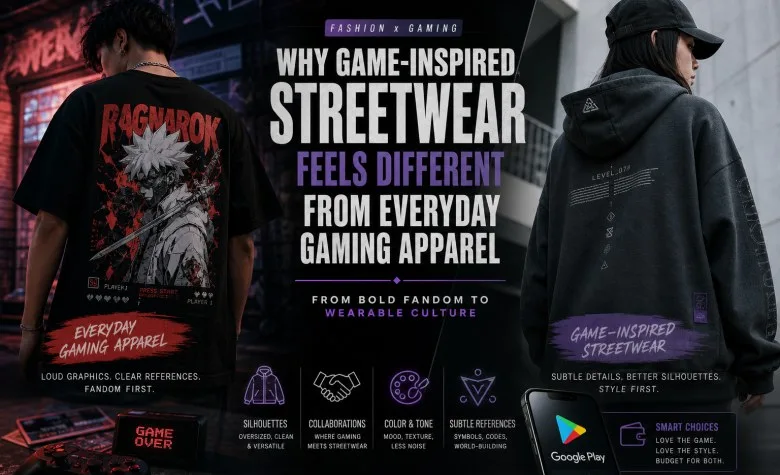
Game-inspired clothing earns a place in a wardrobe when its reference and its shape work together. Everyday gaming apparel often centers a large character image or franchise logo, so the fandom is the first thing people see. Streetwear collaborations can take a quieter route through color, texture, symbols, or art direction. Neither approach is automatically more wearable; graphic intensity, silhouette, styling, and personal comfort decide the result.
That distinction helps when a fashion purchase competes with other entertainment plans. After judging if a hoodie or tee will see repeat use, a player can set aside Google Play credit for a separate digital purchase rather than treating every game-related item as the same kind of expense. The point is not to favor one category, but to decide which purchase suits real habits.
Digital games are available through official platform stores and digital marketplaces. Eneba is a digital marketplace for game keys and gift cards, with clear listing details including region information and verified merchants. That clarity removes friction when digital spending is part of the same considered entertainment budget as apparel.
Overt references and everyday wear
The Horizon Forbidden West x ASOS collection illustrates the difference between a direct costume idea and clothing built for ordinary rotation. Its joggers, hoodies, and shirts drew on Aloy’s look, Horizon graphic novels, and game key art. Yet the collection was presented as ready-to-wear streetwear, with comfort and flexible styling at the center. Each item could work in a matching set or as a separate, which gives the reference room to sit beside existing clothes.
By comparison, overt fan merchandise puts recognition first. A prominent character print or logo can be exactly right for a convention, a community event, or a day when the wearer wants their favorite series visible. The familiar T-shirt form in UNIQLO’s Fighting Game Legends collection offers a middle route: Street Fighter and Tekken artwork appears on a garment that pairs easily with everyday layers. It is fandom in plain view, though the basic silhouette keeps the decision simple.
Gaming culture fashion and franchise capsules
Game-specific capsules and gaming-culture collections take different paths. The Nike x Martine Rose Sport collection drew on gaming and esports culture rather than a single franchise, with football kits, hoodies, shorts, fleece pants, a ski parka, a cross-body bag, and footwear. Nike framed its designs around comfort, mobility, flexibility, and functional silhouettes. That approach reads as contemporary sportswear or streetwear before it asks the viewer to identify a particular game. The result has a broader visual language.
Silhouette can therefore carry more weight than the reference. Hoodies, graphic tees, fleece pants, jackets, caps, and bags fit wardrobes in distinct ways, so a buyer can assess an item by repeat use, ease of matching, and comfort for the intended setting. Collaboration pieces bring story and specific design choices; basics prioritize regular rotation. The strongest choice is the one that fits the wearer’s own style rather than forcing a full themed outfit.
That same practical filter applies to digital purchases. A clear purpose for a game key, gift card, or apparel item keeps entertainment spending connected to real habits rather than a passing fan moment. Digital marketplaces like Eneba offer deals on digital products and can fit this approach when players want games or gift cards, with purchases selected for a defined use.