




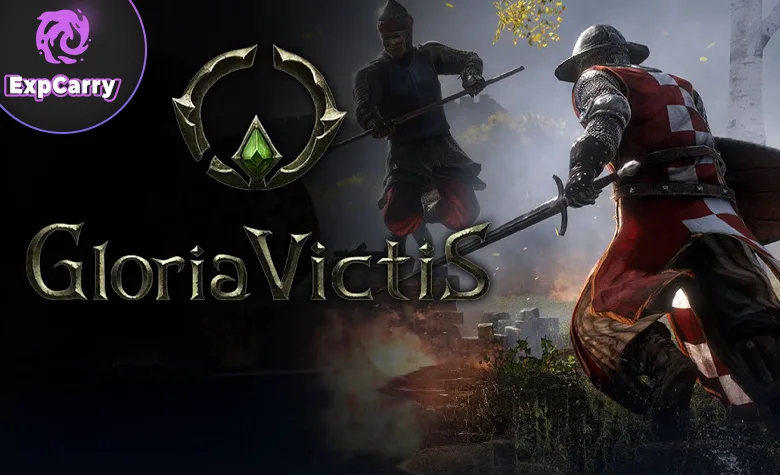
Gloria Victis is close to returning after a long break from active service. gamigo has confirmed that the medieval open-world MMORPG will relaunch on June 17, 2026 at 10:00 AM CET, following closed beta testing, community testing, and the Medieval Fest Open Beta. The relaunch turns the game into a free-to-play title and brings back a PvP-focused sandbox built around territory control, sieges, crafting, partial loot, and player-driven conflict. This is not a new MMORPG built from zero. Gloria Victis already had years of Early Access, a full Steam release in February 2023, and a shutdown after the closure of the original studio. The new version exists because gamigo acquired the license and is bringing the game back with the stated goal of preserving the core experience while improving stability, fixing bugs, adding quality-of-life updates, and preparing further development after launch.
Gloria Victis relaunch has a confirmed June 2026 date
The relaunch is now dated. gamigo's June 4 press release states that Gloria Victis will return on June 17, 2026. The announcement follows the February 2026 confirmation that gamigo had acquired the license and planned to relaunch the game worldwide as a free-to-play MMORPG. The official FAQ also confirms that Gloria Victis is coming back and will be available only on Steam.
The timing matters because the relaunch is no longer framed as a vague revival. The official beta phase is closed as of May 2026, the team is working on final launch preparations, and the Steam announcement says a full changelog will be shared before relaunch. That places the project in the last preparation stage, not in early announcement territory.
Players who owned Gloria Victis before the licensing transition are also part of the relaunch plan. gamigo says previously unlocked premium skins on Steam accounts will be recoverable, whether they were bought with Ambers or Gold. Unused or unbound skins are not included in that recovery statement, and more information about the process is expected before launch.
Gloria Victis returns as a free-to-play medieval MMORPG
The relaunch changes the business model. Gloria Victis is coming back as a free-to-play game, which is a major shift for a title that previously had a paid version on Steam. The official FAQ says the reason is accessibility: a larger player base means more allies, more rivals, more combat, and a more active battlefield.
Monetization is one of the main concerns around the relaunch because Gloria Victis has always depended heavily on competitive PvP. The FAQ directly states that the game is not planned as pay-to-win and describes Gloria Victis as a fundamentally skill-based game. That promise will be important because the relaunch needs both returning veterans and new players to trust the competitive structure.
Steam currently lists the game with in-app purchases and online interactivity, while the official materials emphasize free-to-play access and fair competition. That combination means the relaunch will need clear communication about what can be bought, what affects gameplay, and how the economy will avoid undermining player skill, crafting, territory control, and PvP outcomes.
Gloria Victis gameplay is still built around open-world PvP
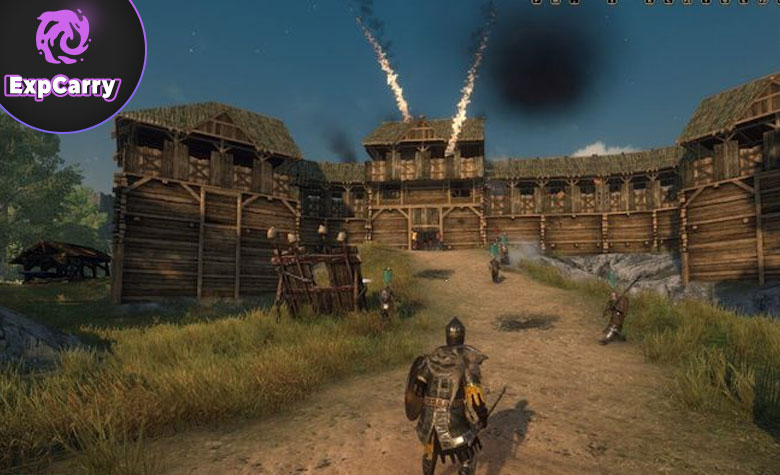
Gloria Victis is defined by medieval open-world PvP rather than theme park questing. Its core structure is based on three nations, territory control, guild warfare, sieges, castle ownership, and large battles over strategic locations. The Steam page describes non-target action combat, open PvP, deep crafting, a player-driven economy, and a low-fantasy medieval world.
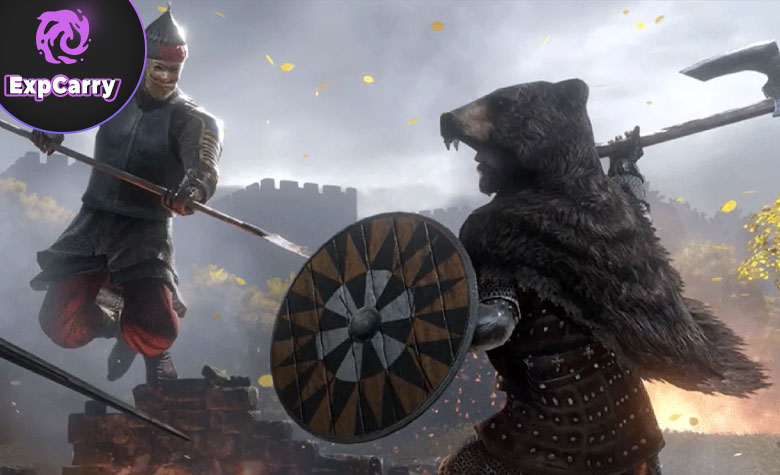
The combat model is one of the game's main identity points. Gloria Victis uses action-based non-target combat where positioning, timing, weapon choice, and player execution have direct weight. It is not a tab-target MMORPG where gear and rotation logic carry most fights. This makes the game more demanding for new players, but it also gives veteran groups a reason to organize around training, battlefield roles, and command structure.
Sieges and territory control remain the main attraction
The relaunch press material focuses heavily on territory control and siege warfare. Players can fight over non-instanced towns and castles, build fortifications, use siege engines, and take part in realm conflict. This is the part of Gloria Victis that separates it from smaller medieval combat games: the battles are tied to persistent map control instead of isolated match lobbies.
Castle warfare also connects to guild identity. A guild that controls territory is not only holding a symbol on the map. It gains a social and strategic center that needs defense, resources, upgrades, and players willing to respond when enemies attack. That structure gives the MMO its strongest long-term loop because conquest, defense, logistics, and politics are linked.
Gloria Victis keeps crafting, economy, and partial loot at the center
Gloria Victis is not only about fighting. Its economy depends on gathered resources, crafting stations, trade, and player production. Steam describes eight different realistic crafts, farming, resource nodes, crops, and an economy where weapons and goods come from players rather than random creature drops. That gives non-combat roles a place in the same world as sieges and PvP.
The partial loot system is another key feature. In specific high-risk areas, players can loot defeated enemies by selecting particular items under time pressure. This avoids a full-loot system where every death removes everything, but it still gives PvP encounters economic weight. A player entering dangerous territory is risking resources, equipment value, and time.
The relaunch depends on risk without pushing players away
Partial loot is one of Gloria Victis' most important balancing ideas. It gives combat a cost, but it does not make every defeat a total reset. That is essential for the relaunch because free-to-play brings in players who may not be used to old-school PvP systems. The game needs enough danger to make victories feel valuable, but not so much punishment that new players leave before reaching the larger territory war.
The same applies to crafting and resource control. If player production is strong, traders, gatherers, crafters, farmers, builders, and guild suppliers can matter even when they are not leading the kill count. That wider role structure is necessary for a medieval MMO built around realms and guilds. A siege game cannot survive only on duelists. It also needs logistics.
Gloria Victis relaunch follows a rough history
The return has weight because Gloria Victis already disappeared once. The original version spent years in Early Access, launched fully on Steam in February 2023, and later became unavailable after the closure of the original studio. PC Gamer reported that the shutdown was tied to financial struggles and developer burnout, which left the game with a dedicated but uncertain community.
That history shapes how the relaunch will be judged. Returning players know the game's strengths: open-world war, medieval atmosphere, directional combat, guild conflict, sieges, and a crafting economy. They also remember the weaknesses, including technical issues, onboarding problems, balance concerns, and the difficulty of keeping a PvP MMORPG populated over time.
gamigo's official line is that the core experience will be preserved while stability, bugs, quality-of-life systems, and future improvements are addressed. That is the correct direction for a relaunch, but the result will depend on execution after June 17. The relaunch cannot rely only on nostalgia. It needs a stable start, clear monetization, active support, and enough population for territory warfare to work.
State of War is planned after the Gloria Victis relaunch
The first major content update after relaunch is called State of War. gamigo has not released the full details yet, but the June 4 announcement says it will bring new opportunities, conflicts, and challenges to Gloria Victis. The name fits the game's strongest systems because the MMO is built around realm conflict and the control of territory.
The post-launch update is important because it shows that the relaunch is not intended as a simple server restoration. The team is already presenting a forward path beyond the June 17 return. For a PvP MMO, that is necessary. Launch activity can bring players back for a short time, but long-term survival depends on updates that keep territory control, guild warfare, economy, and player politics active.
The official FAQ also says legacy systems are being evaluated and that the team will share details about returning or updated features as development progresses. That leaves room for older systems to return in changed form, but it also means players should wait for confirmed patch notes before assuming that every previous version feature will be restored unchanged.
Gloria Victis relaunch is a second chance, not a clean reset
Gloria Victis has a rare position in the current MMO market. It is not trying to compete as a cinematic story MMORPG, a raid ladder, or a casual life sim. Its appeal is narrower and clearer: medieval realm warfare, action combat, siege logistics, guild territory, player economy, and risk-based PvP. That focus gives it a strong identity, but it also makes the relaunch more fragile.
The game needs enough players for sieges, enough new-player support to stop beginners from bouncing off the combat, and enough trust around free-to-play monetization to avoid damaging the competitive core. The official promise of no pay-to-win helps, but the Steam listing already includes in-app purchases, so the relaunch economy will be watched closely.
If gamigo can keep the original strengths while improving stability and onboarding, Gloria Victis could return as one of the few active medieval sandbox MMOs with real territory warfare. If the relaunch only brings the servers back without solving old friction points, the same problems that limited the original game may return with a larger free-to-play audience.
Final Thought
Gloria Victis is returning at a moment when most MMORPGs avoid harsh open-world PvP, player-driven territory control, and economy systems where loss still has weight. That makes the relaunch more interesting than a simple server reopening. The game is trying to bring back a specific kind of medieval MMO experience built around conflict, logistics, guild identity, and the pressure of fighting for land that can actually change hands.
The relaunch will matter if gamigo can keep that identity while making the game easier to enter, more stable, and fair under a free-to-play model. Gloria Victis does not need to become a safer theme park MMO to succeed, but it does need to prove that its old strengths can work for both returning veterans and new players. If the new version solves enough of the original friction without removing the risk, it could fill a rare space in the MMO market that very few active games currently cover.