




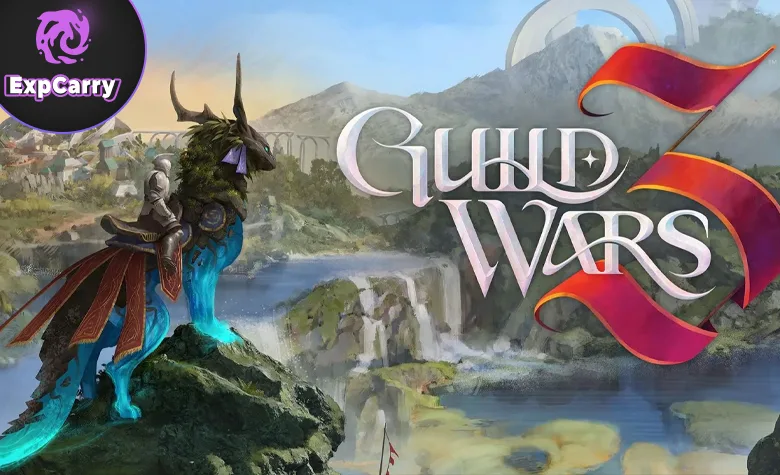
Guild Wars 3 is finally real. ArenaNet announced the next mainline entry in the Guild Wars franchise during Summer Game Fest 2026, moving the long-running MMO series toward a new era with a PC and PlayStation 5 release planned. The game does not have a final release date yet, but ArenaNet has opened newsletter and beta sign-ups, with beta opportunities scheduled to begin in Fall 2027.
The announcement matters because Guild Wars 3 is not being presented as a small sequel, expansion, or side project. ArenaNet calls it an action-adventure MMORPG and a modern evolution of the MMO. The current pitch focuses on action combat, character building, skill collection, free-form movement, solo play, group adventure, and a new setting in Orr more than a thousand years before the original Guild Wars.
The most important thing to understand right now is that Guild Wars 3 is still early. ArenaNet showed a reveal trailer with in-engine footage, opened official pages on Steam and PlayStation, described the world and core design goals, and gave the first beta window. It has not revealed a final launch date, subscription model, full class list, playable races, monetization structure, endgame systems, PvP modes, or expansion plan. So the real article is not "here is everything solved." It is "here is what ArenaNet has announced, what the reveal suggests, and what still has to be answered before players start building castles out of hope and forum posts."
Guild Wars 3 Release Date and Beta Window
Guild Wars 3 does not have a release date. The Steam page lists the release date as To be announced, and the PlayStation Store page says the release date will follow later. That means any exact launch date being shared online is not reliable unless ArenaNet announces it directly.
The clearest timing detail is the beta window. ArenaNet says beta opportunities will begin in Fall 2027. Players can sign up through the official Guild Wars 3 website by joining the newsletter and beta list. This does not mean every player who signs up will automatically receive access, only that ArenaNet is using the sign-up system to keep players updated and offer a chance to join future tests.
The safest expectation is that Guild Wars 3 will not launch before that beta phase begins. A Fall 2027 beta points to a game that is still some distance away from full release. ArenaNet has also said more information will arrive later, including details on the timeline, Orr, the Six Gods, and the capital city of Arah. That makes 2026 the reveal and information-building phase, while 2027 is when the game should begin moving toward broader hands-on testing.
Guild Wars 3 Platforms: PC and PlayStation 5
Guild Wars 3 is currently listed for PC and PlayStation 5. The official site includes wishlist links for Steam and PlayStation, while the Steam page lists ArenaNet as both developer and publisher. The PlayStation Store page also lists ArenaNet, LLC and describes the game as announced.
This is a major shift for the series. Guild Wars and Guild Wars 2 have been strongly associated with PC, while Guild Wars 3 is being presented from the start as a game built for both PC and PS5. ArenaNet says the combat system is designed to feel good with either a controller or mouse and keyboard. That matters because a modern MMO launching on console cannot simply drag a PC interface onto a controller and call it a day. Well, it can, but then players suffer and UI designers pretend not to hear the screaming.
There is no announced Xbox version, Nintendo version, or mobile version at this stage. The current platform focus is PC and PlayStation 5. Any broader platform claim should stay in the speculation bin, where it can sit quietly with every other unverified MMO rumor.
Guild Wars 3 Setting Takes Players to Orr Before the Original Game
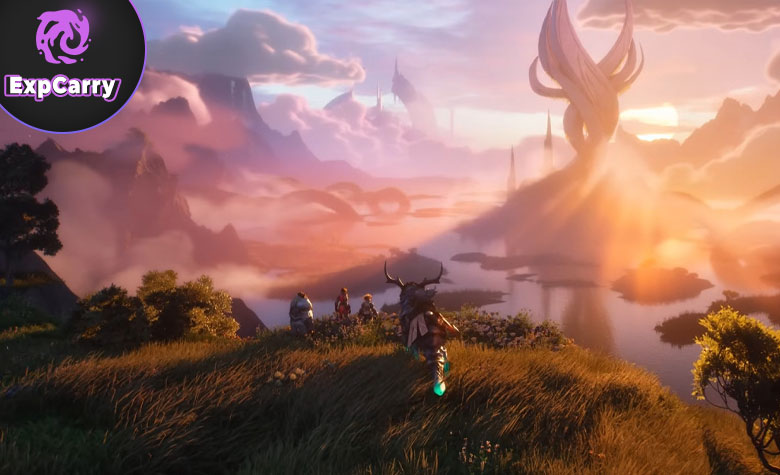
Guild Wars 3 is set in Orr more than a thousand years before the original Guild Wars. That makes it a prequel to the known Guild Wars timeline rather than a direct continuation of Guild Wars 2's current era. ArenaNet describes Orr as an enchanting frontier filled with mystery, magic, nature spirits, rival guilds, and untold stories.
This setting choice gives ArenaNet a strong base. Orr is one of the most important places in Guild Wars history, but the earlier time period lets the studio build a world that is familiar without being trapped by every later event. Longtime players get a major lore location with deep franchise meaning. New players get a frontier setting that does not require years of prior story knowledge before the first quest even begins.
The official setup centers on the Vaelwardens. Players become guardians of Orr, protecting the land, the people outside the walls of towns and cities, and the nature spirits who live there. Rival guilds are fighting for influence and control across Orr, creating a natural conflict structure for an MMO built around exploration, factions, community, and player adventure.
Orr Gives Guild Wars 3 a Strong Lore Hook Without Repeating Guild Wars 2
Orr carries real weight for Guild Wars veterans. It connects to the wider history of Tyria, the Six Gods, Arah, and some of the franchise's most important worldbuilding. Placing the story more than a thousand years before the original game gives ArenaNet room to show Orr before later catastrophe and myth hardened around it.
This avoids one obvious sequel problem. Guild Wars 3 does not need to keep escalating directly after Guild Wars 2 with an even bigger apocalypse, even louder gods, and even more cosmic bookkeeping. Instead, it can go backward and build a living version of a place players know mostly through history, ruins, and legend. That is cleaner than trying to make the next threat even more enormous until the universe itself files for fatigue.
Guild Wars 3 Gameplay Focuses on Action Combat, Builds, and Skill Collection
ArenaNet describes Guild Wars 3 as an action-adventure MMORPG that blends action combat, character building, and skill collection. This directly connects the new game to two major franchise identities: buildcrafting and active combat. Guild Wars has always been strongest when players feel that their skills, choices, and team setup matter more than simple gear numbers.
The official pitch says combat is built around strategic skill use, positioning, and movement, where action RPG combat meets Guild Wars build-making. ArenaNet also says movement can connect with combat through momentum, with speed and motion feeding into greater impact. That suggests Guild Wars 3 is not aiming for a traditional old-style tab-target MMO. It is trying to make combat more physical while keeping the series' focus on flexible builds and meaningful skill decisions.
The key unanswered question is how deep that build system really goes. ArenaNet has not revealed professions">professions, weapon rules, class structure, skill bar design, gear progression, roles, healing model, elite-style mechanics, or party composition details. The promise sounds strong, but the genre is littered with MMOs that promised action combat and then discovered that "responsive" is much easier to type than to build.
Guild Wars 3 Needs to Balance Action Combat With MMO Depth
The biggest gameplay challenge is balance. If Guild Wars 3 leans too far into action RPG combat, it could lose some of the tactical build identity that made the franchise distinct. If it leans too far into old MMO structure, it may feel dated next to newer online RPGs. ArenaNet is trying to sit between those two styles.
That is why the phrase "action RPG combat meets Guild Wars build-making" matters. The game needs to feel immediate while still allowing players to create clever builds. If ArenaNet gets that right, Guild Wars 3 could stand apart from both older tab-target MMOs and shallow action MMOs. If it gets it wrong, players will simply argue whether it failed as an MMO or as an action RPG, because naturally we must categorize the wreckage.
Guild Wars 3 Movement System Is One of the Biggest Revealed Features
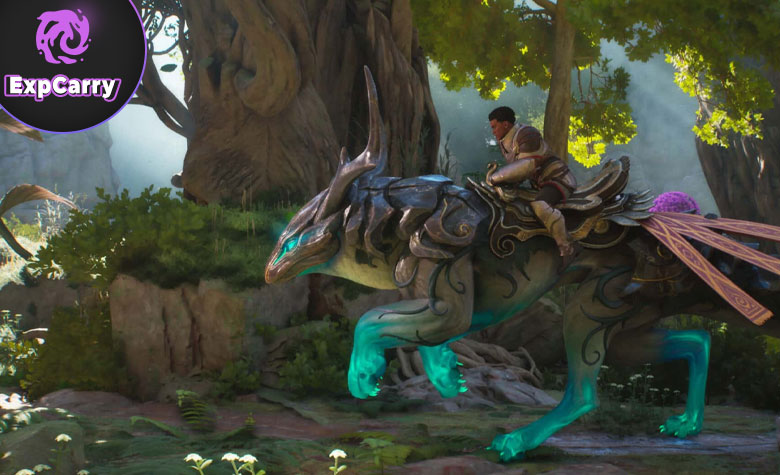
Movement was one of the clearest features shown and described in the Guild Wars 3 reveal. ArenaNet says players will glide, ride, leap, sprint, and wall-run across Orr. The Steam description also mentions running, sliding, leaping, and bounding across the world with a movement system that transfers momentum between travel modes.
This is not a minor detail. Movement has become one of the biggest ways modern online games separate themselves. Guild Wars 2 became famous partly because of its mounts, which were not just speed boosts but movement tools with different physics and terrain uses. Guild Wars 3 appears to be building movement into the foundation from the start.
The Seeker is especially important. ArenaNet describes it as a Vael spirit that serves as the player's mount and direct connection to the magic of Orr. That wording suggests mounts may be more integrated into the setting and player identity than simple collectible transport. It also gives the game a way to tie traversal, worldbuilding, and nature spirits together instead of making mounts feel like a shop category with legs.
Momentum-Based Travel Could Become Guild Wars 3's Signature System
The official wording around momentum transfer is the most interesting part of the movement pitch. If players can carry speed and direction between gliding, riding, wall-running, jumping, sliding, and other movement states, exploration could feel more fluid than in most MMOs. If that momentum also affects combat impact, traversal becomes more than a travel feature. It becomes part of how the game feels moment to moment.
This matters because MMO worlds are repeated spaces. Players cross them for quests, events, gathering, story, dungeons, and social activity. If moving through Orr feels good, the game gains long-term value every time players travel. If movement feels clumsy, the entire world suffers. Traversal is not decoration. It is the thing players do between almost everything else.
Guild Wars 3 Multiplayer, Solo Play, and Community Design
Guild Wars 3 is an MMORPG, so multiplayer is central to the game. The official description says players can play solo or form a band of adventurers, forging bonds with other players, NPCs, and nature spirits. This suggests ArenaNet wants the game to support solo exploration while still keeping group play, community, and shared online spaces important.
This fits the history of the franchise. Guild Wars has always appealed to players who like cooperative play but do not necessarily want an MMO that punishes them for playing alone. Guild Wars 2 also built a reputation around open-world cooperation without traditional friction like competing for every objective tag. Guild Wars 3 needs to preserve that strength if it wants to bring both veterans and new players into Orr.
ArenaNet has also said it wants Guild Wars 3 to respect players' time and investment while creating a positive space to build community and share stories. That is a statement of intent, but the real test will be systems: matchmaking, open-world events, guild tools, social incentives, progression pacing, PvP access, monetization, and how much daily or weekly pressure the game places on players.
Guild Wars 3 Subscription Model and Monetization
The Guild Wars 3 subscription model has not been announced. ArenaNet has not said whether the game will be buy-to-play, free-to-play, subscription-based, expansion-based, or something else. Anyone saying the model is locked in is either guessing or confusing franchise history with current information.
This matters because Guild Wars has a famous history with no required monthly subscription fee. The original Guild Wars sold itself around that model, and Guild Wars 2 also avoided a required monthly subscription while using box sales, expansions, and in-game purchases. But Guild Wars 3 is a new game, and ArenaNet has not said that it will follow the exact same pricing structure.
The Steam page currently lists in-game purchases as part of the game's interactive elements. That points to monetized in-game spending in some form, but it does not explain the full business model. It does not prove a subscription, and it does not prove the absence of one. The honest answer is simple: subscription model unknown, in-game purchases listed, final monetization not detailed.
| Topic | Known information | Why it matters | Main warning |
|---|---|---|---|
| Release date | No final release date announced | Players know the game is real but not close to launch | Any exact launch date is speculation |
| Beta | Beta opportunities begin in Fall 2027 | Gives players the first public timing window | Newsletter sign-up does not guarantee access |
| Platforms | PC and PlayStation 5 are listed through official wishlist pages | Marks the franchise's first full PC and console push from the start | No Xbox or Nintendo version announced |
| Setting | Orr more than a thousand years before the original Guild Wars | Lets ArenaNet use deep lore without forcing a direct sequel structure | Timeline details and story scope are still limited |
| Player role | Players become Vaelwardens, guardians of Orr and its spirits | Gives the game a clear faction and world identity | Playable races and profession systems are not revealed yet |
| Combat | Action combat mixed with Guild Wars build-making and skill use | Could modernize the series while keeping build depth | No full class, skill, weapon, or role breakdown yet |
| Movement | Gliding, riding, leaping, sprinting, wall-running, and momentum transfer | Traversal appears to be one of the game's main design pillars | The reveal is not enough to judge long-term feel |
| Monetization | Steam lists in-game purchases | Shows that some form of in-game spending exists | Subscription model and full pricing are not announced |
Guild Wars 3 Story and Lore Details Known So Far
The story details are still broad, but they are useful. Guild Wars 3 takes place in Orr before the original Guild Wars. Rival guilds are competing for influence and control across the frontier. Players join the Vaelwardens, who protect the land, its people, and the nature spirits that call Orr home.
ArenaNet has also said future information will cover Orr, the Six Gods, the capital city of Arah, and the timeline. This is important because Orr and Arah carry heavy franchise meaning. The Six Gods are central to the religious and mythological history of Tyria. A prequel setting gives ArenaNet room to show those elements before later events reshape how players remember them.
The story direction appears more focused on frontier exploration, natural magic, guild rivalry, and spiritual bonds than on immediately repeating the dragon-scale apocalyptic structure of Guild Wars 2. That is a good sign. A new MMO needs a strong world identity, not just a larger list of disasters. Video games already have enough cosmic emergencies. At some point even fictional continents deserve a normal week.
Guild Wars 3 Reveal Trailer and Summer Game Fest Reaction
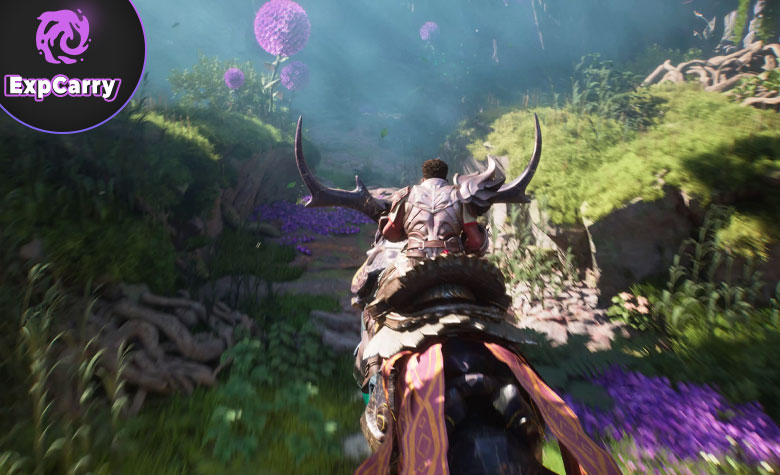
The Guild Wars 3 reveal at Summer Game Fest 2026 created a strong reaction because the announcement had been teased only a few days earlier. ArenaNet posted a cryptic Guild Wars teaser before the show, and PC Gamer noted that the studio did not shut down speculation when asked whether it was Guild Wars 3. That made the reveal feel like a community countdown rather than a random surprise.
The reveal trailer includes in-engine footage, but it does not provide a full gameplay breakdown. ArenaNet has shown the tone, setting, movement fantasy, and visual direction, while deeper systems such as professions, skill bars, combat roles, PvP, raids, economy, and endgame remain unseen. GamingBolt also pointed out that the trailer did not give players much direct system-level gameplay to judge, which is the key limitation of the reveal.
Early community reaction is excited but cautious. Many players are relieved that Guild Wars 3 is real. Others are already asking about playable races, professions, combat depth, monetization, whether Guild Wars 2 will continue, and how ArenaNet plans to avoid splitting its own community. That skepticism is healthy. MMO players have been promised revolutions before. Most of them turned into launch queues, monetization arguments, and patch notes with emotional damage.
Guild Wars 3 and Guild Wars 2: The Big Unanswered Question
One of the biggest questions is what Guild Wars 3 means for Guild Wars 2. ArenaNet has announced the sequel, but it has not fully explained how long Guild Wars 2 will continue, how the two games will coexist, whether any account legacy systems will exist, or whether rewards will carry over in any meaningful way.
This is a sensitive issue because MMOs are not normal sequels. Players invest years into characters, cosmetics, guilds, collections, achievements, story progress, mounts, housing, and social identity. A sequel can excite players, but it can also make them worry that their current game is being slowly moved into the museum.
ArenaNet will need to answer this carefully. The franchise has a long history with legacy systems, community loyalty, and account investment. If Guild Wars 3 respects that history while still giving new players a clean entry point, the transition can work. If communication is vague, the community will fill the silence with panic and seventeen-hour speculation videos. Nobody needs that, except maybe YouTube.
Guild Wars 3 Features Known and Still Missing
The reveal gives enough information to understand the broad direction, but not enough to judge the full game. ArenaNet has shown the setting, movement focus, platform plan, beta timing, core genre identity, and world concept. It has not revealed most of the systems that decide whether an MMO survives long-term.
The missing information is not small. Players still need to know professions, skills, races, PvP modes, world events, dungeons, raids, guild systems, economy, crafting, monetization, housing, endgame, group sizes, expansions, account linking, and whether the game will use megaservers or another world structure. The reveal is promising, but it is still the first page of the book, not the contract.
| Area | What ArenaNet has shown | Why players care | What is still unknown |
|---|---|---|---|
| World | Orr as a frontier setting before the original Guild Wars | Gives the sequel a strong lore foundation and fresh time period | World size, zones, cities, activities, and event structure |
| Traversal | Gliding, riding, sprinting, leaping, wall-running, momentum transfer | Could become the game's signature system | How it feels in real gameplay and how it affects combat |
| Combat | Action RPG combat mixed with Guild Wars build-making | Defines whether the game can stand apart from other MMOs | Professions, weapons, roles, healing, support, and skill bar structure |
| Story | Vaelwardens, rival guilds, nature spirits, Orr, Arah, and the Six Gods | Gives veterans deep lore and gives new players a fresh start | Main antagonist, campaign structure, player choices, and narrative format |
| Multiplayer | Solo play and bands of adventurers are both mentioned | Suggests ArenaNet wants flexible social play | Group sizes, open-world events, guild systems, raids, and PvP |
| Platforms | PC and PlayStation 5 | Expands the franchise beyond its PC roots | Xbox, cross-play, cross-progression, and controller UI details |
| Beta | Fall 2027 beta opportunities through newsletter sign-up | Gives the first practical hands-on window | Beta size, format, NDA rules, regions, and testing phases |
| Business model | Steam lists in-game purchases | Monetization will heavily shape player trust | Box price, free-to-play status, subscription, expansions, and cash shop rules |
Guild Wars 3 Subscription Model: Clear Answer Right Now
The current answer is simple: ArenaNet has not announced the Guild Wars 3 subscription model. The game may follow the franchise's no-required-subscription tradition, but that is not guaranteed for Guild Wars 3. The Steam page lists in-game purchases, which points to monetized in-game spending, but it does not explain whether the game is buy-to-play, free-to-play, subscription-based, expansion-based, or a hybrid model.
This is one of the most important questions ArenaNet needs to answer before beta. MMO business models shape progression pacing, cosmetic design, convenience systems, expansion cadence, player trust, and long-term community health. A game can promise to respect player time, but monetization is where that promise gets tested.
For now, the correct phrasing is not "Guild Wars 3 has no subscription." The correct phrasing is "Guild Wars 3 has no announced subscription model yet." Painfully precise, yes. But precision is better than confidently publishing nonsense and then pretending the update changed reality.
Guild Wars 3 Early Verdict
Guild Wars 3 has a strong reveal because it gives ArenaNet a clear pitch: a new MMO set in ancient Orr, built around action combat, Guild Wars build-making, skill collection, free-form movement, Vael spirits, and a beta path beginning in Fall 2027. That is enough to make the game one of the biggest MMO announcements of Summer Game Fest 2026.
The strongest part of the reveal is the setting and movement direction. Orr gives the game deep franchise value, while the movement system could become the main reason the world feels different from other MMOs. If ArenaNet can combine Guild Wars 2's mount legacy with a more fluid momentum system and meaningful combat impact, Guild Wars 3 could have one of the most interesting traversal systems in the genre.
The biggest weakness is the lack of concrete systems. There is no final release date, no monetization model, no profession list, no playable race breakdown, no full combat demo, no endgame reveal, and no PvP structure yet. That is not unusual for an early MMO announcement, but it means players should stay excited without pretending the game has already solved the genre.
Final Thoughts
Guild Wars 3 is real, and its reveal gives ArenaNet a strong foundation. The game is set in Orr more than a thousand years before the original Guild Wars, puts players in the role of Vaelwardens, and focuses on action combat, character building, skill collection, movement, solo play, and cooperative adventure. It is listed for PC and PlayStation 5, with beta opportunities beginning in Fall 2027.
The most exciting part is the direction. Guild Wars 3 is not simply promising a bigger version of Guild Wars 2. It is moving into a different era of Tyria, using Orr as a living frontier instead of a ruined historical symbol, and building movement into the center of the experience. That gives the sequel a clearer identity than a basic "same MMO, newer graphics" announcement.
The biggest unknown is the business model. ArenaNet has not said whether Guild Wars 3 will have a subscription, a box price, free-to-play access, paid expansions, or another structure. Steam lists in-game purchases, but that is not enough to define the full model. Players should wait for monetization details before assuming the game will copy the exact model of Guild Wars or Guild Wars 2.
For now, Guild Wars 3 looks like one of the most important MMO announcements of 2026. It has the setting, studio history, movement pitch, and franchise name to attract attention. Now ArenaNet has to do the harder part: show deeper gameplay, explain systems, answer monetization questions, and prove that this "modern evolution of the MMO" is more than a good trailer and a very patient fanbase.