



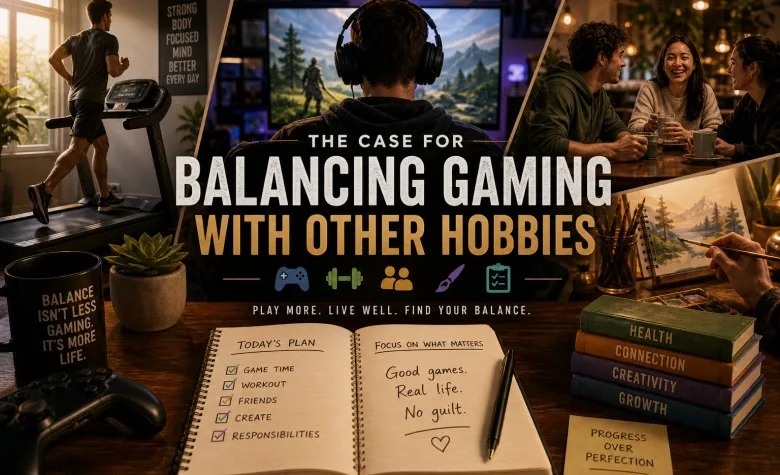
Gaming fits comfortably in a healthy entertainment routine when it shares the calendar rather than competing with every other interest. A great session can provide relaxation and a welcome focus, while other pastimes create opportunities for movement or face-to-face connection. The goal is variety built around real responsibilities, energy, and preferences, not a rigid formula that judges every hour of play.
A leisure budget can reflect that same intention. Setting aside a defined amount for games and digital entertainment, perhaps through an Amazon gift card online, leaves room for a class, supplies, or an outing without turning either choice into a sacrifice. Planning purchases also creates a natural pause to consider which new game genuinely fits the time available.
Two leisure approaches, compared
One approach gives gaming every spare moment, treating other interests as interruptions. The other keeps games as a regular pleasure but reserves time for interests that ask something different of the body or mind. The second approach does not treat gaming as a problem; it recognizes that varied leisure can meet varied needs.
Physical activities offer benefits seated entertainment cannot provide on its own. Walking, cycling, stretching, dancing, gardening, and strength work can contribute to weekly activity goals; adults gain substantial health benefits with 150 to 300 minutes of moderate-intensity aerobic activity per week, along with muscle-strengthening activity. Regular physical activity can improve sleep quality, support mood and brain health, and strengthen bones and muscles.
Social and creative hobbies add a separate counterweight. An in-person tabletop group, volunteering, reading, cooking, music, crafts, or photography can bring conversation, focused practice, or self-expression. Research links hobbies and leisure participation with well-being and social connection, though those associations do not prove that one hobby alone creates the outcome.
Building a routine around real life
The useful comparison is not between a good hobby and a bad one. It is between a routine that protects sleep, movement, relationships, and personal interests, and one that leaves these areas to chance. Start with an accessible activity that suits personal ability, schedule, and health needs, then place gaming in the open spaces that remain.
Players can buy digital games through official platform stores or digital marketplaces. Eneba is a digital marketplace for game keys, gift cards, and other digital products, with product pages that can show platform information and clear regional compatibility.
That information supports a planned purchase rather than an impulsive addition to an already full week. A player with a free evening may choose a game, while a busy period may call for reading, a walk, or a visit with friends. Neither choice needs to displace the other permanently.
Intentional variety sustains the routine
There is no scientifically correct split between gaming and other hobbies. Physical activity guidelines set a useful reference point, yet the shape of free time can change with work, family, energy, and access. Adults who sit less and add any amount of moderate- to vigorous-intensity physical activity may gain some health benefits, so a demanding new schedule is unnecessary.
The strongest routine is one that leaves space for the forms of enjoyment a person values while preserving room to move, connect, and create. Digital marketplaces like Eneba offer deals on digital products for planned purchases, but the larger benefit comes from placing games within a broader mix of interests. A broader mix of interests can remain adaptable as schedules and priorities change over time.