



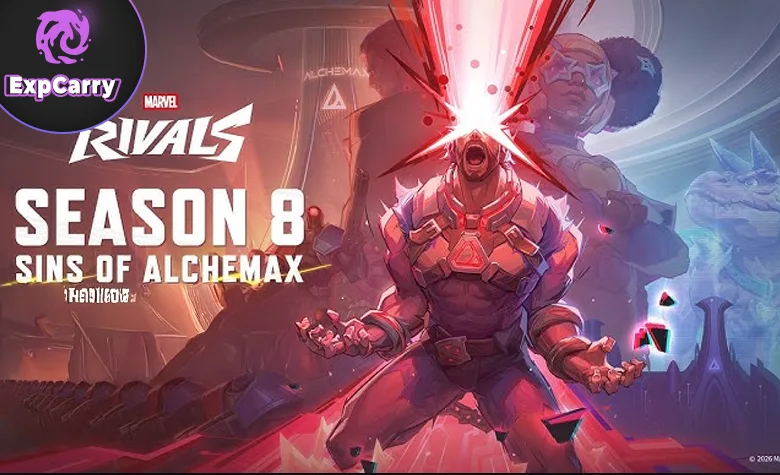
Overwatch spent years acting like its biggest enemy was its own balance sheet, its own legacy, and the terrifying possibility of changing too much at once. Then Marvel Rivals arrived, pulled huge attention into the hero shooter space, and pushed Blizzard into a position it had avoided for too long: respond boldly or look old in its own genre. That pressure is no longer just a fan theory. Overwatch GM and Blizzard SVP Walter Kong admitted that Marvel Rivals "scared us a bit" and pushed the team to become less risk-averse.
That quote matters because it says the quiet part out loud. Blizzard did not suddenly rediscover courage in a vacuum. The company saw another hero shooter build explosive momentum, watched players get excited about messy, loud, comic-book chaos, and understood that a conservative Overwatch would only make the contrast worse. That pressure lined up with one of the most aggressive Overwatch shake-ups in years: Perks, Stadium, Hero Bans, Map Voting, faster balance communication, and a willingness to change core systems that once felt locked behind glass.
Marvel Rivals Pressure Changed Overwatch's Risk Tolerance
Marvel Rivals did not invent competition for Overwatch, but it hit Blizzard in a way previous rivals rarely did. It was not just another shooter borrowing hero abilities. It arrived with recognizable Marvel characters, destructive team-fight spectacle, an easier emotional hook for new players, and enough launch energy to make Overwatch look slower by comparison. For a game that once defined the modern hero shooter, that is the kind of pressure that gets through even the thickest corporate comfort blanket.
Walter Kong's admission is important because Blizzard had spent years framing Overwatch changes as long-term internal planning, player feedback, and natural evolution. Those things were still part of the picture, and some of Overwatch's 2025 systems were clearly not invented overnight because a rival had a strong launch. But Marvel Rivals changed the emotional temperature inside the room. Kong said the success of Rivals made the team feel that staying conservative would expose Overwatch to competitive pressure. In plain English: Blizzard saw that playing safe could become more dangerous than taking risks.
That is the real story. Marvel Rivals did not force Blizzard to copy one feature or panic-paste superheroes into Overwatch. It forced a mindset shift. The Overwatch team had to accept that its old pace was no longer enough. A live-service game cannot coast on legacy while a new rival gets to be exciting, messy, generous with spectacle, and visibly hungry. Players may forgive a familiar game for aging, but they rarely forgive it for looking afraid.
Overwatch Perks and Stadium Became Blizzard's Bigger Swing
The clearest proof of Blizzard's new risk appetite is the 2025 Overwatch feature push. Perks changed core hero gameplay by giving players hero-specific upgrades during matches. Stadium became a permanent mode built around rounds, upgrades, third-person camera options, and buildcrafting. Hero Bans changed Competitive structure, while Map Voting gave players more influence over match flow. Taken together, these were not small balance patches. They were Blizzard admitting that Overwatch needed more than another season of skins, number tweaks, and inspirational blog wording.
Perks were especially risky because they touched the sacred part of Overwatch: hero identity. For years, the game's competitive identity depended on heroes having stable kits that players learned, mastered, and argued about until everyone involved needed sunlight. Perks disrupted that by letting heroes branch during a match. That adds flexibility and surprise, but it also risks readability, balance pressure, and competitive frustration. Blizzard knew that. The fact that it still shipped the system shows how much the team's tolerance for risk had changed.
Stadium pushed even harder. It was not just another arcade playlist. Blizzard called it a third pillar alongside Quick Play and Competitive, which is a huge statement for a game that has historically struggled to add major permanent modes without splitting attention or confusing the player base. Stadium's round structure, upgrades, and different perspective gave Overwatch a space where it could experiment more aggressively without breaking the standard match format every time. It was Blizzard building a laboratory inside the game, because apparently after nine years someone found the key to the room marked "try something weird."
| Overwatch change | Risk Blizzard accepted | Reason it matters |
|---|---|---|
| Perks | Changing hero kits during matches | Gives players more agency but creates harder balance and readability challenges |
| Stadium | Building a major permanent mode with upgrades and different rules | Lets Overwatch experiment beyond standard Quick Play and Competitive |
| Hero Bans | Letting players remove heroes from Competitive matches | Changes match strategy and directly affects hero availability |
| Map Voting | Giving players more control over match flow | Reduces frustration but exposes unpopular maps more clearly |
| Faster updates | Moving away from slower, safer iteration | Makes Overwatch feel more responsive in a more competitive market |
Blizzard's Old Conservative Overwatch Model Had Run Out of Cover
The reason Marvel Rivals mattered so much is that Overwatch already had a credibility problem. Overwatch 2 launched with huge expectations and then spent years fighting the shadow of its own promises. PvE disappointment, monetization backlash, slow evolution, role frustration, stale periods, and constant balance debates all chipped away at the idea that Blizzard had a clear, brave plan for the game. Even when Overwatch remained mechanically strong, it often felt more maintained than reimagined.
That is the weak point Marvel Rivals attacked without needing to say anything. Rivals looked like the hungry challenger. Overwatch looked like the veteran trying to defend a legacy while explaining why the next update would definitely make things better this time. That contrast is brutal in live-service gaming. Players do not only compare mechanics. They compare energy. They compare generosity. They compare how fast a game seems to react. They compare whether the developers appear excited or merely obligated.
Blizzard's new risk-taking can therefore be read as overdue self-preservation. Perks, Stadium, and Competitive changes were not just attempts to add content. They were attempts to change the perception of Overwatch from cautious and reactive to active and experimental. That matters because perception can become reality in a multiplayer game. If players believe a game is stagnant, every update is judged through that suspicion. If they believe it is evolving, even rough experiments get more room to breathe.
Marvel Rivals Did Not Kill Overwatch, It Made Complacency Expensive
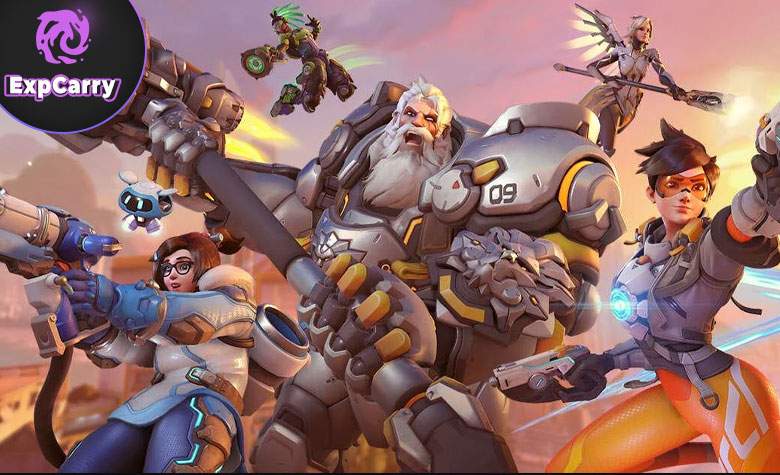
The lazy version of this story is "Marvel Rivals beat Overwatch." That is too simple and, more importantly, boring. Overwatch is still here, still has one of the strongest hero shooter foundations ever made, and still offers team-fight clarity, hero readability, and mechanical polish that Rivals does not automatically erase by being new and shiny. The more accurate point is that Marvel Rivals changed the cost of Blizzard's caution. Before Rivals, conservative updates could be frustrating. After Rivals, they looked dangerous.
Competition does not need to destroy an older game to matter. It only needs to make the older game prove itself again. Marvel Rivals gave players another place to get hero shooter chaos, recognizable characters, big ultimates, and team-based spectacle. That meant Overwatch could no longer assume that lapsed players would simply return out of habit. Habit is powerful, but novelty is louder, and live-service games have the attention span economy of a toddler holding a credit card.
That is why Kong's comment lands so strongly. It shows that Blizzard felt the threat internally. Not as a vague industry trend, not as a polite "competition is healthy" quote, but as something that changed the studio's willingness to take risks. The pressure was not only external. It became design pressure, production pressure, communication pressure, and roadmap pressure. Marvel Rivals made Overwatch move faster because standing still finally looked worse than making mistakes.
Overwatch's Faster Update Era Still Has to Prove It Can Last
The early response to Overwatch's bigger swings has been strong enough for Blizzard to frame the new era as a momentum shift, even if balance concerns remain. Official updates have emphasized that Perks, Stadium, and Hero Bans gave the game new energy. But the hard part is not launching one bold year. The hard part is sustaining it without turning the game into a pile of half-balanced experiments that exhaust players faster than the old stagnation did.
Perks need constant tuning. Stadium needs enough hero support, balance attention, rewards, and reasons to return. Competitive changes need careful handling because players will tolerate chaos in a fun side mode more easily than chaos in ranked. Faster updates sound great until every patch creates three new fires and one developer blog politely explains why the flames are part of the vision. Blizzard has chosen the harder path, and that is good, but it does not automatically mean the path works forever.
The best version of this new Overwatch era is one where Blizzard keeps experimenting while protecting the things that made the game strong: readable fights, distinct heroes, tight teamplay, and fast tactical decision-making. The worst version is one where the team chases Marvel Rivals' energy so hard that Overwatch loses its own discipline. Competition should push Overwatch to evolve, not make it cosplay as the game that scared it.
Final Thoughts
Blizzard's admission that Marvel Rivals scared the Overwatch team is more than a spicy interview quote. It is the cleanest explanation for why Overwatch suddenly became more willing to take bigger swings after years of cautious iteration. Marvel Rivals proved that the hero shooter market still had room for a loud challenger, and that forced Blizzard to confront the risk of doing too little. Perks, Stadium, Hero Bans, Map Voting, and faster updates all fit into that larger response.
This does not mean Overwatch is weak by default or that Marvel Rivals automatically owns the genre. It means Overwatch finally has a rival close enough in shape, audience, and spectacle to make comfort dangerous. That is healthy for players, even if it took Blizzard being rattled to get here. A scared Overwatch is apparently a more interesting Overwatch, which is depressing as a management lesson but useful as a content strategy.
The next test is consistency. Blizzard has shown it can react, experiment, and admit that competition changed the way it thinks. Now it has to prove that the new pace can survive beyond the initial shock. Marvel Rivals pushed Overwatch to stop playing safe, but pressure only opens the door. What Blizzard does after walking through it will decide whether this becomes a real comeback era or just another short burst of energy before the old caution creeps back in wearing a new skin.