




Online games are shutting down across 2026 because the live-service model has reached a harsher stage. Publishers are no longer keeping every multiplayer game alive just because it has a recognizable name, a loyal niche community, or years of old content. If a game cannot maintain enough players, justify server costs, support monetization, or fit a publisher's current strategy, it becomes a shutdown candidate. That is not speculation. It is visible in the closure list already hitting 2026.
Anthem went offline on January 12, 2026. The Sims Mobile shut down on January 20. Fortnite Ballistic and Fortnite Festival Battle Stage went offline on April 16. Battlefield Hardline will lose online support on PS4 and Xbox One on June 22. The Elder Scrolls: Blades will shut down on June 30. These games are different in genre, scale, platform, and audience, but the pattern is the same: online games need active communities and active business reasons to survive.
The biggest reason online games are being closed is not one single disaster. It is a mix of market saturation, weak retention, high operating costs, declining player counts, changing publisher priorities, monetization fatigue, licensing and platform issues, and the technical reality of online-only design. A live-service game is not finished after launch. It must keep paying for servers, support, moderation, updates, anti-cheat, infrastructure, events, community management, and platform operations. When the audience shrinks below a useful level, the business case collapses. Grim, but at least the spreadsheet is honest. Usually more honest than the marketing.
Online Games Shutting Down in 2026 Show the Live-Service Model Under Pressure
The wave of 2026 shutdowns shows that live-service games are no longer treated as automatic long-term bets. For years, publishers chased the dream of one game lasting forever through battle passes, cosmetics, seasons, limited-time events, ranked modes, mobile monetization, and constant updates. Some games made that model work. Fortnite, Warframe, Roblox, Genshin Impact, Destiny 2, Apex Legends, League of Legends, Valorant, Counter-Strike, Final Fantasy XIV, and World of Warcraft proved that online games can become long-running ecosystems instead of short launch-window products.
The problem is that not every game can become one of those giants. Players have limited time, limited money, and limited patience for another daily login loop. Every new online game is competing not only with new releases, but with years-old games that already have friends lists, cosmetics, ranked progress, creators, esports scenes, Discord servers, and social habits built around them. That makes it very hard for a struggling game to recover once the player base starts falling.
GDC's 2025 industry survey captured the tension clearly. Developers were divided on live-service games, with many pointing to market oversaturation, declining player interest, monetization concerns, microtransactions, burnout, and the difficulty of building a sustainable player base. That matters because the people making these games are also seeing the limits of the model from inside the industry.
| Game or mode | 2026 shutdown detail | Why it matters | Main warning |
|---|---|---|---|
| Anthem | Servers shut down on January 12, 2026 | Shows the risk of online-only games with no offline fallback | Once servers went offline, the game became unplayable |
| The Sims Mobile | Shut down on January 20, 2026 | Shows that even known IPs can lose mobile live-service support | Server-stored progress disappears when service ends |
| Fortnite Ballistic | Went offline on April 16, 2026 | Shows that even Fortnite modes can be cut if they fail to retain players | Being inside a massive platform does not guarantee survival |
| Fortnite Festival Battle Stage | Went offline on April 16, 2026 | Shows Epic narrowing support around modes with stronger engagement | Low retention can kill even polished side modes |
| Battlefield Hardline | PS4 and Xbox One online services will shut down on June 22, 2026 | Shows how older multiplayer games lose platform support over time | Single-player may survive, but multiplayer disappears |
| The Elder Scrolls: Blades | Will shut down on June 30, 2026 | Shows that mobile RPGs tied to online service can vanish completely | Purchased and saved content may become inaccessible |
Live-Service Games Close When Player Counts Drop Below a Useful Level
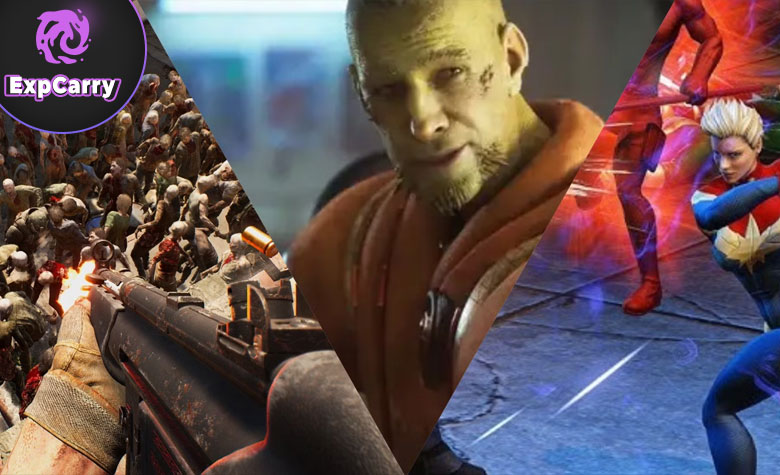
The most direct reason online games shut down is player count. Multiplayer games need enough people to fill matches, maintain queue times, balance skill levels, support ranked modes, populate regions, and keep the community active. When player numbers fall too low, the game stops functioning well even before the servers are formally shut off.
This is especially brutal for games built around matchmaking. A single-player game can still work with one player. A multiplayer game cannot. If there are not enough players in a region, queue times grow. If queue times grow, more players leave. If more players leave, match quality gets worse. That creates a loop where the game becomes less playable while it is technically still online.
Battlefield Hardline is a clean example of a platform-specific shutdown. EA is not shutting down every version of the game at once. The PS4 and Xbox One online services are scheduled to close on June 22, 2026, while the PC version remains online and the campaign remains playable. That distinction matters. Publishers often cut platforms, regions, or services where the active population no longer supports the cost and operational work.
Critical Mass Is the Hidden Lifeline of Multiplayer Games
Online games need critical mass. That means enough active players to keep the game viable under its intended design. A battle royale needs enough players to fill lobbies. A hero shooter needs enough players across roles. A ranked mode needs enough players across skill tiers. A co-op game needs enough players to keep matchmaking healthy. Without that base, the experience begins to decay.
This is why a game can still have passionate fans and still be shut down. A loyal small community is emotionally important, but it may not be operationally enough. Servers, support, platform compliance, security, matchmaking, and updates still cost money. If the active user base cannot justify that work, publishers often end the service.
Server Costs and Online-Only Design Make Shutdowns More Final
Server costs are another major reason online games close. A live-service game requires more than a launch build. It needs backend infrastructure, account systems, matchmaking, databases, cloud hosting, anti-cheat, customer support, maintenance, updates, and monitoring. Even if a game is not receiving major new content, keeping it online is not free.
Online-only design makes this worse for players. Anthem is the clearest case. EA shut down its servers on January 12, 2026, and because the game was built as an online-only title, players lost access to the whole game, not just multiplayer. Physical or digital ownership becomes meaningless when the executable depends on official servers that no longer exist.
The Sims Mobile and The Elder Scrolls: Blades show the same preservation problem in mobile form. When game progress is stored on servers and the game depends on online access, shutdown means more than ending updates. It can mean the disappearance of progress, purchases, characters, cosmetics, cities, collections, and years of personal play history. Nothing says "modern entertainment" like buying memories with an expiration date.
Game Preservation Becomes Harder When Games Need Official Servers
The preservation problem is now part of the shutdown debate. Older offline games can survive through discs, backups, emulation, re-releases, or DRM-free installers. Online-only games often cannot. Without official servers, login systems, matchmaking, databases, or private server support, the game may simply stop existing as a playable work.
This is why player frustration around shutdowns has grown. People are not only upset that updates end. They are upset that games they paid for, played for years, or built communities around can become inaccessible. Anthem's shutdown became a major example because it was a premium online-only game that could not be played after the server closure.
Market Oversaturation Is Crushing Smaller Live-Service Games
The live-service market is crowded because too many companies chased the same dream at the same time. Publishers wanted recurring revenue, seasonal spending, cosmetics, battle passes, long-term engagement, and community retention. The problem is that players cannot seriously commit to every live-service game at once.
A live-service game asks for time every week. It asks players to complete passes, chase limited events, unlock rewards, keep up with balance changes, play with friends, follow patch notes, and return for new seasons. That works when the player loves the game. It becomes exhausting when every game asks for the same attention.
GDC's survey data is important here because developers themselves cited oversaturation and declining player interest as major concerns around the model. The problem is not that live-service games never work. The problem is that only a limited number can dominate player time. Everyone else fights for leftovers.
Big Platforms Are Cutting Modes That Do Not Retain Enough Players
Fortnite is the best example of a live platform that still cuts content aggressively. Epic ended Fortnite Ballistic and Fortnite Festival Battle Stage on April 16, 2026. The company also began winding down Rocket Racing, with that mode and related creator-made content set to be phased out later in 2026. Epic's own explanation was blunt: it failed to build something strong enough to attract and retain a large player base.
That is the key lesson. Even inside Fortnite, one of the strongest live-service ecosystems in gaming, a mode still has to prove itself. Being attached to a massive platform gives a project reach, but it does not guarantee long-term support. If players do not stay, the mode becomes expendable.
Mobile Games Shut Down When Monetization and Retention Stop Working
Mobile games are especially vulnerable to shutdowns because many of them are built around server-stored progression, recurring events, ads, in-app purchases, daily retention, and live operations. If the revenue curve falls and the active base shrinks, publishers often decide that keeping the game alive no longer makes sense.
The Sims Mobile and The Elder Scrolls: Blades show that even recognizable brands are not immune. The Sims and The Elder Scrolls are not obscure names. They are major franchises. But a mobile live-service spin-off still has to justify its continued operation. Brand recognition can help launch a game, but it does not guarantee long-term retention.
Mobile shutdowns are especially painful because many players invest in progress over years. They decorate homes, build characters, collect items, complete events, and spend money on currencies or cosmetics. When servers close, that entire history can vanish. The game was not really a product sitting on a shelf. It was a rented service wearing the costume of a game.
Industry Layoffs and Restructuring Make Shutdowns More Likely
The broader games industry downturn also feeds the shutdown wave. Studios and publishers have spent the last several years cutting costs, cancelling projects, closing teams, and reorganizing around fewer priorities. When companies reduce staff and narrow strategy, older or weaker live-service projects become easier targets.
GDC's 2026 industry survey made the pressure harder to ignore, with a significant share of developers reporting layoffs across the previous two years and the previous 12 months. That matters because live-service games require people to maintain them. Designers, engineers, QA, server teams, community managers, producers, artists, analysts, anti-cheat specialists, support teams, and monetization teams all keep the machine running.
When a publisher is restructuring, the question becomes harsh: does this game still deserve people, infrastructure, marketing, and roadmap space? If the answer is no, shutdown becomes more likely. Nobody wants to put that sentence in a cheerful blog post, so they write "sunsetting" and hope the word sounds less like a guillotine.
Player Fatigue Is Changing the Value of Live-Service Games
Player fatigue is another major cause. Many players are tired of daily quests, battle passes, FOMO events, rotating shops, premium currencies, ranked resets, limited-time modes, and games that demand constant attention. The model can still work, but it works best when the game is good enough to earn that attention.
This is why weak or mid-tier live-service games now struggle harder. In the early boom, players were more willing to try new online ecosystems. In 2026, many players already have their main games. They may play Fortnite, Call of Duty, Roblox, Genshin Impact, Warframe, Final Fantasy XIV, World of Warcraft, League of Legends, Valorant, Counter-Strike, or another long-running title. Convincing them to add one more recurring game is difficult.
That makes retention more important than launch hype. A game can launch with strong interest and still die if it cannot keep players after the first month. Trailers bring attention. Retention keeps servers alive. The industry keeps relearning this, presumably because memory is not monetizable enough.
Online Game Shutdowns in 2026 Are Not All the Same
It is important not to treat every 2026 shutdown as the same kind of failure. Some games are old and have naturally shrinking player bases. Some are mobile titles that lost monetization momentum. Some are modes inside larger platforms that failed to retain players. Some are online-only games whose original design made preservation difficult. Some are being cut because publishers are shifting resources elsewhere.
Anthem is the example of a major online-only game becoming unplayable after servers shut down. Battlefield Hardline is an older multiplayer title losing console online support while single-player and PC access remain separate cases. Fortnite Ballistic and Fortnite Festival Battle Stage were modes inside a much larger ecosystem that did not retain enough players. The Elder Scrolls: Blades is a mobile RPG reaching the end of its live-service life.
These differences matter because the solution is not the same for every game. Some need offline modes. Some need private server support. Some need smaller sustainable budgets. Some should never have been live-service games in the first place. A shocking idea, yes: not every design problem needs a battle pass stapled to it.
Online Game Shutdowns Create a Trust Problem for Players
The more online games close, the more players question whether it is worth investing in new live-service titles. Time is the real cost. Players spend months or years building accounts, unlocking cosmetics, learning systems, joining guilds, ranking up, and forming communities. When a shutdown happens, that investment can disappear.
This creates a trust problem for publishers. Players may become less willing to spend money on games that could vanish. They may avoid niche multiplayer games because they fear short life spans. They may demand offline modes, private servers, refunds, or preservation plans. The Stop Killing Games movement and similar campaigns exist because players increasingly see shutdowns as a consumer rights and preservation issue, not just normal business.
That debate became more concrete in 2026. The Crew shutdown continued to shape the discussion around digital ownership, while consumer groups and preservation advocates pushed for stronger protections. In California, the Protect Our Games Act passed the State Assembly and moved the issue from player frustration into formal legislation. The idea is simple enough to embarrass the industry: if a company sells an online-supported game, it should explain what happens when support ends and offer some path that does not simply erase the product.
Publishers can reduce the damage by being transparent, giving long notice, ending monetization early, offering offline support where possible, preserving single-player modes, enabling private servers, or compensating players fairly. Some companies do parts of this. Many do not. The industry loves recurring revenue, but hates recurring responsibility. Funny how that works.
Why Online Games Keep Closing in 2026
The short answer is that online games close when the service no longer works as a business or as a playable ecosystem. Low player counts make matchmaking worse. Worse matchmaking pushes players away. Smaller communities reduce revenue. Lower revenue makes updates harder to justify. Fewer updates reduce interest. Eventually, the publisher decides that the remaining audience is not enough to support the cost.
The long answer is more complicated. The live-service market is saturated, players are tired, development costs are high, infrastructure costs continue, mobile monetization is unstable, older games lose platform support, publishers are restructuring, and online-only design makes closure final. No single factor explains every shutdown, but together they explain the 2026 pattern.
The most important lesson is that live-service games need more than launch hype. They need a sustainable audience, a clear identity, fair monetization, regular content, good onboarding, strong retention, and technical support. If any of those fail badly enough, shutdown becomes a matter of time.
Final Thoughts
Online games are being shut down in 2026 because the live-service market has become too crowded, too expensive, and too dependent on long-term retention. Games like Anthem, The Sims Mobile, The Elder Scrolls: Blades, Battlefield Hardline, Fortnite Ballistic, and Fortnite Festival Battle Stage show different sides of the same problem: online games do not survive on brand recognition alone.
The biggest cause is sustainability. A live-service game must keep enough players, earn enough revenue, justify server costs, support ongoing updates, and remain strategically useful to its publisher. When that balance fails, even a game with fans can be shut down. Passionate communities matter, but they do not always pay for infrastructure, support, moderation, anti-cheat, updates, and platform work.
The harsher issue is preservation. When an online-only game shuts down, players can lose access to the entire product. Anthem is the clearest warning from 2026: once the servers went offline, the game was no longer playable. Mobile games with server-stored progress create the same problem in another form. Purchases, saves, collections, and years of play can disappear with a server switch.
The 2026 shutdown wave does not mean every online game is doomed. It means the live-service model is becoming less forgiving. Successful games will keep thriving, but weaker projects, aging titles, failed modes, and unsustainable mobile spin-offs are being cut faster. Players should treat every new online-only game with caution: if the developer cannot explain how the game will survive, preserve progress, or remain playable after support ends, then the real endgame may already be scheduled.