
The Project Ascension lawsuit is not only another legal strike against a World of Warcraft private server. Blizzard filed the case on June 12, 2026 in the U.S. District Court for the Central District of California, with the public docket listing copyright infringement as the cause of action. Reporting on the complaint describes broader allegations around unauthorized use of World of Warcraft material, monetization, server operation, business entities, and efforts to profit from Blizzard's intellectual property. Those claims are allegations in an active case, not final court findings. But the larger genre question is harder to dismiss: why did a large audience spend years chasing unofficial versions of WoW that offered classless gameplay, custom progression, altered raids, Mythic+ style Vanilla dungeons, High Risk PvP, and alternative Classic+ rulesets? The Project Ascension lawsuit is not only another legal strike against a World of Warcraft private server. Blizzard filed the case on June 12, 2026 in the U.S. District Court for the Central District of California, with the public docket listing copyright infringement as the cause of action. Reporting on the complaint describes broader allegations around unauthorized use of World of Warcraft material, monetization, server operation, business entities, and efforts to profit from Blizzard's intellectual property. Those claims are allegations in an active case, not final court findings. For readers following WoW Classic, the larger genre question is harder to dismiss: why did a large audience spend years chasing unofficial versions of WoW that offered classless gameplay, custom progression, altered raids, Mythic+ style Vanilla dungeons, High Risk PvP, and alternative Classic+ rulesets?
That question is why the lawsuit keeps the Classic+ discussion alive. Project Ascension did not become relevant by offering a museum copy of 2004 World of Warcraft. It became relevant because it treated old Azeroth as a design platform. It asked what would happen if classes were not fixed, if talents and abilities became a build draft, if Vanilla dungeons received modern difficulty layers, if raids scaled through multiple formats, if open-world PvP carried real gear risk, and if Classic could be expanded without following Blizzard's official expansion timeline. Whether those ideas were balanced, legal, or sustainable is a separate issue. The demand behind them is real. That question is why the lawsuit keeps the Classic+ discussion alive. Project Ascension did not become relevant by offering a museum copy of 2004 World of Warcraft. It became relevant because it treated old Azeroth as a design platform. It asked what would happen if classes were not fixed, if talents and abilities became a build draft, if Vanilla dungeons received modern difficulty layers, if raids scaled through multiple formats, if open-world PvP carried real gear risk, and if Classic could be expanded without following Blizzard's official expansion timeline. Professions are another part of that design space, because players often want systems that matter beyond leveling. Whether those ideas were balanced, legal, or sustainable is a separate issue. The demand behind them is real.
Project Ascension Became a Classic+ Lab Before Blizzard Defined Classic+
Project Ascension's strongest design identity is classless WoW. Instead of choosing Mage, Rogue, Warrior, Shaman, or another fixed class at character creation, players build a hero by mixing abilities, talents, archetypes, and custom progression choices. That changes the center of progression. In normal WoW, a class defines the player's toolkit, fantasy, role options, cooldowns, and long-term identity. In Ascension's model, ability choice becomes the identity. The player is not only leveling a character. The player is testing a build theory inside Azeroth.
That is exactly the kind of design space Classic+ players often talk about, even if they do not always ask for a fully classless game. The repeated demand is for old Azeroth to become flexible again. Players want unused class fantasies, new specs, hybrid roles, stronger profession identity, altered dungeon routes, unfinished zones, custom raids, and systems that make Vanilla feel alive without turning it into retail WoW. Project Ascension pushed that idea aggressively. It did not wait for Blizzard to define what Classic+ could be. It built its own answer, then let players test whether the answer had an audience.
The result was not a clean blueprint Blizzard could copy. It was messy, unofficial, monetized, and legally exposed. But as a genre signal, it mattered. Private servers like Ascension and Turtle WoW functioned as demand tests for design ideas Blizzard would normally treat as risky. A studio has to think about subscriptions, brand control, legal exposure, production cost, balance debt, and long-term support. A private server can move faster because it is not carrying the same corporate responsibility. That freedom is legally dangerous, but creatively important. It lets unofficial teams test versions of WoW that official WoW can only approach slowly.
Classless Gameplay Shows the Gap Between Class Fantasy and Player Agency
The classless model is the most useful part of the Ascension conversation because it exposes a long-running tension in WoW. Strong classes give World of Warcraft its identity. A Priest, Warrior, Druid, or Warlock should feel distinct. But fixed classes also limit experimentation, especially in Classic, where many specs and hybrid fantasies were incomplete, weak, or dependent on later expansion design. Ascension attacked that limitation directly by letting players build combinations that official WoW would never permit.
That does not mean Blizzard should make official Classic+ classless. It probably should not. A fully classless official WoW would create enormous balance problems, damage part of the game's class identity, and make raids, PvP, loot tables, talents, and encounter tuning harder to maintain. The lesson is narrower. Players keep returning to classless systems because they want more agency inside old WoW. They want to make strange builds work. They want a melee Hunter, a holy damage dealer, a tank Shaman, a support hybrid, a spellblade, a necromantic caster, or a spec that uses old abilities in a new role. Ascension's appeal came from that desire, not only from being free.
The Lawsuit Is About IP, but the Debate Is About Missing Design Space
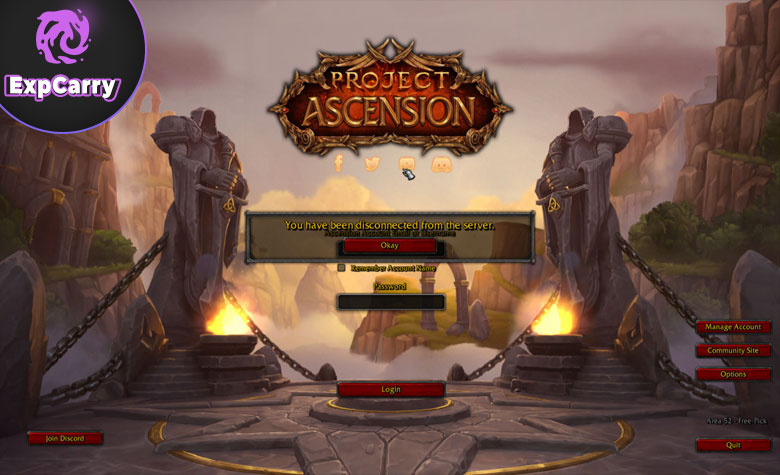
Blizzard's legal position is straightforward. World of Warcraft is Blizzard's intellectual property, and unauthorized servers using its client, assets, trademarks, systems, and player-facing identity are exposed to copyright and trademark claims. The Project Ascension case appears more severe because Blizzard's complaint, according to public reporting, alleges more than a small fan project. It points to monetization, donation systems, business structures, and large-scale operation. From Blizzard's side, the argument is not about whether players enjoyed Ascension. The argument is that, according to the complaint, an unauthorized business was built on Blizzard's game.
That legal reality should not be softened. A private server with a cash shop, paid access, account systems, launcher distribution, or donation currency is not the same thing as a harmless offline mod. Even players who like the design ideas can recognize why Blizzard would not tolerate a large unauthorized server turning WoW into a competing product. The company also has a broader incentive to avoid selective enforcement. If Blizzard ignores one large project because fans like it, every other server can point at that silence.
But that still leaves the player-side question. If Project Ascension and similar servers gained large communities, they did so because official WoW was not giving those players the specific version of Azeroth they wanted. Some wanted Classic with new content. Some wanted Vanilla with modern encounter design. Some wanted class fantasy expanded beyond fixed 2004 roles. Some wanted difficulty scaling, high-risk PvP, flexible raid sizes, new loot logic, or a more experimental seasonal model. The legal answer can pressure or shut down the server. It does not automatically answer the demand that made the server popular.
Rogue Servers Became a Warning Signal for Official WoW
Rogue servers are a problem for Blizzard, but they are also a form of market research Blizzard does not have to fund. Nostalrius became one of the clearest demand signals for official legacy WoW before WoW Classic became real. Turtle WoW suggested interest in Vanilla-style custom zones, races, and classes. Project Ascension showed demand for classless buildcraft, custom progression, and expanded PvE difficulty inside an old Azeroth framework. None of these projects are legal substitutes for official development, but each one shows a different absence in the official product.
This is why the private-server crackdown creates so much Classic+ speculation. When Blizzard takes legal action against major unofficial Classic-adjacent projects while community speculation around the future of WoW Classic is already rising, players naturally connect the dots. Recent discussion around the mysterious World of Warcraft Camelot branch has only intensified that mood, even though Blizzard has not officially announced Classic+. The lawsuit does not prove Blizzard is preparing official Classic+. It also does not prove Blizzard is copying private-server ideas. It only shows that the timing lands in a community already waiting for Blizzard to do something more ambitious with Classic than another expansion cycle.
Custom Raids, Mythic+ Vanilla, and High Risk PvP Explain the Demand
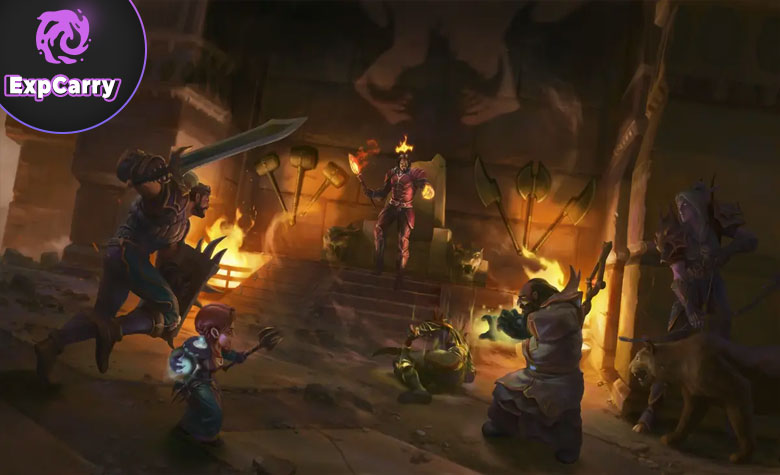
The clearest way to understand Project Ascension's relevance is to look at the features players could not get from official Classic. Ascension promoted difficulty layers for dungeons and raids, including Mythic+ Vanilla dungeons, Flex raids, Heroic raids, and Ascended raids. It also pushed High Risk PvP, where players could enter dangerous open-world environments with the possibility of losing gear. These are not small cosmetic twists. They are structural changes to how Classic-style WoW can be played.
Classic WoW has powerful atmosphere, slower pacing, dangerous leveling, social grouping, strong world identity, and memorable dungeon routes. Its weakness is that the endgame can become solved. Boss strategies, class rankings, optimal consumables, gold routes, raid compositions, and leveling paths are already documented in extreme detail. A private server can disturb that solved state by changing class rules, encounter difficulty, loot incentives, and world risk. That makes old zones feel less static without needing a completely new continent.
This is the core Classic+ argument. Players are not only asking for preservation. They are asking for controlled mutation. They want Deadmines, Scarlet Monastery, Blackrock Depths, Molten Core, Stranglethorn Vale, and Eastern Plaguelands to matter again, but not only as museum exhibits. They want the old world to produce new decisions. Ascension's model was legally vulnerable, but its feature list shows what part of the audience keeps trying to find: Classic structure with new problems to solve.
| Private-Server Idea | Why Players Notice It | Official Classic+ Risk |
| Classless gameplay | Lets players create builds outside fixed class rules | Can damage class identity and create severe balance problems |
| Custom raids | Makes old Azeroth feel unsolved again | Requires new encounter design without breaking Vanilla tone |
| Mythic+ Vanilla dungeons | Adds repeatable endgame to old dungeon routes | Can make Classic feel too close to retail if overdesigned |
| High Risk PvP | Gives the open world real stakes and player-driven tension | Can create griefing, economy abuse, and player retention issues |
| Expanded Classic+ zones | Uses old Azeroth as a platform for new exploration | Needs careful lore and art direction to avoid feeling unofficial |
| New class fantasies | Fills gaps left by incomplete Vanilla specs and hybrid roles | Can turn Classic+ into a balance-heavy class redesign project |
Explore services related to this guide, selected from our WoW Classic catalog.
View All WoW Classic Services


Classic+ Cannot Just Be Legal Ascension
The easiest mistake is to say Blizzard should simply take the best private-server ideas and make them official. That ignores why unofficial projects can be so extreme. A private server can accept imbalance, sharp edges, unstable economies, aggressive monetization, uneven difficulty, and frequent design resets because its expectations are different. Official WoW cannot operate that way. Blizzard has to support millions of accounts, maintain customer service, protect the economy, localize content, pass platform and legal checks, manage accessibility, and avoid destroying the value of existing Classic Era and progression realms.
That means official Classic+ would need a more conservative design philosophy than Project Ascension. Blizzard could take inspiration from the demand without copying the systems. Instead of classless gameplay, Blizzard could expand weak specs and add missing role support. Instead of full Mythic+ retail logic, it could add harder dungeon variants with Classic pacing. Instead of High Risk PvP everywhere, it could create specific opt-in zones or events. Instead of massive custom class lists, it could restore unfinished class fantasies through talents, quests, runes, or carefully limited gear effects.
The lesson from Ascension is not that every private-server feature belongs in official WoW. The lesson is that old Azeroth still has unused design pressure. Players are willing to replay Classic, but the most engaged part of the audience also wants surprise, danger, build experimentation, and a reason to talk about the world again. Blizzard's challenge is to capture that energy without importing the legal, balance, and monetization problems that made private servers such a volatile model.
Blizzard's Crackdown Raises Expectations, Even Without an Announcement
The legal pressure around Project Ascension, Turtle WoW, and other private servers changes the mood around Classic+. It tells players Blizzard is paying attention to unofficial Classic-adjacent projects. That does not mean an official reveal is guaranteed. It does mean any future Classic announcement will now be judged against the ideas those servers made visible. If Blizzard only offers another nostalgia loop, part of the audience will ask why the private-server space had more ambition. If Blizzard goes too far, another part of the audience will say Classic lost its identity.
This is the narrow path for official Classic+. It has to be more than fresh realms, but less than retail in old zones. It has to create new reasons to play without erasing what made Vanilla different. It has to give players new builds without making class identity meaningless. It has to add dungeon and raid depth without turning every activity into a modern seasonal checklist. Project Ascension showed one extreme version of that appetite. Blizzard now has to decide whether official Classic can answer it in a controlled, legal, and sustainable way.
Final thoughts
The Project Ascension lawsuit matters because it sits at the collision point between law and design. Legally, Blizzard has every reason to protect World of Warcraft from large unauthorized servers, especially ones it accuses of monetizing access, using copyrighted material, and operating at serious scale. That part of the story is not hard to understand. A company cannot let a parallel WoW business grow around its own IP and then pretend nothing happened.
The Classic+ debate survives because the lawsuit does not erase the design signal. Project Ascension, Turtle WoW, and other rogue servers became popular because they offered something official WoW did not: old Azeroth treated as a live design laboratory. Classless builds, custom raids, Mythic+ Vanilla dungeons, High Risk PvP, expanded Classic+ zones, and new class fantasies all point to the same unmet desire. Players do not only want to preserve Classic. A large part of the audience wants Classic to continue in a direction that feels new without becoming retail.
That is the uncomfortable lesson for Blizzard. Legal action against unauthorized servers may be necessary from an IP perspective, but it also raises the pressure on official WoW Classic. If Blizzard wants the Classic+ conversation to move out of private servers, it has to offer a version of old Azeroth that gives players new problems to solve, new builds to test, and new reasons to return. Project Ascension may now be a legal target, but the demand it exposed is still alive.