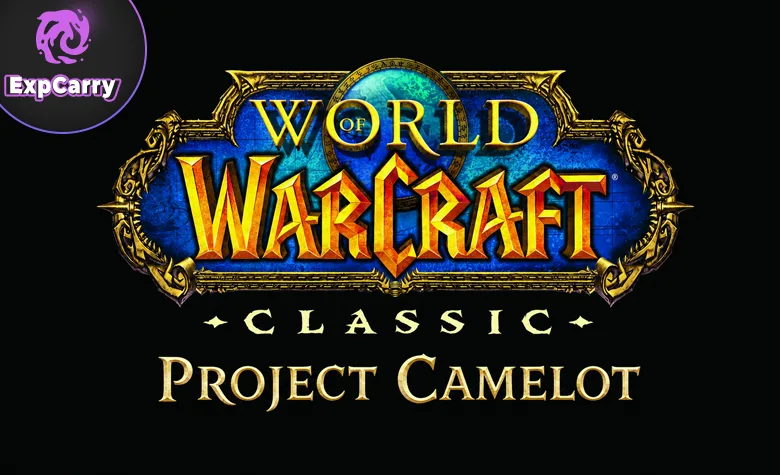
On June 16, 2026, dataminer Stiven posted on Twitter that he had found Heroic and Epic license entries for something called "World of Warcraft Camelot" inside Blizzard's internal servers. Not a mod, not a fan project, not a placeholder for a seasonal refresh. An actual internal product entry with two commercial purchase tiers, sitting on a branch completely separate from the retail client. Within hours the WoW Classic community had connected it to the mysterious patch 1.60 build quietly sitting on Blizzard's CDN since October 2025, and the years-long demand for Classic+ suddenly had its most credible evidence to date. Within hours the WoW Classic community had connected it to the mysterious patch 1.60 build quietly sitting on Blizzard's CDN since October 2025, and the years-long demand for Classic+ suddenly had its most credible evidence to date. For players following the broader scene, WoW Classic remains the main hub for this kind of news.
The WoW Camelot Datamine: What Stiven Found
Stiven confirmed his find directly on Twitter: "Ok, I did look more and can confirm it 100%. Patch 1.60 is Mainline Camelot." That is a dataminer reading Blizzard's own server files, not community speculation. The Heroic and Epic license entries he found match the exact two-tier edition structure Blizzard applies to retail expansion launches: the same format used for bundles that come with cosmetics, mounts, early access, and a real purchase price. The internal server branch is listed as classic_alpha, build 1.60.0.67985. That combination explicitly ties the project to a Classic alpha environment, not retail code, not a backend label for Midnight or any current expansion. Community trackers had already logged at least 29 distinct encrypted builds for this 1.60 branch on Blizzard's CDN going back to October 2025, which makes a one-off test environment explanation impossible to sustain. Wowhead, which first reported the find, confirmed the branch is tied to the 2005 Blackwing Lair client build rather than any modern retail code.
Patch 1.60 is not a random number. It corresponds to the Blackwing Lair content patch from 2005, the raid that became part of WoW history through the viral Leeroy Jenkins video. Vanilla WoW's live patch timeline officially ended at 1.12 before The Burning Crusade shipped. A 1.60 designation on a Classic alpha branch signals either a very deliberate naming choice or a codebase that has moved substantially beyond what retail WoW Classic ever covered. Classic Era is currently on version 1.15. The gap between 1.15 and 1.60 is not a minor iteration.
Heroic and Epic Editions: What the Camelot Edition Structure Signals
Seasonal modes do not get Epic bundles. Internal alpha experiments do not get Heroic editions with tiered commercial pricing. When Blizzard builds a product with two purchase tiers on a separate client branch, it is being packaged for a real product launch. Icy Veins noted that the bundle structure could mean new cosmetics tied to a Camelot release, potentially alongside existing products like Midnight or Mists of Pandaria Classic. The broader read, consistent across Wowhead, mmos.com, and PCGamer, is that two commercial purchase tiers on a Classic alpha branch is the structural fingerprint of a standalone product, not a seasonal rotation. Threads on r/classicwow have already opened debate about monetization: whether Camelot will price like an expansion, require a separate subscription, or fold into existing WoW accounts. The datamine does not answer those questions, but the edition structure is a concrete indicator that Blizzard is treating this as something customers buy, not something that appears and disappears on a seasonal cadence.
Blizzard's Classic Teases Before BlizzCon 2026
The Camelot datamine did not arrive without context. Blizzard spent roughly eight months dropping signals that something was coming for Classic without specifying what it was. The Blizzard Yearbook contained vague Classic references that read as isolated curiosities at the time. Josh "Aggrend" Greenfield, the lead developer on WoW Classic, posted on Twitter about being "really excited for players to see what other awesome stuff the Classic team is working on in due time." Content creators were flown to Blizzard's campus under strict NDAs weeks before the datamine surfaced, with no public disclosure of what they saw or discussed. Icy Veins also flagged the "Classic Titan Reforged" servers in China as additional context for the broader Classic infrastructure expansion Blizzard has been running in parallel.
The most prominent tease came on January 29, 2026, during the State of Azeroth presentation. Executive Producer Holly Longdale began mid-sentence with "I'm really excited to announce that..." before a staged cutoff ended the segment. Her response on stream: "I guess we'll save that for later." Blizzard confirmed afterward that the cutoff was intentional. The same State of Azeroth stream explicitly pointed players toward BlizzCon 2026, stating that more information about Classic's future would come "after The Black Temple, at BlizzCon 2026." Holly Longdale separately described Classic's potential as "limitless." BlizzCon 2026 is scheduled for September 12, 2026. The Pandaria Classic roadmap ends at BlizzCon. There is a deliberate content gap in Classic's post-BlizzCon schedule, consistent with Blizzard reserving the slot for an announcement rather than a standard progression reveal.
| Date | Event |
|---|---|
| October 2025 | Patch 1.60 build (1.60.0.67985) first appears on Blizzard's CDN on the classic_alpha branch. Community trackers begin logging encrypted builds. At least 29 distinct builds recorded over the following months. |
| January 29, 2026 | Holly Longdale is cut off mid-sentence during the State of Azeroth presentation. The stream explicitly points to BlizzCon 2026 as the reveal window for Classic's next chapter. |
| Spring 2026 | Content creators visit Blizzard campus under NDA. Josh "Aggrend" Greenfield tweets about the Classic team's unannounced work. Classic Titan Reforged servers active in China. |
| May 14, 2026 | Turtle WoW officially shuts down following a copyright ruling in Blizzard's favor filed in September 2025. Blizzard moves against Everlook, Epoch, and Project Ascension in the same period. |
| June 16, 2026 | Dataminer Stiven finds Heroic and Epic license entries for "World of Warcraft Camelot" and confirms on Twitter that Patch 1.60 is Mainline Camelot. |
| September 12, 2026 | BlizzCon 2026 - the stated reveal window for Classic's next chapter. Blizzard has not confirmed Project Camelot will appear. |
Project Camelot and the Classic+ Theories
Four competing theories have formed. The dominant reading across Wowhead, mmos.com, PCGamer, and the r/classicwow community is that Camelot is Classic+: a version of WoW that branches off from the Vanilla 1.0 codebase and grows with new original content instead of replaying the historical expansion sequence. The model most cited is Old School RuneScape, which Jagex separated from the main game in 2013 and has operated as a fully independent live product ever since, with its own raids, zones, and development track. Classic+ on those terms would mean new level-60 zones, additional raids that the original game never shipped, class tuning the 2004-2006 patches skipped, and endgame progression that does not route players into The Burning Crusade. Season of Discovery demonstrated that a large audience exists for remixed Classic content with experimental systems. The structural question was always whether Blizzard would invest in it as a permanent product rather than a rotating seasonal experiment, and the Camelot edition structure argues that they are.
The second theory is an evolved Season of Discovery: deeper systems, more rune content, new encounters, but still operating as a seasonal mode on existing Classic infrastructure. The issue with this theory is the commercial packaging. Seasonal modes do not receive Heroic and Epic bundles with tiered pricing. Blizzard's own pricing history is inconsistent with applying that structure to something temporary. The third theory positions Camelot as a standalone Classic product sold independently, similar to Diablo II Resurrected: a clean-launch game on the 1.0 codebase with its own economy, subscription tier, and development team. The edition labels are compatible with this reading. The fourth possibility, which the community largely sidelines but which Boostmatch and others have noted as technically real, is that the datamine points to a project that gets cancelled before anyone outside Blizzard ever plays it. Internal projects get cut. Datamined license entries are not shipping products. Blizzard has not confirmed any of these theories.
Classic+ Zones, Shen'dorei, and Unfinished Vanilla Content
If Project Camelot is Classic+, the original WoW build from 2004-2006 contains a meaningful amount of content that was never completed or shipped to live servers. The fully explorable, non-instanced version of Mount Hyjal exists in those files. Azshara Crater, designed as a large outdoor PvP battleground, was never finished before the game moved into The Burning Crusade development cycle. Timbermaw Hold has map geometry indicating a more developed zone than what shipped. A Blizzard Classic+ team would have direct access to these assets and a legitimate reason to revisit them as foundation material for new zones. Community speculation reported by SSEGold also includes the possibility of alternate tier sets at level 60, revised spec viability for underperforming classes, and additional crafting professions. None of this is confirmed.
Alongside the Camelot licenses, Stiven surfaced a secondary datamine referencing a Shen'dorei race. As noted by Warcraft Tavern, Stiven himself expressed uncertainty about whether this connects to Camelot, to a retail feature, or to neither. Community analysis has tied the "Shen" prefix to Shen'dralar, the Highborne faction known in WoW lore as "Those Who Remain Hidden," fueling speculation about a new playable race in a Classic+ launch. It could equally belong to a retail feature tied to the Skyborne datamine from patch 12.0.5. The TBD NPC Race 1 and TBD NPC Race 2 entries found alongside the Shen'dorei reference have also been read as Horde and Alliance placeholders for a new race, though that connection is speculative. Blizzard has not confirmed the Shen'dorei name or its relation to any announced or unannounced product.
Explore services related to this guide, selected from our WoW Classic catalog.
View All WoW Classic Services


WoW Classic Private Server Crackdown: The Camelot Context
Running parallel to the datamine, Blizzard executed its most aggressive legal campaign against Classic-style private servers in the game's history. Turtle WoW, one of the largest and longest-running Classic Plus private servers, officially shut down on May 14, 2026, following a copyright lawsuit Blizzard filed in September 2025 and won in court. Turtle WoW had built its identity specifically around expanding Vanilla WoW with new content inside the original design philosophy: custom quests, new zones, additional raids, no level cap increase, no system modernization that would make the game feel retail. It operated for nearly a decade and had established itself as a proof-of-concept for the type of organic, lore-consistent Classic Plus content the community had been asking Blizzard to make officially. The legal settlement forced a complete shutdown, stripping the website and all active realms.
Before the Turtle WoW ruling, Blizzard had already secured shutdowns of Everlook and Epoch. A separate lawsuit targeting Project Ascension followed in the same period. The historical parallel that the community has pointed to is direct. In 2016, Blizzard shut down Nostalrius, the largest vanilla preservation private server, shortly before officially announcing WoW Classic at BlizzCon. Nostalrius demonstrated demand for a vanilla product. Blizzard cleared it legally and then launched their own version. As mmos.com reported, Classic progression realms are also currently approaching Warlords of Draenor, the expansion that originally drove the demand for legacy servers and eventually produced official WoW Classic in 2019. The private server crackdown, the progression timeline, and the Camelot datamine all land inside the same six-month window. The pattern is consistent with a company clearing the market before entering it with a competing official product.
Final Thoughts
The evidence stack around Project Camelot is not a rumor and it is not community wishful thinking. There are 29 logged encrypted builds on a Classic alpha branch active since October 2025. There are Heroic and Epic edition licenses with the same commercial structure Blizzard uses for real product launches. There is a staged Holly Longdale cutoff on a livestream pointing players to BlizzCon 2026. There is a deliberate gap in the post-BlizzCon Classic content schedule. There is a legal campaign that shut down the largest Classic Plus private server in the same months this alpha branch was being developed. Blizzard has confirmed none of it, but they have constructed a situation where BlizzCon 2026 on September 12 is the only plausible resolution point. Either Project Camelot becomes an announcement there, or it remains the most documented and commercially packaged datamine that never shipped. Those are the two real outcomes at this point.