




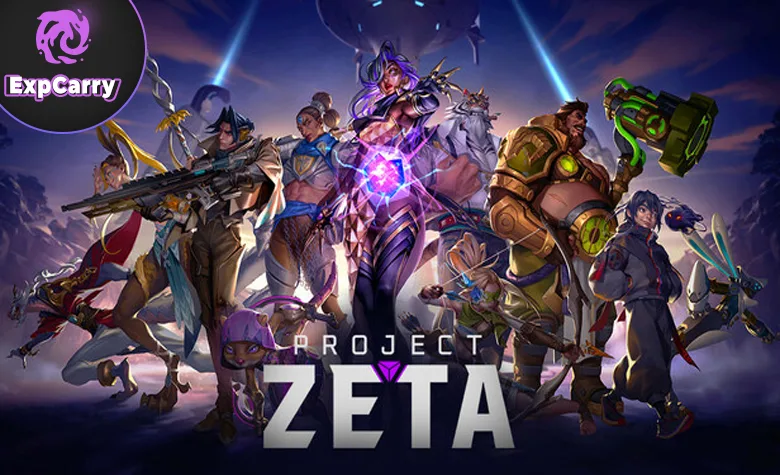
Krafton has opened registration for the first global test of Project ZETA, a multi-team tactical arena built by NIRVANANA Studio. The test runs from June 25 to June 28, bringing together players from North America, Europe, and South Korea on a single Steam build. Unlike a typical hero shooter or MOBA, Project ZETA puts four teams of three players on the same battlefield at once, all fighting over a single objective called the Prism.
The format has been through several closed tests in Korea, China, North America, and Europe since 2025, with Krafton using an open development approach to shape hero balance, controller support, and match pacing ahead of a planned Early Access launch later this year. This overview covers the core concept, the heroes and combat system, the Aran Plateau setting, the testing history leading up to the June playtest, the release plans, and the system requirements published for the current build.
Krafton Project ZETA Concept and Multi-Team Format
Project ZETA is described by Krafton as a Multi-team Tactical Arena, a genre label the publisher uses specifically because the game does not fit the usual two-team structure found in most competitive shooters or MOBAs. In the current build, four teams of three players, twelve people in total, compete at the same time on one shared map rather than facing off in isolated lanes or rounds. Earlier closed beta tests in late 2025 ran with five teams of three instead, so the team count has already been adjusted once based on player feedback before reaching the June global test.
Every match revolves around the Prism, an object that teams must secure and carry back to a designated point to win. Because four squads are chasing the same objective at once, fights rarely stay one on one, and a team that looks safe one moment can be caught between two rivals the next. Krafton has also built in multiple dynamic objectives around the map, so teams can choose between a patient, defensive approach or an aggressive push for an early Prism capture.
Project ZETA Heroes, Classes and Combat

Combat plays out from a third person perspective, with each hero built around a kit of unique abilities rather than a generic shooter loadout. The June global test includes 14 heroes split across four classes: Fighter, Marksman, Assassin, and Mage. The roster has grown steadily through testing, with recent additions including a twin gun Assassin named Yufei Shen and a possessed Mage represented by the pair Yul and Sun-Ha.
Krafton frames the moment to moment fighting around combos and multikills, giving skilled play a clear payoff during the three way and four way clashes that the multi-team format produces. The game also blends PvE progression with PvP combat on the same battlefield, so players are not only fighting other squads but also working through environment based systems while a match is in progress. Full controller support is included in the current test build, which lines up with Krafton's stated plan for PC and console crossplay once the game reaches Early Access.
Aran Plateau and the Zeta Dimension Setting
Matches take place on a map called the Aran Plateau, a stylized sci-fi arena built specifically around the multi-team Prism fights rather than reused from another Krafton title. The wider fiction is built around something the developers call the Zeta Dimension, a space said to hold all the information that makes up the universe.
According to the official lore, humanity built an artificial intelligence known as Infinity Improving Intelligence, or I3, to observe and manage that dimension, then leaned on humanoid units powered by the same intelligence until those humanoids began replacing people across nearly every domain. A short but brutal war followed, and humanity won it, but lost the ability to interact with the Zeta Dimension once the humanoids stopped functioning. That backstory mostly sits in the background during matches, giving the heroes and the Aran Plateau a consistent tone without turning the test build into a story heavy experience.
Project ZETA Testing History and Global Playtest Schedule
Project ZETA has already been through multiple rounds of testing before reaching this global stage. Closed Beta Test 2 opened to North America and Europe across two separate weekends with six hour play windows each day, while a December 2025 Closed Beta Test 3 ran under strict NDA over two more weekends and introduced two new heroes alongside a simplified Prism scoring system. Korea also received a separate run of weekly tests on four Fridays in May 2026 ahead of the global rollout.
The first global community test runs from June 25 to June 28 and is open to players in North America, Europe, and South Korea at the same time, a step up from the earlier region locked tests. Daily play windows are staggered by region, with Europe running from 6 PM to 9 PM CEST, North America from 5 PM to 8 PM PDT, and Asia from 8 PM to 11 PM KST. Krafton has not placed an NDA on this test, so participants are free to share footage and feedback publicly during the four day window.
How to Join the Project ZETA Global Test
Access is requested directly through the Project ZETA Steam store page, and registration grants automatic entry once the test window opens, with no separate key drawing involved. Players only need a Steam account and a PC that meets the published minimum specifications listed below, since the global test is currently limited to PC even though console support and crossplay are planned for later.
Project ZETA Release Plans and Platforms
Krafton and NIRVANANA Studio are targeting a global Early Access launch in the second half of 2026, starting on PC through Steam before console versions follow. Crossplay between PC and console has been confirmed as a goal from the start, which is part of why controller input is already being tested alongside the core match experience during the June playtest rather than being left for a later update.
Pricing and monetization have not been announced for Project ZETA. Krafton has also disclosed that AI generated content is used in some areas of development, including animation, sound, character design, and visual effects, but the publisher states that all final art assets are reviewed and completed by human designers before reaching players.
Project ZETA System Requirements
Krafton has published minimum specifications for the current test build, covering the hardware needed to run Project ZETA on PC. No recommended tier has been published yet, so the table below reflects only the confirmed minimum requirements.
| Component | Minimum Requirement |
| Processor | Intel Core i5-12400F |
| Memory | 16 GB RAM |
| Graphics Card | NVIDIA GeForce RTX 3060 |
| Storage | 9 GB available space |
Project ZETA Final Thoughts
Project ZETA is one of the clearest signs that Krafton is not treating PUBG as its only long term bet, betting instead on a genre built specifically around chaos between more than two sides rather than refining an existing battle royale or shooter formula. The jump from five teams to four, the steady growth of the hero roster, and the move from region locked tests to a single global window all point to a studio still actively reshaping the core format rather than polishing a finished design.
The real test for Project ZETA will be whether four team fights stay readable and skill based once thousands of new players join at once, since multi-team formats are historically harder to balance than simple two side matchups. With Early Access targeted for later this year and no pricing model announced yet, the June global test is less a victory lap and more a working checkpoint on a format Krafton is still actively defining.