



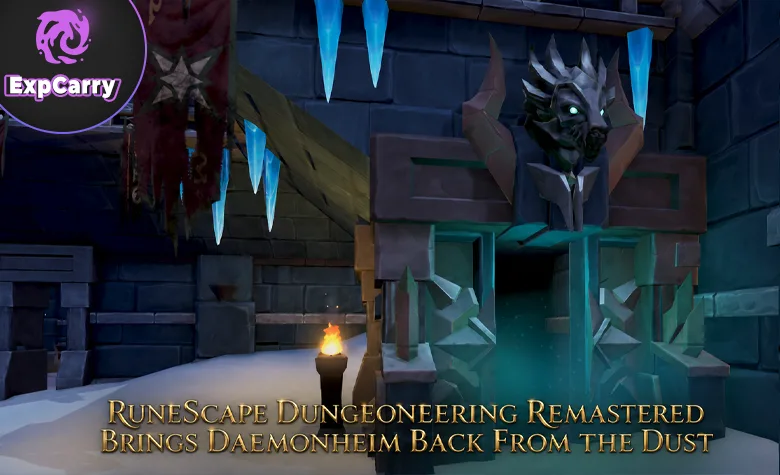
RuneScape Dungeoneering Remastered is Jagex's attempt to make Daemonheim feel like active RuneScape content again instead of an old system players route around for tokens. The update launches on May 11, 2026, and modernizes Dungeoneering without replacing its core identity. Players still descend into Daemonheim, clear floors, solve puzzles, fight bosses, gather resources, craft gear, manage binds, and push deeper through one of RuneScape's strangest skill-based activities.
The remaster changes the parts that made Dungeoneering harder to return to: floor XP, token gains, Prestige, binds, rewards, puzzles, bosses, visuals, and combat support. Necromancy is being integrated into Daemonheim, new Ruinous T90 weapons are being added, and several old friction points are being cut down. This is not a tiny balance pass where one number changes and everyone is expected to clap. It is a broad cleanup of a major skill that has needed one for years.
RuneScape Dungeoneering Remastered Release Date and Main Changes
RuneScape Dungeoneering Remastered launches on May 11, 2026. The main release covers the core Daemonheim update, while speedrunning support arrives later on May 18. Jagex is separating speedrunning from the first week so early runners do not gain an unfair advantage before the team validates how completion thresholds change after the remaster goes live.
The main changes include rebalanced floor XP, massively increased Dungeoneering token gains, the removal of the old Prestige system, new floor buffs, Necromancy integration, Ruinous T90 weapons, Smuggler's Storage, expanded binds, and quality-of-life improvements across floors, puzzles, and bosses.
| Feature | RuneScape Dungeoneering Remastered change | Why it matters |
|---|---|---|
| Launch date | May 11, 2026 | Main remaster release for Daemonheim |
| Speedrunning | Arrives May 18, 2026 | Gives Jagex time to validate new completion thresholds |
| Floor XP | Rebalanced across floors | Makes more of Daemonheim feel worth running |
| Dungeoneering tokens | Massively increased token gains | Gives players stronger reason to train through core Dungeoneering |
| Prestige | Old Prestige system replaced | Removes one of Dungeoneering's most confusing systems |
| Necromancy | Full integration inside Daemonheim | Adds Necromancy gear, rituals, and Ring of Kinship classes |
| Rewards | New Ruinous T90 weapons with Warpbane effects | Adds new chase rewards to the remaster |
| Binds | Smuggler's Storage and expanded binds | Makes loadout management less restrictive |
| QoL | Improvements across floors, puzzles, bosses, visuals, and audio | Reduces old friction without turning Dungeoneering into a different skill |
Daemonheim Needed a RuneScape Dungeoneering Remaster for Years
Dungeoneering originally stood out because it was not a normal RuneScape skill. It mixed dungeon crawling, skilling, combat, puzzles, crafting, resource management, and floor progression into one self-contained activity. That identity made it memorable, but it also made the skill age badly once its systems started falling behind the rest of the game.
The problem was not that Daemonheim had no identity. The problem was that its identity became buried under friction. Newer players had to understand floor selection, Prestige, binds, roles, tokens, bosses, puzzle logic, dungeon size, party scaling, and reward value before the activity started making sense. Veterans could still find the rhythm, but many players simply trained Dungeoneering elsewhere or treated Daemonheim as old content they had to tolerate.
RuneScape Dungeoneering Remastered matters because it does not try to turn Daemonheim into a generic combat instance. It keeps the dungeon structure, but makes the rewards clearer, the progression less punishing, and the activity easier to repeat. That is the right target. Dungeoneering needed modernization, not an identity transplant.
RuneScape Dungeoneering XP and Token Gains Move Back Into Daemonheim
One of the biggest goals of Dungeoneering Remastered is making Daemonheim worth playing again for Dungeoneering XP and tokens. Jagex is rebalancing floor XP and massively increasing token gains, which directly addresses one of the skill's long-running problems: players often had stronger incentives to chase tokens outside core Dungeoneering than to run floors.
This change matters because rewards decide player behavior. If Daemonheim gives weak token returns, players will farm better methods elsewhere. If Daemonheim becomes a strong way to train the skill and earn tokens, the activity has a reason to live again. Somehow, "players go where the rewards are" still has to be rediscovered by MMO design every few years, but at least it is being applied here.
The token changes should help newer, returning, and mid-level players most. If reward shop prices feel disconnected from the old activity's token rates, the skill becomes less satisfying to train. Better token gains give players a clearer path to useful upgrades while actually playing Dungeoneering.
Prestige Is Gone and RuneScape Dungeoneering Gets Floor Buffs Instead
The old Prestige system was one of Dungeoneering's biggest explanation problems. It affected efficiency heavily, but it was unintuitive and punishing if players did not follow it properly. RuneScape Dungeoneering Remastered removes the current Prestige system and replaces it with an end-of-floor buff system. Floor XP will no longer be penalized by Prestige in the old way.
The new system rewards players for completing unique floors by giving buffs. These can include XP boosts, resource boosts, token boosts, damage reduction, and similar bonuses. Buffs stack as players complete floors, then reset automatically once the player has completed the maximum number of floors currently available to them.
This is cleaner because it turns a hidden punishment structure into visible progression. Old Prestige often felt like a rulebook waiting for players to make a mistake. The new floor buff setup should be easier to understand during normal play, especially for returning players who do not want to relearn ancient efficiency logic before opening a dungeon door.
| Old Dungeoneering issue | Dungeoneering Remastered answer |
|---|---|
| Prestige was unintuitive | Prestige is replaced with a clearer floor buff system |
| Players could be punished for inefficient floor order | Floor XP no longer uses the same punitive Prestige penalty |
| Unique floor completion felt like bookkeeping | Unique floors now contribute to stacking buffs |
| Returning players had to relearn old logic | Buffs make the system easier to understand during normal play |
| Daemonheim felt less rewarding than external methods | XP and token changes push value back into core Dungeoneering |
Necromancy Comes to RuneScape Dungeoneering Remastered
Full Necromancy integration is one of the most important additions in RuneScape Dungeoneering Remastered. The update adds Necromancy gear, rituals, and Ring of Kinship classes for Dungeoneering, which means players will not have to leave one of RuneScape's major modern combat styles at the door when entering Daemonheim.
This matters because Dungeoneering is not just combat. It combines combat, skilling, crafting, resources, dungeon progression, and role choices. Necromancy needs to fit into that full loop, not just appear as another damage option. If the gear, rituals, and Ring of Kinship support feel natural, Daemonheim becomes much more consistent with current RuneScape combat.
The change is especially useful for players who built their combat setup around Necromancy. Forcing them back into older styles inside Dungeoneering would make the remaster feel dated immediately. Adding proper Necromancy support is obvious, but old systems have a charming habit of missing obvious things until players complain for years.
Ruinous T90 Weapons Give Dungeoneering Remastered Real Chase Rewards
RuneScape Dungeoneering Remastered adds new Ruinous T90 weapons with Warpbane effects. This gives the update a reward hook beyond cleaner XP curves and better interface logic. Systems matter, but players still need items worth chasing. New high-tier weapons tied to Daemonheim give the remaster a stronger reason to pull players back into the activity.
The Warpbane effects are important because they connect the weapons to Dungeoneering thematically and mechanically. They do not sound like generic stat sticks dropped into the reward shop because the patch needed a shiny object. Dungeoneering rewards work best when they feel like part of Daemonheim's strange self-contained ecosystem.
These weapons will be one of the main things to watch after launch. If they feel desirable without being too narrow, they can help keep players running floors after the first wave of curiosity fades. If they are too niche, the remaster still improves the skill, but its long-term reward pull becomes weaker.
Smuggler's Storage and Expanded Binds Reduce Daemonheim Friction
Smuggler's Storage and expanded binds target one of Dungeoneering's practical pain points: loadout management. The old bind system had identity, but it could feel restrictive and awkward. Dungeoneering Remastered improves this by adding a small Dungeoneering bank accessed through the Smuggler and expanding bind options.
The point is not to let players hoard everything forever. The goal is to make floor preparation less annoying and give players more stable setups between runs. This matters even more with Necromancy and new gear entering the system, because loadout pressure would only get worse if the bind structure stayed too narrow.
This kind of quality-of-life change may not sound as exciting as T90 weapons, but it can affect how often players repeat the activity. If setup feels miserable, players avoid the content. If setup feels smooth, they run another floor. MMO design occasionally becomes simple when everyone stops pretending it is alchemy.
RuneScape Dungeoneering Remastered Updates Floors, Puzzles, Bosses, and Visuals
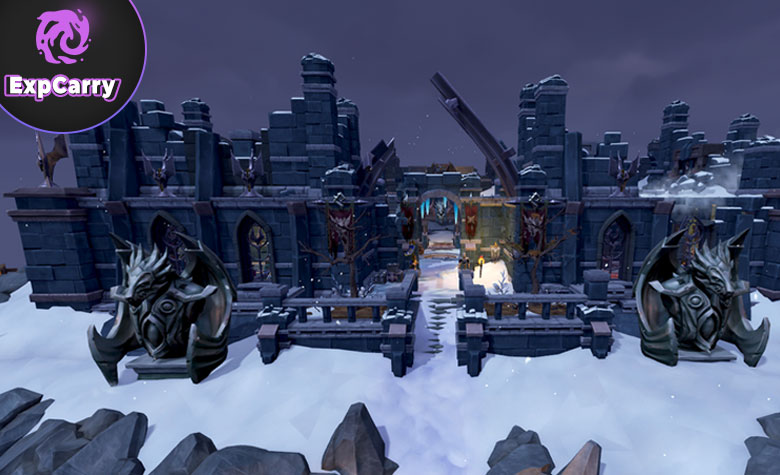
Dungeoneering Remastered includes quality-of-life improvements across floors, puzzles, and bosses. Jagex is also updating lighting, visual effects, and audio to make Daemonheim feel closer to current RuneScape standards. Visuals are not the core of the remaster, but they help Daemonheim feel less detached from the rest of the game.
The puzzle and boss improvements may matter more than the presentation. Dungeoneering lives or dies on pacing. If puzzles interrupt flow too harshly, bosses feel dated, or floors drag without meaningful decisions, the skill becomes a chore. Better pacing gives the core dungeon loop a better chance to work without players feeling trapped in old mechanical residue. Beautiful phrase, ugly experience.
RuneScape Dungeoneering Speedrunning Arrives After the Main Remaster
Speedrunning support is scheduled for May 18, one week after the main RuneScape Dungeoneering Remastered release. Jagex is delaying this part because the remaster changes floor pacing, XP, systems, and completion expectations. Launching speedrunning immediately could give early players an unfair advantage if thresholds or timings are not properly validated.
This is a sensible choice. Dungeoneering speedrunning depends on consistency, routing, floor knowledge, mechanical execution, and fair comparison. If the activity changes heavily on May 11, the speedrunning layer needs time to settle before leaderboards become meaningful.
The May 18 follow-up is also expected to include environment updates to Dungeoneering Sagas and other Daemonheim-related content, along with improvements to Elite Dungeoneering outfit fragment gathering. That makes the second update more than a timer switch.
RuneScape Dungeoneering Remastered Does Not Nerf Every External Token Source
One important detail is that Jagex considered reducing or removing token rewards from Elite dungeons-service">dungeons-services">Dungeons and Archaeology collections, but decided not to do that. Instead, the team is focusing on improving token gains inside core Dungeoneering. That is the cleaner approach: make Daemonheim better instead of making every alternative worse.
This matters for trust. Players usually respond better when an old activity is improved rather than when existing methods are nerfed to force engagement. If Daemonheim becomes a better source of Dungeoneering tokens because it is smoother and more rewarding, players can return naturally. If alternatives were simply gutted, the remaster would feel less like modernization and more like a hostage negotiation with extra doors.
Keeping external methods intact also avoids punishing players who already built routines around Elite Dungeons or Archaeology. RuneScape is full of long-term habits and layered progression, so changing too much at once can create backlash. Raising Daemonheim's value is the smarter move.
RuneScape Dungeoneering Remastered Changes Players Should Watch First
The first thing players should watch is whether Daemonheim feels better to repeat. XP and token numbers matter, but pacing matters just as much. If floors move better, rewards arrive at a healthier rate, and the new buff system is easy to understand, the remaster succeeds at the activity level.
The second thing to watch is Necromancy integration. Gear, rituals, and Ring of Kinship classes need to feel natural inside Daemonheim. If Necromancy feels tacked on, players will notice quickly. If it works cleanly, Dungeoneering becomes much more consistent with modern RuneScape combat.
The third thing to watch is the reward economy. Ruinous T90 weapons, token gains, reward shop pricing, and upkeep items will shape long-term behavior. If the rewards are desirable and token gains feel fair, players will keep returning. If the rewards are too niche or the economy gets adjusted too harshly later, launch goodwill can disappear fast.
RuneScape Dungeoneering Remastered Final Thoughts
RuneScape Dungeoneering Remastered is important because it treats Daemonheim as a system worth repairing, not a relic to quietly route around. Dungeoneering has always had one of RuneScape's strongest concepts: a skill built around dungeon runs, resources, puzzles, combat, teamwork, and progression inside a self-contained space. The idea was never the weak part. The weak part was letting that idea age until many players preferred earning its rewards elsewhere.
The remaster's strongest design choice is that it improves core Dungeoneering without burning down every alternative token method around it. Better XP, higher token gains, clearer floor progression, Necromancy support, expanded binds, and new Ruinous T90 weapons give Daemonheim a real chance to feel useful again without turning the update into a forced march through nostalgia.
The real test will come after launch week. Players will try Dungeoneering Remastered because it is new. They will stay only if floors feel better, rewards feel worth chasing, Necromancy works cleanly, and the new buff system replaces Prestige without creating another pile of confusion. If that lands, Daemonheim stops being the place players remember fondly but avoid practically. It becomes a reason to train Dungeoneering through Dungeoneering. Wild concept. Might even work.