




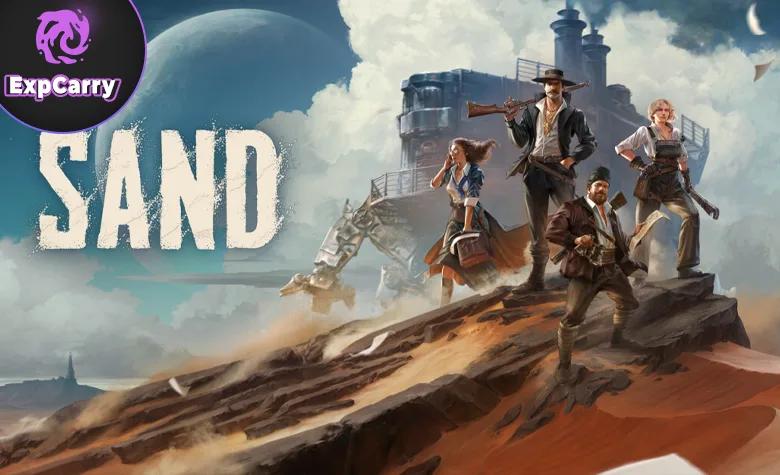
SAND: Raiders of Sophie is a PvPvE extraction shooter about crossing a ruined desert planet in giant walking machines, stealing what is valuable, fighting rival crews, and extracting before the run falls apart. The game is developed by Hologryph and TowerHaus, published by tinyBuild, and planned for PC through Steam. Its PC launch was previously listed for June 10, 2026, but the release was pushed back to June 22, 2026 after the latest server slam exposed issues that still needed work before launch. Console versions for PlayStation 5 and Xbox Series X|S are planned for a later date, but the PC release remains the main confirmed launch point for now.
The game’s central idea is the Trampler: a customizable walking mech fortress that works as transport, storage, protection, and combat platform. This makes SAND different from a standard extraction shooter where the player only manages weapons, armor, backpack space, and an exit route. Here, the machine itself is part of the risk. A good run depends not only on aim or loot luck, but also on where the Trampler is moved, how it is built, how well the crew protects it, and when players decide that the cargo is valuable enough to leave.
What Is SAND: Raiders of Sophie?
SAND: Raiders of Sophie is set on Sophie, a fallen desert planet in an alternate version of 1910. An ecological disaster has destroyed the oceans and left behind a massive wasteland filled with ruins, resources, hostile encounters, undead threats, and other raiders. Players enter this world solo or in squads, explore the dunes, scavenge for loot, weapons, ammo, resources, and artifacts, then try to extract with whatever they can keep. The format is PvPvE, so the threat comes from both the world itself and other human-controlled crews.
The game is not a classic survival title with a static base, and it is not a pure mech combat game where the walker exists only to shoot. The Trampler connects most of the major systems together: movement, storage, protection, customization, combat, and extraction. That gives SAND a stronger identity than many extraction shooters built only around looting buildings and reaching an exit. The loop is still about risk and reward, but the walking base makes the journey more important than simple inventory management.
The extraction structure is what gives each run pressure. Finding valuable loot is only the first part of the job; players still need to survive long enough to leave with it. Staying longer can mean better rewards, but it also makes the crew more exposed. A Trampler loaded with resources becomes a visible prize, and rival players have a clear reason to attack. That creates the main decision: push deeper into the desert, or extract before greed turns the whole run into scrap.
Release Date, Platforms, and Developers
SAND: Raiders of Sophie is planned for PC via Steam, with Hologryph and TowerHaus as developers and tinyBuild as publisher. The game was originally expected earlier in 2026, then moved out of its March window, later received a June 10 Steam launch date, and then was pushed again to June 22, 2026 after the server slam revealed technical and balance problems that needed more work. PlayStation 5 and Xbox Series X|S versions are planned for later, but no same-day console launch has been confirmed.
| Category | Details |
|---|---|
| Game title | SAND: Raiders of Sophie |
| Genre | PvPvE extraction shooter |
| Developer | Hologryph, TowerHaus |
| Publisher | tinyBuild |
| Updated PC release date | June 22, 2026 |
| PC platform | Steam |
| Console versions | PlayStation 5 and Xbox Series X|S planned later |
| Main feature | Customizable walking bases called Tramplers |
| Setting | Alternate-history 1910 on the desert planet Sophie |
| Core loop | Explore, loot, fight, survive, and extract |
The developer background matters because SAND is an online game with technically demanding systems: procedural desert exploration, extraction logic, PvP encounters, PvE enemies, large walking machines, physics, loot, and server-side progression. For this type of project, the launch quality will depend less on the premise and more on stability. If movement, hit registration, Trampler control, extraction, or server performance feels unreliable, players will lose trust quickly because every failed run costs time and resources. The latest delay makes that risk more visible, because it shows that connectivity, balance, and launch readiness are still central concerns for the project.
Gameplay and Core Systems
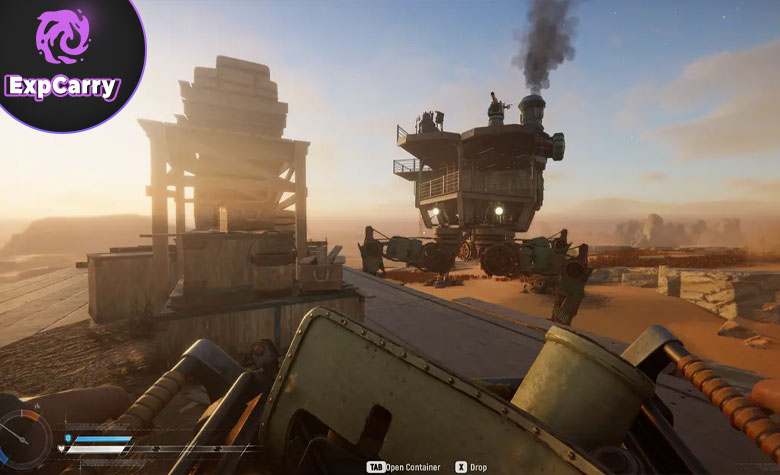
The main gameplay loop starts with preparation. Players customize a Trampler, enter Sophie’s desert, search for resources and artifacts, fight through danger, and extract with the loot. The Trampler changes the usual extraction rhythm because it is both a tool and a liability. It lets the crew travel across the wasteland, store cargo, survive the environment, and defend itself, but it is also large, valuable, and difficult to hide. A player on foot can disappear into cover more easily; a walking fortress cannot pretend it is not there.
SAND includes different ways to approach the dunes. Voyage Mode is the lower-pressure option, built around testing Trampler builds and scavenging lower-tier items at a more controlled pace. Storm Dive raises the stakes with higher-tier loot, greater rewards, and stronger pressure as sandstorms slowly engulf the region. This gives the game a clearer risk ladder: players can experiment and prepare in a safer mode, then move into more dangerous runs when they want better rewards and more direct competition.
That structure creates a stronger focus on positioning and crew decisions. Players need to think about where to park, when to move, when to fight, and when to leave. Solo players have more control but must handle scouting, travel, looting, defense, and extraction alone. Squads can divide roles more naturally: one player can drive, another can watch for threats, others can loot, repair, or fight. The game should be at its strongest when the Trampler feels like a shared project rather than a big vehicle with passengers.
Loot includes weapons, ammo, resources, and priceless artifacts, but the value of those items depends on extraction. This is where SAND follows the genre’s main rule: greed is dangerous. A crew can keep searching for better rewards, but every extra stop increases the chance of being ambushed, trapped by the storm, or forced into a bad fight. The best runs should come from reading the situation correctly, not from collecting every item on the map.
The main balance challenge is making PvE, PvP, and Trampler combat support the same loop. PvE needs to make Sophie feel hostile without becoming constant background irritation. PvP needs to create tension without making every run feel like unavoidable griefing. Tramplers need to be powerful enough to matter, but not so dominant that foot combat becomes irrelevant. If these systems are tuned well, SAND can offer a clear extraction identity. If they are not, the game could become a strong concept buried under frustration.
The World of Sophie and the Trampler Fantasy
Sophie is a ruined desert planet with a dieselpunk tone: heavy machinery, dust, metal, industrial ruins, dead cities, shipwrecks, and alternate-history technology instead of clean futuristic sci-fi. This setting supports the Trampler concept because the machines look like practical survival tools rather than sleek hero mechs. They are massive walking bases built for cargo, defense, and long travel across a dead world where roads and oceans no longer matter.
The desert is more than visual background. Open space makes movement risky because a large machine can be spotted, tracked, or attacked. Ruins and points of interest create reasons to stop, loot, and expose the crew. PvE threats, including the undead Upiors connected to Sophie’s fallen world, add danger beyond rival players. The setting also gives the game its strongest image: raiders crossing a dead ocean of sand in mechanical fortresses, carrying loot that other players want. That image is simple, readable, and more memorable than another extraction map full of ordinary bunkers and warehouses.
Customization is the system that needs to make the Trampler fantasy last beyond the first impression. If different builds create real trade-offs, crews can develop different identities: storage-focused haulers, combat-heavy raiders, faster scouts, tougher defensive machines, or balanced all-rounders. If customization is shallow, the Trampler risks becoming a visual gimmick. If it affects routes, fights, survival, and extraction decisions in meaningful ways, it becomes the feature that defines SAND.
How SAND Compares to Other Extraction Shooters
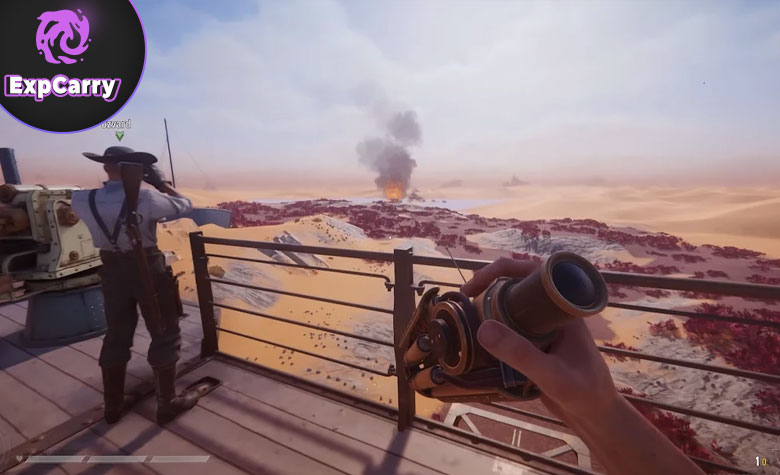
SAND may be compared to Escape from Tarkov, Marauders, Rust, Sea of Thieves, and Last Oasis, but none of those comparisons fully describes it. It has extraction pressure like Tarkov-style games, crew chaos similar to vehicle or ship-based multiplayer sandboxes, survival flavor from resource management, and mobile-machine identity closer to Last Oasis. The difference is that SAND puts those ideas into a desert extraction structure where the walking base is part of the raid, not a separate menu or safe home.
| Comparison | How SAND differs |
|---|---|
| Escape from Tarkov | SAND has extraction tension, but adds a large mobile base as a core system |
| Marauders | Both involve raiding and extraction, but SAND focuses on desert walkers instead of space boarding |
| Rust | SAND has survival pressure, but avoids the same static base-raiding structure |
| Sea of Thieves | Both can create crew-based chaos, but SAND uses Tramplers instead of ships |
| Last Oasis | Both feature mobile machines, while SAND is framed around PvPvE extraction |
The most important difference is that SAND gives the genre a physical centerpiece. In many extraction shooters, the emotional focus is a backpack full of loot. In SAND, the Trampler can become the thing players care about most because it carries the run, protects the crew, and represents preparation. That makes losses feel larger, but it also gives successful extractions more weight.
Strengths, Risks, and Final Thoughts
The strongest part of SAND: Raiders of Sophie is its clear concept. A PvPvE extraction shooter with giant customizable Tramplers has an immediate hook, and the ruined dieselpunk desert supports it well. The game is not relying only on loot rarity or weapon stats; it is trying to make the machine, the route, the crew, and the extraction decision matter together. Voyage Mode and Storm Dive also help separate lower-risk preparation from higher-risk reward hunting, which gives players more control over how much danger they want in each session.
The risks are also clear. SAND needs stable servers, reliable Trampler controls, fair PvP, useful PvE, meaningful customization, and extraction losses that feel deserved. Online extraction games have less room for technical failure because every bug can cost progress. If players lose loot because of bad servers, broken physics, or unclear systems, the game will feel punishing for the wrong reasons. The delay after the server slam makes this point especially important: SAND has a strong premise, but its long-term reception will depend on whether the launch build can support that premise under real player load.
For players who enjoy extraction shooters, co-op survival tension, vehicle-based gameplay, and unusual multiplayer systems, SAND is worth watching. It may not suit players who want a pure PvE survival game, a simple arena shooter, or a low-risk casual FPS. Its appeal comes from pressure: moving a valuable machine across a hostile desert, deciding how much loot is enough, and getting out before another crew, the storm, or Sophie’s own dangers turn the whole plan into wreckage. If Hologryph, TowerHaus, and tinyBuild deliver that loop with enough stability and depth, SAND: Raiders of Sophie could become one of the more distinctive multiplayer releases of 2026.