




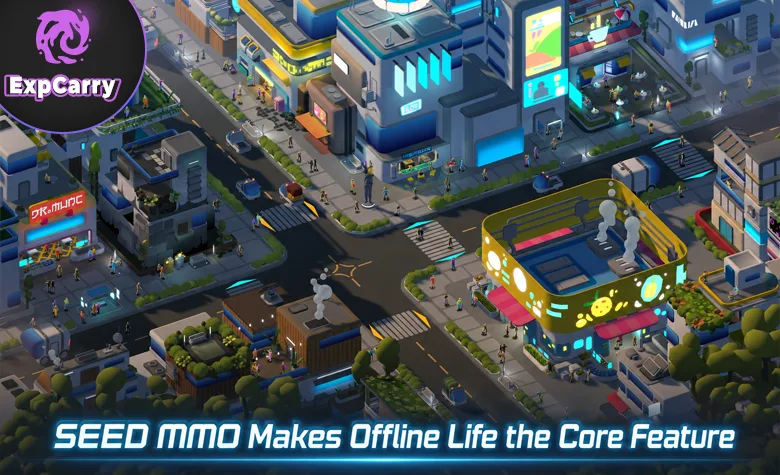
SEED MMO from Klang Games is moving toward Early Access with one clear hook: the world does not stop when the player logs out. The game is built as a 24/7 persistent society simulator where human-like characters called Seedlings continue to live, work, socialize, age, and die while the player is offline. Instead of treating persistence as a background server feature, SEED makes it the center of its MMO design.
SEED is scheduled to enter Early Access on July 21, 2026 through Klang's own standalone PC launcher. A Steam version is planned later in 2026, with GamesBeat reporting a fall 2026 window. The game is set on Avesta, a new planet where players guide Seedlings, build societies, create economies, shape laws, and leave long-term consequences inside a shared persistent world. A mobile version is also in development and expected later in 2026. That fits the game's core idea because Seedlings continue to exist and act even when the player is away from the main PC client.SEED MMO is built around a 24/7 persistent world
The main difference between SEED MMO and a standard online life sim is that character activity is not tied only to active play sessions. Seedlings have their own schedules, personalities, talents, relationships, and needs. They can continue working, sleeping, socializing, using resources, and interacting with other Seedlings while the player is not logged in.
This creates a different kind of MMO pressure. The player is not just controlling a character in real time. The player acts as a Cultivator who guides one or more Seedlings over time, sets priorities, manages their place in society, and checks back as the simulation develops. Klang presents Avesta as a world shaped by thousands of players and their Seedlings. Every alliance, conflict, law, job, resource chain, and social decision can affect the direction of a settlement. That makes the game's persistence more than a technical claim. It is connected to politics, production, relationships, inheritance, and the long-term development of societies.SEED MMO turns Seedlings into long-term characters
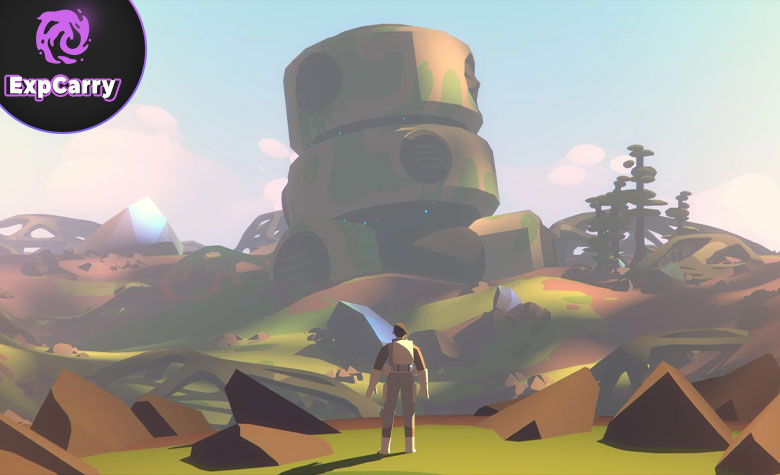
Seedlings are the core unit of SEED. They are bio-engineered human inhabitants of Avesta with their own traits and life paths. Players do not simply create a combat avatar and run missions. They guide Seedlings through daily life, jobs, relationships, social roles, and the wider structure of the society they belong to.
The game includes life-cycle systems such as birth, aging, death, reproduction, and inheritance. This gives SEED a long-term simulation angle that many MMOs avoid. A character can have a personal history, contribute to a society, pass value forward, and become part of a wider chain of consequences. That fits Klang's goal of building a society simulator rather than a traditional quest-focused MMORPG.Seedlings keep working when players are offline
The offline behavior is the feature that gives SEED its identity. A Seedling can continue contributing to a job, maintaining relationships, satisfying needs, using resources, or taking part in the local economy without the player sitting at the keyboard. This does not remove player agency. It changes the type of agency. Players need to prepare, organize, and guide their Seedlings so their offline time still fits the society's needs. This also makes society design important. A badly organized settlement can waste labor, mismanage resources, or leave Seedlings without support. A stronger settlement can assign roles, distribute tasks, maintain supply chains, and keep moving even when many players are offline. SEED uses that structure to make persistence part of the social and economic game.Avesta gives SEED MMO a shared society layer
SEED takes place on Avesta, a planet selected by humanity as a new home after leaving Earth at the end of the 21st century. The setting gives players a blank slate for building new forms of society. The game is not focused on clearing zones or following a fixed campaign path. Its main content comes from what players and their Seedlings build together.
Societies are central to the game. Players can collaborate or compete with others, build communities from the ground up, define political structures, manage laws, create production systems, and shape the future of their part of Avesta. A society can become a small settlement, a larger industrial community, or a more complex political and economic system. This is where SEED's EVE Online connection is easiest to see. The comparison is not accidental: SEED is built by former EVE Online developers, but it moves the idea of long-term player-driven persistence away from space warfare and into society simulation. The game is not copying EVE's combat structure, but it is aiming for the same kind of long-term player-made drama through shared systems.SEED MMO uses player-driven economy and governance
SEED's economy is built around production, crafting, trade, and player activity. Every item, from basic furniture to more complex machinery, is meant to come from gathered, crafted, and sold resources. That makes labor and logistics central to the experience. A society needs people and Seedlings who can collect materials, produce goods, maintain infrastructure, and support other roles.
Governance is another major system. Players can form shared societies and define their own laws and government structures. GamesBeat described possibilities ranging from democratic organization to authoritarian systems. The important point is that social structure is not only roleplay text. It connects to how a society functions, how resources are used, and how Seedlings live inside that system.Player choices can shape laws, work, and social order
Because Seedlings continue to act over time, laws and roles can have persistent consequences. A rule that affects work, ownership, crime, justice, or access to resources can change how a society develops. This gives SEED a slower, more systemic rhythm than a combat MMO. The result of a decision may appear through production changes, social conflict, resource shortages, or political tension rather than an instant quest reward. The game also supports direct interaction with Seedlings through Seedling Chat. This system lets players communicate with their characters, understand their thoughts and feelings, and influence their social lives. It gives the player another way to guide behavior without reducing Seedlings to simple worker units.SEED MMO Early Access starts outside Steam first
SEED enters Early Access on July 21, 2026 through the standalone SEED Launcher on Klang's website. That means the first public Early Access phase is not launching through Steam on day one. Steam is planned later in 2026, and Klang says progress will carry over when the Steam version arrives.
The Steam page already lists SEED as a massively multiplayer simulation, strategy, RPG, and indie title with online PvP, online co-op, in-game purchases, in-game chat, and online interactivity. It also describes the game as a single-shard world where thousands of players collaborate to build economies, manage Seedlings, and shape laws on a new planet. GamesBeat reported a base Early Access price of $29.99. Klang's current SEED page lists Founder’s Packs from €29.99, with pre-sale starting on June 15. These packs are limited to 10,000 founders and include a base game license, immediate Early Access on July 21, one Seedling, one additional Seedling slot, a Founder clothing bundle, Discord perks, the player's name in the credits, and Pollen rewards. Pollen is the in-game currency-farm">currency tied to SEED's account and reward systems. Klang also says Closed Beta players who logged 25 or more hours will receive a free base game license at launch. Those players can still buy a Founder’s Pack if they want the additional Founder rewards.Start a Society Bundles are aimed at groups
SEED will also offer special Start a Society Bundles at launch. These bundles include multiple user licenses and are aimed at groups of three players who want to begin creating their own named societies on Avesta. This fits the game's focus on social organization rather than solo character progression. This launch structure makes SEED different from a normal Early Access MMO release. The first wave is not only about buying access to a build. Klang is also trying to seed Avesta with founders, early society builders, and organized groups that can start shaping the first political and economic structures.SEED MMO is not a standard theme park MMORPG
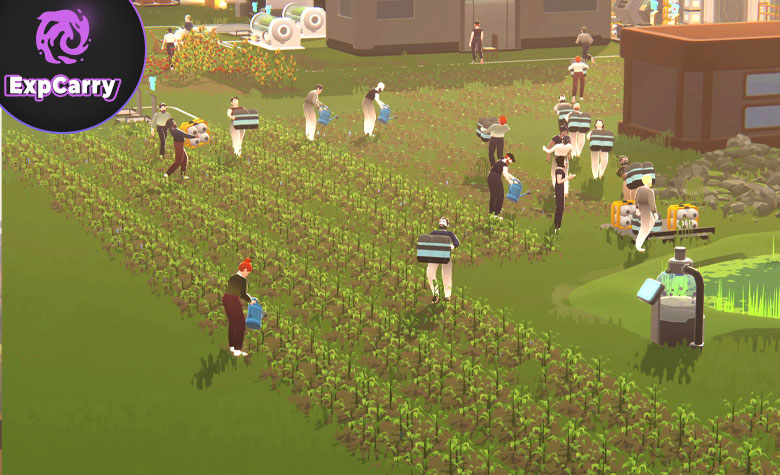
SEED should not be read as another quest-driven MMORPG with raids, dungeons-services">dungeons, classes, and gear score as the main loop. Its focus is society simulation. The central systems are Seedlings, offline life, Avesta, player-built settlements, production chains, relationships, law, governance, aging, inheritance, and persistent consequences.
That makes the game more relevant for players who want long-term social systems, colony management, role specialization, political conflict, and a world that can keep changing between sessions. It may be less direct for players who expect constant combat, fixed progression routes, or short-session matchmaking. The Early Access phase will be important because SEED's concept depends on scale, stability, and player cooperation. A 24/7 society simulator needs enough active players, enough working systems, and enough meaningful offline behavior to make the world feel alive. Klang's pitch is ambitious, but the current details show a clear direction: SEED is trying to make MMO persistence a playable system, not just a server status.Final Thought
SEED's real test is not whether its idea sounds different on paper. The important question is whether Avesta can stay readable, fair, and interesting once thousands of players start pushing its systems in conflicting directions. A society simulator only works if player decisions create consequences that are clear enough to understand, but complex enough to feel organic.
If Klang can make offline life, social pressure, law, ownership, work, inheritance, and long-term character history matter without turning the game into passive management noise, SEED could stand apart from most modern MMOs. Its strongest potential is not in replacing raids or PvP arenas, but in offering a world where progress is measured by what a society becomes over time, not just by what a single character unlocks.