




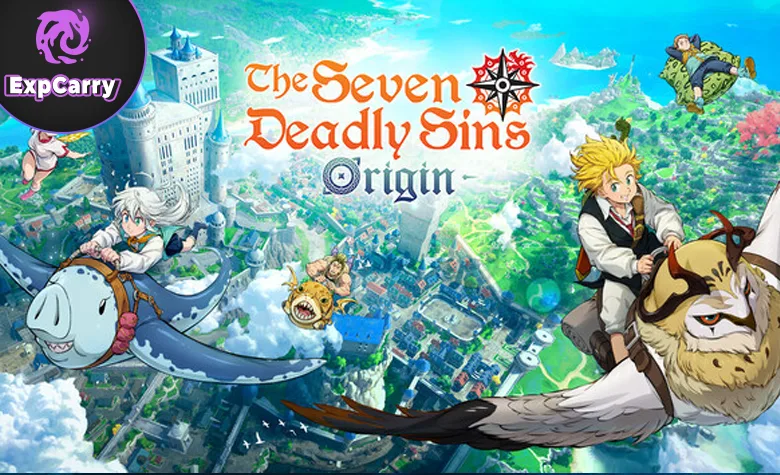
The Seven Deadly Sins: Origin is a free-to-play open-world action RPG from Netmarble F&C built around the world, characters, and visual identity of The Seven Deadly Sins. It places players in the role of Prince Tristan of Liones and sends them across Britannia after a mysterious collision of time and space throws the world into chaos. Familiar heroes, original characters, monsters, ruins, towns, dungeons-services">dungeons, and timelines are pulled together into a large anime-style adventure designed for solo play and online co-op.
The game combines open-world exploration, character collection, real-time combat, and live-service progression. Players build a team of heroes, switch between characters during combat, combine abilities, explore the environment, complete quests, fight bosses, gather materials, and develop their account through equipment, character upgrades, events, and gacha systems.
As of Version 1.5, Beyond the Sandstorm, The Seven Deadly Sins: Origin has already received changes to equipment balance, boss challenges, and dungeon content. The game looks impressive, but its long-term value depends on how much players enjoy the franchise, whether they accept gacha progression, and how much patience they have for technical issues and uneven polish.
The Seven Deadly Sins: Origin Game Concept and Story
The Seven Deadly Sins: Origin is not a direct retelling of the original anime. It uses the familiar universe as the foundation for an original story centered on Tristan, the prince of Liones. A collision of time and space disrupts Britannia, allowing characters, locations, and threats from different points in the franchise to appear together.
This multiverse-style concept gives Netmarble a practical reason to bring fan-favorite characters into the same game without following one strict timeline. It also gives the developers room to add original heroes and new storylines without replacing the characters players already recognize. For fans, this is one of the strongest parts of the game because Origin feels like a large crossover adventure rather than a simple retelling of familiar events.
The main conflict is understandable for newcomers, but the story is more rewarding for players who already care about Tristan, Meliodas, Elizabeth, Diane, King, Ban, Escanor, and the wider cast. Many character appearances, relationships, and references have more weight when the player already knows the original series.
Britannia Is the Main Reason to Explore
The open world is one of the game's biggest attractions. Britannia is filled with towns, plains, ruins, hidden dungeons, monsters, treasures, gathering points, environmental challenges, fishing, cooking, and other activities. The world is colorful, easy to read, and designed to look like a playable version of the anime rather than a realistic fantasy landscape.
Characters also have abilities that affect exploration. Some heroes can make gathering easier, help reach specific areas, or change how the player moves through the world. This gives character collection a purpose outside combat and connects roster building to exploration instead of limiting it to damage calculations.
The weakness is that many of these activities follow familiar open-world gacha RPG patterns. Players who enjoy roaming Britannia, solving simple challenges, and collecting materials will find plenty to do, but others may feel that the game relies too heavily on systems they have already seen elsewhere.
The Seven Deadly Sins: Origin Combat and Character System
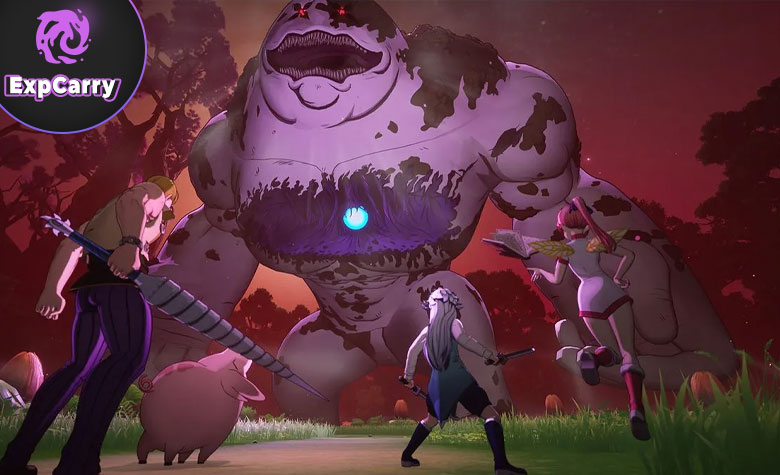
Combat is built around a team of four heroes that can be switched in real time. Each character has unique skills, elemental properties, weapon options, and combination abilities. The system encourages players to change characters during battle instead of relying on one hero for every situation.
Hero and weapon pairings can alter abilities and combat styles, which gives the roster more flexibility than a simple character collection system. A familiar hero may play differently depending on the selected weapon, while team composition can provide elemental coverage, support effects, stronger combinations, and better responses to enemy mechanics.
The combat is fast, flashy, and enjoyable during normal exploration. Character switching, large skill effects, ultimate abilities, and combination attacks make regular fights visually satisfying. Boss encounters demand more attention when elemental mechanics, positioning, attack patterns, and team coordination become important.
Character Switching Gives Battles More Variety
The strongest part of the combat system is the ability to switch between heroes without stopping the action. This creates a smoother rhythm than games where the player is locked into one character for long periods. A team can include characters for damage, support, elemental coverage, mobility, exploration, or specific boss mechanics.
This also makes collecting characters more meaningful. New heroes are not only portraits with higher numbers. They can change how the team moves, explores, gathers materials, and fights. For fans of The Seven Deadly Sins, building a group around favorite characters is one of the game's main attractions.
The weakness is that movement, targeting, controls, and combat feedback do not always feel as precise as they should. The system has a solid foundation, but inconsistent responsiveness and technical rough edges prevent it from matching the most polished action RPGs in the genre.
The Seven Deadly Sins: Origin Multiplayer and Co-Op
The Seven Deadly Sins: Origin supports online co-op and cross-platform multiplayer. Players can form parties, explore the open world, fight enemies, complete activities, and take part in cooperative content together. Multiplayer is integrated into the broader game rather than limited to a completely separate mode.
Main quests and side quests can be completed in a party based on the party leader's progression, but multiplayer may be temporarily disabled during certain parts of the Main Chapter. Players can also join cooperative dungeon challenges and boss encounters built around elemental mechanics and coordinated character abilities.
Co-op is useful because it makes repeated exploration, boss fights, and progression activities more enjoyable with friends. It also gives groups a reason to consider team composition instead of bringing several versions of the same damage-focused character.
Co-Op Is Useful, but It Does Not Replace the Solo Game
The Seven Deadly Sins: Origin is still designed as a game that can be played alone. Story progression, exploration, character upgrades, and much of the open world work without a group. Co-op expands the experience, but it is not required for every activity and is unavailable during some story sections.
This balance suits players who want a solo RPG with optional multiplayer. It also means the game remains playable when friends are offline. Players looking for a full MMO-style world, persistent social systems, or unrestricted cooperative story progression may find the multiplayer more limited than expected.
The game works best when co-op is treated as an additional layer rather than the entire reason to play. Shared exploration, dungeons, and boss fights are meaningful features, but they do not turn Origin into a traditional massively multiplayer RPG.
The Seven Deadly Sins: Origin Gacha and Progression
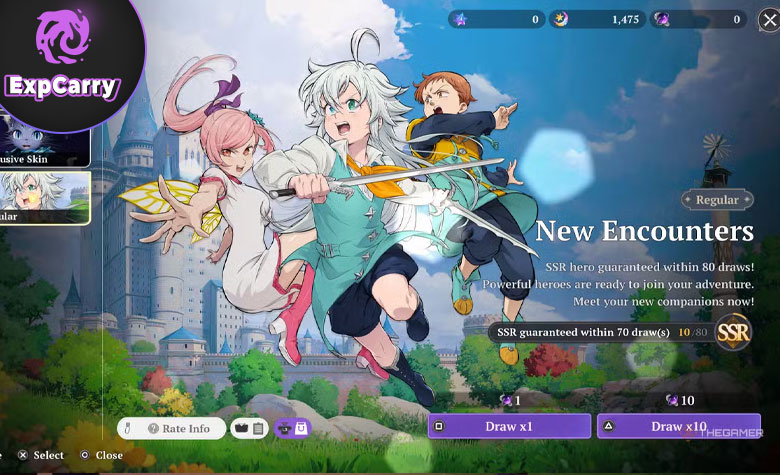
The Seven Deadly Sins: Origin is a free-to-play game with gacha mechanics. Players collect heroes and other rewards through banners, tickets, and premium currencies. This system is an important part of progression for anyone who wants stronger characters, limited heroes, or specific team combinations.
The gacha system is also the biggest reason some players will avoid the game. A random SSR character is guaranteed at 80 pulls, but this does not guarantee the featured limited hero. After 120 pulls on a Pick Up banner, the featured character's rate increases, yet the player can still fail to obtain that character.
Players who enjoy saving resources, planning pulls, and slowly building a roster may accept this structure. Players who want a traditional RPG where every character is earned through story progress will probably find it frustrating. Origin does not hide that it is a live-service gacha RPG, and that should be considered before investing significant time.
Limited Pulls and Account Progression Divide Players
One of the most common complaints is that premium resources and limited character pulls feel too restricted compared with the cost of chasing a featured hero. Standard banner rewards may be easier to obtain, but most players care more about limited characters and new releases.
This creates tension between the enjoyable parts of the game and its monetization. A player may like the world, combat, characters, boss challenges, and dungeons while still feeling that roster progression is controlled too heavily by currency income and banner timing.
The gacha system does not automatically make the game bad, but it changes the recommendation. The Seven Deadly Sins: Origin is easier to enjoy when players accept that they will not obtain every character and avoid treating every limited banner as mandatory.
The Seven Deadly Sins: Origin Pros and Cons
The Seven Deadly Sins: Origin has enough strengths to stand out as more than a simple licensed mobile game. Its world is attractive, its character roster has real appeal, and its combat is much more ambitious than a basic anime adaptation. It also has clear weaknesses that prevent it from being an easy recommendation for every RPG player.
| Strength | Why it matters | Main limitation |
|---|---|---|
| Faithful anime world | Britannia looks colorful, recognizable, and inviting for fans | Players unfamiliar with the series may feel less attached to the world |
| Real-time team combat | Four-character switching and combination skills create variety | Controls and combat can feel less polished than top competitors |
| Open-world exploration | Fishing, cooking, dungeons, treasures, and character abilities add activities | Some exploration systems feel familiar rather than original |
| Online co-op | Players can explore, complete many quests, and fight bosses together | Some story sections temporarily disable multiplayer |
| Free-to-play access | Players can try the game without buying it | Gacha progression and limited pulls can become frustrating |
| Large character roster potential | Familiar heroes and original characters support long-term updates | Featured characters are not guaranteed by the Pick Up banner pity system |
The Best Parts of The Seven Deadly Sins: Origin
The strongest part of Origin is the feeling of moving through a playable anime world. The environments, characters, attacks, and visual effects create a convincing version of Britannia. Fans who wanted a larger and more interactive Seven Deadly Sins game finally have something more substantial than a small licensed adaptation.
The combat gives the game a solid foundation. Switching between four characters keeps battles active, while weapon choices and elemental mechanics add useful variety. The system is easy to understand during exploration but has enough flexibility to support stronger team building for bosses and harder content.
Co-op adds value to the open world by making boss fights, dungeons, and repeated progression activities more social. It is not a replacement for the solo game, but it gives players a practical reason to explore and build teams with friends.
The Biggest Problems Holding Origin Back
The biggest problem is that the game competes in a crowded genre. Players already have several open-world anime RPGs with years of updates, polished combat, established communities, and large content libraries. Origin cannot rely only on the Seven Deadly Sins license when players are comparing it with better-established competitors.
Technical issues also hurt the experience. Player reviews frequently mention performance problems, crashes, inconsistent controls, interface frustrations, and other rough edges. These problems do not affect everyone equally, but they make the game feel less finished than its attractive presentation suggests.
The gacha economy is the other major concern. Slow limited-banner income, account progression pressure, and the lack of a guaranteed featured hero can make the game feel less generous after the early rewards are gone.
The Seven Deadly Sins: Origin Player Reviews Are Mixed
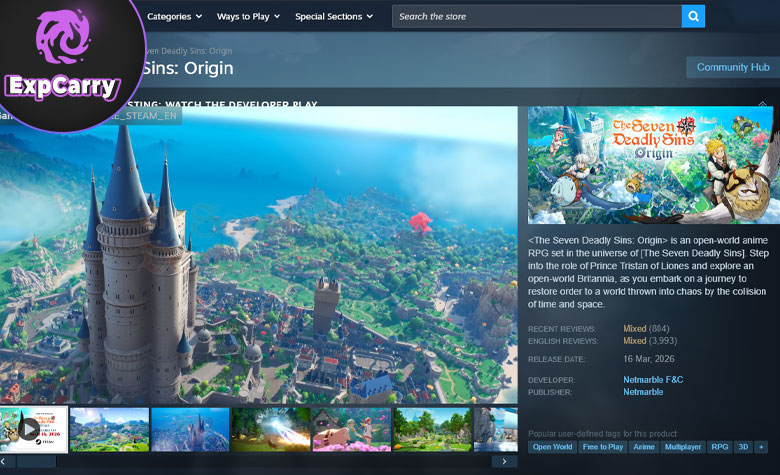
Player opinion remains divided. At the time of writing, Steam reviews are Mixed, with roughly 60% positive ratings across more than 14,000 reviews. That reaction fits a game with an attractive world and enjoyable combat that is also held back by technical problems, monetization concerns, and uneven polish.
Positive reviews often focus on the world, character abilities, combat, enemy variety, exploration, and the chance to play a large Seven Deadly Sins adventure. Different heroes can improve combat, gathering, travel, and exploration, which makes the roster feel useful instead of decorative.
Negative reviews frequently mention performance, progression, and monetization. Players report lag, crashes, weak optimization, frustrating combat behavior, and dissatisfaction with the limited-banner economy. These complaints are especially important for anyone planning to play for months rather than only completing the early story.
Fans of the Anime Are More Likely to Forgive the Rough Edges
The Seven Deadly Sins license matters. Players who already care about the characters and world have more reasons to continue through technical problems or familiar open-world systems. Seeing Britannia, controlling favorite heroes, and following a new Tristan story can carry the experience further than the mechanics alone.
Players with no attachment to the series will judge Origin more harshly. For them, the game must compete directly with every other open-world action RPG and gacha game. In that comparison, Origin has strengths, but it does not always feel polished, generous, or original enough to become the obvious choice.
Is The Seven Deadly Sins: Origin Worth Playing?
The Seven Deadly Sins: Origin is worth trying because it is free, visually attractive, and offers a substantial open-world RPG based on a popular anime universe. Fans of The Seven Deadly Sins have the strongest reason to play because the story, characters, exploration, and co-op features provide more value than a basic licensed adaptation.
It is also worth trying for players who enjoy anime action RPGs, real-time team switching, open-world exploration, cooperative boss fights, and long-term roster progression. Version 1.5 shows that Netmarble is continuing to revise equipment, boss challenges, and dungeon content rather than leaving the launch systems untouched.
The game is harder to recommend to players who dislike gacha mechanics, expect perfect technical performance, want unrestricted cooperative story progression, or already feel exhausted by open-world live-service RPGs. Origin asks for time, patience, and acceptance that future characters will remain tied to a monetized banner system.
Final Thoughts
The Seven Deadly Sins: Origin is an ambitious open-world anime RPG with a strong license, an attractive version of Britannia, enjoyable character switching, and useful co-op features. Its original Tristan story and exploration systems give fans a larger adventure than most anime adaptations can offer.
The game is not an easy recommendation for everyone. Technical issues, uneven polish, familiar open-world design, multiplayer restrictions during some story sections, and a gacha system without a guaranteed featured hero prevent it from matching the strongest games in the genre.
The best recommendation is to try The Seven Deadly Sins: Origin if you like the anime, enjoy free-to-play action RPGs, and can accept limited-banner progression. Skip it if you want a traditional single-player RPG, dislike gacha systems, or expect a fully polished alternative to the largest open-world anime games.