




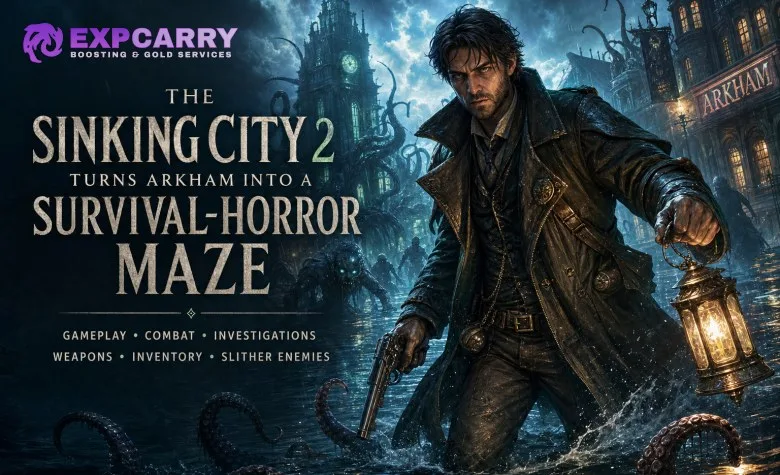
The Sinking City 2 launches on 18 August 2026 for PC, PlayStation 5 and Xbox Series X|S. Frogwares has shifted the series towards survival horror, placing limited ammunition, a finite inventory and dangerous backtracking ahead of the broad detective structure used in the first game.
Players control Calvin Rafferty, an occult adventurer whose attempt at a dreaming ritual leaves his girlfriend, Faye, trapped in a mysterious sleep. Her body is later taken, forcing Calvin to search the flooded city of Arkham while creatures known as the Slither possess and distort its dead residents.
The release arrives in a market where players can move between shooters, puzzle games and online blackjack within seconds. Frogwares is asking for a slower approach. Entering the wrong building without enough ammunition or healing supplies can turn a short search into a costly retreat.
Arkham is built around water, decay and blocked routes
The game takes place in a 1920s New England port overwhelmed by a supernatural flood. Its streets contain damaged Art Deco buildings, abandoned hospitals, flooded markets and darkened speakeasies.
Travel happens on foot and by boat. Water separates parts of the city, while collapsed seawalls and damaged streets prevent a direct walk between every location. Players must learn which landing points connect to useful buildings and where a newly opened shortcut can reduce later journeys.
The boat is more than a way to cross open water. It links districts while keeping the player exposed to threats that can emerge near the route. Reaching a dock safely does not guarantee that the building beyond it is secure.
Indoor spaces create a different type of pressure. Narrow corridors limit movement, closed doors hide enemies and poor lighting makes it difficult to judge whether a room contains supplies or an ambush.
Inventory space forces decisions before combat begins
Calvin cannot carry every weapon, healing item and piece of ammunition he finds. Each trip therefore begins with a practical question: which resources are likely to be useful in the next area?
A firearm may offer reliable stopping power but consume scarce ammunition. A melee weapon saves bullets, although using it means standing closer to enemies. Carrying too many weapons can leave insufficient room for medical supplies or newly discovered items.
Players must also judge the value of an empty inventory slot. Leaving space allows useful resources to be collected during exploration, but it means entering the area with fewer tools.
A place of refuge provides an opportunity to rearm and adjust the character build. Returning there may be safer than pressing ahead, especially after a difficult fight. The drawback is that backtracking can expose Calvin to further danger and use supplies that were meant for the next objective.
The Slither turn dead bodies into active threats
The Slither do not operate like ordinary human enemies. They possess corpses and reshape them into hostile puppets, so a body in the environment cannot always be treated as harmless scenery.
Their presence changes how rooms are read. A player entering a hospital ward may need to check the floor and beds before searching cupboards. A corpse beside an item could be a warning, a source of story information or an enemy waiting to move.
Other creatures require different responses. Deep Ones can emerge from dark water, making flooded areas dangerous even when the street ahead appears empty. Shadow-based threats can distort space and interfere with the player’s sense of direction.
Not every encounter should be fought immediately. If an enemy consumes more ammunition than the area is likely to return, retreat may be the sensible choice. Finding another route, completing an optional investigation or upgrading a weapon can make the same encounter more manageable later.
Firearms fit the 1920s setting
Calvin uses period-inspired guns alongside melee weapons. The arsenal is designed around the limitations of survival horror rather than the constant supply expected in an action shooter.
Reload timing is especially important. Starting a reload in an open corridor can leave the player unable to respond when an enemy closes the distance. Waiting too long risks reaching an empty chamber during the next attack.
Accuracy affects resource use. A missed shot is not simply a failed attempt at damage. It removes ammunition that may be needed several rooms later, where a retreat is harder.
Weapon selection also depends on the space. A gun suited to a large creature may be excessive against a weaker Slither, while a low-powered option may not interrupt an enemy quickly enough in a narrow room.
Melee combat offers a way to conserve ammunition, but it carries its own cost. Taking damage may consume a healing item worth more than the bullets saved.
Optional investigations can improve survival chances
The Sinking City 2 retains Frogwares’ detective experience without making every investigation compulsory. Optional cases allow players to inspect ritual residue, decode journals, examine disturbing clues and solve puzzles away from the direct story route.
Completing these cases can reveal upgrades, supplies and safer paths. The reward is therefore connected to survival rather than lore alone.
An investigation may explain how to avoid a threat that first appears difficult to fight. Another could open a shortcut through a district, reducing the number of enemies faced during later journeys.
The player must decide whether the possible reward justifies the immediate risk. A side room containing a clue may also contain a creature and very little ammunition. Ignoring it saves resources now but may leave Calvin weaker in the next main encounter.
This structure prevents detective work from stopping the main story. Players who want a direct survival-horror route can continue, while those who search more thoroughly can gain practical advantages.
Shortcuts change the value of backtracking
Arkham’s damaged streets and boarded interiors initially restrict movement. Opening a gate, clearing a blocked passage or finding a route behind a seawall can connect areas that previously required a long diversion.
A shortcut becomes useful when inventory space is tight. The player can return to a refuge, store unwanted items and reach the unfinished area without repeating the full original route.
It can also create an escape path. A difficult room is less dangerous when Calvin has a reliable exit leading to a cleared corridor or nearby boat.
This places value on environmental memory. Players who remember locked doors, unusual symbols and unreachable platforms can return when they obtain the relevant tool or information. Those who rush through each location may overlook routes that simplify later sections.
The sequel has changed genres rather than repeating the first game
The original Sinking City placed greater weight on open-world investigation and case solving. Its sequel uses a more concentrated survival-horror structure, with combat, inventory limits and the condition of the environment shaping progress.
That shift affects the detective elements. Clues still provide information, but they can now influence weapon upgrades, supply routes and decisions about when to fight.
Calvin is also a different type of lead character. He is described as an occult adventurer whose own reckless actions contribute to the disaster. His search for Faye gives the story a direct personal objective while Arkham’s flood provides the wider threat.
The result depends on whether the game can keep its systems connected. Scarce ammunition needs enemies that are dangerous but readable. Optional investigations need rewards strong enough to justify the risk. Backtracking needs shortcuts that make the return journey useful rather than repetitive.
The flooded districts provide those systems with a clear setting. Arkham is not simply a backdrop for monsters. Its boats, blocked streets, abandoned rooms and hidden passages determine what Calvin can carry, where he can escape and whether the next encounter should be fought at all.