



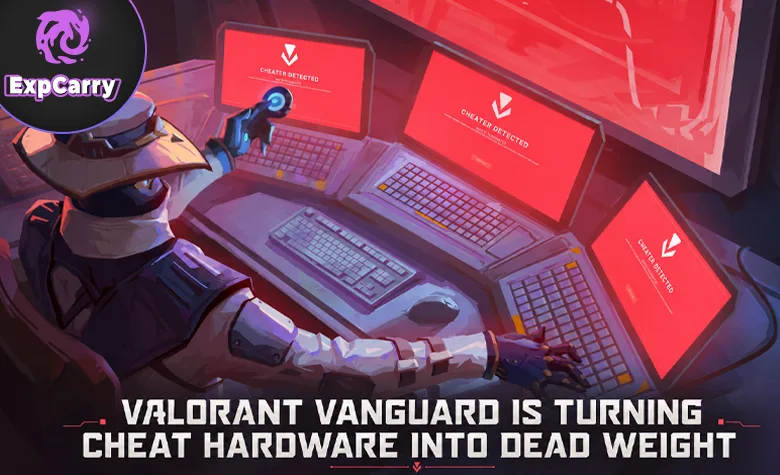
Valorant's Vanguard anti-cheat has entered a more aggressive phase of the hardware-cheat arms race. A recent Vanguard update targeted DMA-based cheat setups that use external hardware and custom firmware to read or manipulate game memory outside the normal software stack. Riot's public joke about a "brand new $6k paperweight" made the story explode because many players read it as if Vanguard had started remotely destroying PCs. That is not what Riot says is happening. The more accurate version is narrower, sharper, and still important: Vanguard is blocking certain DMA cheat setups from working in Riot games by enforcing system-level memory protection.
This distinction matters because "anti-cheat kills hardware" is the kind of headline that spreads faster than facts, which is impressive because facts already move at human speed, meaning badly. Riot clarified that Vanguard does not damage normal PCs, does not disable legitimate devices, and does not brick player systems. The update targets systems attempting to use DMA cheat devices sold for cheating in Valorant. If those devices depend on firmware tricks that work only when IOMMU protection is disabled, bypassed, or misrepresented, Vanguard now forces the choice: keep the security model Riot requires, or lose access to Riot games.
Valorant Vanguard Targets DMA Cheat Hardware at System Level
The key term in this story is DMA, or Direct Memory Access. DMA allows hardware devices to access system memory without routing every operation through the CPU. That is useful for legitimate hardware, but it has also become a path for high-end cheats. A DMA cheat setup can involve an external device connected through PCIe-style access and controlled from a second computer, letting cheat software inspect game memory while trying to stay outside the normal detection space of Windows and traditional anti-cheat tools.
That is why DMA cheating is harder to fight than ordinary cheat software. A normal cheat runs on the same PC and can be detected as a process, driver, injection, overlay, or memory-tampering tool. DMA hardware tries to move the cheating logic outside the main system, where it can pretend to be a legitimate device or use custom firmware to disguise its real purpose. Vanguard's new move is focused on blocking many of these DMA firmware paths, including setups described around SATA and NVMe-style interfaces.
In practical terms, Vanguard is not just looking for a cheat executable anymore. It is enforcing the platform security conditions that make those cheat devices fail in Valorant. Riot has tied this to IOMMU, the system component that controls which devices can access which memory regions. If IOMMU protection is active and trusted, a malicious DMA device should not freely read or write the game's memory. If a cheat device depends on bypassing or weakening that protection, Vanguard's stricter enforcement can turn the expensive cheat box into a very sad desk ornament.
DMA cheats moved the fight below normal software detection
The reason this story matters is not only that cheaters spent too much money and Riot laughed at them, though that is clearly the part the internet enjoyed because humans are simple creatures with broadband. The real point is that cheat makers have been moving deeper into hardware and firmware territory. Kernel-level anti-cheats like Vanguard were already controversial because they operate at a low level in the operating system. DMA cheats are one answer to that: if the anti-cheat watches the OS, move the cheat outside the OS.
Vanguard's response is to make the platform itself part of the anti-cheat boundary. Instead of only asking "is cheat software running," it also asks whether the system's memory protections can be trusted. That is a broader model. It means the anti-cheat fight is no longer only about files, processes, drivers, or suspicious overlays. It is also about boot state, motherboard firmware, IOMMU behavior, PCIe devices, and hardware paths that can touch memory before ordinary software has a clean view of what happened.
This is why the update feels bigger than another ban wave. A ban wave removes accounts. A hardware-focused security update attacks the cheat infrastructure. It does not just punish one player after the fact. It targets the method that lets high-end cheaters keep coming back with new accounts, spoofed identities, or external devices. That is less pleasant than a simple account ban, but competitive shooters have spent years proving that polite anti-cheat is just a welcome mat for people with firmware programmers.
Riot Says Vanguard Does Not Brick Normal PCs
The most important correction is that Riot denies the scary version of the story. The company says Vanguard does not damage hardware, does not disable legitimate devices, and does not brick normal PCs. Riot's clarification came after its "paperweight" post caused people to assume the anti-cheat could remotely destroy a player's machine. According to Riot, the affected setups are DMA cheat devices sold explicitly for cheating, not ordinary storage drives, standard gaming hardware, or legitimate PC components.
That does not make the debate disappear. Vanguard still operates at kernel level, still requires deep trust, and still creates understandable anxiety among PC users who do not enjoy the idea of a game company enforcing system security rules. But there is a major difference between "Riot can destroy your PC" and "Riot blocks cheat hardware from functioning in Riot games unless the required memory protections are trusted." The first version is panic bait. The second version is the actual anti-cheat controversy.
Some reports around the update describe affected cheat users seeing warnings, broken cheat behavior, and setups that may require security changes before the cheat hardware works elsewhere. That is ugly for the cheat buyer, which is rather the point. But it is still not the same as Vanguard physically destroying legitimate PC components. The safer wording is that Vanguard makes certain DMA cheat setups unusable under Riot's required security conditions, not that it melts hardware with digital witchcraft.
The "$6k paperweight" joke made the story louder and messier
Riot's "$6k paperweight" post was effective, smug, and imprecise enough to create chaos. It worked as a public taunt against cheat sellers and buyers. It also gave critics a perfect opening to claim Vanguard was remotely bricking PCs. That is what happens when a company jokes like a Discord admin while operating one of the most intrusive anti-cheat systems in gaming. The joke lands, then everyone spends the next day sweeping up the meaning.
The better framing is that Riot wanted to signal a major win against expensive DMA cheat kits. These devices are not cheap hobby gadgets when packaged with firmware, support, and cheat software. By making those setups fail in Valorant, Riot hits cheaters where account bans often do not: the hardware investment. That is why the "paperweight" phrase stuck. A banned account is replaceable. A useless $6,000 cheat rig is a much funnier invoice.
Still, the communication problem is real. When anti-cheat reaches system firmware, IOMMU, BIOS updates, and DMA protection, casual wording becomes risky. Normal players need precise reassurance. Cheat sellers need deterrence. Riot tried to do both with a meme and then had to clarify the engineering after the panic spread. Very efficient, if the goal was to turn anti-cheat messaging into a small house fire.
IOMMU, BIOS Updates, and Vanguard's Pre-Boot Security Push

This Vanguard update fits into a longer security push. Riot previously disclosed a motherboard firmware problem involving Pre-Boot DMA Protection and IOMMU initialization. In simple terms, some systems could report that DMA protection was enabled even though the protection was not actually active early enough during boot. That created a gap where hardware cheats could potentially inject or operate before Vanguard had a trustworthy security environment.
That earlier issue led Riot to require BIOS updates for affected motherboard platforms from vendors such as ASUS, Gigabyte, MSI, and ASRock. Players on affected systems could be blocked from playing until their firmware was updated. That was not only a Valorant anti-cheat issue. It was also a real platform security issue, because broken IOMMU initialization can matter beyond games. Riot discovered it through anti-cheat work, which is a tidy little reminder that sometimes the people chasing cheaters find firmware bugs the rest of the PC industry politely walked past.
The new DMA cheat hardware wave is the next phase of the same arms race. Riot wants Vanguard to trust the machine from boot onward. DMA cheat makers want to hide outside the OS, spoof legitimate devices, and access memory from paths the anti-cheat cannot easily police. IOMMU enforcement is Riot's answer: if a device wants memory access, the system must restrict it properly. If a cheat device depends on unsafe access, it loses the advantage that made the hardware valuable in the first place.
| Layer | Cheat method | Vanguard response | Player impact |
|---|---|---|---|
| Software | Processes, injections, overlays, suspicious tools | Detection, blocking, bans | Traditional anti-cheat enforcement |
| Kernel | Low-level drivers and hidden memory access | Kernel-level monitoring and driver control | More intrusive protection model |
| Hardware / DMA | External devices reading memory through PCIe-style access | IOMMU enforcement and DMA setup blocking in Riot games | Cheat hardware becomes unusable for Valorant |
| Firmware / boot | Pre-boot gaps, broken IOMMU initialization, spoofed trust state | BIOS update requirements and stricter boot checks | Some legitimate players may need firmware updates |
Valorant Anti-Cheat Is Becoming a Hardware Trust System
The larger shift is that Valorant anti-cheat is no longer just an account discipline tool. It is becoming a hardware trust system. Vanguard does not only ask whether your Riot account is clean. It asks whether the machine can satisfy the security assumptions Riot needs for competitive integrity. In the broader Vanguard model, that can involve platform trust features such as Secure Boot, TPM requirements in some cases, firmware state, and now stricter DMA and IOMMU enforcement.
This is why the debate around Vanguard never fully goes away. On one side, competitive players want fewer cheaters, and DMA cheating is exactly the kind of high-end abuse that makes normal matchmaking feel rigged. On the other side, PC users are right to be cautious when a game anti-cheat sits deep in the system and can block play based on firmware, boot configuration, or hardware behavior. Both points can be true. Cheaters are a plague, and kernel anti-cheat is still a miserable cure.
For Riot, the argument is simple: Valorant is a tactical competitive shooter where cheating destroys the product. If cheats move into hardware, anti-cheat must follow them into hardware security. For critics, the concern is that this model makes game access dependent on increasingly strict system trust rules, which can affect privacy, repairability, older hardware, Linux compatibility, virtualization, and user control. That is the real trade. Not "Riot burns your PC," but "Riot demands a locked-down PC security model to keep its ranked ecosystem clean."
This is a win against cheat sellers, not a simple win for PC freedom
The update is clearly painful for cheat sellers and buyers. Expensive DMA setups lose much of their value if they cannot function in Valorant. That can reduce high-level cheating, increase ban confidence, and make cheat development more expensive. Any serious competitive shooter needs that kind of pressure, because if cheating becomes cheap and reliable, ranked integrity collapses into theater.
But the same technical direction also raises hard questions. A game company enforcing IOMMU and boot-chain trust is no longer only moderating a game. It is pushing users toward a specific system security posture. Some of that posture is good security. Some of it is anti-cheat necessity. Some of it is uncomfortable because users have to trust Riot's driver, update process, false-positive handling, and communication. The trust burden is large, and Riot's meme-first messaging did not exactly make the room calmer.
The best version of this future is clear anti-cheat transparency, strong privacy boundaries, careful false-positive review, and precise public explanations. The worst version is an arms race where every competitive game demands deeper system control while players get vague warnings and forum arguments instead of understandable documentation. Vanguard's DMA crackdown may be justified, but justification does not remove the need for restraint.
Final Thoughts
Valorant's Vanguard update did not start killing normal gaming PCs. The verified story is more specific: Riot is blocking advanced DMA cheat setups by enforcing system-level protections such as IOMMU, making certain expensive cheat rigs unusable in Riot games. Riot's "$6k paperweight" post turned that into a viral controversy, then Riot clarified that it does not damage legitimate devices, disable normal hardware, or brick regular player systems.
This is still a major escalation. DMA cheats were designed to bypass ordinary software and even kernel-level detection by moving memory access into external hardware and custom firmware. Vanguard's response pushes the fight into boot security, motherboard firmware behavior, IOMMU enforcement, and hardware trust. That is why the update matters. It attacks the cheating supply chain instead of only banning accounts after damage is done.
The uncomfortable part is that anti-cheat is now deeply tied to PC security architecture. For players who only care about clean ranked matches, Vanguard's move looks like overdue punishment for expensive cheat rigs. For users worried about kernel drivers and platform control, it looks like another step toward games dictating how a PC must be configured. Both reactions are rational. The clean conclusion is this: Riot did not start frying hardware, but Vanguard is making cheat hardware useless at a lower level than most players ever expected a game anti-cheat to reach.