




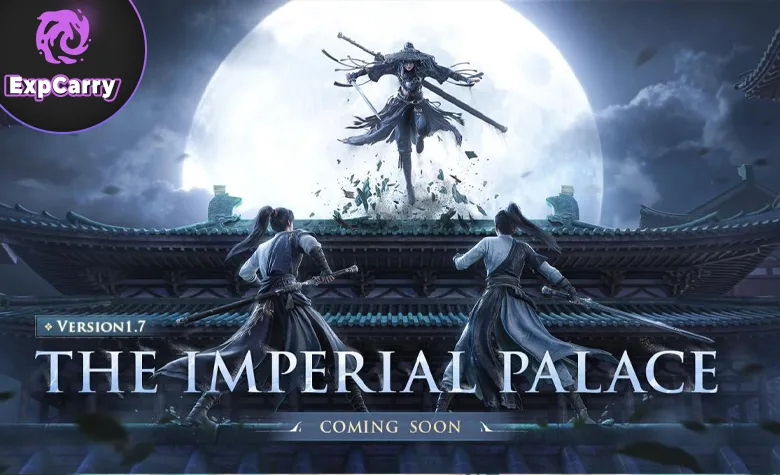
Where Winds Meet is getting its second major expansion, titled Imperial Palace, in late May 2026, and this is not being pitched as a small seasonal stopgap. Everstone Studio and NetEase are opening a massive royal court and palace grounds that were previously forbidden, shifting the wuxia open-world RPG from frontier roads and city streets into the political heart of the empire.
The confirmed details are specific enough to separate the real update from the usual cloud of player speculation. Imperial Palace adds a 1-million-square-meter palace zone comparable in scale to Kaifeng, more than 3,000 NPCs, intersecting factions, royal-family connections, court conspiracies, and narrative foreshadowing for the next stage of the game. Alongside the palace itself, the roadmap points to Homesteads, a Companion System, Gauntlets as a new weapon, a 5-player cooperative PvE mode, an Ancient Tombs exploration mode, and continued quality-of-life work based on player feedback.
Where Winds Meet Imperial Palace Release Window and Confirmed Scope
Imperial Palace is scheduled to launch in late May 2026 as the second major expansion for Where Winds Meet. The update follows the Hexi expansion and moves the game's narrative focus toward the imperial center, where palace politics, hidden motives, royal relationships, and faction conflict become the main attraction.
The headline number is the scale of the new area. Everstone describes the Imperial Palace as a 1-million-square-meter royal court and grounds, comparable in size to Kaifeng. That is a serious claim for an open-world update, because Kaifeng is already one of the game's major urban anchors. The palace is not being presented as a single dungeon or a decorative hub. It is a full explorable royal complex with its own NPC density, faction web, and story routes.
| Imperial Palace detail | Confirmed information |
|---|---|
| Expansion name | Imperial Palace |
| Release window | Late May 2026 |
| Expansion status | Second major expansion for Where Winds Meet |
| Main location | Royal court and palace grounds |
| Area scale | 1 million square meters |
| NPC count | More than 3,000 NPCs |
| Main themes | Royal life, court factions, conspiracies, imperial politics |
| Roadmap additions | Homesteads, Companions, Gauntlets, Martial Path Domain, Ancient Tombs |
The important point is that Imperial Palace is not only a map update. It is also a content roadmap marker. The palace opens the next narrative layer, while the surrounding roadmap shows where Everstone wants the game to go over the following months: more social systems, more cooperative PvE, more exploration, more weapons, and more reasons to stay in Jianghu beyond daily chores.
Imperial Palace Moves the Wuxia Story Into Court Intrigue
Where Winds Meet has always leaned on wuxia freedom: martial arts, wandering heroes, local stories, city life, strange encounters, and player-driven roleplay across 10th-century China. Imperial Palace changes the angle. Instead of only roaming through villages, frontier regions, and city districts, players will step inside a royal environment where status, secrecy, and political danger matter.
The expansion promises a palace filled with royal-family links, hidden conspiracies, and intersecting factions. That fits the game's broader identity better than a simple combat-focused update would. Wuxia stories are not only about sword fights. They are also about loyalty, betrayal, secret histories, court pressure, personal reputation, and the cost of stepping into spaces where every smile may hide a blade.
The more interesting part is the phrase "massive narrative foreshadowing." That suggests Imperial Palace is being used to prepare future storylines, not just wrap up a short palace arc. If handled well, the palace could become a turning point for Where Winds Meet's longer seasonal structure, giving players a clearer view of the empire's internal fractures before later updates push those conflicts outward.
A 1-Million-Square-Meter Palace Needs More Than Pretty Corridors
The scale claim is impressive, but scale alone is not enough. A 1-million-square-meter palace only matters if the space is dense, readable, and full of meaningful interactions. Large live-service maps can become empty tourism zones very quickly if they rely only on architecture and collectible markers. Imperial Palace needs to justify its size through NPC behavior, story density, faction activity, exploration secrets, and repeatable reasons to return.
The promise of more than 3,000 NPCs helps. Where Winds Meet already sells itself around living-world density, NPC routines, side stories, social interaction, and consequences tied to player behavior. The palace setting gives that design a sharper stage. In a royal court, NPCs are not just background villagers. They can be officials, guards, servants, nobles, spies, rivals, informants, and story triggers.
This is where the update could either succeed or sink into decorative excess. If those NPCs are meaningful, the palace can feel like a political ecosystem. If they are mostly scenery with dialogue bubbles, players will sprint past them toward rewards, because even imperial splendor has a hard time competing with efficient loot behavior.
Martial Path Domain and Ancient Tombs Aim to Add Repeatable Content
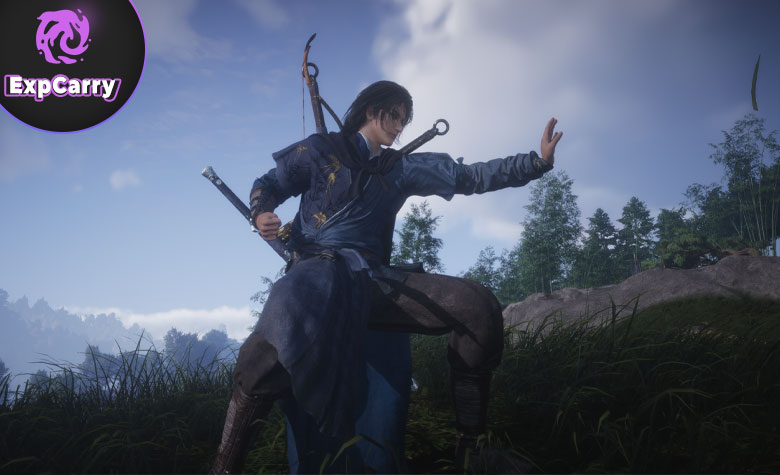
Beyond the Imperial Palace itself, the roadmap introduces two important modes: Martial Path Domain and Ancient Tombs. Martial Path Domain is a 5-player cooperative PvE mode, while Ancient Tombs is an exploration mode that sends players into dark tombs to fight enemies and chase valuable rewards.
These two additions matter because Where Winds Meet needs more than story updates to keep its player base engaged. A giant palace is useful for narrative and exploration, but live-service retention needs repeatable systems. Martial Path Domain gives coordinated groups a more direct PvE activity, while Ancient Tombs leans into exploration, danger, and loot pursuit.
| New content | Core function | Why it matters |
|---|---|---|
| Imperial Palace | Large royal court zone with factions and conspiracies | Expands story, exploration, and political roleplay |
| Martial Path Domain | 5-player cooperative PvE mode | Gives groups a more structured combat activity |
| Ancient Tombs | Dark exploration mode with enemies and valuable rewards | Adds dungeon-like exploration pressure and reward chasing |
| Homesteads | Player housing and sanctuary building in Qinghe | Adds long-term lifestyle progression outside combat |
| Gauntlets | New weapon with its own martial arts path | Expands combat styles with close-range fist-focused play |
| Companion System | Furry sidekicks with evolving personalities and dialogue | Adds social flavor and personal attachment systems |
The split is smart. Imperial Palace gives the game a prestige location. Martial Path Domain gives co-op players something more focused. Ancient Tombs gives explorers and loot-driven players a darker side activity. Homesteads and Companions support social and lifestyle play. Gauntlets support combat players. That is a better roadmap than dumping everything into one giant palace and hoping nobody notices the lack of structure.
Homesteads Could Become the Most Important Long-Term System
The Homesteads system is planned for June, after the Imperial Palace expansion window. It will send players back to Qinghe, where they can build a personal sanctuary, farm, and lean into the fantasy of living as a hidden martial arts master. That sounds softer than a palace conspiracy or a new weapon, but it may be more important for long-term retention.
Housing systems give players a reason to care about a world when they are not chasing combat rewards. They turn an open-world RPG from a route through content into a place where players keep roots. In a game like Where Winds Meet, where roleplay, occupations, social identity, and exploration are already part of the pitch, Homesteads fit naturally.
The risk is that Homesteads become a shallow decoration menu. The system needs enough farming, building, customization, utility, and social presence to feel like a real life path. If the player sanctuary is only a pretty room with furniture slots, it will fade quickly. If it ties into professions">professions, companions, social visits, resource loops, and personal storytelling, it could become one of the game's strongest non-combat anchors.
Gauntlets Bring a More Brutal Martial Arts Style to Where Winds Meet
Gauntlets are the next weapon on the roadmap, planned for summer. Everstone describes them as a visceral, fist-to-flesh combat option with its own martial arts path. That is a good fit for Where Winds Meet because the game already depends heavily on weapon identity and martial style flexibility.
A fist-focused weapon can change the rhythm of combat if it has enough mechanical personality. Swords, spears, dual blades, fans, umbrellas, and other weapons already push different styles. Gauntlets need to feel more direct, more physical, and more aggressive. They should not just be another weapon skin with a punch animation. The entire point of adding a new weapon is giving players a different way to read spacing, pressure, counters, burst windows, and combo flow.
For PvP, Gauntlets will need careful tuning. Close-range pressure weapons can become oppressive fast if mobility, stagger, or burst damage is too generous. For PvE, they could become a strong fantasy choice for players who want a more grounded martial artist build instead of blade-heavy wuxia elegance. Either way, this is one of the roadmap items players will judge immediately by feel, not by trailer language.
Companions and Panda Cosmetic Show the Softer Side of the Roadmap
The Companion System is planned for a future update and will add furry sidekicks whose personalities and dialogue can evolve as the bond with the player deepens. This is not the kind of feature that defines a combat update, but it fits the game's broader open-world identity. Where Winds Meet is trying to be more than a martial arts combat sandbox. It wants daily life, social presence, wandering stories, and personal relationships inside Jianghu.
The limited Panda cosmetic starts on May 19 and is available for 30 days, ending on June 17. It costs 60 Echo Beads, roughly 0.99 USD, and is tied to wildlife protection awareness. That is a small monetized item, but it also shows the tone of the current half-anniversary push: content roadmap, community thank-you gifts, cosmetic event, and a public promise of ongoing support.
Players can also claim three premium outfits for free during the half-anniversary event. That is useful for goodwill, especially in a free-to-play game where cosmetics and monetization are always under scrutiny. Giving players free premium outfits alongside a major roadmap is a cleaner community move than simply announcing a palace and then pointing everyone toward the shop like a merchant with a sword.
Quality-of-Life Work Is Doing the Boring but Necessary Heavy Lifting
Everstone says it has implemented more than 100 updates and optimizations over the past two months based on player feedback. The listed areas include gear progression, PvP matchmaking, guild wars, catch-up mechanics, beginner experience, PlayStation optimization, controller support, and other fixes.
This part matters more than it sounds. Large content updates bring players back, but quality-of-life work keeps them from leaving again after the first week. A massive palace will not save a game if progression feels bad, PvP matchmaking is irritating, guild war systems lack clarity, or console controls feel like someone designed them during a blackout.
| Optimization area | Why it matters for Imperial Palace |
|---|---|
| Gear progression | New modes and palace content need reward paths that feel worth repeating |
| PvP matchmaking | Competitive systems need fairer matches before new players commit deeper |
| Guild wars | Large social systems need clearer structure and better long-term incentives |
| Catch-up mechanics | Returning players need a realistic path into new expansion content |
| Beginner experience | New players attracted by the expansion need less early confusion |
| PlayStation and controller support | Console players need stable controls and performance for long sessions |
The studio also plans to expand guild systems with self-organized gameplay and GVE modes, continue weapon balance work, and deploy new servers in Australia, South America, and the Middle East. Those are not flashy trailer beats, but they are practical. Server coverage and control responsiveness matter. Players cannot admire the palace if latency turns every duel into an archaeological reconstruction of their inputs.
Imperial Palace Strengthens the Game's Live-Service Pace
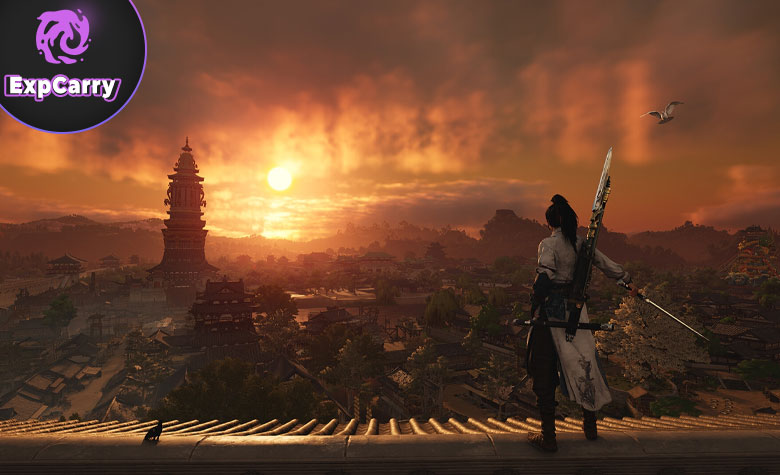
Where Winds Meet has moved quickly since its global launch. The game launched worldwide on PC and PlayStation 5 on November 14, 2025, followed by mobile availability on December 12, 2025, the Hexi expansion, and now Imperial Palace. The half-anniversary roadmap shows Everstone trying to position the game as a fast-moving wuxia live service rather than a static open-world RPG.
That pace can be powerful if the content holds up. Players like seeing a world expand regularly, especially when updates add new regions, weapons, storylines, modes, and lifestyle systems. But speed creates pressure. Every season needs enough substance. Every new system needs maintenance. Every big roadmap promise becomes a future complaint if delayed or underbuilt.
Eric Zheng, head of publishing for Where Winds Meet, framed the team's priority as delivering rich seasonal content and keeping the adventure moving. That is the correct message for a live-service RPG. The real test is not the statement. It is whether Imperial Palace, Homesteads, Ancient Tombs, Gauntlets, and Companions arrive with enough depth to justify that confidence.
The Biggest Risk Is Feature Sprawl
The Imperial Palace roadmap is ambitious, but ambition creates its own problem. Palace exploration, court factions, Homesteads, Companions, Gauntlets, 5-player PvE, Ancient Tombs, PvP work, guild expansions, GVE modes, regional servers, balance changes, and platform optimization are a lot of moving pieces. If they connect well, the game feels bigger and healthier. If they arrive unevenly, players get a pile of systems competing for attention.
Feature sprawl is a common live-service disease. A game adds housing, pets, dungeons, raids, PvP, guild systems, cosmetics, events, and new weapons, then spends the next year trying to make all of it coherent. Where Winds Meet has a strong thematic advantage because wuxia stories naturally support wandering, fighting, social bonds, personal homes, court intrigue, and martial progression. Still, theme alone does not solve system design.
The safest path is depth over noise. Imperial Palace needs to feel like a major narrative and exploration center. Homesteads need real utility and identity. Martial Path Domain needs good group combat. Ancient Tombs need tension and reward value. Gauntlets need a distinct combat rhythm. Companions need more than cosmetic cuteness. If each system has a real purpose, the roadmap works. If not, it becomes a buffet where half the dishes are decorative.
Imperial Palace Could Define Where Winds Meet's Second Phase
Imperial Palace arrives at a useful moment for Where Winds Meet. The game has already proved it can attract attention with its open-world wuxia setting, martial arts combat, and dense NPC-driven world. Now it needs to show that its seasonal updates can deepen that world instead of only widening the map.
The palace setting is a strong choice because it lets the game lean into a different side of wuxia storytelling. Not every major update has to be a new wilderness region or battlefield. A royal court can create tension through politics, reputation, investigation, hidden alliances, and social risk. That gives the expansion a different flavor from Hexi and from the game's broader open-world exploration.
If Everstone uses the palace as a proper narrative engine, Imperial Palace could become more than a big map. It could become the place where Where Winds Meet's longer story turns sharper, where Jianghu and imperial power collide, and where player choices start carrying heavier political weight. That is the interesting version. The boring version is a beautiful court full of errands. There are already enough errands in the world.
Final Thoughts
Where Winds Meet: Imperial Palace is a major update because it gives the game a new kind of centerpiece. The expansion opens a huge royal court and palace grounds in late May, with more than 3,000 NPCs, faction tension, royal connections, and conspiracy-driven storytelling. It shifts the game from wandering wuxia adventure into a more political space where court life, hidden motives, and imperial power can shape the next phase of the narrative.
The surrounding roadmap is just as important as the palace itself. Homesteads, Martial Path Domain, Ancient Tombs, Gauntlets, Companions, free premium outfits, limited cosmetics, server plans, guild improvements, weapon balance, and over 100 recent optimizations all point to a game trying to build a fuller live-service ecosystem. That is the right direction if Everstone can keep the systems deep enough and avoid drowning players in disconnected features.
The cautious verdict is that Imperial Palace looks like one of the most important Where Winds Meet roadmap beats since Hexi, but its success will depend on density, not size. A 1-million-square-meter palace sounds impressive. The real question is whether its NPCs, factions, stories, and activities make the space feel alive after the first tour. If they do, Imperial Palace can turn Where Winds Meet's second expansion into a serious statement of intent. If they do not, it will be another grand digital building where players sprint through the throne room looking for the next reward marker.