
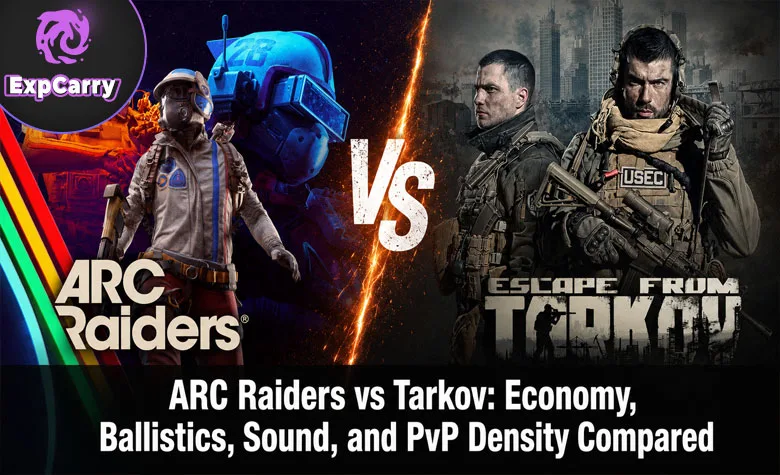
Tarkov veterans tired of wipes, cheaters, and exhausting raid pacing keep asking the same question: is ARC Raiders actually a real alternative, or just a softer extraction shooter that borrows the genre's surface tension without its punishment. Tarkov veterans tired of wipes, cheaters, and exhausting raid pacing keep asking the same question: is ARC Raiders actually a real alternative, or just a softer extraction shooter that borrows the genre's surface tension without its punishment. If you are looking for more on ARC Raiders, this is the main hub for the game. The honest answer sits in the mechanics, not the marketing. Both games are built around loot loss, hostile players, and the pressure of making it out alive, but they reach that tension through very different systems for economy, gunplay, sound, PvE threats, and raid structure. This breakdown compares what each game actually does at the mechanical level so the answer is practical: who should switch to ARC Raiders, and who is still better off staying in Tarkov.
ARC Raiders vs Tarkov Economy: What You Actually Lose on Death
The most persistent myth about ARC Raiders is that it removes the extraction genre's core risk. It does not. Dying topside still means losing what you brought out of Speranza and whatever you picked up during the raid, except for items protected by your Safe Pocket. There is no Tarkov-style insurance system, no delayed gear return, and no way to recover a dead loadout after another player or ARC machine takes you out.
Safe Pocket vs Secure Container
The key difference is how each game defines its safety net. The key difference is how each game defines its safety net. For players building around loot recovery, Stash Expansion can matter as much as what you keep in your Safe Pocket. Tarkov gives PMC players a secure container that protects whatever fits inside it, while the rest of the loadout is lost on death unless insured items are later returned. ARC Raiders uses the Safe Pocket instead: a protected slot system tied to augments and loadout choices. By default, it is more restrictive than Tarkov's secure container, but higher-tier looting augments change what can be protected. Weapons are not universally impossible to secure in ARC Raiders; they are blocked from ordinary Safe Pocket use, but the Safekeeper augment allows broader item protection, including cases where weapon storage is intended rather than an exploit.
That makes ARC Raiders less about pre-raid financial hedging and more about in-raid triage. In Tarkov, insurance rewards players who can afford to insure expensive gear and whose bodies are not fully looted. In ARC Raiders, the decision is immediate: what single item is valuable enough to protect before everything else disappears. Both systems punish death, but Tarkov softens some losses through delayed recovery, while ARC Raiders makes the protection smaller, clearer, and more final.
ARC Raiders vs Tarkov Ballistics: Shields, Armor, and Time to Kill
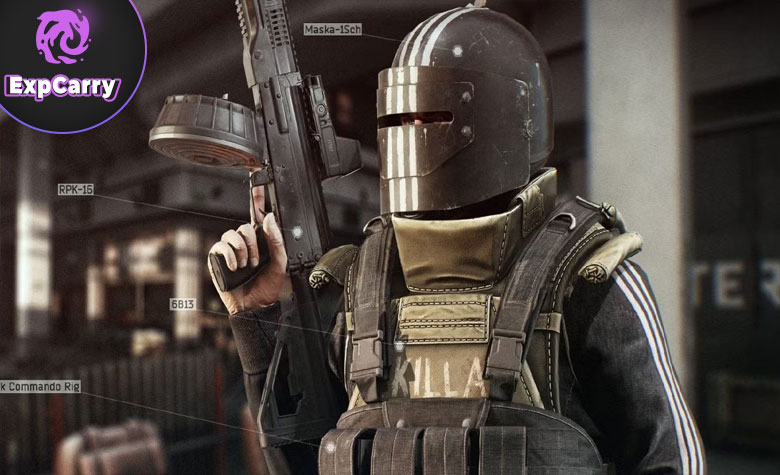
Tarkov's combat model is built around simulated ballistics. Every round has its own penetration value, damage profile, velocity, and interaction with specific armor classes. Limb damage also matters, so a leg shot and a thorax shot do not resolve the same way. This creates a combat system where ammo knowledge can decide a fight before the first shot is fired. A weak round into strong armor may do very little, while the right round from the right caliber can end an engagement instantly.
ARC Raiders replaces that model with a more readable shield and health structure. Instead of asking players to memorize dozens of ammunition and armor interactions, it asks them to read shield strength, weapon role, distance, positioning, and surrounding threats. Light, Medium, and Heavy shields create a more predictable damage curve than Tarkov's penetration checks, although exact time-to-kill values still move with balance patches. That distinction matters: ARC Raiders is easier to understand in the moment, but Tarkov gives more power to preparation, ammunition choice, and deep system knowledge.
This does not mean ARC Raiders has shallow combat. It means its difficulty comes from different pressure. A Tarkov fight can be decided by ammo, armor class, angle, limb damage, and whether one bullet slips through the correct hitbox. An ARC Raiders fight is more often decided by shield tier, weapon range, movement, third-person positioning, gadget use, and whether nearby ARC machines or other raiders collapse onto the fight. Tarkov is more punishing in its simulation. ARC Raiders is more readable, but still lethal when players overextend or get caught between multiple threats.
ARC Raiders vs Tarkov Perspective: First-Person Tension vs Third-Person Awareness
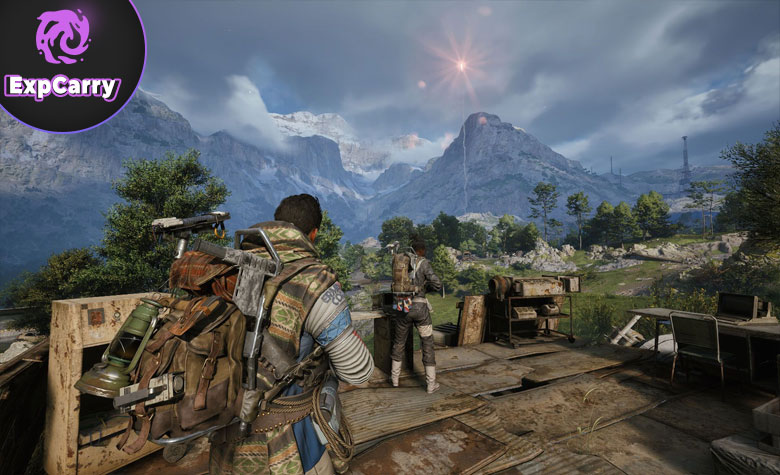
The first-person versus third-person split is one of the biggest mechanical differences between the two games. Tarkov's first-person camera makes every angle more dangerous because players only know what their character can directly see. Peeking a hallway, crossing an open field, or checking a dark room carries more uncertainty because the camera itself limits information.
First-Person vs Third-Person Combat
ARC Raiders changes that equation through third-person awareness. Players can read cover, watch corners, track movement, and evaluate threats with more spatial information than Tarkov allows. That makes the game feel more accessible, especially for players who dislike Tarkov's visual claustrophobia, but it also changes PvP fundamentals. Corner play, camera peeking, vertical cover, and movement timing matter more. A Tarkov veteran expecting the same first-person information denial will not find it here.
The adjustment is not just visual. Third-person combat changes how players push, hold, and disengage. In Tarkov, patience and sound discipline can let a player freeze an angle for minutes. In ARC Raiders, third-person awareness and faster repositioning make static play less reliable, especially when ARC machines, extraction timers, and other squads force movement. The result is a game that still punishes bad decisions, but does not punish visual uncertainty in the same way Tarkov does.
Explore services related to this guide, selected from our ARC Raiders catalog.
View All ARC Raiders Services

ARC Raiders vs Tarkov Sound Design: Tactical Clarity vs Atmospheric Immersion
Sound is where the two games diverge most sharply in design philosophy. Tarkov audio is built around tactical information: footsteps, surfaces, gear noise, distance, verticality, and weapon sounds are all part of the fight. Experienced players can often identify where someone is, how fast they are moving, and sometimes what kind of kit they are carrying before seeing them. Sound mastery is one of Tarkov's core skills. ARC Raiders takes a different approach. Embark has described the game's audio as a dense soundscape built from live recordings, procedural rules, environmental layers, ARC machine states, item sounds, backpack noise, and dynamic world logic. The goal is not to create a sterile competitive audio mix where every footstep is isolated. The goal is to make the surface feel alive, dangerous, and mechanically readable through a broader sound environment. That design choice splits players. Some praise ARC Raiders because the world sounds more alive and unpredictable. Others, especially players coming from Tarkov or tactical shooters, find that footsteps and directional cues can be masked by machines, weather, combat noise, or environmental detail. The practical takeaway is simple: ARC Raiders will not give Tarkov veterans the same level of clean audio-based map control. It has useful sound information, but it is layered into the world rather than separated for competitive precision.
ARC Raiders vs Tarkov PvE Threats: ARC Machines vs Scavs and Bosses
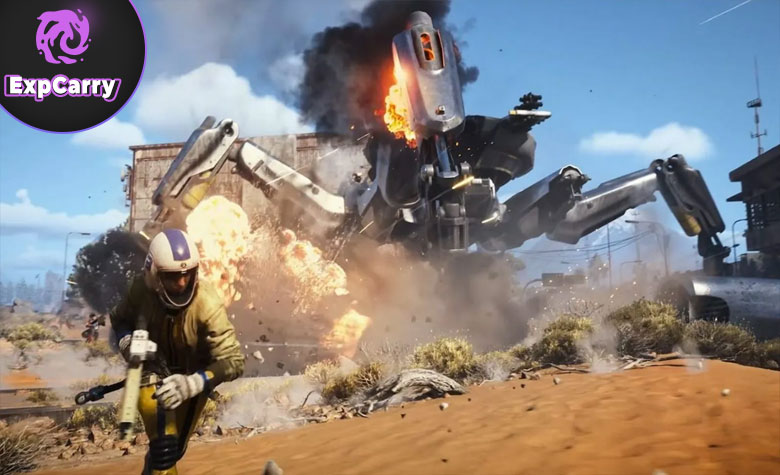
The PvE layer is another major difference. Tarkov's AI threat comes through Scavs, bosses, guards, cultists, rogues, and other human or human-like enemies. They are dangerous, but they still sit inside Tarkov's military-sim logic: firearms, armor, patrols, ambushes, and map-specific danger zones. ARC Raiders makes PvE part of the game's identity. ARC machines are not just background mobs guarding loot. Ticks, Snitches, Leapers, Bombardiers, Wasps, Hornets, Bastions, and larger threats like the Queen all create different kinds of pressure. Some punish careless looting indoors. Some reveal your position. Some force movement. Some make open-ground fighting risky. This changes PvP as well, because fighting another raider can attract machines, and fighting machines can reveal you to other players.
In Tarkov, PvE often creates noise, risk, and resource drain, but PvP remains the center of most high-stakes encounters. In ARC Raiders, PvE can become the third side of the fight. A player duel can turn into a three-way problem when machines arrive, and a quiet loot run can collapse because one bad movement triggers an ARC response. That makes ARC Raiders less pure as a PvP duel simulator, but stronger as a PvPvE extraction sandbox.
ARC Raiders vs Tarkov Raid Structure and PvP Density
Raid length and pacing shape how often players actually meet. ARC Raiders is built around shorter topside sessions, with extraction pressure arriving quickly and map conditions pushing players toward decisions instead of long periods of waiting. Extracts closing over time, hostile machines, and compressed raid flow make late-raid encounters more likely, especially around extraction routes. Tarkov raids are generally longer and slower depending on location, often sitting around the 35 to 45 minute range on major maps. More of that time is spent on cautious movement, sound discipline, looting routes, and avoiding known PvP hotspots. A skilled Tarkov player can often choose not to fight by rotating away from danger, waiting out pressure, or taking a quieter extraction path. The result is a clear split. ARC Raiders is better for players who want extraction pressure in shorter sessions and more frequent contact with human or AI threats. Tarkov is better for players who value long-form raids where patience, map knowledge, and avoidance can be as important as aim. ARC Raiders makes the session tighter. Tarkov gives the player more room to slow the game down.
Cheaters, Wipes, and Why Tarkov Veterans Are Looking Elsewhere
The frustration driving this comparison is specific. Tarkov's wipe cycle has historically reset progression, and the game's cheating reputation remains one of the most persistent reasons players look for alternatives. The experience varies heavily by region, map, timing, and player perception: some players report long clean stretches, while others describe suspicious deaths as a routine part of high-value raids. That inconsistency is part of the problem, because a new or returning player cannot know which version of Tarkov they are going to get.
Mandatory Wipes vs Voluntary Expeditions
ARC Raiders avoids one of Tarkov's biggest friction points by not relying on mandatory global wipes in the same way. However, it does not avoid reset mechanics entirely. ARC Raiders uses the Expedition Project, a voluntary reset system where players can choose to reset character progress for rewards. That distinction matters. Tarkov-style wipes are imposed on the whole player base. ARC Raiders' Expedition system is opt-in, so players who do not want to reset months of progress are not forced into the same loop.
On cheating, ARC Raiders has the advantage of being newer and having a different technical foundation, but it should not be treated as immune. No major multiplayer extraction shooter is cheat-proof. The more accurate comparison is that Tarkov carries years of community frustration around cheating, while Embark has been more publicly explicit about ARC Raiders' anti-cheat stack, including Easy Anti-Cheat, telemetry-driven detection, machine-learning models, and continued kernel-level work. That does not guarantee a clean future, but it does give players more current visibility into what the developer says it is doing.
Final Thoughts: Who Should Switch to ARC Raiders, and Who Should Stay in Tarkov
The mechanics point to a clear split rather than a universal winner. Players burned out on Tarkov's mandatory wipe structure, slow raids, punishing audio reliance, and unresolved cheating reputation may find ARC Raiders to be a real alternative rather than a casual imitation. It keeps meaningful loot-loss stakes, but makes combat more readable, raids shorter, PvE more active, and progression less dependent on forced resets.
Players who specifically value Tarkov's simulated ballistics, first-person tension, ammo knowledge, sound-based tactical mastery, and long raids built around patience will not find a direct replacement in ARC Raiders. Those systems are not missing from ARC Raiders by accident. They are part of Tarkov's identity, while ARC Raiders is built around a different kind of extraction pressure: third-person awareness, shield-based fights, hostile machines, fast triage, and shorter sessions where the world pushes players into decisions faster.
The simplest answer is this: ARC Raiders is the better choice for players who want extraction tension without Tarkov's heaviest friction. Tarkov is still the better choice for players who want the most punishing, simulation-heavy version of the genre. They share the same economic spine, but almost everything built on top of it is different enough that the right choice depends on what exactly made a player tired of Tarkov in the first place.