



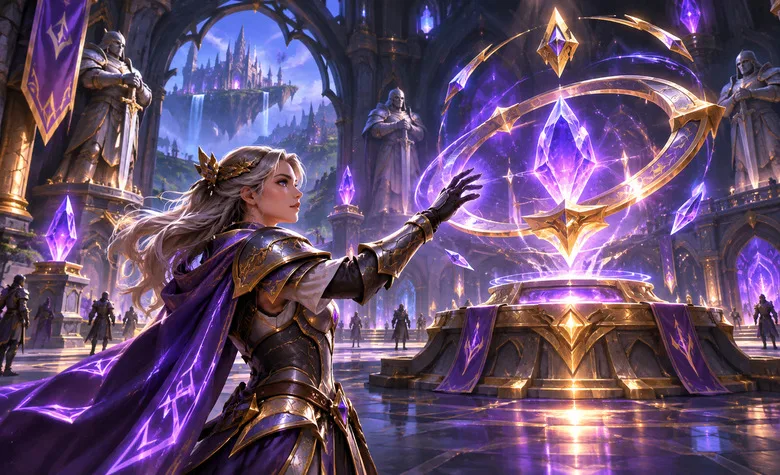
Modern video games have become increasingly sophisticated, combining detailed environments, responsive controls, and progression systems that give players reasons to return. From traditional role-playing games to competitive multiplayer titles, developers use a wide range of mechanics to make every session feel meaningful.
In 2026, engaging gameplay is no longer defined by impressive graphics alone. Players expect intuitive interfaces, rewarding challenges, meaningful customization, and a sense of progress that extends beyond individual matches or missions. Understanding how these elements work together helps explain why some games maintain active communities for years while others struggle to keep players interested.
What Makes Modern Game Mechanics Engaging?
Successful game design begins with a clear relationship between player actions and their consequences. When players complete a quest, defeat a difficult opponent, or discover a hidden location, the game should provide feedback that makes the achievement feel worthwhile.
Different genres approach this challenge in different ways. Role-playing games often emphasize character development and equipment upgrades, while competitive games focus on improving mechanical skills, tactical awareness, and teamwork.
Adventure games may reward exploration through new environments and story discoveries. Strategy games encourage players to experiment with different approaches and learn from previous decisions.
Despite these differences, successful games generally share one important characteristic: they give players understandable goals while providing enough variety to keep the journey interesting.
How Visual Effects Improve the Gaming Experience
Visual presentation plays an important role in modern game design. Animations, lighting, particle effects, and environmental details help communicate information while making virtual worlds more immersive.
For example, a powerful ability in an RPG may feature a distinctive animation that helps players immediately recognize its effects. A successful critical hit might produce a different visual response from an ordinary attack.
These details are more than decorative. They help players understand what is happening without constantly checking menus or numerical indicators.
Developers also use visual effects to distinguish important objects from ordinary environmental elements. Rare equipment may feature a unique appearance, while interactive locations can be highlighted through lighting or recognizable symbols.
However, excessive visual effects can become distracting. In fast-paced multiplayer games, too many animations may make it difficult to identify opponents, understand attacks, or react to changing situations.
The most effective visual design balances atmosphere with clarity.
Classic Gameplay and Modern Interactive Features
Many successful modern games combine familiar mechanics with new technological possibilities. Traditional movement systems, inventory management, and character progression remain recognizable, but developers continuously refine how players interact with them.
Classic role-playing games often relied on straightforward equipment systems and clearly defined character classes. Modern RPGs can offer more complex customization, including specialized skill trees, equipment combinations, and alternative combat approaches.
Some games also introduce accessibility features that make their systems easier to use. Adjustable controls, interface scaling, subtitle options, and customizable visual settings help players adapt the experience to their needs.
These improvements demonstrate that innovation does not always require replacing established mechanics. Sometimes the best development decisions involve making familiar systems more intuitive and flexible.
Progression Systems and Long-Term Motivation
Progression is one of the most important elements of modern gaming. Players often enjoy seeing their characters, accounts, or personal abilities improve over time.
In MMORPGs such as World of Warcraft, progress may involve leveling, collecting equipment, developing professions, and completing challenging group activities.
Action RPGs such as Diablo offer different approaches to progression, including character builds, equipment optimization, and repeated encounters that test increasingly refined strategies.
Competitive games provide another type of development. Players improve their rankings, learn new tactics, and develop the mechanical consistency required to perform against stronger opponents.
A well-designed progression system should make improvement visible without reducing the entire experience to repetitive tasks.
Why Meaningful Rewards Matter
Not every reward needs to provide a direct gameplay advantage. Cosmetic items, achievements, titles, and collectible objects can become valuable because of the effort required to obtain them or the memories associated with them.
A rare mount in an MMORPG might represent months of exploration or repeated dungeon runs. A distinctive character appearance can remind players of a challenging event they completed with friends.
The strongest reward systems connect these achievements to meaningful activities. Players are more likely to remember an item when obtaining it required a difficult challenge, careful preparation, or cooperation with other players.
How Randomness Creates Variety in Video Games
Random elements have existed in video games for decades. Developers use procedural generation, variable encounters, and randomized equipment properties to prevent every session from feeling identical.
In dungeon-focused games, players may encounter different enemy arrangements, environmental layouts, or equipment combinations during separate attempts.
This uncertainty can encourage exploration and experimentation. Instead of relying on a single predictable strategy, players must adapt to changing situations.
However, random systems require careful balancing. If important progression depends too heavily on unpredictable outcomes, players may feel that their effort is not being recognized.
Developers can address this problem through alternative progression routes, predictable achievement rewards, or systems that provide gradual advancement even when a particular item has not appeared.
The goal is to introduce variety without making long-term progress feel completely unpredictable.
The Role of Seasonal Content and Regular Updates
Modern online games frequently introduce new content through seasons, expansions, events, and regular updates.
These additions can provide fresh challenges for experienced players while creating opportunities for newcomers to discover the game.
Seasonal activities may include new quests, special encounters, cosmetic collections, competitive modes, or temporary changes to existing systems.
Regular updates also allow developers to respond to community feedback. Adjustments to character abilities, matchmaking systems, interface features, and equipment balance can improve the overall experience.
Nevertheless, frequent updates are not automatically beneficial. Players need enough time to understand new systems and enjoy existing content before major changes alter their strategies.
Successful long-term development requires a balance between innovation and consistency.
Why User Interface Design Matters
An intuitive interface is essential for an enjoyable gaming experience. Players should be able to access important information without navigating unnecessarily complicated menus.
Health indicators, ability cooldowns, inventory screens, maps, and quest trackers must communicate information clearly.
Different platforms also require different approaches. Desktop players may use keyboards and mice, while console players rely on controllers. Mobile interfaces must accommodate touchscreen controls and smaller displays.
Customization options can help improve usability. Adjustable interface elements allow players to position important information according to their preferences.
Good interface design reduces unnecessary distractions and lets players concentrate on the activities they enjoy.
Community Features and Multiplayer Interaction
Social interaction is another important reason why players remain engaged with online games.
Guilds, teams, cooperative missions, and competitive communities create experiences that extend beyond individual gameplay mechanics.
In MMORPGs, organized groups work together to complete difficult encounters, distribute responsibilities, and develop strategies.
Competitive multiplayer games rely on communication and teamwork, while cooperative adventure titles encourage players to coordinate their actions and share discoveries.
Community features also help newcomers learn complicated systems. Experienced players can provide advice, explain mechanics, and introduce others to activities they might otherwise overlook.
When social interaction is supported by thoughtful game design, the game world becomes a shared experience rather than a collection of isolated tasks.
Frequently Asked Questions About Modern Game Mechanics
What makes a video game engaging?
Engaging games combine clear goals, responsive controls, enjoyable challenges, meaningful progression, and feedback that helps players understand the results of their actions.
Why do developers use randomized game elements?
Randomized elements can increase variety, encourage experimentation, and make repeated activities feel different. Their effectiveness depends on how fairly and consistently they are implemented.
Are graphics more important than gameplay?
Graphics contribute to immersion, but smooth performance, intuitive controls, and satisfying gameplay mechanics are usually more important for long-term enjoyment.
How do seasonal updates affect player engagement?
Seasonal updates introduce fresh goals and challenges. They can encourage players to return, particularly when new content complements the existing game rather than replacing familiar systems too frequently.
Can modern games remain enjoyable without complex systems?
Yes. Simple mechanics can support excellent gameplay when they are responsive, well balanced, and offer enough depth for players to develop their skills.
Final Thoughts
The most successful modern video games combine technical quality with thoughtful design. Visual effects, progression systems, randomized encounters, customization, and multiplayer features all contribute to the experience, but none can replace enjoyable core gameplay.
Players continue returning to games that respect their time, communicate goals clearly, and provide meaningful opportunities to improve.
As gaming technology evolves, developers will continue experimenting with new ways to make virtual worlds more interactive. The fundamental challenge will remain the same: creating experiences that are enjoyable not only during the first session, but also after hundreds of hours of play.