Our CS2 Guides hub brings together practical Counter-Strike 2 information for players who want to understand the game better, improve their performance and make smarter decisions both inside and outside a match. Here you can find guides covering Premier, Competitive ranks, FACEIT, settings, aim, maps, economy, skins, trading, game mechanics and major CS2 updates.
Counter-Strike 2 rewards much more than raw aim. Consistent improvement comes from understanding movement, positioning, utility, economy, map control, communication and the settings that affect how clearly and reliably you can play. Our goal is to explain those systems without unnecessary filler and show what actually matters in a real match.
CS2 Gameplay and Improvement Guides
Improving at CS2 is usually not about finding one secret setting or copying a professional player's configuration. Strong players combine several fundamentals: accurate crosshair placement, controlled movement, efficient peeking, good positioning, utility knowledge and better decisions under pressure.
Our gameplay guides break these areas into practical topics that you can train individually and then combine in real matches. That includes aim routines, counter-strafing, recoil and spray control, positioning, movement, peeking, communication and round-by-round decision making.
If you are still building your fundamentals, start with our CS2 gameplay and tips guide and then move into more specific topics based on the part of your game that needs the most work.
Premier, Competitive Ranks and FACEIT
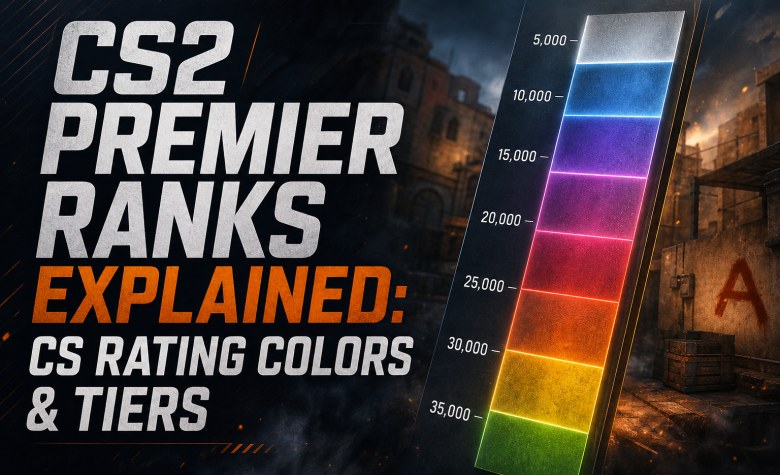
CS2 does not have only one competitive progression system. Players can move through Premier CS Rating, map-based Competitive ranks and third-party platforms such as FACEIT. Each system measures progression differently, so the best way to improve depends on where you actually play.
Our rank and competitive guides explain how these systems work, what affects progression, how placement matches function, how to approach losing streaks and what separates mechanical improvement from actual rank progression.
We also cover practical topics such as team composition, map selection, communication, consistency and preparing for more serious competitive play.
CS2 Settings, FPS and Competitive Setup
Good CS2 settings should make the game clear, responsive and consistent. They should not exist simply because a professional player uses them.
Our settings guides cover areas such as:
- video and performance settings;
- resolution and aspect ratio;
- mouse sensitivity and eDPI;
- crosshair configuration;
- audio and radar settings;
- key binds and useful console commands;
- FPS, latency and visibility optimization.
When Valve changes a setting or game system, we review the practical impact instead of assuming that an older CS:GO recommendation still applies to CS2.
Maps, Utility and Round Strategy
Knowing a map means more than memorizing callouts. Strong map knowledge includes understanding timings, common angles, rotation paths, utility, bombsite setups and which areas of the map actually decide a round.
Our CS2 map guides are designed to help players understand:
- important callouts;
- T and CT positioning;
- default setups;
- site executes and retakes;
- smoke, flash and molotov usage;
- rotations and map control;
- common mistakes on popular competitive maps.
Use these guides as a foundation, then practice utility and positioning on the server rather than trying to memorize dozens of lineups at once.
CS2 Economy and Better Round Decisions
Counter-Strike is also an economy game. Winning more rounds often starts with understanding when your team should full buy, save, eco or force rather than making five independent purchases.
Our economy content explains weapon costs, loss bonuses, kill rewards and how one purchase can affect not only the current round but the next several rounds as well.
For players trying to climb Premier or FACEIT, better economy decisions are one of the easiest ways to improve without requiring better mechanical aim.
CS2 Skins, Market and Trading Guides
CS2 skins have their own ecosystem of finishes, wear values, patterns, marketplaces and trading risks. We cover the market from a player's perspective rather than treating every expensive skin as a good purchase.
Our skin guides explain how to compare prices, evaluate cheaper alternatives and understand the difference between Steam Market and external marketplaces. You can start with our Steam Market vs third-party CS2 marketplaces guide or browse our guide to the best affordable CS2 gloves.
Prices and market conditions can change quickly, so market-related content should always be checked against current listings before making a purchase or trade.
CS2 Updates and Changing Mechanics
Counter-Strike 2 continues to receive changes to maps, weapons, matchmaking, settings and other game systems. That means older advice is not always reliable simply because it once worked in CS:GO or an earlier version of CS2.
We review important changes and update our guides when they materially affect gameplay. For topics that depend on current values, map pools or game rules, we separate stable fundamentals from information that may change with a future Valve update.
How to Use Our CS2 Guides
If you are new to Counter-Strike 2, start with gameplay fundamentals, settings and the ranking systems. Once those are comfortable, move into map-specific strategy, economy, utility and more advanced mechanics.
If you already play Premier or FACEIT regularly, focus on the weakest part of your current game rather than reading random guides. A player with strong aim but poor positioning benefits more from map and decision-making work than from another sensitivity change.
Our CS2 Guides category is continuously built around those practical questions: what should you improve, how does the system actually work and what can you apply in your next match?
If you want direct help with progression rather than only reading guides, visit our CS2 services or explore CS2 coaching for more personalized improvement.




 ExpCarry Editorial TeamExpCarry Editorial Team