




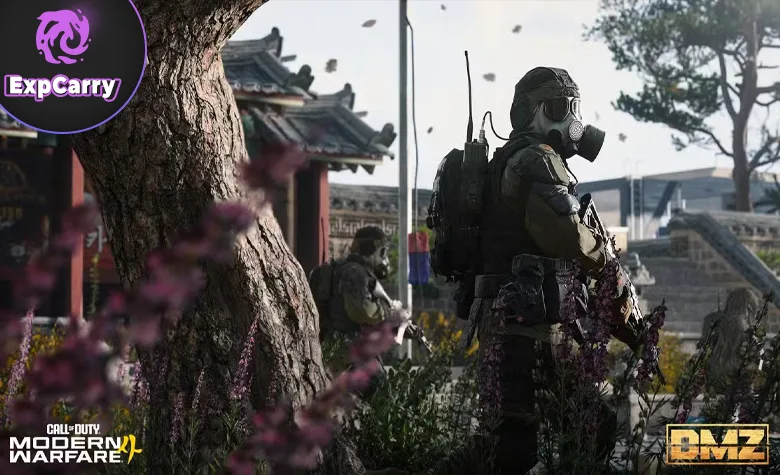
Call of Duty: Modern Warfare 4 gives DMZ a much larger role than a side mode. The new version is built around Hajin, a large Exclusion Zone shaped by the aftermath of the Modern Warfare 4 Campaign. Players enter the area as off-the-books assets, search for advanced military technology, complete operations, fight enemy forces, face other players, and extract with whatever they can carry.
Modern Warfare 4 is scheduled for release on October 23, 2026. The official site presents Campaign, Multiplayer, and DMZ as the main game modes, while the DMZ deep dive describes the mode as Call of Duty's definitive extraction shooter. The focus is on repeated deployments, inventory decisions, mission progress, escalating threats, and recovery systems instead of short match-based objectives only.
Modern Warfare 4 DMZ centers on Hajin
Hajin is the main setting for Modern Warfare 4 DMZ. Activision describes it as a sprawling Exclusion Zone created after the events of the campaign. The zone is built for exploration, survival, and extraction, with several activity layers running at the same time. Players are not only moving through a large map for loot. They are entering a conflict area where story objectives, dynamic operations, enemy behavior, player encounters, and extraction timing all affect the run.
The official setup places Hajin in a contested region tied to the Korean Peninsula conflict. The area is scarred by radiation, evacuation, abandoned military technology, and collapsed infrastructure. Locations such as the irradiated Fallout reactor, Prison complex, Hajin City, and Military Base give the zone different combat spaces, traversal routes, hidden areas, and risk levels.
This gives DMZ a stronger identity than a standard multiplayer variant. Hajin is designed as a combat sandbox where players can choose how deep they want to push into the zone. A squad can focus on a mission, gather supplies, search for better weapons, avoid fights, engage other players, or extract early if the risk becomes too high. This structure supports solo play and squad play without forcing every deployment into the same route.
The campaign connection also matters because DMZ is not framed as a disconnected loot mode. The area exists because of the wider conflict, and the main objective is tied to recovering advanced military technology before it falls into hostile hands. That gives the extraction loop a clearer narrative reason and makes the mode part of the larger MW4 package.
Modern Warfare 4 DMZ uses Story Missions and Dynamic Operations
Modern Warfare 4 DMZ includes narrative-driven Story Missions, Dynamic Operations, Side Ops, and Free Roam. These systems are important because they give players several types of goals inside one deployment. Story Missions push the larger DMZ narrative forward, while Dynamic Operations and Side Ops create additional objectives that can change the player's route through Hajin.
Free Roam gives the mode more flexibility. Players can move through the zone, look for supplies, scout enemy activity, and decide when to engage or avoid combat. This makes DMZ different from a linear co-op mission and different from a normal multiplayer match. The player is not locked to a single objective path, and the extraction decision remains part of the pressure.
Dynamic objectives make each deployment less predictable
The official deep dive places heavy emphasis on unpredictable objectives, enemy encounters, and player-driven situations. This means DMZ is designed around repeated runs where the same map can produce different priorities. A squad may begin with one mission, then shift to another task if a better opportunity appears or if enemy activity blocks the original route.
Side Ops also help the map feel less static. Activities such as repairing vehicles, finding supply drops, using radio towers, and entering dangerous fallout sectors can pull players away from their original plan. These smaller objectives support the larger extraction loop because they create decisions inside the deployment instead of only before it starts.
This structure is one of the clearest signs that Call of Duty is making a larger investment in DMZ. The mode is not only about extracting loot. It adds story progression, operational choices, open movement, and risk management across multiple deployments. That gives players more reasons to return than simple weapon leveling or short-term rewards.
Hajin adds weather, enemies, and escalating threats
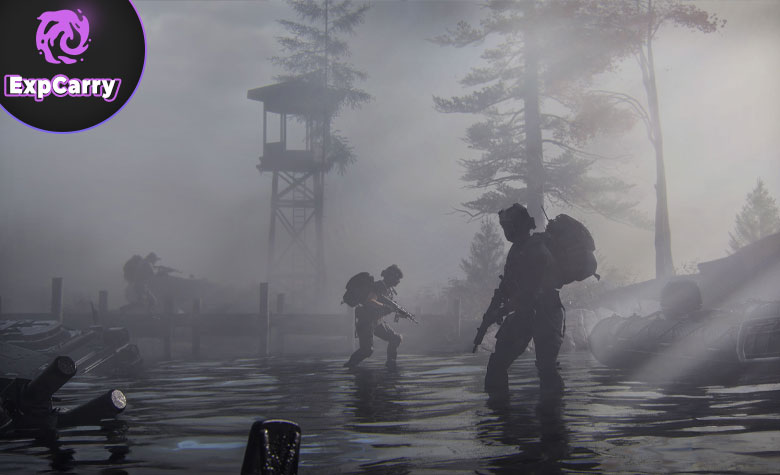
Modern Warfare 4 DMZ is described as a living combat world with unpredictable enemy encounters, weather, and objectives. Weather can change visibility and movement conditions, while enemy behavior creates pressure across the map. Sudden rain, fog, and overcast conditions can turn familiar routes into less reliable paths, especially when players are already carrying valuable gear.
Information is one of the main resources in an extraction shooter. Players need to judge when to keep looting, when to finish an objective, when to avoid contact, and when to extract. Weather and escalating threats make those decisions harder because the situation can shift during the run. A safe route may become risky, and a squad that delays too long can lose the advantage.
DMZ also includes PvP, which adds another layer to the risk. Human players can interrupt missions, challenge extraction attempts, or force squads into fights they did not plan for. The mode still includes AI-controlled enemies and objectives, but PvP makes every deployment less controlled. Players must watch both the environment and other squads.
PvP has its own risk and reward systems
Modern Warfare 4 DMZ does not treat PvP as only random player contact. The deep dive also confirms a Bounty system built around rival Operator eliminations, dog tags, extraction payouts, and notoriety. Eliminating other Operators can increase both the reward and the danger, while hunting bounty targets can reduce the pressure on a squad's own back.
Proximity Chat is another important part of the PvP layer. The upgraded version includes distance-based vocal falloff, directionality, and environmental voice reverb. That means communication can become a tactical tool. Players may negotiate, threaten, bait, avoid a fight, or use nearby voices as information before deciding how to move.
Modern Warfare 4 DMZ builds progression around inventory and operators
Progression is a major part of the new DMZ structure. The official deep dive lists Forward Operating Base, looting, crafting, weapon condition, weapon variants, and recovery features as key parts of the mode. These systems point to a more persistent extraction loop where players build resources across deployments instead of starting every run from the same baseline.
The Forward Operating Base gives players a central progression layer connected to what they recover from Hajin. Before and after deployments, players return to the FOB to prepare, manage resources, and unlock new services. The FOB includes systems such as the 3D Printer crafting station, The Stash for stored inventory, weapon purchasing, a firing range, bounty boards, and upgrades that expand over time.
Looting and crafting support longer-term preparation, while weapon condition and variants make equipment management more important. A weapon is not only a temporary pickup. Its state, value, and use can affect how players prepare for the next run. The mode also connects progression to Operators through XP, missions, traits, and long-term development.
Recovery systems make failure part of progression
Recovery features are especially important for DMZ because extraction modes need failure to have weight. If a player dies or fails to extract, the result should affect more than the match scoreboard. Modern Warfare 4 uses systems such as the Tourniquet and MIA System to create consequences without fully blocking long-term progress.
The Tourniquet gives players another survival option when they are wounded and do not have self-revive equipped. It can keep an Operator alive briefly, but it still requires additional medical items to return to full health. The MIA System is broader. If an Operator is lost in action, players can spend in-game cash at the FOB to deploy rescue teams and recover that Operator instead of starting from scratch.
This makes failure meaningful without making every mistake feel like a complete reset. Failed operations can still cost equipment, resources, and momentum, but players continue earning XP, unlocking rewards, developing traits, and moving through long-term progression. That balance is important if DMZ is going to keep the tension of extraction gameplay while staying accessible to a wider Call of Duty audience.
Modern Warfare 4 makes DMZ a core Call of Duty mode
The main takeaway is simple: Modern Warfare 4 DMZ is being treated as a major part of the game. Activision is presenting it alongside Campaign and Multiplayer, and the official deep dive gives DMZ its own systems, setting, progression, PvP layer, and mission structure. This is a larger approach than the earlier DMZ Beta from Modern Warfare 2.
For players who wanted Call of Duty to take extraction gameplay more seriously, Modern Warfare 4 DMZ is the feature to watch. Hajin gives the mode a dedicated battlefield, Story Missions and Dynamic Operations give it structure, Free Roam gives it flexibility, and FOB, crafting, weapon condition, variants, traits, and recovery systems give it a longer progression loop.
The mode still needs to prove itself at launch, but the direction is clear from the current official material. Modern Warfare 4 is not using DMZ as a small experiment. It is building a full extraction experience around Hajin, PvPvE pressure, persistent progression, operator recovery, and repeated high-risk deployments.
Final Thoughts
Modern Warfare 4 DMZ looks important because it gives Call of Duty a mode built around decisions that carry past a single match. The strongest part is not one feature by itself, but the way Hajin, FOB progression, PvP pressure, recovery systems, and dynamic objectives all point toward a more persistent loop. If these systems feel balanced at launch, DMZ could become one of the main reasons players keep returning to Modern Warfare 4 after finishing the campaign and moving beyond standard multiplayer.