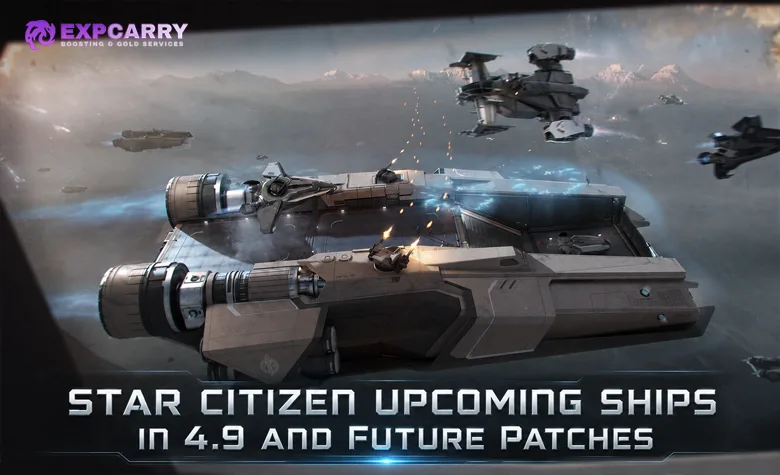
Upcoming ships in Star Citizen range from active production projects such as the Drake Kraken, Anvil Liberator, and RSI Galaxy to long-term concepts that have no confirmed release window. The most important distinction is between a ship being actively developed, completing a production milestone, appearing on the official Release View, and becoming flyable in LIVE. Those events do not necessarily happen at the same time, and a whitebox or greybox milestone is not a release-date announcement.
This guide tracks the development status, latest publicly reported production stage, expected release timing, ship specifications, intended crew, and historical pledge prices of major unreleased Star Citizen ships. It uses the October 9, 2026 Roadmap Roundup and the September 2026 Persistent Universe Monthly Report as its principal current references, while distinguishing official release targets from estimates and older concept information.
Short answer: as of Alpha 4.10.2 LIVE, the Kraken is in LOD0 production, the Liberator has completed greybox work and is progressing through LOD0, and the Galaxy has passed its greybox review and entered LOD0. None has a confirmed LIVE release patch; the Kraken has a public DefenseCon 2957 indication, while the remaining unreleased ships have no dependable official launch date.
Star Citizen Alpha 4.10.2 Ships and Current Release Status
Star Citizen Alpha 4.10.2 was released to LIVE on October 9, 2026. The update introduced RSI Discovery Month content, the RSI Constellation Mk IV Gold Standard overhaul, the RSI Constellation Mk V Centaurus, and the RSI Skylark. The Centaurus and Skylark are accessible through a limited-time rental opportunity during Discovery Month, which should not be confused with general pledge-store or in-game purchase availability.
The October 9 Roadmap Roundup marks the Centaurus and Skylark as Released on the roadmap. It does not assign the Kraken, Liberator, Galaxy, Pioneer, or the other major concepts in this guide to Alpha 4.10.2 or a confirmed Alpha 4.11 launch.
Alpha 4.11 is currently targeted for Q4 2026. The roadmap continues to focus on Nyx planetary content, Genesis-related development, and associated technology. Its updated schedule should not be interpreted as a ship-release promise.
For the complete list of unreleased ships, there are several different levels of evidence.
| Status label | Meaning for a release estimate |
|---|---|
| Released | The ship or feature has entered the stated public game release. This confirms implementation in that release, but does not necessarily mean the ship is available for general purchase. |
| Committed | A roadmap deliverable has passed the release review. It has high scheduling confidence but can still change under exceptional circumstances. |
| Tentative | The ship or feature is provisionally scheduled and can move before completion of the release review. |
| Active production | Developers are working on the ship. This does not by itself identify a public delivery patch. |
| Pre-production | Teams are resolving concept, technical, layout, and asset requirements before full production. |
| Whitebox | The ship's main dimensions, layout, interior flow, and gameplay spaces are being established. |
| Greybox | Art and functional spaces are more developed, but substantial detail, integration, and testing may remain. |
| LOD0 | The ship's detailed, high-quality assets are being developed; this does not automatically mean that the vehicle is ready for release. |
| Final review and testing | The vehicle is closer to delivery, but defects, gameplay integration, and release scheduling can still delay it. |
| Concept or backlog | The ship has an announced design but lacks a sufficiently recent, named production milestone to establish an imminent release. |
| Community estimate | An unofficial projection based on development information, not a date promised by CIG. |
The official Release View is the appropriate place to check patch assignments. Monthly Reports describe what development teams worked on, but completing a greybox gate or scheduling LOD0 work does not automatically add the ship to the next public patch.
The September Monthly Report provides the clearest current production milestones for the Kraken, Liberator, and Galaxy. Other ships should retain their latest specifically identified status until CIG publishes a newer update about them.
Several vehicles that previously appeared on upcoming-ship lists are already flight-ready, including the Apollo, Perseus, Ironclad, and Railen families. They should not be counted as unreleased concept ships merely because they were once delayed.
Star Citizen Upcoming Ships, Crew, Prices, and Release Estimates
The following table includes the major unreleased ships from the original guide, with their development status updated where more recent public evidence is available. Specifications and pledge prices are historical design references, not newly verified October 2026 store offers.
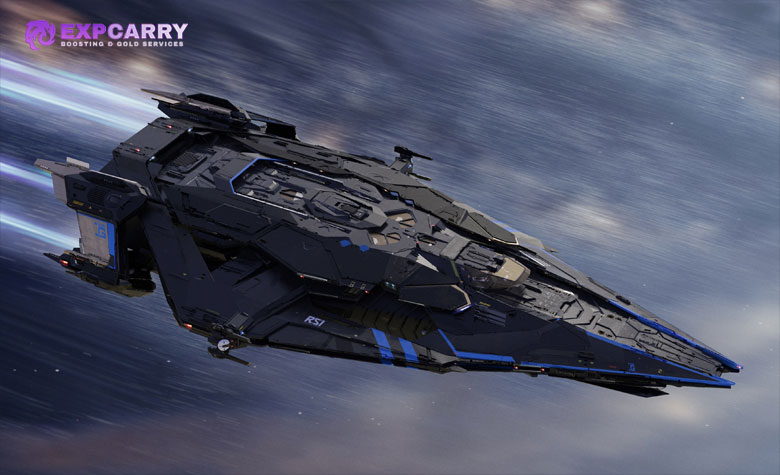
Listed crew sizes and SCU values may change during production. Approximate pledge prices are retained for context, but should be checked against the official RSI store during an actual sale. The release-outlook column deliberately avoids assigning unsupported years to ships without a public target.
| Ship | Main role | Listed crew | Concept cargo | Historical pledge price | Latest confirmed stage | Release outlook |
|---|---|---|---|---|---|---|
| Drake Kraken | Capital carrier | 10 | 3,792 SCU | About $1,650 | LOD0, active production in September 2026 | DefenseCon 2957 indication for 2027; no confirmed LIVE patch |
| Anvil Liberator | Ship and vehicle transport | 1–2 | 400 SCU | About $575 | Greybox work completed; substantial LOD0 work underway in September 2026, with a formal review planned for October | No official release date or patch |
| RSI Galaxy | Modular cargo, medical, and refining platform | 6 | 64 SCU base hull | About $380, hull only | Greybox review passed; LOD0 work underway in September 2026 | No official release date or patch |
| CNOU Pioneer | Capital construction ship | 4–8 | 1,000 SCU, historical specification | About $925 | Previously reported active development; no named September 2026 production milestone verified | No confirmed patch; dependent on construction systems |
| Banu Merchantman | Trading vessel and mobile marketplace | 4–8 | 2,880 SCU | About $650 | Previously moved to backlog; production return was planned for H2 2026 but restart not independently confirmed | No confirmed release window |
| RSI Arrastra | Large mining and refining ship | 2–5 | 576 SCU | About $575 | Concept; no newer public production stage verified | No confirmed release window |
| RSI Orion | Capital mining and refining | 4–7 | 384 SCU, historical conventional cargo figure | About $650 | Concept; current active production not verified | No confirmed release window |
| MISC Endeavor | Science, research, agriculture, and medical platform | 3–5 | 500 SCU | About $350, base hull | Concept; no current named production milestone verified | No confirmed release window |
| MISC Odyssey | Self-sufficient exploration ship | 6 | 252 SCU | About $700 | Concept; no current named production milestone verified | No confirmed release window |
| Aegis Nautilus | Mine laying, sweeping, and area denial | 4–8 | 64 SCU | About $725 | Concept; active production not verified | No confirmed release window |
| Aegis Vulcan | Repair, refuel, and rearm support | 1–3 | 12 SCU | About $200 | Concept; active production not verified | No confirmed release window |
| Anvil Crucible | Heavy repair and workshop ship | 3–8 | 230 SCU | About $350 | Established concept; no current production stage verified | No confirmed release window |
| MISC Hull D | Capital bulk freight | 3–5 | 6,912 SCU | About $550 | Concept; no verified current production milestone | No confirmed release window |
| MISC Hull E | Maximum-scale freight | 4–5 | 12,288 SCU | About $750 | Concept; no verified current production milestone | No confirmed release window |
| Crusader Genesis Starliner | Passenger transport | 2–8 | 300 SCU | About $400 | Concept; no current named production milestone verified | No confirmed release window |
This table separates actual production progress from an absence of new evidence. A ship remaining listed as a concept does not prove that no internal work exists; it means a more advanced current stage cannot responsibly be claimed from the public reporting reviewed here.
Only the Kraken has a sufficiently specific public event indication among these ships. Galaxy and Liberator production progress makes them important projects to monitor, but their work-in-progress status does not establish delivery at IAE 2956, Alpha 4.11, or any other upcoming event.
Kraken, Liberator, and Galaxy Production Details
The Kraken, Liberator, and Galaxy have the strongest recent, individually named production evidence among the major unreleased ships in this guide. Each progressed during September 2026, but they are at different stages of integration and development.
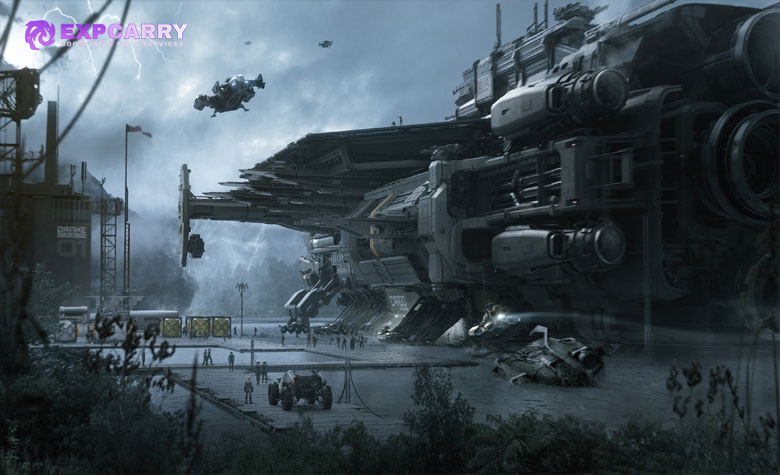
The September report is especially useful because it identifies completed reviews and work currently being performed, rather than relying on speculative release predictions.
Drake Kraken and Kraken Privateer
The Drake Kraken is a capital carrier designed to transport, support, and operate smaller spacecraft. The original specifications include six external landing pads, two internal hangars, substantial cargo capacity, defensive turrets, and facilities intended to support ship operations.
Its production history shows steady development through several major stages:
- 2025: pre-production and whitebox work established the updated design.
- May 2026: the ship reached greybox, with revisions to its approximate dimensions and interior layout.
- August 2026: work continued on the exterior, hangar, bridge, materials, and major internal spaces.
- September 2026: the Kraken was in LOD0 production, with developers working across the ship's systems and interiors.
The September Monthly Report specifically describes work on integrated internal transport, including lifts and a tram, along with dedicated capital components located across multiple engineering rooms.
These are meaningful production milestones. The team is no longer simply establishing the ship's basic shape; it is building out detailed spaces and systems required for its intended function.
However, the Kraken remains a complex capital vessel. Work still has to account for engineering, multi-deck navigation, docking and landing-pad operations, component interactions, ship services, damage behavior, audio, optimization, and testing.
Release outlook: during DefenseCon 2956, Drake's presentation pointed toward DefenseCon 2957 with language about unleashing the Kraken. This provides a public indication associated with 2027, but it is not a committed Release View card or an exact LIVE release date.
The Kraken Privateer is a distinct commercial variant designed around onboard shops and trading facilities. It should not automatically be assigned the same production stage or release date as the base Kraken.
CIG's progress on the standard Kraken may support later variant development, but the Privateer's shop interiors, commercial gameplay, and other differences require their own implementation.
Anvil Liberator
The Anvil Liberator is a ship and ground-vehicle transport intended to move smaller craft between operating locations.
Its published design includes three landing pads, an internal vehicle garage, and 400 SCU of cargo capacity. Unlike the Kraken, the Liberator is primarily a transporter rather than a fully equipped capital fleet-service carrier.
Production moved through several stages during 2026:
- June: the ship was reported in whitebox, with layout and access work underway.
- August: the Liberator progressed through greybox. Interior spaces were refined, while main and maneuvering thrusters and landing gear were integrated.
- September: greybox work wrapped up, with a formal review planned for early October.
- Late September: substantial areas had already progressed into LOD0.
- October production target: the September report anticipated completion of the relevant LOD0 work in late October.
The late-October reference is a development target, not a public release date. Completing LOD0 does not mean a ship is immediately ready for LIVE.
Additional work may still involve art polish, engineering, damage setup, ship systems, cargo and vehicle interactions, audio, optimization, and testing.
Release outlook: no committed LIVE patch or official release window has been published for the Liberator. Community expectations tied to IAE 2956 or another event should be treated as speculation unless CIG assigns a specific release target.
RSI Galaxy and Its Modules
The RSI Galaxy is a modular ship designed around interchangeable industrial, cargo, and medical functions.
Its core design includes a central module bay, a small rear hangar, crew facilities, and permanent cargo storage. Previously published modules cover additional cargo, medical services, and refining.
Module specifications and historical pledge prices remain subject to change before release, particularly where gameplay systems have evolved since the initial concept announcement.
The latest production history shows:
- May–June 2026: the ship progressed through whitebox work and layout development.
- August: interior color and lighting work continued ahead of the greybox gate review.
- September: the Galaxy successfully passed its greybox review.
- After review: the team advanced into LOD0 work, including corridors, wall details, lighting, and signage.
- Modules: development continued alongside the main hull.
This is stronger evidence than the original article's whitebox status. The Galaxy has advanced into detailed production work, but the specific modules and their functional integration remain important dependencies.
Completing a modular hull does not automatically make all planned modules available on release day. The first module lineup, exchange mechanics, and functionality require their own confirmation.
Release outlook: no official patch or date has been assigned to the Galaxy. A late-2026 release is a community expectation, not a confirmed production commitment. The September report supports continued progress but not an exact delivery window.
The September Star Citizen Monthly Report documents the latest named production details for all three ships.
Explore services related to this guide, selected from our Star Citizen catalog.
View All Star Citizen Services

Industrial, Mining, and Construction Ships
Industrial concepts depend on both the vehicle development pipeline and the gameplay systems required to operate them. The Pioneer is tied to player construction, the Arrastra and Orion to advanced industrial mining, and the Endeavor to several specialized professions.
Pioneer and Arrastra
The Consolidated Outland Pioneer is an announced capital construction ship intended to support large-scale planetary building, manufacturing, and material logistics.
Its role has changed since the original concept. CIG's more recent construction presentations describe using drones and appropriate building equipment to create structures at the selected site, rather than producing a fully assembled outpost inside the Pioneer and placing it on a planet.
The Pioneer has been associated with active development, but the September 2026 ship-art report does not provide a new individually named whitebox, greybox, or LOD0 milestone for the vessel.
Therefore, the guide should not claim that the Pioneer passed a specific production gate in September or that its release is imminent.
Its main remaining dependency is the intended base-building profession. Item crafting is already available in LIVE, but player-owned planetary construction, operational land claims, and the associated building systems are not available as a complete gameplay loop.
Release outlook: no official LIVE patch or date has been published for the Pioneer. Its release should be followed through explicit production reports and base-building milestones rather than inferred from unrelated crafting updates.
The RSI Arrastra is a large mining and refining ship designed for a small crew. Its concept includes several mining positions, refinery capability, cargo capacity, and space for ground vehicles.
Unlike the MOLE, the Arrastra aims to combine more of the resource extraction and processing chain aboard one ship.
However, no newer individually named production stage or release commitment was verified in the latest reporting reviewed for this guide.
Release outlook: no confirmed release year or patch. Older projections placing the Arrastra in 2027 or later should not be presented as a CIG commitment.
Orion and Endeavor
The RSI Orion is a capital mining platform designed around industrial-scale extraction, resource handling, and onboard refining.
Its intended operations are more complex than ordinary Prospector or MOLE mining and would require substantial crew coordination and material logistics.
The original concept specifications provide an indication of the ship's scale, but exact dimensions, capacity, equipment, and internal layout may change during any renewed production effort.
No current named production milestone or confirmed release window has been published in the latest official reports reviewed here.
The MISC Endeavor is a modular science and research vessel with configurations associated with medicine, agriculture, scientific equipment, and other specialized operations.
Its announced modules make it one of the most career-dependent ship concepts. Several intended scientific and advanced medical systems are not yet available at their proposed depth in the current game.
The Endeavor also lacks a current confirmed ship-production stage and release date.
For both vessels, an accurate release estimate is not announced. Assigning an arbitrary year would create false precision without a corresponding roadmap commitment.
Trade, Exploration, Freight, and Passenger Ships
These ships depend on infrastructure and gameplay beyond their physical hulls. The Merchantman requires marketplace features, the Odyssey needs deeper exploration systems, the larger Hull series depends on capital freight infrastructure, and the Genesis Starliner requires passenger transport gameplay.
For concepts whose intended profession is only partially implemented, a completed ship model would not automatically provide its original full gameplay role.
Banu Merchantman and MISC Odyssey
The Banu Merchantman combines cargo transportation with the idea of a mobile marketplace, including onboard retail spaces and trading facilities.
Its development was previously moved out of active production after work on the complex Banu design and asset requirements became difficult to sustain.
CIG later discussed resuming work during the second half of 2026. That statement is a production-planning intention, not proof that the ship had reached a new whitebox, greybox, or LOD0 stage by October.
The September 2026 Monthly Report does not identify a Merchantman production milestone by name.
Release outlook: a firm release window cannot be supported from current public production evidence. The previously suggested 2028-or-later estimate is an unofficial forecast and should not be displayed as an expected CIG release year.
The MISC Odyssey is a long-range exploration concept designed around self-sufficiency, resource gathering, and onboard support systems.
Its announced configuration includes a hangar, medical facilities, mining equipment, a refinery-related fuel-production concept, and living space for extended travel.
These features describe the intended role, not a finished feature set in the present LIVE game.
There is no recently confirmed active production stage or official release date for the Odyssey.
Release outlook: unannounced. A previous 2028 estimate should be treated as unsupported rather than used as a purchasing deadline.
Hull D, Hull E, and Genesis Starliner
The MISC Hull D and MISC Hull E are capital-scale cargo ships designed around extensive external cargo spindles.
Their published design capacities are 6,912 SCU and 12,288 SCU respectively, although the final specifications may change before launch.
Both require operational infrastructure suitable for very large freight transactions, including docking, physical cargo management, market access, and ship support.
The Hull C already provides a smaller implementation of the broader Hull-series cargo concept in LIVE, but its availability does not establish a release timetable for Hull D or Hull E.
Neither capital Hull model has a confirmed current production stage or committed release patch in the latest reports reviewed.
The Crusader Genesis Starliner is a passenger transport ship intended for scheduled services, commercial travel, and related passenger-care gameplay.
Its intended profession requires functioning boarding, NPC passenger behavior, transport contracts, scheduling, passenger services, and related systems.
No current named production milestone or release date has been confirmed for the Genesis Starliner.
For all three concepts, the appropriate public status is no official release window. Their intended roles explain why they remain important to future gameplay without proving that they are scheduled for an upcoming Alpha patch.
Combat, Repair, and Fleet Support Ships
Specialist military and repair ships require additional mechanics beyond flight, weapons, and ordinary cargo handling. A mine layer must interact with persistent mine systems, while drone-based repair ships need the corresponding repair, refueling, and rearming functionality.
Aegis Nautilus and Vulcan
The Aegis Nautilus is designed for mine laying, mine clearance, and area-denial operations.
Its proposed role requires a complete set of supporting mechanics, including mine deployment, persistence, target recognition, ownership, detection, countermeasures, and disarming.
The currently available combat and radar systems provide useful foundations, but they do not constitute the full Nautilus mine-warfare career.
No current named production milestone or confirmed LIVE patch has been identified for the Nautilus.
The Aegis Vulcan is a compact fleet-support concept intended to repair, refuel, and rearm ships using specialized equipment and drones.
Some ship-servicing systems already exist in LIVE, but the Vulcan's intended field-service equipment and drone workflow are separate from ordinary station refueling or manual maintenance.
Its development status remains unconfirmed beyond the established concept information, with no public release window.
Neither ship should be assigned to Alpha 4.11 or a specific 2027 update without an explicit official roadmap change.
Anvil Crucible and Fleet Support Requirements
The Anvil Crucible is a mobile workshop concept intended for major ship repairs in the field.
Its original design includes a detachable workshop and equipment for servicing damaged vessels, with a larger operating scope than the Vulcan's lighter support role.
Its functionality would depend on physical repair mechanics, component damage, diagnostic systems, usable materials, and the interaction of multiple ships during a repair operation.
The Crucible has an established concept, but a recent individually named whitebox, greybox, or LOD0 milestone has not been verified from the latest official reports.
Release outlook: no announced date or patch.
The distinction between a completed concept and a production milestone is important. A ship can have a highly detailed design without the production resources, working gameplay systems, or release schedule needed to place it in the next public update.
Crew Requirements for Large and Capital Ships
Published crew specifications usually refer to the positions provided by the ship's design. They do not necessarily describe the complete number of people needed for an efficient operation.
A carrier also needs pilots for the ships it transports. A marketplace needs staff and cargo support. A construction ship may need survey, logistics, and security operators beyond the crew using its own onboard stations.
The following examples distinguish published ship crew figures from possible operational team arrangements. The practical group sizes are planning examples, not official CIG minimum requirements.
| Operation | Listed ship crew | Illustrative operational team | Additional roles |
|---|---|---|---|
| Kraken carrier deployment | 10 | 20–40 or more | Fighter pilots, deck operations, engineering, security, logistics, and medical support |
| Liberator transport | 1–2 | 4–8, plus transported craft crews | Loadmaster, escorts, ground crews, and pilots |
| Galaxy modular operation | 6 | 6–10 depending on module | Medical staff, refinery operators, cargo handling, and engineering |
| Pioneer construction | 4–8 | 10–20 or more for a large project | Surveying, resources, construction, cargo, and settlement defense |
| Merchantman marketplace | 4–8 | 10–20 for a larger trading operation | Commercial operations, security, inventory, cargo, and engineering |
| Orion mining operation | 4–7 | 8–15 for an extended operation | Mining support, escorts, cargo transfer, and refinery oversight |
| Hull E freight operation | 4–5 | 10–20 for a major commercial run | Logistics, cargo handling, security, escorts, and shift coverage |
Actual crew efficiency will depend on the implemented engineering, damage, fire, life-support, cargo, medical, and security systems when each ship is released.
For that reason, a concept ship should not be treated as a dependable solo platform merely because its controls may technically be accessible to one player.
NPC crew and automation could change future staffing requirements, but their eventual functionality, costs, and limitations are not sufficiently established to guarantee that a capital ship will be practical for solo ownership.
Star Citizen Ship Prices and Release-Date Limits
The historical pledge prices in this guide are reference values from previous sales. They do not establish current availability, the final flight-ready price, or the amount of in-game currency needed when the ship eventually reaches a dealership.
Prices can vary by sale event, warbond eligibility, regional taxes, upgrade options, and changes made during development.
Quantity-limited ships such as the Kraken and Pioneer may also have special sale conditions. A concept appearing in a sale is not evidence that its release is approaching.
The more important distinction concerns production and delivery dates.
Kraken: confirmed LOD0 development in September 2026, with a public DefenseCon 2957 indication but no committed LIVE patch.
Liberator: greybox work completed and substantial LOD0 work underway, with a late-October internal production target but no release commitment.
Galaxy: greybox gate passed and LOD0 development underway, with work continuing on the modular systems and no committed delivery date.
Pioneer: development has been discussed, but a new individually named September production stage and LIVE release schedule have not been verified.
Merchantman: a production return was planned for the second half of 2026, but that should not be described as a confirmed restart or ship release.
Other concepts: no dependable public launch date can be inferred solely from their original announcement, intended role, or concept specifications.
CIG's current roadmap also makes an important distinction between the Alpha patch columns and Star Citizen 1.0. The 1.0 column describes content planned for release in or before the commercial launch; it is not a promise that every listed ship will arrive on one specific date.
To follow a particular project, use the official Release View, the Progress Tracker, current Monthly Reports, and final LIVE patch notes.
The production reports are particularly valuable for identifying whitebox, greybox, LOD0, and final-review progress. The Release View and subsequent patch notes remain decisive for the actual release schedule.
Final Thoughts
The useful dividing line is not ship size or pledge price. It is whether the vessel has identifiable production progress and whether the game systems required by its role are ready. The Kraken reached LOD0 and continues developing its internal transport and capital components, the Liberator completed greybox work and progressed into LOD0, and the Galaxy passed its greybox gate while work continued on its modules. The Pioneer remains dependent on the wider construction system, while ships such as the Merchantman, Orion, Endeavor, and several specialist support concepts still lack a dependable public release timetable.
Alpha 4.10.2 is the current LIVE version, and the October roadmap does not provide a confirmed release patch for the major unreleased concepts covered here. Players who need a usable ship should choose a flight-ready alternative rather than rely on a speculative event or year. A future pledge should be based on the intended role, crew, and acceptable uncertainty, with release expectations updated only when CIG publishes a new production milestone, committed Release View card, or final LIVE announcement.