The best PoE 3.29 league starter overall is Poison Summon Raging Spirits Necromancer. Winter Orb Elementalist is the strongest mapping-focused breakout build, Righteous Fire Chieftain is the safest beginner option, and Earthshatter Berserker offers the fastest low-budget melee progression. This updated PoE 3.29 League Starter Tier List uses live Curse of the Allflame results after the first week and patch 3.29.1 rather than pre-launch predictions.
The ranking focuses on what matters for a first character: campaign consistency, four-link damage, defensive reliability, early Atlas completion, two-to-four Voidstone progression, required uniques, transition cost, and how expensive it is to repair a build that falls behind. It does not rank mirror-budget endgame characters or treat a high Path of Building damage number as proof of a good league starter.
Last reviewed: August 1, 2026, after the release of patch 3.29.1. Ladder data is used as a trend signal, not as the only ranking factor, because high-level snapshots overrepresent fast trade-league players and builds that already received significant investment.
PoE 3.29 League Starter Tier List
| Tier | Build | Ascendancy | Best For | Main Limitation |
|---|---|---|---|---|
| S | Poison Summon Raging Spirits | Necromancer | Best overall starter, bosses, Atlas progression | Poison transition needs reliable chance to poison and Abyss gear |
| S | Winter Orb + Creeping Frost | Elementalist | Fast mapping, trade league, new 3.29 meta | Single-target damage and defenses require a disciplined upgrade path |
| S | Righteous Fire | Chieftain | Beginners, safe mapping, low-input gameplay | Boss damage is slower without a properly scaled secondary skill |
| S | Earthshatter | Berserker | Fast melee progression and low-budget damage | Active warcry rotation and lower margin for mistakes than Juggernaut |
| A | Penance Brand Ignite | Elementalist | Balanced mapping and boss progression | Less forgiving than RF and needs correct ignite progression |
| A | Poison Ranged Animate Weapon | Necromancer | High value damage and bossing | More setup and maintenance than SRS |
| A | Spectre or Minion Army | Necromancer | Beginner-friendly persistent damage | Support minions, Spectres, and Animate Guardian setups must be 3.29-ready |
| A | Lightning Arrow | Deadeye | Fast low- and mid-tier map farming | Fragile and increasingly dependent on bow upgrades |
| A | Boneshatter | Juggernaut | Durable melee and SSF progression | Performance varies heavily by version; some Complex Trauma setups feel poor early |
| B | Toxic Rain | Pathfinder | SSF mapping and familiar progression | Ballista single-target support was weakened |
| B | Armageddon Brand of Volatility | Elementalist | Experimental buffed-spell starter | Large gem buffs have not made it a proven top live starter |
| B | Hexblast Mines | Trickster or Occultist | Sanctum and burst damage | Mine supports deal less damage and have higher cost multipliers |
| B | Storm Burst Totems | Hierophant | Safe ranged mechanics and boss learning | Base-skill buff is offset by Spell Totem and Hierophant nerfs |
| B | Archmage Ice Nova | Hierophant | Experienced players with a clear mana plan | Archmage and Arcane Cloak lost damage |
| Avoid as first character | Luminary Mercenary builds | Luminary | Later experimentation | Inconsistent early damage, AI issues, and expensive solutions |
Tier meaning: S Tier builds have a reliable low-cost path from the campaign into red maps and can solve their main weaknesses without a rare league-exclusive item. A Tier builds are strong but have one meaningful condition, such as higher mechanical complexity, weaker defense, or a more demanding transition. B Tier builds remain viable, but they are less efficient or less proven than the alternatives. “Avoid as first character” does not mean the build is impossible; it means it is a poor default choice for a fresh economy.
What Changed After the PoE 3.29 Launch?
The live league changed several conclusions from the original pre-launch ranking:
- Winter Orb moved into S Tier. Patch 3.29 gave the skill two to three projectiles instead of one, higher critical strike chance, built-in freeze chance, and more level-20 damage. Live adoption and current build guides confirm that the buff was large enough to create a real mapping meta rather than only a theorycrafting candidate.
- Poison SRS and Righteous Fire stayed near the top. Both retained dependable campaign and Atlas progression, while the minion behavior update improved SRS damage uptime.
- Earthshatter remains excellent, but Berserker is the aggressive softcore recommendation. Juggernaut is still the safer Hardcore or SSF alternative, but Berserker reaches damage checkpoints faster when the player can manage warcries and defenses.
- Armageddon Brand of Volatility did not become the leading buffed-spell starter. Its numerical improvements are real, but Winter Orb and established ignite or minion routes produced clearer live results.
- Luminary is not a recommended first character. Early reports repeatedly identify low single-target damage, Mercenary AI problems, and a high cost to make the archetype feel competitive. It is better treated as a second-character project.
- Patch 3.29.1 did not overturn the core skill meta. The update mainly improved Mercenaries, Abyss, Voyages, Allflame crafting, and league-mechanic usability, so the most important build balance changes still come from the 3.29.0 patch.
S Tier: Best PoE 3.29 League Starters
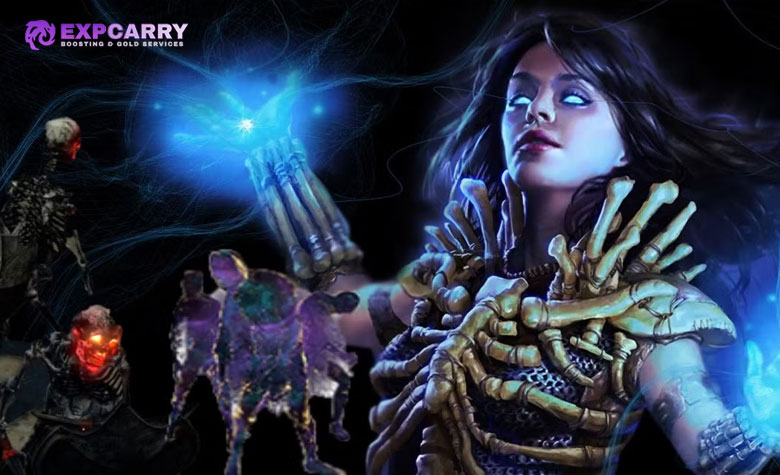
Poison Summon Raging Spirits Necromancer
Poison SRS is the best all-round PoE 3.29 league starter. It levels without expensive uniques, deals damage while the player moves, and has a clean progression path from ordinary hit-based Summon Raging Spirits into poison. The character does not need its complete poison package to finish the campaign, which protects the league start from an unlucky market or delayed Abyss drops.
Patch 3.29 improved non-Spectre minion attack continuity, and Summoned Raging Spirits was specifically identified as one of the minions expected to gain meaningful damage per second. This matters in Charts, Voyages, Abyss encounters, and bosses where targets move or the player must reposition.
Do not force the poison swap too early. First cap elemental resistances, stabilize life and mana, obtain useful SRS gem levels, and reach reliable minion chance to poison. Abyss is now the primary source of Abyssal Jewels and Stygian Vises, so an early Abyss Atlas path can support the transition. In trade league, compare the cost of poison jewels with ordinary minion upgrades before changing the build.
Why it is S Tier: strong damage uptime, low-cost campaign, credible boss scaling, and a functional fallback at every stage.
Winter Orb Elementalist
Winter Orb is the biggest successful 3.29 meta shift. The base gem now fires two to three projectiles at gem levels 1–20 instead of one, gains 25% chance to Freeze, has 7.5% base critical strike chance, and deals more damage at level 20. These are not minor quality-of-life changes: they improve coverage, hit frequency, freeze consistency, and scaling at the same time.
The most practical starter version uses Elementalist with Winter Orb and Creeping Frost, then transitions toward a more specialized critical or Occultist setup only when the required gear is available. It is exceptionally good at clearing maps while moving, collecting Charts, and maintaining damage during short repositioning windows.
Winter Orb is not the universal best boss starter. Poor upgrade sequencing can leave the build fragile or create a single-target wall in late yellow and red maps. Prioritize a real defensive layer, capped resistances, cast speed, gem levels, critical scaling only when it becomes efficient, and a reliable secondary damage plan before buying luxury clear-speed items.
Why it is S Tier: the strongest live mapping breakout of patch 3.29, with high speed and a scalable endgame route. Choose Poison SRS instead when boss reliability matters more than map speed.
Righteous Fire Chieftain
Righteous Fire Chieftain remains the best beginner starter. It has a simple clear pattern, forgiving resistance progression, and enough durability to learn Curse of the Allflame encounters without losing every mistake to a death. The main skill and Chieftain did not receive a direct 3.29 nerf.
The build clears normal packs by moving through them, making it comfortable for Charts, Abyss pits, and routine Atlas progression. It also benefits from the new socket system because correct links are immediately usable even before their socket colors are optimized for the quality bonus.
The weakness is unchanged: single-target damage. Fire Trap, Scorching Ray, or another secondary setup must be correctly linked and scaled. RF is S Tier because it reaches maps and farms safely, not because it deletes pinnacle bosses on starter equipment.
Why it is S Tier: extremely low execution risk, stable defenses, and predictable gearing. It is the best recommendation for a new player who values consistency over speed.
Earthshatter Berserker
Earthshatter Berserker is the best aggressive melee starter in 3.29. It scales from craftable rare weapons, does not require a league-specific unique, and can reach strong single-target damage much earlier than many defensive melee variants. The skill creates spikes that are detonated with warcries, combining dense pack coverage with strong boss bursts.
The Berserker version is recommended for softcore players who want fast progression. Earthshatter Juggernaut remains a valid alternative for Hardcore, SSF, or players who accept slower damage in exchange for more defensive tolerance.
Weapon upgrades are the main economic checkpoint. Compare physical DPS rather than chasing one named unique, keep elemental resistances capped, and do not neglect accuracy, attack speed, armour, and recovery. Damage falls sharply when the warcry rotation or spike detonation is handled poorly.
Why it is S Tier: excellent damage per unit of currency and a proven route into Voidstone progression. The cost is a more active playstyle than RF, minions, or brands.
Explore services related to this guide, selected from our Path of Exile 2 catalog.
View All Path of Exile 2 Services

A Tier: Strong Curse of the Allflame Starters
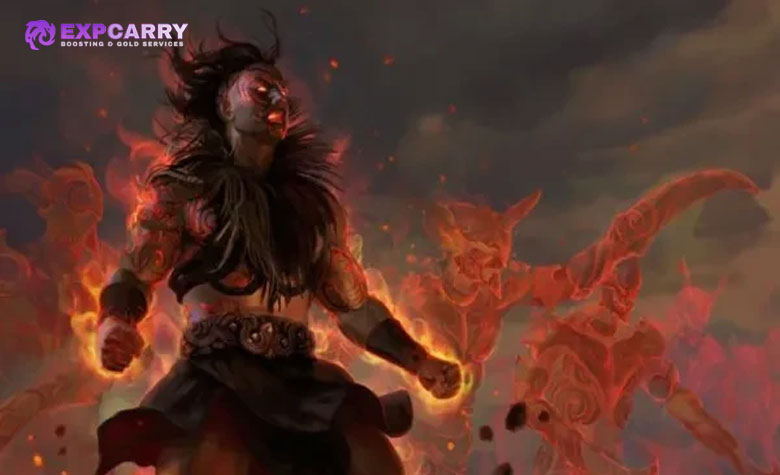
Penance Brand Ignite Elementalist
Penance Brand Ignite is one of the strongest balanced caster starters. Brands continue dealing damage while the player moves, ignite supports efficient pack clear, and the build can reach important Atlas checkpoints without requiring an endgame weapon. It is a better live recommendation than forcing an early transition into EK Ignite or another projection-focused setup that only becomes efficient after investment.
The build belongs in A Tier because it is less forgiving than RF and requires correct ignite scaling, exposure, ailment management, and defense. Follow a 3.29-specific progression rather than importing an old endgame tree into the campaign.
Poison Ranged Animate Weapon Necromancer
Poison Ranged Animate Weapon offers excellent damage for the investment and has received strong post-launch feedback from players following updated progression guides. It benefits from the general minion behavior improvements and can handle bosses efficiently while the player focuses on positioning.
It remains below Poison SRS because its setup, weapon generation, minion maintenance, and transition are less intuitive. Experienced minion players can treat it as an S-tier personal choice; beginners should use SRS or a mixed Minion Army instead.
Spectre or Minion Army Necromancer
Spectre and mixed Minion Army Necromancer builds remain strong low-pressure starters. Permanent or semi-permanent minions deal damage while the player moves, and the archetype can progress on life, resistances, gem levels, and ordinary minion modifiers before premium gear becomes necessary.
The risk is using outdated support-minion information. Several Spectres and Animate Guardian interactions changed in 3.29. Verify the exact Spectres, support links, guardian equipment, and defensive assumptions before copying an older guide. A modern guide is more important here than the name of the main skill.
Lightning Arrow Deadeye
Lightning Arrow is still one of the fastest trade-league mapping starters. Wide projectile coverage is valuable for Atlas completion, Legion, open map layouts, and rapid Chart collection. Elemental Hit of the Spectrum is another viable bow progression route because it was not affected by the 17% added-damage reduction applied to the base Elemental Hit gem.
The build stays in A Tier because bow upgrades, elemental damage, critical scaling, accuracy, and defense all compete for currency. Ballista Totem Support was also weakened, reducing a common low-budget single-target supplement. Choose Lightning Arrow for speed, not for safe blind bossing.
Boneshatter Juggernaut
Boneshatter Juggernaut remains a credible durable melee starter, but the exact version matters. Hit-based Complex Trauma setups have received positive reports, while some bleed or poorly sequenced variants reached maps with mediocre clear, recovery, and single-target damage.
Use a tested 3.29 progression and upgrade the weapon on schedule. Do not assume that “Juggernaut” automatically makes every Boneshatter version Hardcore-safe. The build earns A Tier through defensive potential and SSF-friendly rare gear, but it is less universally efficient than Earthshatter Berserker.
B Tier and Builds to Avoid at League Start
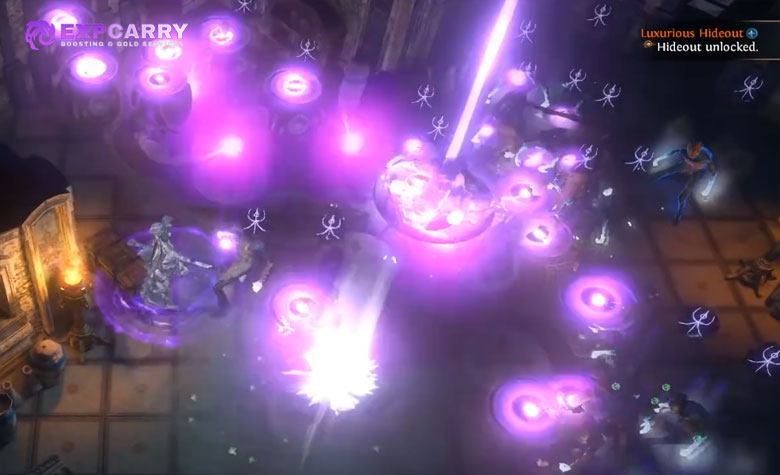
Toxic Rain Pathfinder
Toxic Rain itself avoided a direct 3.29 nerf and remains functional with crafted bows, gem levels, attack speed, and chaos damage over time multiplier. The problem is Ballista Totem Support: supported skills now deal more “less damage” than before. Self-cast Toxic Rain is intact, but the common ballista supplement contributes less boss damage.
Toxic Rain is still reasonable for an experienced player who knows the gearing path. It is B Tier because the current S and A Tier builds reach similar checkpoints with fewer compromises.
Armageddon Brand of Volatility Elementalist
Armageddon Brand of Volatility received a major numerical buff: higher base fire damage, much higher added damage effectiveness, and lower mana cost. The patch-note case is strong, but the build has not emerged as the clear live winner that the raw numbers suggested before launch.
It remains a valid experimental starter or transition target, especially for players who already understand brand scaling. It should not be ranked above Winter Orb, Penance Brand Ignite, or established minion builds until a repeatable low-budget progression is proven across the full Atlas.
Hexblast Mines
Hexblast received a shorter cooldown, faster cast time, and lower mana cost, but mine builds do not receive the full benefit of those self-cast improvements. Blastchain Mine Support and High-Impact Mine Support now apply larger damage penalties and use higher cost multipliers.
The build can still perform in Sanctum and deliver strong burst with investment. It is no longer the default fresh-economy recommendation when an untouched or directly buffed starter can reach the same checkpoint more cheaply.
Storm Burst Totems Hierophant
Storm Burst gained base damage and added damage effectiveness, but the complete totem package was reduced. Spell Totem Support now applies a larger damage penalty, Ritual of Awakening grants less more damage per summoned totem, and passive-tree totem critical scaling was reduced.
The playstyle remains safe and comfortable for learning mechanics. The build belongs in B Tier because the buff to Storm Burst does not fully represent the damage of the complete Hierophant setup.
Archmage Ice Nova and Kinetic Blast of Clustering
Archmage Support now adds less lightning damage from unreserved maximum mana, and Arcane Cloak also lost added damage scaling. Ice Nova of Frostbolts gained base critical strike chance, so the archetype is not dead, but its resource and gear requirements make it less automatic as a first character.
Kinetic Blast of Clustering also lost Arcane Might and maximum-mana-based added physical damage. Both mana archetypes can become powerful later; neither is the most efficient way to open a fresh league unless the player already understands the transition and crafting plan.
Luminary Mercenary Builds
Do not choose Luminary as the default first character. Post-launch reports are highly inconsistent, with repeated complaints about poor single-target damage, Mercenary AI behavior, and the amount of gear required to make the archetype competitive. Patch 3.29.1 improved Mercenary availability and interactions with league content, but it did not solve every build-level problem.
Luminary can still support creative second-character setups after gear and currency are available. A league starter should not depend on expensive fixes for uncertain AI or damage scaling.
Best PoE 3.29 Build by Goal
| Goal | Best Choice | Alternative | Why |
|---|---|---|---|
| Best overall league starter | Poison SRS Necromancer | Earthshatter Berserker | Reliable low-cost progression with strong boss and Atlas performance |
| Best mapping starter | Winter Orb Elementalist | Lightning Arrow Deadeye | High coverage, movement, and efficient Chart collection |
| Best beginner build | Righteous Fire Chieftain | Minion Army Necromancer | Simple execution and forgiving defensive progression |
| Best boss progression | Poison SRS Necromancer | Penance Brand Ignite Elementalist | Persistent damage gives more time to handle mechanics |
| Best melee starter | Earthshatter Berserker | Boneshatter Juggernaut | Earthshatter has higher early damage; Boneshatter offers more defensive potential |
| Best SSF starter | Earthshatter Juggernaut | Righteous Fire Chieftain | Both progress with craftable rare gear and limited market dependence |
| Best Hardcore starter | Righteous Fire Chieftain | Earthshatter Juggernaut | Defense and recovery are built into the progression |
| Best new 3.29 meta build | Winter Orb Elementalist | Armageddon Brand of Volatility | Winter Orb has stronger live validation; Armageddon Brand remains experimental |
League Start Gear and Atlas Priorities
The 3.29 socket rework lets any gem go into any socket. Matching the socket color now grants quality, but a wrong-color socket no longer blocks the gem. This reduces campaign friction and changes early gearing priorities: equip the better defensive rare with the correct links first, then optimize socket colors when the item is worth keeping.
- Poison SRS: life, resistances, minion gem levels, mana sustain, then reliable minion chance to poison and Abyssal Jewels.
- Winter Orb: life or Energy Shield plan, resistances, cast speed, gem levels, then efficient critical and projectile scaling.
- Righteous Fire: maximum fire resistance, regeneration, life, armour, and a properly linked single-target skill.
- Earthshatter: physical weapon DPS, accuracy, attack speed, armour, resistances, and recovery.
- Penance Brand Ignite: gem levels, fire and damage-over-time scaling, ignite chance, exposure, and defensive uptime.
- Lightning Arrow: bow elemental DPS, attack speed, accuracy, critical scaling, life, and suppression or another real defensive layer.
Match the first Atlas strategy to the build. Winter Orb and Lightning Arrow are natural choices for Legion and fast open-map farming. Poison SRS and Animate Weapon gain useful progression value from Abyss because of Abyssal Jewels and Stygian Vises. RF and durable melee builds tolerate slower, more dangerous mechanics. Patch 3.29.1 improved Abyss chests and Abyssal Depth rewards, making early Abyss investment more relevant than it was at launch.
When a character reaches a progression wall, buy or craft the upgrade that removes the immediate bottleneck. Do not spend the first Divine Orbs on luxury movement or clear-speed pieces while boss damage, elemental resistances, recovery, or weapon DPS remains insufficient. The same principle applies when choosing Path of Exile services: solve the current Atlas, boss, or gearing checkpoint instead of purchasing progress that does not unlock the next objective.
PoE 3.29 League Starter FAQ
What is the best PoE 3.29 league starter?
Poison Summon Raging Spirits Necromancer is the best overall recommendation because it combines a low-cost campaign, persistent damage, safe boss positioning, and a realistic progression path into red maps and Voidstones.
What is the fastest mapping starter in Curse of the Allflame?
Winter Orb Elementalist is the strongest current mapping-focused starter. Lightning Arrow Deadeye is the main alternative for players who prefer bow gameplay and can fund regular weapon upgrades.
What is the easiest PoE 3.29 build for beginners?
Righteous Fire Chieftain is the easiest general recommendation. Its clear pattern is simple, defenses are straightforward to build, and the character can farm maps without complex rotations.
Is Luminary a good 3.29 league starter?
No, not as a default first character. The archetype has inconsistent live results, AI-related problems, and a higher cost to solve its damage weaknesses. Build it later when the required gear and currency are available.
Did patch 3.29.1 change the league starter tier list?
Not significantly. Patch 3.29.1 focused mainly on Mercenaries, Abyss, Voyages, Allflame crafting, rewards, and bug fixes. It improved some farming routes but did not reverse the major skill and support-gem changes introduced in patch 3.29.0.
Final Verdict
Choose Poison SRS for the safest all-round start, Winter Orb for maximum mapping momentum, Righteous Fire for the simplest progression, or Earthshatter for high-value melee damage. Penance Brand Ignite, Poison Ranged Animate Weapon, Spectres, Lightning Arrow, and tested Boneshatter versions are strong alternatives when their playstyle matches the content you plan to farm.
The main mistake in PoE 3.29 is selecting a build from patch-note numbers alone. Armageddon Brand of Volatility is strongly buffed but remains less validated than Winter Orb. Hexblast Mines, Storm Burst Totems, Archmage, and mana-based Kinetic Blast can still work, but their complete setups absorbed meaningful nerfs. Luminary is better treated as an experimental second character.
A good Curse of the Allflame starter must work before premium gear, survive unknown encounters, and have a clear upgrade path. Build around obtainable items, fix the current bottleneck first, and transition into experimental Pacts, transfigured gems, or Mercenary archetypes only after the first Atlas character is already functional.
Sources and Review Methodology
- Official Path of Exile 3.29.0 patch notes for skill, support gem, Ascendancy, socket, Abyss, and system changes.
- Official Path of Exile 3.29.1 patch notes for the latest Mercenary, Abyss, Voyage, reward, crafting, and bug-fix updates.
- Path of Exile Builds community 3.29 starter index to verify which builds have maintained guides and current progression routes.
- PoE Ninja Allflame build data as a live trend signal. Ladder representation is not treated as proof that a build is cheap or beginner-friendly.
- Post-launch player reports were used to identify recurring progression failures, misleading transitions, and builds that performed better or worse than their pre-launch expectations.