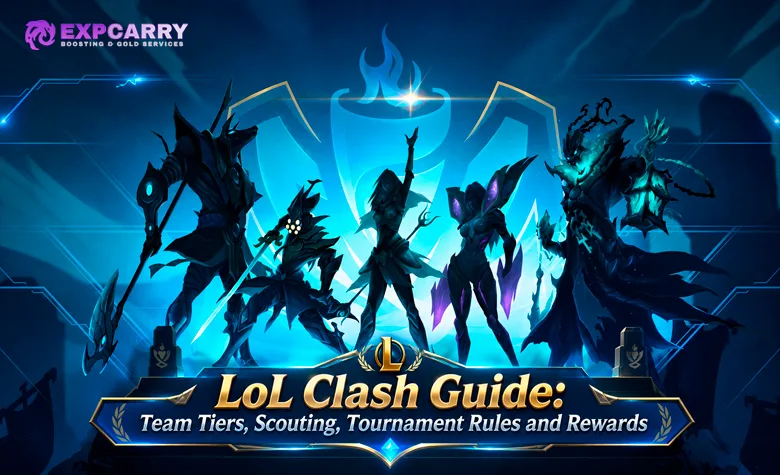
Clash is League of Legends' recurring five-player tournament mode, featuring skill-based Team Tiers, opponent scouting, competitive Champion Select, and rewards based on tournament performance. Unlike ordinary Ranked games, Clash places teams into eight-team brackets where winning three matches earns a tournament Trophy. Every player needs an eligible account and a Basic or Premium Ticket, while preparation involves building a balanced roster, studying opponents, and completing the entire bracket together. The same core rules apply across regular Summoner's Rift Clash tournaments, making them useful beyond a single event.
The next scheduled event is Worlds Clash on November 21–22, 2026, with team formation available from November 16. Riot's current schedule also includes ARAM Freljord Cup on December 19–20, although ARAM has different Ranked eligibility requirements. This guide covers account verification, Team Tier calculations, lock-in windows, tournament rules, scouting strategies, tickets, Victory Points, and the rewards available from each bracket result.
Short answer: Reach Level 30, meet the Ranked eligibility requirements for Summoner's Rift Clash, verify your account by SMS, and join a five-player team with a valid Clash Ticket for every member. Lock in during your Team Tier's window, use opponent scouting to prepare your draft, and win up to three bracket matches for better rewards and a tournament Trophy.
LoL Clash Tournament Format: Five Players and Eight-Team Brackets
Clash is a scheduled tournament rather than a queue that players can enter whenever they want. Riot runs themed events throughout the year, usually across a Saturday and Sunday, with registration opening on the preceding Monday. Each team consists of five players competing in a bracket against opponents assigned to the same general skill tier. The official Riot Clash FAQ describes the standard format as eight teams competing across a three-round tournament.
Winning all three matches makes your team the bracket champion. Losing the opening match does not automatically end participation, because the consolation bracket gives first-round losers additional games and opportunities to improve their rewards. Teams can enter only one Clash bracket per day, but Saturday and Sunday are separate entries, so players may participate on either day or both.
| Feature | Tournament rule | Player impact |
|---|---|---|
| Team size | Five players | Every position must be filled before entering a bracket. |
| Bracket size | Eight teams | A championship run requires three consecutive victories. |
| Matchmaking | Four Team Tiers | Teams are matched against opponents within their assigned tier. |
| Tournament days | Saturday and Sunday | One bracket per day; players may compete on both days. |
| First-round defeat | Consolation bracket | Teams can continue competing for improved placement rewards. |
| Champion Select | Tournament Draft | Scouting and coordinated pick/ban decisions are important. |
| Entry | Basic or Premium Ticket per player | Ticket selection affects personal prizes, not matchmaking. |
| Bracket championship | Three wins | Winning teams receive a tournament-themed Trophy. |
Consolation Bracket and Tournament Placement
The main bracket follows a single-elimination structure, meaning a team that loses cannot return to compete for first place. However, first-round losers enter a separate consolation path where they can continue playing against other teams that lost their opening matches. This distinction matters because leaving immediately after one defeat can mean forfeiting opportunities to improve the final reward.
Teams should plan to remain available for the complete bracket rather than scheduling time for only one match. The actual duration depends on game length and the progress of the other teams, so Riot does not provide a universal completion time for every tournament. A team that wins the first two matches should also be prepared for a potentially longer final, particularly if both finalists play cautiously.
Clash Requirements: Level 30, Ranked Placements and SMS Verification
Summoner's Rift Clash requires an account at Level 30, completed placements in at least one Summoner's Rift Ranked queue during the current or previous ranked year, and SMS verification. Every team member must meet these requirements individually. One eligible captain cannot register an otherwise ineligible teammate, and having a Premium Ticket does not bypass account requirements.
Riot's current Clash FAQ explicitly states that there is no Clash-specific Honor Level restriction. This is important because some older guides still reference Honor Level 2 as an entry requirement. Account restrictions or penalties can still affect access to game features, but players should not treat an outdated Honor threshold as part of the current Clash eligibility checklist.
Summoner's Rift Ranked Placements and ARAM Clash Eligibility
For Summoner's Rift Clash, a player needs qualifying Ranked placement history, not a particular visible rank such as Gold or Platinum. Riot accepts completed placements in an eligible Summoner's Rift Ranked queue during the current or previous ranked year. Its Ranked placement documentation explains the current placement process for accounts entering Ranked competition.
ARAM Clash and ARURF Clash use different rules. Players still need Level 30, SMS verification, and a Ticket, but completed Ranked placements are not required for those formats. This makes ARAM Clash accessible to players who meet the account requirements but do not participate in Summoner's Rift Ranked. The actual event type is displayed in the Clash tab, so eligibility should be checked against the active tournament rather than a previous event.
For accounts below Level 30, the necessary preliminary step is ordinary account experience progression. The existing League account leveling options concern reaching the required account level, but they do not replace SMS verification or the Ranked placements required for Summoner's Rift Clash.
Clash SMS Verification and the Six-Month Phone Restriction
Riot requires a valid mobile or prepaid phone number to limit smurfing in competitive tournament modes. Verification is completed through the League client by opening Clash, selecting the Team tab, choosing Confirm SMS, and entering the code sent to the linked phone. Internet-based VoIP numbers are not accepted, and each phone number can be associated with only one Riot account for tournament verification.
According to Riot's Tournament Modes SMS Verification guide, removing a phone number starts a six-month waiting period before it can be used on another account. Player Support does not provide a workaround for moving the same number immediately. Complete verification before the tournament weekend rather than attempting to fix an account-linking problem during the lock-in window.
Clash Team Tiers: Skill-Based Matchmaking from Tier IV to Tier I
Clash divides teams into four competitive tiers, with Tier I representing the strongest groups and Tier IV the lowest. A team's tier is calculated from the competitive strength of its members, including Ranked information and relevant Clash history. The calculation is weighted toward the strongest player on the roster, rather than simply averaging the five visible ranks equally.
This matters when building a mixed-skill team. Adding a very highly ranked player can increase the team's tier and produce stronger opponents, even when the other four members are less experienced. Riot shows the resulting Team Tier in the Clash interface and updates it as the roster changes, allowing players to understand the competition before committing to the tournament.
| Team Tier | Relative skill level | Preparation priority |
|---|---|---|
| Tier IV | Lowest Clash tier | Reliable comfort picks, basic teamwork, and clear objective calls. |
| Tier III | Intermediate competition | Consistent role assignments and coordinated early-game plans. |
| Tier II | Higher-skill competition | Champion pool preparation, draft flexibility, and matchup planning. |
| Tier I | Highest Clash tier | Detailed scouting, coordinated drafting, and disciplined macro decisions. |
These are relative matchmaking categories, not fixed Solo/Duo rank requirements. There is no universal rule that a particular visible Ranked division always produces one specific Clash tier, especially when players have different tournament histories. Teams should use the tier displayed in the client instead of relying on outdated rank-to-tier charts.
Team Captain, Roster Management and Role Assignments
One player acts as captain, creates the team, chooses its name, tag, and logo, and invites the remaining members. Team formation opens on the Monday of Clash Week, providing several days to organize the roster before tournament matches begin. Once the team enters a bracket, its members are locked to that bracket and cannot be freely swapped between games.
Assign positions before tournament day and ensure every player has at least two champions they can use reliably in their intended role. Draft restrictions may remove a teammate's strongest pick, while opponents can target players with narrow champion pools during scouting. A balanced roster with functional Top, Jungle, Mid, ADC, and Support coverage is more reliable than five individually strong players who all prefer the same positions.
Explore services related to this guide, selected from our League of Legends catalog.
View All League of Legends Services
Clash Lock-In Windows and Worlds Clash 2026 Schedule
Clash does not begin at the same moment for every Team Tier. Riot opens a lock-in window in stages, allowing lower tiers to lock in earlier and higher tiers to enter later. All five members must complete the lock-in process before matchmaking can place the team into a bracket, so having a team created in advance is not sufficient by itself.
For standard regions, Riot describes a two-hour lock-in period with access opening in 30-minute steps. Tier IV can lock in throughout the full window, Tier III opens 30 minutes later, Tier II after another 30 minutes, and Tier I during the final 30 minutes. Southeast Asian regions use a separate one-hour system in which all tiers can lock in one hour before Clash begins.
| Team Tier | When lock-in opens | Available window |
|---|---|---|
| Tier IV | Start of the standard lock-in period | Full two hours |
| Tier III | 30 minutes after the window opens | Remaining 90 minutes |
| Tier II | 60 minutes after the window opens | Remaining 60 minutes |
| Tier I | 90 minutes after the window opens | Final 30 minutes |
Worlds Clash: November 21–22, 2026
Worlds Clash is the next scheduled Summoner's Rift tournament in Riot's 2026 calendar. Team formation began on Monday, November 16, with tournament brackets scheduled for Saturday, November 21, and Sunday, November 22. Players can enter on one day or both, with a separate bracket and Ticket entry for each day's participation.
Exact local lock-in times depend on the server and Team Tier. Riot warns that tournament dates can change and instructs players to use the League client for the most accurate regional information. The following scheduled event is ARAM Freljord Cup on December 19–20, demonstrating why the general account and tournament rules remain useful after Worlds Clash ends.
Late Lock-In, Missing Players and Bracket Entry
Every member must be ready during the available window, with their account verified and Ticket selected. A single missing teammate can prevent the team from entering, even if the captain and the other players are prepared. The captain should confirm attendance before the window opens, then verify that all five players have actually locked in rather than merely accepted their invitations.
Once matchmaking places the roster into a bracket, the team must complete that tournament with the locked lineup. Do not plan on replacing a teammate between rounds, changing the entry Ticket after lock-in, or participating in another bracket on the same day. These restrictions make roster reliability just as important as individual skill.
Clash Scouting: Champion Pools, Target Bans and Tournament Draft
Scouting is one of Clash's biggest differences from regular Ranked play. Before Champion Select, Riot provides information about the opposing team, including their frequently played champions, Ranked win rates and KDAs, champion mastery, and previous Clash performance. This information allows teams to prepare a draft against known preferences rather than relying entirely on a blind matchup.
Scouting data should be treated as evidence of player tendencies, not a guarantee that an opponent will repeat the same champion or role. Players can prepare alternative picks, switch strategies, or intentionally avoid their most-played champions. The strongest approach is to identify several likely threats and prepare a flexible draft plan instead of spending every ban on one player's profile.
| Scouting signal | Practical interpretation | Draft response |
|---|---|---|
| High win rate on a frequently played champion | A likely comfort pick worth investigating. | Consider a targeted ban or prepare a reliable counterpick. |
| High champion mastery | Evidence of substantial champion experience. | Check whether recent performance supports treating it as a priority threat. |
| Small champion pool in one role | Potential vulnerability to targeted bans. | Force less familiar picks when it does not weaken your own composition. |
| Previous Clash results | Possible indication of preferred team strategies. | Prepare for recurring draft patterns without assuming they will repeat. |
| Unclear role assignments | Possible flex picks or recent role changes. | Keep early picks flexible and avoid committing counters too soon. |
Pick and Ban Strategy Around the Opponent's Strongest Players
Clash uses Tournament Draft with two ban phases and two pick phases. The team captain controls the bans, making it important to agree on priorities before Champion Select begins. All champions are unlocked for the tournament draft, so players do not need to own every champion they intend to select.
Start by identifying the opposing team's strongest comfort picks and any obvious combination that creates a difficult matchup for your planned composition. If the opponent relies heavily on one Jungle champion, removing that option may be more valuable than banning a generally popular Mid pick. However, target bans should not come at the cost of allowing an exceptionally dangerous matchup against your own team's weakest position.
The team should also have an alternative plan for both sides of the draft. Early selections can prioritize flexible champions or dependable blind picks, while later selections can address the enemy composition's damage profile, engage tools, or lack of frontline. Players who need to improve coordinated drafting and team macro can use role-specific coaching and match review to work on those decisions outside the tournament itself.
Champion Select Rules: Captain Bans, Champion Access and Random Locks
All champions being available does not eliminate the need for preparation. Players must still understand the champions they select, their lane matchups, and how they fit into the team's overall composition. The captain should confirm each player's comfort pool before using bans or locking in a strategy that requires an unfamiliar champion.
Riot's rules also differ from ordinary draft games when a player fails to declare or hover a champion. In Clash, failing to make a valid selection can result in a random champion being locked instead of allowing the team to avoid the match through a conventional dodge. This makes clear communication and timely selections essential, particularly during a tense final.
Clash Match Rules: Sudden Death, Pauses and Remakes
Clash matches include special restrictions intended to keep the tournament moving. The commands /pause and /remake are disabled, so teams should resolve connection issues before entering the bracket. A player disconnecting during the match does not give the team a standard pause or remake option under the published rules.
Summoner's Rift Clash also uses sudden-death mechanics to prevent matches from continuing indefinitely. After 60 minutes, defensive structures become easier to destroy; after another five minutes, structures begin taking automatic damage in sequence. If the game continues for another five minutes, the system forces an outcome, making an endless defensive stalemate impossible.
Late-Game Decisions Under Clash Sudden Death
Most Clash games end well before sudden death, but teams running scaling compositions should understand the rule. At very long game durations, preserving every structure becomes increasingly difficult, and controlling the map matters more than waiting indefinitely for another item spike. Teams should recognize when a decisive Baron, Elder Dragon, or side-lane push provides a better opportunity than continuing to defend passively.
Sudden-death timing is a tournament safeguard rather than a strategy players should intentionally aim to reach. A team with a strong late-game composition still needs normal objective control and coordinated fights to win. Riot's fixed match duration also helps the bracket progress without forcing every other team to wait indefinitely for a single game.
Clash Tickets: Basic vs Premium Entry and Reward Differences
Every Clash participant must submit a Ticket when entering a tournament. Riot offers Basic and Premium Tickets, both of which allow players to enter the same competitive brackets. The difference is the personal prize pool: a Premium Ticket improves the rewards available after the tournament, but does not provide easier opponents, a higher Team Tier, or any in-game advantage.
Basic Tickets can be obtained from available missions, purchased with Blue Essence or RP, or provided by a teammate. Premium Tickets are available through the store for a higher RP cost. Each player chooses their own entry, so teammates can participate in the same bracket using different Ticket types while receiving rewards based on their individual selections.
| Feature | Basic Ticket | Premium Ticket |
|---|---|---|
| Tournament access | Standard bracket entry | Same bracket entry |
| Matchmaking | Based on Team Tier | Based on the same Team Tier |
| Acquisition | Missions, teammates, Blue Essence or RP | Store purchase using RP |
| Personal reward | Clash Orb | Clash Capsule |
| Prize quality | Standard rewards based on results | Expanded rewards based on results |
| Selection deadline | Before final team lock-in | Before final team lock-in |
Premium Tickets and Tournament Win Expectations
A Premium Ticket is most attractive when a player values the additional cosmetic rewards and is comfortable with the RP cost. Riot's published reward table includes additional Skin Shards, Orange Essence, and other rewards in Premium Capsules, with better outcomes for stronger tournament finishes. Winning a full bracket with a Premium Ticket can also provide a permanent skin and Mythic Essence under the currently published reward structure.
However, paying for a Premium Ticket does not increase the probability of winning. A team still needs to defeat its opponents through drafting and gameplay, and a first-round loss can substantially reduce the value received. Players concerned primarily with efficient entry should use a Basic Ticket, while Premium entry is a personal reward decision rather than a competitive requirement.
Clash Rewards: Trophies, Victory Points, Orbs and Capsules
Clash offers multiple reward systems that depend on different parts of tournament performance. Winning the entire bracket awards a Trophy associated with the event theme, while individual wins generate Victory Points that contribute to cosmetic progression. Every participant who exits their bracket receives an Orb or Capsule based on their Ticket type and tournament results.
Riot's published reward reference includes themed logos, Summoner Icons, emotes, Ward Skin Shards, Skin Shards, Orange Essence, and other cosmetic rewards. The contents improve as tournament performance increases. Players should inspect the current client reward preview before paying for Premium entry, especially because event-specific rewards and Victory Point milestone presentations have changed over time.
Clash Trophies and Tournament Champion Rewards
A team that wins all three matches earns the Trophy for that tournament theme. Riot displays the highest applicable Trophy near the Nexus in Summoner's Rift games for two weeks after the event, while trophies from the current season can also appear in the player's profile. These are cosmetic distinctions recognizing the bracket victory, not gameplay bonuses.
The Trophy is separate from the Orb or Capsule contents. Winning the tournament grants the championship recognition while also improving the personal prize awarded through the Ticket system. Players do not need a Premium Ticket to become bracket champions, because both Ticket types enter the same competitive tournament.
Victory Points and First-Win Bonuses by Team Tier
Riot's current FAQ lists 400 Victory Points for a Clash match victory, with additional first-win bonuses based on the team's Tier. The first-win bonus can be earned once per Clash day, so a team competing across both Saturday and Sunday has separate opportunities. Higher tiers receive larger first-win bonuses, but they also compete against stronger opponents.
| Team Tier | First-win bonus | Standard win VP |
|---|---|---|
| Tier I | 150 VP | 400 VP |
| Tier II | 100 VP | 400 VP |
| Tier III | 50 VP | 400 VP |
| Tier IV | No first-win bonus | 400 VP |
Victory Points contribute toward themed cosmetic rewards, including banners, profile decorations, and tournament logos. They do not carry over beyond their Clash theme, are not the same as Ranked LP, and do not improve the team's matchmaking tier. Because Riot has previously changed VP reward thresholds when adjusting Clash frequency, the live event's reward display should be checked instead of treating an older milestone table as permanent.
Clash Orbs and Capsules by Tournament Result
Basic Tickets award Clash Orbs, while Premium Tickets award the larger Capsule reward pool. Riot's published payout structure scales with tournament results, from players who lose all their matches to teams that win the entire bracket. The differences can include additional Skin Shards, Orange Essence, icons, emotes, and higher-value cosmetics.
| Tournament result | Basic Ticket reward examples | Premium Ticket reward examples |
|---|---|---|
| 0 wins | 3 Win XP Boost, Clash logo and Mystery Icon. | Basic Ticket, 500 Orange Essence, 750 Skin Shard and logo. |
| 1 win | Mystery Emote, Clash logo and 640 Ward Skin Shard. | Basic Ticket, 500 Orange Essence, three Skin Shards and logo. |
| 2 wins | Mystery Emote, Mystery Icon, Clash logo, 640 Ward Skin Shard, 975 Skin Shard and Basic Ticket. | Basic Ticket, 750 Orange Essence, four Skin Shards and logo. |
| 3 wins | Mystery Emote, Mystery Icon, Clash logo, Chibi Icon, 640 Ward Skin Shard, 975 and 1350 Skin Shards, and Basic Ticket. | Basic Ticket, 750 Orange Essence, four Skin Shards, Chibi Icon, 10 Mythic Essence, 1350 Skin and logo. |
These are reward categories from Riot's published table rather than a promise that every future event will retain identical quantities or items. Ticket rewards are personal, meaning one teammate's Premium Ticket does not upgrade another player's Basic Orb. Both ticket choice and tournament performance matter, so finishing more matches generally produces a better result than abandoning the bracket after a loss.
Clash Tournament Preparation: Roster, Scouting and Match Strategy
Clash rewards teams that prepare before the first match instead of improvising during Champion Select. The most important priorities are confirming player eligibility, organizing a dependable five-player roster, preparing champion pools, and agreeing on how the team will communicate during fights and objectives. A well-coordinated group can perform better than a collection of individually stronger players who have no shared draft or game plan.
For teams that are missing one or more eligible players, Clash team participation assistance concerns filling roster positions with players using their own accounts. The tournament's five-player requirement, SMS verification, Ticket rules, and lock-in restrictions still apply to every participant regardless of how the roster is assembled.
Clash Team Preparation Checklist
Complete the administrative requirements before working on detailed matchups. A team with an excellent strategy can still miss the tournament if one player has not verified their account or cannot lock in on time. Once eligibility is secure, focus on the gameplay decisions that matter during a three-round bracket.
- Confirm eligibility: check Level 30, the applicable Ranked placements, and SMS verification for all five accounts.
- Finish the roster: assign Top, Jungle, Mid, ADC, and Support, including backup champions and flexible picks.
- Check Team Tier: review the tier after all invitations are accepted and consider how mixed skill levels affect matchmaking.
- Prepare Tickets: ensure each member has chosen Basic or Premium entry before the final lock-in.
- Check regional timing: confirm the exact tournament day and lock-in window in the League client.
- Set draft priorities: agree on your strongest blind picks, likely bans, and at least one alternative composition.
- Assign shotcalling: decide who handles objective timers, map rotations, and major teamfight decisions.
- Scout opponents: identify comfort champions and role patterns, then revise bans for each successive match.
- Complete the bracket: remain available for all possible rounds, including consolation games when applicable.
Clash Team Compositions and Objective Control
A functional Clash composition should have a clear method for starting fights, protecting its damage dealers, and securing important neutral objectives. Teams built around scaling carries need enough early-game stability to reach their strongest point, while aggressive compositions should understand how to convert early kills into towers, Dragons, and Baron pressure. Selecting five individually strong champions is not enough if the lineup lacks engage, frontline, or a reliable damage profile.
Practice one primary composition and one alternative rather than preparing an entirely different strategy for every possible opponent. This makes it easier for teammates to understand their responsibilities when the draft changes unexpectedly. The same preparation also helps in later rounds, when opponents may have stronger scouting information and better coordination than the teams faced earlier in the bracket.
Clash, Ranked 5s and ARAM: Different Competitive Formats
Clash and Ranked 5s both involve coordinated League of Legends teams, but they are not the same mode. Clash uses scheduled tournament brackets, Tickets, Team Tiers, scouting, and tournament-specific prizes. Ranked 5s uses its own competitive queue and reward structure, even though Riot has introduced strategic draft features influenced by Clash.
Riot discussed those differences in its 2026 developer update, which described the return of Ranked 5s and its draft changes. The existing League of Legends Ranked 5s and ARAM Mayhem article covers those separate systems. ARAM Clash is also distinct from regular ARAM or ARAM: Mayhem, since it follows the Clash tournament structure while using different eligibility and gameplay conditions.
LoL Clash FAQ
The following answers cover common entry and tournament issues that can prevent a team from participating or claiming its intended rewards.
Can unranked players enter Clash? Summoner's Rift Clash requires qualifying Ranked placements during the current or previous ranked year. ARAM and ARURF Clash do not require Ranked placements, but Level 30, SMS verification, and Tickets still apply.
Can a Clash team use both Basic and Premium Tickets? Yes. Each player chooses their own Ticket, and the reward received depends on that player's entry and the team's tournament results. Ticket type does not change the team's matchmaking or bracket opponents.
Can a team enter another Clash bracket after losing? Not on the same tournament day. Each team can enter one bracket per day, but eligible players can return on Sunday for another bracket after participating on Saturday.
Can players change teammates after Clash begins? A roster is locked once it enters a bracket. Players should complete all roster changes before lock-in rather than expecting to replace a teammate between matches.
Conclusion
Clash success depends on preparing the team as carefully as the individual matchups. Verify every account, understand how Team Tiers and lock-in windows work, use scouting to plan flexible drafts, and complete all available bracket games for the best possible rewards. Basic and Premium Tickets share the same competition, while tournament victories determine trophies, Victory Points, and the quality of personal prizes. The next event is Worlds Clash on November 21–22, but these preparation principles apply to the Clash tournaments that follow.