
Path of Exile 2 patch 0.5.2 went live on June 12 as part of the Return of the Ancients update, and Grinding Gear Games has already pushed three hotfixes for it between June 12 and June 15. That alone would be a normal week for an early access ARPG, but the patch lands in the middle of a much bigger story: the studio's ongoing fight against players who keep finding ways to turn endgame mechanics into currency printing machines.
The current flashpoint is Vaal Temple farming, a mechanic that has already forced one emergency hotfix earlier this season and is shaping how Grinding Gear Games is tuning Runes of Aldur encounters inside patch 0.5.2 itself. Between the bug fixes, the balance changes and the studio's public comments about the Temple, this update says more about how PoE 2 is run mid season than any single patch note.
Path of Exile 2 Patch 0.5.2 Endgame and Balance Changes
The headline addition in Path of Exile 2 patch 0.5.2 is a new Atlas Keystone called On the Wind, which lets players choose between making Azmeri Spirits move 50 percent faster or stopping them from disintegrating when no players are nearby, directly changing how that Atlas mechanic gets chased. The Partial Translations Atlas Master option was also reworked, replacing a flat chance to double a Tablet's modifiers with a random increase between 0 and 40 percent, which smooths out how reliable that crafting option feels. On top of that, ten new Omens were added through the Queen's Ritual favor selection, giving Ritual farmers more crafting options to chase.
Delirium also got friendlier in this patch, with bigger monsters losing roughly half their toughness so fights do not require a burst heavy build just to keep up. Several Interlude Act campaign bosses, including Azmadi and Siora, were tuned down as well, addressing complaints that the Return of the Ancients campaign had a difficulty spike compared to earlier acts. None of these changes are exploit related on their own, but they set the tone for a patch built around correcting things that got out of hand after the 0.5.0 launch.
Hotfixes Rolling Out From June 12 to June 17
Patch 0.5.2 has needed steady aftercare since launch day, with Grinding Gear Games shipping three separate hotfixes inside the first week. The pace mirrors how the studio handled 0.5.0 and 0.5.1, where double digit hotfix counts became normal for stabilizing a major content drop before moving on to the next one.
Hotfix 1 Reverts Accidental Ascendancy Buffs
The first hotfix, also released on June 12, walked back changes to the Advanced Thaumaturgy Ascendancy passive that were never meant to ship. Flameblast's bonus Magnitude of Damaging Ailments per stage was reverted from 40 percent back to 20 percent, Hammer of the Gods' chance to not consume Glory dropped from 50 percent back to 30 percent, and Cluster Grenade's quality bonus was corrected back to its intended effect. These were not exploits in the traditional sense, just unintended buffs that slipped through, but the speed of the revert shows the same low tolerance for unplanned power spikes that defines the Temple situation.
Hotfix 2 and Hotfix 3 Clear Out Crashes
Hotfix 2, shipped the same day as Hotfix 1, fixed an instance crash tied to entering the Loathsome Mire area. Hotfix 3 followed on June 15 and addressed a client crash that happened while using the Trade Market, along with two additional instance crashes. Neither of these touched balance, but stable trading and stable maps matter just as much to the economy conversation as any nerf, since a broken Trade Market can distort prices on its own.
Vaal Temple Farming and the Pattern of Mid Season Nerfs
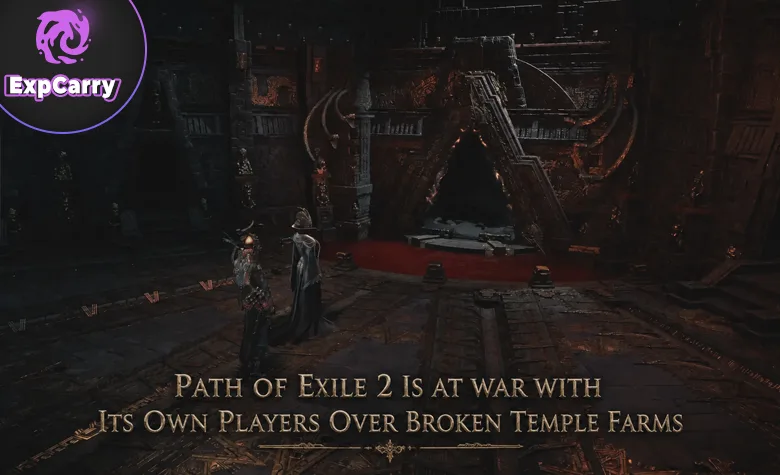
Atziri's Temple, generally called the Vaal Temple by players, has been a recurring problem since it was introduced during the Fate of the Vaal league in patch 0.4.0. Its grid based layout lets players chain rooms together for compounding rewards, and a strategy nicknamed the snake let dedicated farmers lock specific rooms so they never destabilized, creating a permanent chain of high value nodes that could be run over and over. When the Temple became a core mechanic in patch 0.5.0, Grinding Gear Games changed the destabilization rules so that locked rooms in a long chain turn into plain pathways instead of staying intact, which removes the reward without breaking the flow of the run.
That fix did not end the story. Within days of the 0.5.0 launch, which peaked at 421,596 concurrent Steam players according to third party tracking, dedicated farmers found a new way to push Temple rewards beyond intended levels. Grinding Gear Games posted on social media that it needed to cut down on the excess juicing the Temple allowed, then shipped a hotfix within hours rather than waiting for the next scheduled patch. Lead designer and co game director Mark Roberts has been openly vocal about how much he dislikes the Temple's recurring exploits, describing the mechanic as a personal source of frustration during the original 0.4 crisis and saying he has no issue stepping outside the normal patch cycle to shut farming strategies down when they get out of hand.
Explore services related to this guide, selected from our Path of Exile 2 catalog.
View All Path of Exile 2 Services


Runes of Aldur Remnant Farming Gets Capped in 0.5.2
The Temple is not the only system getting tuned for efficiency this patch. Remnant encounters, part of the Runes of Aldur league mechanic, had their Unique Monster spawn count significantly reduced per run in patch 0.5.2, since farmers were clearing these encounters specifically for the attribute transfers tied to those monster deaths. To keep the encounters from feeling gutted, Grinding Gear Games raised the overall stat pool on remaining monsters so the difficulty stays comparable while the farming speed drops.
High tier Remnants also had a more targeted fix: Perfect Augments and Transmutes were hoarding the combo pool at the top difficulty tiers, letting players lock in the best possible outcomes far more often than the system was designed to allow. Patch 0.5.2 reduces how often that hoarding happens, which is a smaller scale version of the same philosophy behind the Temple changes, identify the specific interaction that is overperforming and adjust that interaction directly instead of nerfing the entire mechanic.
| Date | Update | Main Focus |
| June 12, 2026 | Patch 0.5.2 Notes | Atlas Keystones, Delirium, Runes of Aldur, Remnant tuning |
| June 12, 2026 | Hotfix 1 | Reverted accidental Advanced Thaumaturgy buffs |
| June 12, 2026 | Hotfix 2 | Fixed a Loathsome Mire instance crash |
| June 15, 2026 | Hotfix 3 | Fixed Trade Market and instance crashes |
Why Grinding Gear Games Keeps Reaching For The Nerf Hammer
The contrast between the 0.4 Temple crisis and the 0.5.0 response is the clearest example of how Grinding Gear Games has changed its approach to farm exploits. During the original snake strategy crisis, the exploit ran for weeks before the studio unified its response, which let the currency it generated spread widely enough to distort trade prices for the rest of that league. The 0.5.0 emergency hotfix, by comparison, went out within hours of the new exploit being discovered, and content creators tracking the trade league agreed the economic impact stayed minimal because the window for abuse was so short.
Patch 0.5.2 extends that same logic to smaller systems rather than waiting for a full mechanic to spiral. Reducing Remnant Unique Monster counts and limiting Perfect Augment hoarding are both preemptive trims on strategies that were clearly heading toward Temple level overperformance, just caught earlier in their lifecycle. Combined with the rapid hotfix cadence for crashes and accidental buffs, it points to a studio that would rather ship a slightly unpopular mid season nerf than let an entire league's economy ride on a single overlooked interaction.
Final Thoughts on Path of Exile 2 Patch 0.5.2
Patch 0.5.2 is not a flashy update on paper, but it captures how Path of Exile 2 is actually being maintained in its current season. Endgame quality of life changes, accidental buff reverts and crash fixes are normal patch hygiene, while the Vaal Temple history and the new Remnant farming caps show a studio actively hunting for the next mechanic that could spiral the way the Temple already has twice. The speed of the hotfix cadence, three updates in three days, suggests Grinding Gear Games is treating exploit response as part of its core development loop rather than an occasional emergency.
For players, the practical takeaway is that any strategy generating noticeably more currency or crafting value than its surrounding content should be treated as temporary. Patch 0.5.2 shows that Grinding Gear Games is watching closely enough to cut off that kind of advantage within days, not seasons, whether it shows up in a headline mechanic like the Vaal Temple or in a smaller system like Remnant encounters.