
Returning to Path of Exile is easiest when you treat it as Path of Exile 1, choose a current build, start a fresh league character, and relearn the game through the ten-act campaign. The familiar foundation is still here, but the Atlas, Voidstones, Gold economy, league systems, and equipment sockets have changed enough that an old character or guide can create unnecessary confusion.
Publication note: Path of Exile 3.29, Curse of the Allflame, launches on July 24, 2026 PDT. Its changes are officially confirmed but are not live before launch. Existing characters remain available in Standard, while the new challenge league has a fresh economy and requires a new character.
Path of Exile 1 and Path of Exile 2 Are Separate Games
Path of Exile 2 is not a replacement campaign inside the original game. PoE 1 and PoE 2 have separate characters, balance, leagues, skill systems, progression, and endgames. A PoE 2 build guide cannot be followed in PoE 1, and a PoE 1 character cannot enter PoE 2 content.
| System | Path of Exile 1 | Path of Exile 2 |
|---|---|---|
| Current version identifier | Uses 3.xx patch numbers, including 3.29 | Uses its own Early Access version numbers and announcements |
| Campaign | Ten acts followed by the Atlas of Worlds | A separate campaign and endgame structure |
| Skill setup | Skill and Support Gems are placed into linked equipment sockets | Skills and Supports use PoE 2's separate gem interface |
| Character progress | PoE 1 characters remain in their own leagues or Standard | PoE 2 characters never transfer into PoE 1 |
| Build guides | Look for PoE 1, the current patch, Passive Tree, and PoB references | Use only guides specifically written for PoE 2 |
The fastest visual check is the version number. If a guide says 3.29, Atlas of Worlds, ten acts, or linked sockets on equipment, it is discussing PoE 1. If it says PoE 2 Early Access, it belongs to the other game. The official Curse of the Allflame FAQ also identifies 3.29 as a Path of Exile 1 update.
What Returning Players Should Do First
Do not begin by sorting years of Standard stash tabs or repairing an old Passive Tree. A fresh character provides a controlled way to learn current systems while earning relevant items in the active economy.
- Update the PoE 1 client and make sure you launch Path of Exile rather than Path of Exile 2.
- Select the current challenge league when creating a character if you want the fresh economy and league mechanic.
- Choose a current PoE 1 League Starter that includes leveling gems, Passive Tree stages, gear priorities, and an endgame plan.
- Install or update an item filter made for the current patch.
- Complete the ten-act campaign, all four Labyrinths, and the quests that award permanent bonuses.
- Enter Maps, learn the redesigned Atlas from its center, and work toward all four Voidstones.
Trying to understand every league mechanic before creating a character is unnecessary. Learn the campaign, your build, and basic Atlas progression first. Add optional mechanics after your character can clear Maps reliably.
The Atlas Was Completely Rebuilt
The largest source of confusion for an experienced returning player is the current Atlas. The 3.28 redesign changed map items, Atlas navigation, Voidstone sockets, boss access, and several long-standing progression systems.
Map Items Are Generic by Tier
A Map item is no longer permanently tied to a layout such as Mesa or Cemetery. You select an available location directly on the Atlas, place a Map item of the required tier in the Map Device, and open that chosen area. The device remembers the last location, but you can select another connected Atlas node for the next run.
The Atlas Starts in the Center
Progress now begins near the middle and expands toward four quadrants. Endgame locations, Unique Maps, guardian encounters, and other Map Device content are physically represented on the Atlas. The official Path of Exile 3.28 patch notes contain the complete foundation of this redesign.
Voidstones Affect Individual Quadrants
Each corner has a fixed Voidstone socket. A socketed stone raises the minimum Map Tier of its quadrant to Tier 16, improves Map drops there, converts lower-tier Map drops to Gold, enables Nightmare Map drops, and provides a special Atlas-wide effect.
- Eldritch Voidstone requires both The Searing Exarch and The Eater of Worlds.
- Ceremonial Voidstone requires The Maven.
- Decayed Voidstone requires both The Shaper and The Elder, with Uber Elder as an alternative.
- Originator Voidstone requires the Incarnation of Dread.
This is different from the older system in which Exarch and Eater awarded separate stones and Uber Elder was the normal fourth requirement. Following an outdated Voidstone guide will send you toward the wrong objectives.
Several Old Mapping Habits No Longer Apply
The Favoured Map system is gone because a generic Map item can open different locations. Traditional Kirac Missions and Scouting Reports were also removed. Regular Cartographer's Chisels no longer drop, while Maven's Chisels remain part of advanced map preparation. Tier 17 Maps were reworked into Nightmare Maps.
Explore services related to this guide, selected from our Path of Exile catalog.
View All Path of Exile Services
Equipment Sockets Change in PoE 3.29
The 3.29 socket update preserves PoE 1's equipment-based gem system but removes the old rule that a gem must match the socket color. Links still matter, and Support Gems still need to be linked to the Skill Gem they modify.
- Any gem can be inserted into any equipment socket, regardless of color.
- Equipment sockets are White by default.
- Red, Green, and Blue sockets can appear as special colored sockets.
- A gem matching a colored socket receives an additional 10% Quality.
- Chromatic Orbs create or help target Non-White sockets instead of being required to make a gem usable.
- Jeweller's Orbs and Orbs of Fusing still matter because socket count and links remain equipment properties.
The practical result is simpler early gearing. You can equip an upgrade without losing your main skill merely because its colors are wrong. Colored sockets become an optimization layer for gem Quality rather than a basic permission check. This change and its item-specific exceptions are detailed in the official PoE 3.29 patch notes.
Gold and the Currency Exchange Reduce Trading Friction
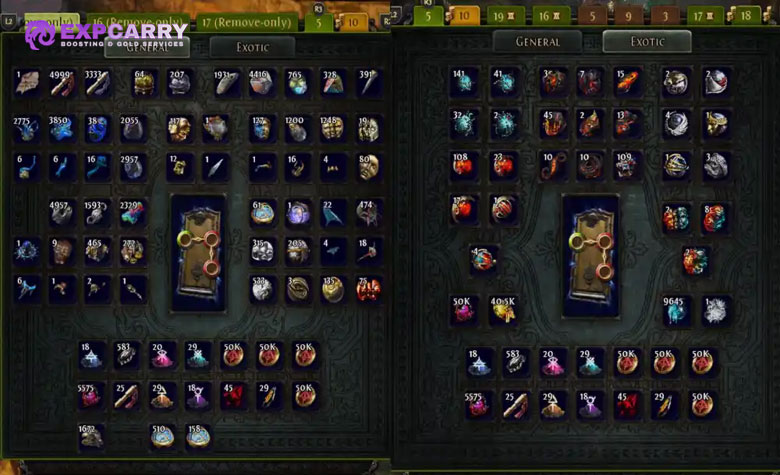
Gold is now a permanent PoE 1 resource used by multiple NPC systems. It drops while playing and cannot be traded directly to another player. One of its most useful roles is paying transaction fees in the Currency Exchange Market.
The Currency Exchange lets you place asynchronous orders for stackable items such as common currency instead of messaging many players for a manual trade. You choose what you are offering, what you want, the exchange ratio, and the quantity. Regular equipment and individually rolled items still use the normal trade website and direct player interaction.
Returning players should use the exchange for routine conversions and reserve direct trading for equipment, jewels, special bases, and other non-stackable items. Orders still require Gold, so regular gameplay supplies the fee needed to keep using the market.
Major Content Changes in PoE 3.29
Curse of the Allflame is more than a balance patch. It introduces a new challenge league while changing several core mechanics that returning players may recognize by name but not by current behavior.
Curse of the Allflame League
The new league centers on Charts, voyages aboard The Sovereign, underwater expeditions, Allflame-powered protection, treasure recovery, and Ducats. This league-specific content is available only to characters created in a Curse of the Allflame league during its active period.
Mercenaries Return as Core Content
Mercenaries of Trarthus can appear from Act 3 onward. You can challenge a Mercenary, wager Gold, and temporarily hire the defeated opponent. Map encounters can provide Warrants, which preserve a Mercenary for a later rematch and can be traded. Scion also receives the Luminary Ascendancy, which specializes in permanently hired Mercenaries.
Abyss Has a New Encounter Flow
Abyss no longer asks you to chase a moving crack across the Map. Open pits collect souls from nearby enemies and release Abyssal forces after enough have been slain. Abyss is also the primary source of Abyssal Jewels and Stygian Vises, and the mechanic now has an additional endgame pinnacle boss.
Legion and Talismans Were Reworked
Legion encounters release automatically after enough enemies and chests have been broken out. The Domain of Timeless Conflict has new reward and item-transformation systems, while Incubators are no longer obtainable. Talismans are no longer Corrupted by default, use special Enchantments instead of their old Implicits, and are connected more directly to Bestiary.
Atlas Anomalies Appear in the Endgame
Completing Maps affected by a Voidstone can make an Anomaly appear when the Atlas is opened again. Anomalies do not consume a Map item, ignore Atlas Passive Tree bonuses, and cannot be improved with fragments. Reflecting Mists and the Nameless Seer now appear through these special areas rather than spawning randomly inside ordinary Maps.
Should You Start Fresh or Continue in Standard?
A fresh league character is the better return path for most players, but Standard remains useful when your goal is testing old equipment or continuing a long-term collection.
| Choice | Advantages | Problems to expect |
|---|---|---|
| Current challenge league | Fresh economy, active league mechanic, easier access to current guides, and natural relearning | No old currency or equipment is available in the new league stash |
| Standard | Existing characters, legacy items, accumulated currency, and permanent collections remain available | Old builds may have invalid trees, changed gems, removed interactions, and difficult stash organization |
If you return in Standard, do not spend a full passive reset immediately. Check whether the build's Ascendancy, gems, items, reservation costs, and defensive mechanics still work. Compare it with a current version before assigning points. If you would rather rebuild around a tested plan, a current PoE custom build can provide a coherent path instead of trying to repair several obsolete systems at once.
Your First Campaign Priorities
The campaign remains the best tutorial for a returning player because it introduces mechanics gradually and creates clear gear checks. You do not need expensive items to finish it, but you do need a functional main skill and basic defenses.
- Use one main damage setup: link a primary Skill Gem to Supports that directly improve its damage or coverage.
- Keep moving: equip a movement skill and add movement speed on boots when possible.
- Protect elemental resistances: maintain Fire, Cold, and Lightning Resistance and repair them after the campaign resistance penalties.
- Take Life or the defense appropriate to the build: campaign damage is easier to manage when defense grows alongside offense.
- Upgrade weapons when the build depends on weapon damage: attack builds can fall behind quickly when using an outdated weapon.
- Complete Labyrinths: Ascendancy points are a central part of the character, not an optional endgame bonus.
- Complete permanent-reward quests: collect passive points and other lasting character rewards before committing to Maps.
In 3.29, a Crafting Bench is available in every town from Act 2 onward. Use it to add missing Life, Resistances, or another essential modifier instead of waiting for a perfect rare item.
Your First Steps After Reaching Maps
Once the campaign ends, your immediate goal is not maximum profit. Build a stable Tier 16 character, reveal the Atlas, earn Atlas Passive Points, and secure Voidstones so that more quadrants operate at the highest regular Map Tier.
- Cap elemental resistances after the final campaign penalty.
- Check Life, recovery, ailment handling, movement, and single-target damage.
- Use the Map Device to open the Atlas and select a connected location.
- Complete new Atlas locations and their Bonus Objectives.
- Spend early Atlas points on mechanics your build can clear safely and consistently.
- Progress toward Exarch, Eater, Maven, Shaper, Elder, and the Incarnation of Dread requirements.
- Socket every acquired Voidstone in its fixed corner.
Do not copy an old Atlas strategy built around Favoured Maps, Sextants, Scouting Reports, or the former Voidstone order. Use the official current Atlas Passive Tree when planning points, and confirm that any external tree was created for the same patch.
How to Check Whether an Old Build Still Works
An old character can appear functional in the hideout while failing immediately in current Maps. Review the build layer by layer before investing currency into repairs.
- Open the Passive Tree and check whether a free reset is available or whether allocated paths have changed.
- Verify that the Ascendancy nodes still provide the effects the build expects.
- Read every Skill and Support Gem instead of assuming its old values and tags remain unchanged.
- Check whether reservation changes prevent the old aura combination from running.
- Confirm that required Unique items still have the same modifiers and interactions.
- Review flasks, ailment protection, curse handling, recovery, and physical mitigation.
- Test damage and survivability in low-risk content before entering pinnacle encounters.
When replacing equipment, compare current listings through the official Path of Exile Trade site. Legacy Standard items can have modifiers that no longer appear on new drops, so do not price or replace them solely by comparing their names.
Common Returning Player Mistakes
Most problems come from mixing different game versions or trying to resume at the exact difficulty where the old character stopped. A short reset in easier content prevents expensive mistakes.
- Following a PoE 2 guide: the skill, support, class, and endgame instructions do not transfer to PoE 1.
- Using an outdated PoE 1 build: matching the class and skill name is not enough if the tree and items were made for an older patch.
- Repairing Standard before relearning: a fresh character usually teaches current systems faster than reorganizing years of items.
- Assuming old Map items still define layouts: current Map items primarily provide a tier, while the Atlas location determines the area.
- Using the former Voidstone route: the four current stones have different combined boss requirements.
- Ignoring 3.29 socket bonuses: any gem fits any socket, but matching a colored socket can add Quality.
- Trying every league mechanic immediately: first establish campaign progress, defenses, Atlas completion, and Voidstones.
- Spending currency before checking current prices: use the Currency Exchange or official Trade site before making a large purchase.
PoE Returning Player Checklist
Use this list as a simple route from installation to stable endgame progression without mixing PoE 1 and PoE 2 information.
- Launch Path of Exile 1 and verify the current 3.xx patch.
- Create a character in the current challenge league unless you specifically want Standard.
- Select a current PoE 1 League Starter and update your item filter.
- Complete ten acts, permanent-reward quests, and four Labyrinths.
- Cap resistances and establish reliable recovery before Maps.
- Learn the generic Map item and Atlas-location system.
- Complete Atlas objectives and allocate a simple farming tree.
- Unlock the Eldritch, Ceremonial, Decayed, and Originator Voidstones.
- Use the Currency Exchange for stackable items and regular Trade for equipment.
- Add advanced league mechanics only after the character clears Maps consistently.
Path of Exile 1 remains the fast, dense game built around ten acts, linked equipment sockets, the Passive Tree, Ascendancies, and the Atlas of Worlds. Start with a current character instead of an old assumption, learn the redesigned Atlas one quadrant at a time, and treat PoE 2 as a separate game with separate guides. That approach removes most of the confusion before it can slow your return.