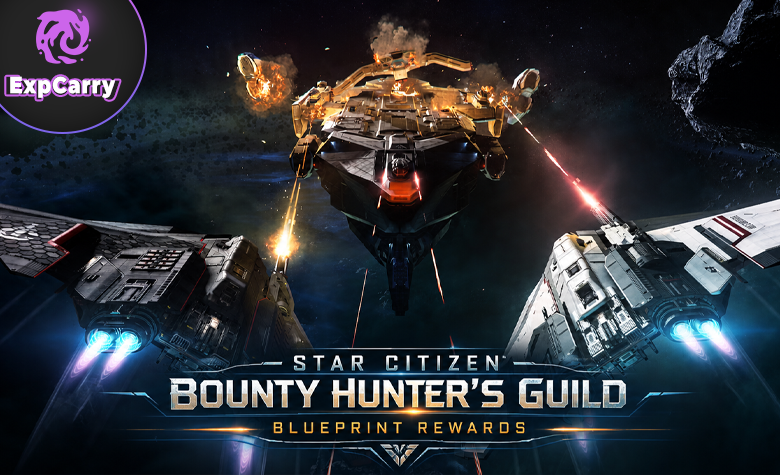

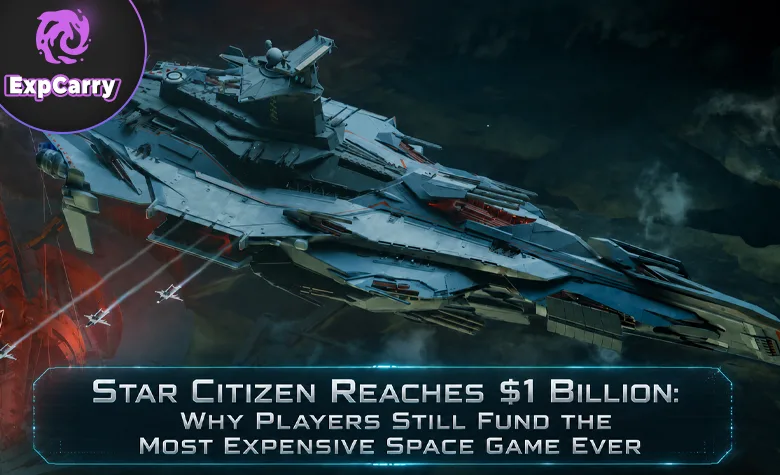
Star Citizen has passed one of the strangest milestones in gaming history: more than $1 billion in player funding. For most games, that number would describe a publisher's entire blockbuster pipeline. For Star Citizen, it is another checkpoint in a project that has been playable for years, unfinished for years, criticized for years, and still powerful enough to convince players to buy into the next promise.
The easy reaction is to call the number absurd. It is absurd. But that does not explain why the money keeps coming in. Star Citizen did not cross $1 billion because players forgot the delays, the bugs, the wipes, the expensive ships, or the lack of a full 1.0 release. It crossed that line because Cloud Imperium Games has built something more complicated than a normal early access game: a playable alpha, a ship marketplace, a community identity, a technology project, and a dream that no other space game has fully replaced.
Star Citizen $1 Billion Funding Turns an Old Argument Into a Bigger One
The $1 billion milestone does not make Star Citizen finished. It does not erase the long development cycle, the missed expectations, the unstable patches, the unfinished professions">professions, or the fact that Squadron 42 still has to prove itself as a released product. What it does change is the scale of the argument. Star Citizen is no longer just a crowdfunded game that became too large. It is now the most visible example of how far direct player funding can go before a traditional release exists.
That is why the milestone feels both impressive and uncomfortable. Supporters see the number as proof that players still want a massive first-person space sim with physical ship interiors, planetary travel, multiplayer organizations, trading, combat, salvage, mining, exploration, and long-term universe building. Supporters see the number as proof that players still want a massive first-person space sim with physical ship interiors, planetary travel, multiplayer organizations, trading, combat, salvage, mining, exploration, and long-term universe building. That loop also includes Mining Resources for players focused on extraction and hauling. Critics see the same number as proof that CIG has become too comfortable selling future potential while the game remains in alpha. Both sides are reacting to the same billion dollars. They are just reading different warnings from it.
The timing also matters. The milestone arrived around a major sales and access window, not after a final release, a review cycle, or a clean 1.0 launch. That makes the story sharper. Star Citizen did not reach $1 billion by delivering a finished game and then selling expansions. It reached that number while still selling access, ships, future ships, upgrades, and the idea that the most ambitious version of the project is still ahead.
DefenseCon, Free Fly Access, and the $5,000 Anvil Odin Made the Milestone Louder
The billion-dollar moment did not happen in a vacuum. Star Citizen was running through a period of heightened attention tied to DefenseCon, free fly access, and ship sales. That matters because it shows how the game's funding engine still works. CIG does not only rely on old backers quietly adding money over time. It creates event windows where new players can try the alpha, existing players return, organizations become active, and limited or high-profile ship offerings push the conversation back into public view.
The clearest example was the Anvil Odin, a massive battlecruiser offered at a reported $5,000 while still not ready to fly in the live game. That single detail explains the Star Citizen controversy better than any abstract paragraph could. To supporters, a ship like the Odin is a long-term pledge toward a capital-class fantasy that may eventually define organization warfare and fleet gameplay. To critics, it is a perfect symbol of the problem: a very expensive promise attached to a game that still has no full release.
This is why the $1 billion milestone became such a useful lightning rod. It was not just "players funded game." It was "players funded unfinished space MMO past $1 billion while a $5,000 future ship was being sold." Human civilization really did invent cave paintings, agriculture, spaceflight, and then this. Still, the reaction proves the same thing CIG has proved for years: controversy does not automatically weaken Star Citizen's funding model. In some cases, it amplifies attention around it.
Star Citizen Is Not Just a Crowdfunded Game Anymore
Star Citizen began as a crowdfunded revival of the PC space sim, but that description is now too small. It is a live alpha, a pledge store, a testing environment, a ship collection platform, a social MMO space, a technology showcase, and a permanent argument about what players should tolerate from ambitious game development. That mix is exactly why normal comparisons often fail.
A normal early access game sells access to something unfinished and then moves toward launch. Star Citizen sells access, but it also sells ships, upgrades, concept vehicles, event packages, subscriptions, cosmetics, and a long-term role inside a universe that is still under construction. Players are not only buying what exists today. They are buying status, identity, future gameplay, organization utility, and the belief that the current alpha is a rough version of something much larger.
| Funding driver | Why players buy in | Why it stays controversial |
|---|---|---|
| Starter packages | Give access to the live alpha and a basic ship | The game is still unfinished |
| Standalone ships | Let players build a personal hangar and choose a role | High prices raise pay-to-win and overcommitment concerns |
| Concept ships | Sell future gameplay before a vehicle is flyable | Delivery can take years |
| Free fly events | Bring new players into the alpha during sales windows | They can turn testing periods into marketing funnels |
| Organization gameplay | Encourages groups to plan fleets, logistics, and roles | Large social investment makes walking away harder |
This model works because Star Citizen's ships are not treated like ordinary cosmetics. A cargo ship is not only a vehicle. It is a future profession. A fighter is not only a weapon platform. It is status, skill, and danger. A capital ship is not only a large asset. It is organization command, logistics, crew fantasy, and social hierarchy wrapped in one expensive pledge. The ship store sells objects, but the real product is imagined ownership inside a future version of the universe.
Explore services related to this guide, selected from our Star Citizen catalog.
View All Star Citizen Services

The Most Expensive Space Game Still Has No Clean Finish Line
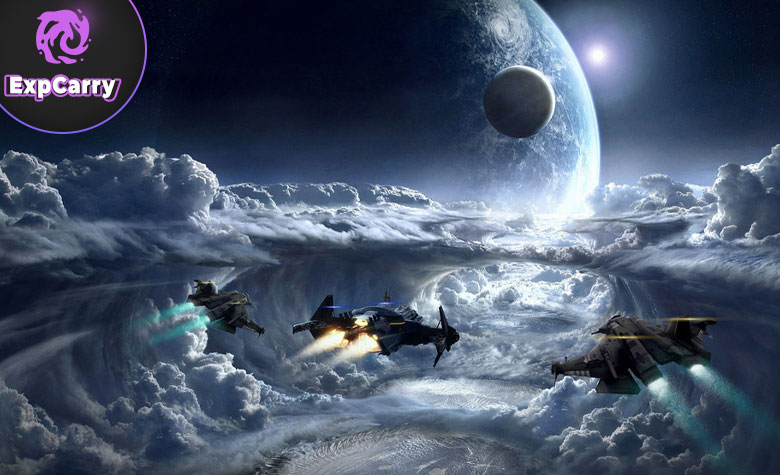
Calling Star Citizen the most expensive space game ever is a fair and useful description. Calling it the most expensive game ever needs more caution because some huge commercial games, mobile titles, and marketing-heavy projects make budget comparisons messy. The cleaner point is harder to dispute: no other space sim has carried this much public player funding, this long of a visible development cycle, and this much expectation before a full commercial 1.0 release.
That missing finish line is still the central problem. Star Citizen is playable, but it is not finished. It has planets, moons, cities, stations, ships, first-person combat, hauling, mining, salvage, bounty hunting, medical gameplay, piracy, Pyro, server meshing progress, and large events. It also has crashes, bugs, wipes, unfinished systems, rough balance, unstable economies, placeholder loops, and features that still feel like scaffolding for the game CIG keeps describing.
This is why the honest assessment sits between the two loudest camps. Star Citizen is not vaporware. Anyone saying nothing exists is ignoring the live alpha, the technology already deployed, and the players spending hundreds of hours inside it. But it is also not a finished MMO that deserves to be judged like a released product. Anyone pretending the alpha label solves every complaint is being too generous. The game is real, active, and still incomplete enough for every funding milestone to feel strange.
Alpha 4.8 Shows Progress, Resets, and the Same Old Star Citizen Risk
Alpha 4.8 is a useful snapshot of Star Citizen's current condition. The update brought new missions, equipment changes, combat content, system fixes, and another attempt to stabilize parts of the live experience. It also arrived with a major reset. Long-term persistence was not preserved, and only earned blueprints were kept through the wipe. Credits, reputation progress, in-game purchases, and other earned assets were reset as CIG responded to economy problems, exploits, and duplication issues.
That combination is Star Citizen in miniature. There is visible progress, but the foundation is still unstable enough for sweeping resets to remain part of life. For committed players, this is the price of testing a live alpha while major systems are still being built. For skeptical players, it is proof that the game is still not ready to be treated as a normal released product. Both reactions are rational. The update proves the project is moving, and it proves that movement still comes with disruption.
Alpha 4.8 gives Star Citizen fresh content without solving the release problem
The important point is not that Alpha 4.8 was good or bad in isolation. The important point is that updates like this keep the community active while also reminding everyone why Star Citizen remains controversial. CIG can add missions, ships, locations, systems, and fixes, but until the economy, persistence, server stability, and core loops feel reliable across major patches, every update will carry the same question: is this a step toward release, or just another layer on top of an unfinished foundation?
Players Keep Funding Star Citizen Because Nothing Else Replaces It
The strongest reason players still fund Star Citizen is also the simplest: no other game replaces its exact fantasy. Elite Dangerous has scale and flight. No Man's Sky has exploration and procedural discovery. EVE Online has player politics and a ruthless economy. X4 has deep simulation. Space Engineers has construction. None of them combine Star Citizen's specific blend of first-person presence, detailed ship interiors, multiplayer crew fantasy, planetary traversal, cinematic sci-fi tone, and direct physical interaction with the world.
That gives CIG a strange advantage. Star Citizen does not have to compete only with finished rivals. It competes with the absence of a true replacement. For players who want this exact version of the dream, the choice is not simple. They can leave and accept that no other game offers the same mix, or they can stay, complain, test, buy, wait, and hope the next technical milestone makes the whole thing more coherent.
This is the part critics often underestimate. Many backers are not blind to the problems. They know the bugs. They know the delays. They know wipes can erase progress. They know expensive ships look ridiculous from the outside. They keep returning because the moments that work are still powerful: walking through a ship interior, taking off from a planet, joining a crew, hauling cargo through danger, boarding a wreck, or watching a large organization turn a messy alpha into a night of emergent sci-fi chaos.
Ship Sales Turn Star Citizen Funding Into Personal Investment
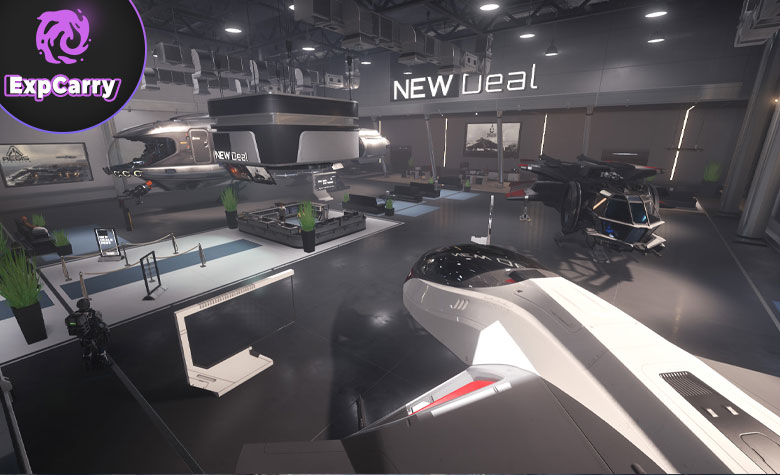
Star Citizen's ship sales work because they attach spending to identity. A player buying a mining ship is not only buying a tool. They are buying the idea that mining will be their career. A hauler is buying trade routes, risk, cargo, and long-distance logistics. A fighter pilot is buying mastery and status. A capital ship buyer is buying leadership, crew coordination, and the hope that organization warfare will eventually justify the cost.
This is powerful monetization because it changes the question players ask. They do not only ask, "Is this worth the price today?" They ask, "Will this become my role when the game finally reaches the version I believe in?" That future-facing psychology explains why concept ships can sell before they are flyable. It also explains why the model is dangerous. When a game sells a future identity this effectively, support can slide into overcommitment before players notice.
The Anvil Odin turned the old criticism into a perfect headline
The Anvil Odin became such a sharp example because it compressed the whole debate into one object. A $5,000 battlecruiser that is not yet playable sounds absurd to anyone outside the Star Citizen ecosystem. Inside that ecosystem, it is framed as a pledge toward future fleet gameplay, a rare capital-class asset, and a serious organization tool. That gap between outside disbelief and inside logic is exactly why Star Citizen remains so fascinating and so exhausting to discuss.
The controversy is not only about price. It is about trust. A finished game selling an expensive collector's item is one thing. An unfinished alpha selling a future capital ship is another. CIG's defenders can argue that backers know what they are buying. Critics can argue that the model keeps rewarding delay. Both points can be true, because apparently reality was not busy enough and needed a monetized paradox with a hangar module.
Squadron 42 Is the Next Major Test of Cloud Imperium's Discipline
Squadron 42 matters because it is the cleanest test CIG has left. Star Citizen's persistent universe can survive rough patches because players already understand that it is an alpha. Squadron 42 will not have that same excuse. A single-player campaign has to launch, run well, tell a coherent story, justify its production values, and prove that years of technology work can become a polished final product.
CIG has presented Squadron 42 as targeted for 2026, but the project still carries the weight of repeated delays and shifting expectations. That makes it more than a separate campaign. It is a credibility checkpoint for the entire company. If Squadron 42 lands strongly, it gives CIG a powerful answer to years of skepticism: the long development cycle can actually produce a finished premium game. If it slips again or launches poorly, the $1 billion milestone will look far more uncomfortable.
Squadron 42 affects Star Citizen even if players only care about the MMO
Many persistent universe players may not care about a single-player campaign on paper, but Squadron 42 still affects them. It tests CIG's production pipeline, polish standards, performance work, cinematic tools, mission design, AI systems, and ability to stop iterating long enough to ship. Those same disciplines matter for Star Citizen 1.0. A studio that can finish Squadron 42 has a stronger case that it can eventually finish the MMO foundation. A studio that cannot will face the same brutal question again: what forces this project to stop expanding and finally ship?
Star Citizen 1.0 Needs More Than Bigger Funding Numbers
The $1 billion milestone proves that Star Citizen can keep raising money. It does not prove that CIG can finish the game. That distinction is the entire story. Funding solves some problems: staffing, technology, infrastructure, asset production, events, marketing, and long-term support. It does not automatically solve scope control, release discipline, economy design, server reliability, onboarding, balance, or the pressure to keep selling the next future feature.
Star Citizen 1.0 needs a stable foundation more than it needs another dramatic number. Players need persistence they can trust, an economy that does not collapse under exploits, gameplay loops that feel complete, server performance that supports the intended scale, and a release structure that makes the game understandable to newcomers who have not spent a decade decoding CIG's development language. The current alpha has impressive pieces, but 1.0 has to connect those pieces into a product that can stand without constant explanation.
This is where the project faces its hardest transition. Selling potential has worked for years. Shipping a finished foundation is different. Once CIG moves toward 1.0, Star Citizen will be judged less as a dream and more as a game. That is healthy, necessary, and probably terrifying for everyone involved, including the players who have built part of their gaming identity around waiting for it.
The Real Reason Players Still Pay for Star Citizen
Players still fund Star Citizen because the project offers a fantasy they cannot get anywhere else, and because enough of that fantasy already works to keep belief alive. The alpha is often frustrating, but it is not empty. The technology is inconsistent, but not imaginary. The ship sales are aggressive, but they are tied to roles and dreams players genuinely care about. The delays are damaging, but each major addition gives supporters another reason to believe the long road still leads somewhere.
There is also a social reason. Star Citizen is not only a game people play alone. It is an organization ecosystem. Players join fleets, plan operations, collect ships for group roles, teach newcomers, argue about patches, track development, and build their own stories around a universe that is still forming. That social investment makes the project harder to abandon. Leaving Star Citizen is not always just uninstalling a game. For some players, it means leaving a community, a fleet, a future plan, and a decade of accumulated expectation.
That does not make the funding model harmless. It makes it effective. Star Citizen turns patience into a resource, and CIG has been extracting that resource for a very long time. The question is not whether players care. They clearly do. The question is whether that care will be rewarded with a finished game strong enough to justify the money, time, and trust spent along the way.
Star Citizen's $1 Billion Milestone Is a Victory With a Warning Label
Star Citizen passing $1 billion is a victory because it proves extraordinary demand still exists for a massive, first-person, multiplayer space sim. Few games keep this much attention before launch. Fewer still keep raising money through years of bugs, resets, controversy, and jokes that should have killed a weaker project. CIG has built something players keep wanting even when they are angry at it.
It is also a warning because money can hide structural problems. A project that keeps raising funds can keep expanding, reworking, delaying, and selling the next layer unless leadership creates a hard path toward completion. Star Citizen's biggest risk is no longer whether people care. They do. The risk is whether the game can stop being an infinite promise and become a stable foundation that grows without feeling unfinished forever.
The milestone does not end the Star Citizen debate. It sharpens it. Supporters can point to the funding, the active alpha, the scale, the technology, and the lack of a true rival. Critics can point to the same billion dollars and ask why the game still has no full release. Both arguments are stronger now, which is exactly why this milestone matters.
Final Thoughts
Star Citizen reaching $1 billion is not a simple success story and not a simple scandal. It is both. It proves that players still want a vast sci-fi universe with ships they can walk through, planets they can land on, missions they can share, and careers they can build over years. It also proves that CIG's funding model can keep generating enormous money while the game remains unfinished, which is exactly why the number feels so strange.
The reason players still fund Star Citizen is not that they ignore the problems. Many backers know the problems better than critics do: delays, bugs, wipes, expensive ships, unstable systems, and shifting timelines. They keep funding because the parts that work are still compelling, and because the finished version of Star Citizen remains one of the strongest fantasies in PC gaming. That fantasy has survived more criticism than most released games ever receive.
The next stage is not about proving Star Citizen can raise money. That argument is over. The next stage is about delivery. Squadron 42, Star Citizen 1.0, server stability, economy integrity, finished gameplay loops, and trust after future wipes will decide whether the $1 billion milestone becomes a historic foundation or the most expensive warning label in game development.