Finishing the Diablo 4 campaign does not leave you with one mandatory dungeon to spam. The modern endgame is a loop: reach level 70, unlock Torment through The Pit, establish an Ancestral gear set, level Paragon Glyphs, improve that gear with crafting, target-farm the Uniques your build needs, and then push higher Torment tiers or aspirational content. The important part is choosing the activity that solves your current bottleneck instead of running every icon on the map at random.
This guide covers the live game in patch 3.1.3 and Season 14, not the concluded Season 15 PTR. The current level cap is 70, the difficulty ladder extends through Torment XII, and the old World Tier III and IV route is obsolete. Lord of Hatred owners also gain Temis, War Plans, the Talisman, the Horadric Cube, and Echoing Hatred, but the core Helltide, Whisper, Nightmare Dungeon, Pit, Infernal Horde, and Lair Boss progression remains understandable without those expansion systems.
Diablo 4 Endgame Progression in One Roadmap
The cleanest answer to "what do I do after the campaign?" is to work through the following stages. Do not treat the last column as a rigid checklist. Move forward when your character clears comfortably, then return to the activity that supplies the next missing upgrade.
| Stage | Main goal | Best activities | Move on when |
|---|---|---|---|
| Post-campaign | Reach level 70 and finish account or realm progression unlocks | Helltides, Whispers, Strongholds, Season Rank objectives | Your skills, class mechanic, healing setup, and starter gear are functional |
| Pre-Torment | Build a complete Legendary setup | Helltides, Tree of Whispers, easy Nightmare Dungeons | Every important slot has a useful Aspect and your defenses are stable |
| Torment I | Replace temporary gear with Ancestral bases | Helltides, Whispers, Nightmare Dungeons, early Lair Bosses | You can farm without repeated deaths and bosses do not take several minutes |
| Early Torment climb | Level Glyphs, collect Obducite, and target Uniques | The Pit, Nightmare Dungeons, Infernal Hordes, Lair Bosses | Your next Pit unlock is a controlled clear, not a lucky carry |
| Late endgame | Finish Greater Affixes, Charms, Masterworking, and Mythics | High Torment farms, Undercity, boss farming, War Plans | Routine content is fast and only optimized rolls remain |
| Push | Test the completed character | High Pit tiers, Artificer's Tower, Echoing Hatred | There is no required endpoint; stop where the challenge is enjoyable |
What to Do Immediately After the Campaign
Your first session after the credits should remove progression blockers, not chase a Mythic Unique. Confirm your class mechanic, unlock useful regional waypoints, and collect the permanent or seasonal progression rewards available to your realm. On the Seasonal Realm, Skill and Paragon rewards are tied to Season Rank rather than the old Renown progression; Eternal characters can still benefit from Eternal Renown rewards. Healing Potions no longer need to be upgraded, so focus instead on your healing, sustain, and potion-charge setup. Claim any Season Rank rewards already earned, salvage unwanted Legendary items when they improve the Codex of Power, and keep only gear that serves the build you are actually assembling.
Reach Level 70 Before Judging the Build
The current character cap is level 70. A campaign can end before that point, so continue leveling in content that also gives gear and materials. Helltides and Whisper objectives are strong because they overlap naturally: one loop can provide experience, Cinders, Grim Favors, gear, boss resources, and crafting materials. If leveling an alt or a late-start character is the only obstacle, the Diablo 4 leveling service is the relevant option, but a first character benefits from learning the build during this stage.
Choose Seasonal or Eternal Goals
The permanent endgame exists on both realms. Seasonal characters add Season Rank, seasonal quests, seasonal reputation, and temporary reward sources on top of that foundation. Renown is no longer the Seasonal Realm's permanent-power progression system; those rewards are now integrated into Season Rank. Eternal characters keep long-term progress and Eternal Renown but do not receive the limited seasonal system. Never make a permanent gearing plan around a PTR feature or an unconfirmed next-season mechanic.
Lord of Hatred Owners Should Unlock Temis
After completing the Lord of Hatred campaign, Temis becomes the streamlined endgame hub. The Command Table lets you build War Plans that chain the endgame activities available to your account, including Nightmare Dungeons, Helltides, Undercity, Lair Bosses, Infernal Hordes, and The Pit. Completing the chain grants a War Chest and activity progression, while overlapping Whispers can add Grim Favors. Blizzard's Lord of Hatred overview confirms that War Plans, the Horadric Cube, Talisman, and Echoing Hatred require the expansion. Without it, enter the permanent activities directly and follow the same gearing priorities.
How Difficulty Progression Works Now
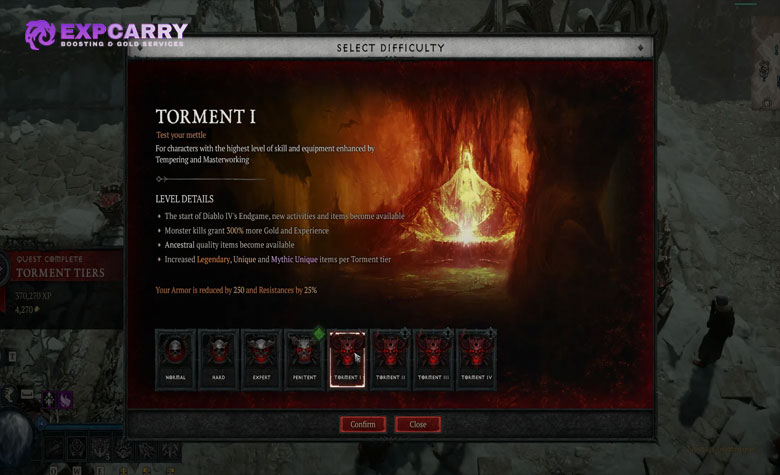
Normal, Hard, Expert, and Penitent are the standard difficulties. Torment I through Torment XII form the endgame ladder. Higher Torment raises enemy pressure while improving experience, gold, and the chance of valuable gear and materials. Torment progression is tied to The Pit rather than the old World Tier III and IV Capstone route. Capstone Dungeons have returned for Season Rank progression, but they are not the old World Tier unlock system.
| Difficulty step | Current Pit requirement | What changes |
|---|---|---|
| Torment I | Reach level 70 and clear Pit tier 10 | Ancestral gearing and the full boss-driven endgame begin |
| Torment II to V | Pit tiers 15, 20, 25, and 30 | Reward rates improve in smaller early steps |
| Torment VI to XII | Pit tiers 40, 50, 60, 70, 80, 90, and 100 | Each jump demands a larger increase in damage and defense |
Check the requirement displayed in the live Pit interface before planning a carry or long farm, because Blizzard can adjust progression gates in a patch. The practical rule is more important than the number: farm the highest difficulty you can clear quickly and reliably. A higher tier is a downgrade if trash packs become slow, bosses consume most of the run, or deaths erase the extra reward rate.
When to Raise Torment
Move up when ordinary elites die in one short damage cycle, incoming damage is predictable, and your boss kill is controlled. If a new tier doubles the clear time, drop back down and farm the missing power source. A fast Torment VI loop usually produces more useful attempts per hour than a miserable Torment VII loop.
What to Fix After a Failed Pit Unlock
Repeated deaths usually indicate missing resistance, armor, life, damage reduction, sustain, or crowd-control recovery. A long boss fight with safe trash clearing indicates single-target damage, resource uptime, or cooldown problems. Slow trash with an easy boss points toward area damage, movement, or skill rotation. Diagnose the wall before spending materials.
Explore services related to this guide, selected from our Diablo IV catalog.
View All Diablo IV Services

Stage One: Build a Functional Gear Set
A functioning endgame build needs synergy before it needs perfect rolls. Equip the required skill interactions, fill offensive and defensive Aspect slots, maintain resource generation, and solve basic survivability. A random Greater Affix does not automatically beat a lower-power item with the correct affixes and Aspect.
Use Helltides for Broad Gear and Materials
Helltide is the best flexible starting loop when several slots are weak. Kill dense packs, participate in local events and the Blood Maiden, collect Cinders, and open Tortured Gifts that match weak slots when the live chest selection allows it. The activity also overlaps well with Whispers and seasonal events, which makes it more efficient than traveling between unrelated objectives.
Use Whispers for Caches, Gold, and Keys
Complete high-value Grim Favor objectives that overlap with content you already need. Turn in ten Grim Favors for a cache instead of traveling across the map for isolated one-Favor tasks. Whisper Caches support early gearing and supply gold, materials, sigils, and Lair Boss resources, so they are especially efficient before the build has one precise target.
Keep Bases, Not Just Legendary Colors
Compare item power, required affixes, Greater Affixes, sockets, and the cost of finishing the item. In Torment, prioritize Ancestral bases with useful Greater Affixes, but remember that the modern crafting system can also make lower-rarity Ancestral bases relevant. The live loot filter can highlight Ancestral items, Greater Affixes, Codex upgrades, required affixes, specific Uniques, and Talisman sets. Start permissive, then hide weak bases only after every slot has a stable replacement.
Which Endgame Activity Gives Which Upgrade
Most confusion disappears when every activity has a job. The table below is a decision map, not a claim that each activity drops only one reward.
| If you need | Run this first | Why |
|---|---|---|
| General gear and materials | Helltide plus Whispers | Dense kills, targeted chests, overlapping objectives, and broad caches |
| Masterworking material | Nightmare Dungeons | Enemies and events drop Obducite throughout the run |
| Glyph ranks | The Pit | Successful clears grant Glyph upgrade attempts |
| Specific Unique items | Lair Bosses | Boss-specific pools make them the direct target farm |
| More Obducite or wave rewards | Infernal Hordes | Aether can be converted into the reward category the run offers |
| Targeted loot with a Tribute | Kurast Undercity | Vessel of Hatred owners can use Tributes and Bargains to narrow the reward purpose |
| Expansion crafting materials | War Plans, Whispers, Undercity | Expansion owners can use these sources to feed Horadric Cube recipes and Command Table progress |
| Difficulty unlock or build test | The Pit | It gates Torment and exposes damage or defense weaknesses |
Nightmare Dungeons Are for Obducite, Not Glyph XP
This is the most common outdated tip. Glyph upgrading was moved from Nightmare Dungeons to The Pit. Nightmare Dungeons remain valuable because Obducite drops from enemies, events, and bosses rather than existing only in the completion chest. Good sigil affixes and War Plan modifiers can add more value, but the base reason to run them is gear, experience, and Masterworking material.
The Pit Levels Glyphs and Unlocks Torment
A successful Pit run grants Glyph upgrade attempts, with an additional attempt for a deathless clear. Upgrade chance depends on the completed Pit tier relative to the Glyph rank, so farming comfortably above the target Glyph is better than forcing a marginal clear. If dungeon routing, Pit unlocks, or Glyph farming becomes the bottleneck, the Diablo 4 dungeon services hub covers those specific activities.
Infernal Hordes Convert Clear Speed Into Resources
Infernal Hordes reward builds that can control dense waves and survive escalating choices. Farm Aether during the waves, then spend it on the reward category that solves the current problem. Use Hordes when you need a dense repeatable loop and Obducite, but avoid burning valuable entries if the build cannot maintain wave tempo.
Undercity Is a Targeting Tool
Kurast Undercity is a Vessel of Hatred activity and is most efficient when a suitable Tribute or Bargain gives the run a defined purpose. Entering without a target can still produce rewards, but it wastes the system's main advantage. Save rare Tributes until the character can complete the timer reliably and the desired reward is worth the attempt.
How to Level Paragon Glyphs Efficiently
Socket only Glyphs that serve the current build, satisfy their nearby stat requirements, and improve a real damage or defense layer. Spreading upgrades across every Glyph in the inventory delays the breakpoints that matter. Start with the Glyph whose radius or secondary effect enables the largest immediate gain, then level the remaining equipped Glyphs in order of impact.
- Complete the Pit tier that your character clears quickly and without deaths.
- Spend every upgrade attempt before leaving the completion area.
- Keep the main equipped Glyphs within a similar useful range unless one has a critical breakpoint.
- Raise the Pit tier when upgrade chance becomes inefficient, not merely because a higher tier is unlocked.
- Recheck the Paragon board after radius changes because additional nodes can become worthwhile.
Do not use an old Paragon guide that tells you to earn Glyph experience in Nightmare Dungeons. The current system awards rank attempts after Pit clears. Nightmare Dungeons instead feed the Masterworking side of the same progression loop.
Crafting Order: Improve Gear Without Wasting Materials
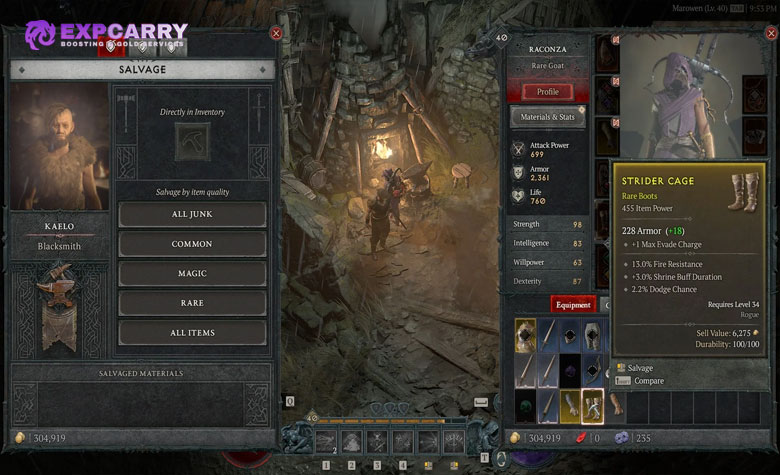
The safest approach is to invest in layers. Cheap or easily repeatable changes come first. Expensive optimization comes only after the base item proves it belongs in the build. This prevents a temporary weapon or ring from consuming the Obducite, Neathiron, and gold needed for a lasting upgrade.
Recommended Order for Legendary and Unique Gear
Use the following sequence as a checklist, while respecting any recipe-specific warning shown in the live interface.
- Confirm the base slot, item power, required affixes, and useful Greater Affixes.
- Enchant the one undesirable affix only if the remaining item is worth keeping.
- Imprint the required Legendary Aspect or verify the Unique power fits the build.
- Temper the item with the needed offensive, defensive, or utility property.
- Add Gems, or Runewords if your account has access to the Vessel of Hatred system, to solve current damage and defense needs.
- Masterwork a good temporary item only as far as needed, but reserve the push to maximum Item Quality and the final affix boost for strong long-term pieces.
- Use advanced Horadric Cube or Transfiguration options only after reading the exact recipe and risk.
Unique, Mythic Unique, and Iconic Mythic items can have one undesirable affix rerolled through Enchanting in the current live patch, and all three Unique types now have two guaranteed affixes when they drop. The Mythic Uniques 3.0 guide explains that item-quality layer in detail without turning this progression map into an item encyclopedia.
When to Masterwork
The current Masterworking system raises Item Quality in random increments up to a maximum of 25. Each point of Quality improves affix values, while the item's base properties also scale with the system. Fully Masterworking a piece grants a 50% boost to one random affix. Early Masterworking is still useful when partial investment immediately unlocks the next Torment step, but save the push to maximum Quality and the final affix optimization for an Ancestral base with the correct affixes, a build-defining Unique, or a piece that would require exceptional luck to replace.
How the Horadric Cube and Talisman Fit In
These Lord of Hatred systems amplify an established build; they do not replace one. The Cube can create, transmute, upgrade, and customize gear, Runes, Gems, and Talisman objects. The Talisman accepts a Seal and up to six Charm slots, with matching affixes on non-Unique Charms able to stack and Set Charms granting partial or full set bonuses. Farm Charms and Cube materials alongside War Plans, then choose bonuses that reinforce the skill tags and damage engine already present.
Boss Progression and Unique Target Farming
Do not start farming Lair Bosses simply because keys are available. First identify the exact Unique slot or item the build lacks, check which Lair Boss has the relevant pool, and farm on the highest Torment that still gives clean kills. A lower tier with many efficient Hoard openings can outperform a higher tier where every fight is slow.
Use the Boss Ladder as a Target Map
Lair Bosses become relevant from Torment I. Keys are no longer spent to summon the boss itself. After a Lair Boss dies, each player receives access to their own Hoard and must individually spend the appropriate Lair Boss Keys to open it. Different bosses and seasonal targets can use different key types, including Greater or Superior keys where applicable. The old rotation logic where one player paid the summon cost and the whole party collected full rewards is obsolete. Group play still provides a bonus chance for additional Uniques, but another player's keys do not open your Hoard. The goal is not to kill every boss equally; it is to convert the keys you own into attempts at the Unique your build needs.
Do Not Confuse a Unique With a Finished Item
A first copy can activate the build even with mediocre secondary rolls. Replace it later with an Ancestral, Greater Affix, Mythic, or better-power version. For the current high-end item chase, the Iconic Mythic farming guide separates confirmed sources from player sample rates. If the limiting factor is opening more boss Hoards, the Diablo 4 Lair Keys service is more relevant than buying an unrelated generic run.
When to Start Push Content
Push content is where you test a finished progression loop, not where you repair a half-built character. Start pushing after routine farming is fast, the main Glyphs are developed, core gear is Masterworked, and the build has a reliable boss plan. Pushing too early produces little except long clears and expensive deaths.
The Pit Versus the Artificer's Tower
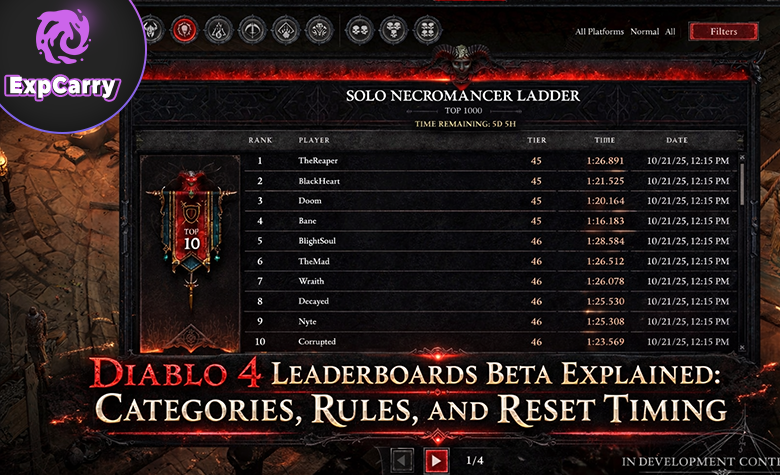
The Pit is both progression and a scalable build test: it upgrades Glyphs, unlocks Torment tiers, and measures timed clear power. The Artificer's Tower is the competitive environment tied to leaderboards and scoring. The Tower and Leaderboards left Beta with Season 14, so they now serve as the live competitive endgame rather than a test feature. Farm The Pit for permanent character power first; use the Tower when ranking and execution are the goal.
Echoing Hatred Is an Aspirational Finish
Lord of Hatred owners can use a rare Trace of Echoes at the Sightless Eye in Temis to enter Echoing Hatred. The activity escalates until the character is overwhelmed, so it tests sustained damage, defense, movement, and survival rather than offering a normal endpoint. Treat it as a final exam for a mature build, not an efficient early gearing method.
A Practical Endgame Session Order
When you log in without a clear goal, use a short diagnostic loop. It keeps several resources moving while preventing the common habit of spending an entire session on content that cannot provide the missing upgrade.
- Claim Season Rank, Whisper, or War Plan rewards already completed.
- Run overlapping Helltide and Whisper objectives if several gear slots remain weak.
- Run Nightmare Dungeons when Obducite is the bottleneck.
- Run The Pit when Glyph ranks or the next Torment unlock is the bottleneck.
- Spend keys only on the Lair Boss Hoard that can provide a required Unique.
- Use Infernal Hordes or Undercity when you have access to them and their rewards fit the current goal.
- Craft upgrades, test the build in one higher tier, and return to the relevant farm if the test fails.
War Plans make this sequence smoother for Lord of Hatred owners by chaining the same activities and adding a War Chest. Blizzard continues to adjust live rewards and bugs in the current Diablo 4 patch notes, so use the in-game tooltip for exact costs and drop conditions after a hotfix.
Current Seasonal Layer Versus Permanent Endgame
Seasonal content should accelerate or enrich the route, not replace the permanent explanation. In Season of Death Awakening, the seasonal questline, Pandemonium Ruptures, Deathtoll Chambers, reputation, and the Corrupted Reaper add another path to Superior Lair Keys, Mythic crafting currency, and high-end drops. Blizzard's official Season of Death Awakening guide identifies the Corrupted Reaper as the season's strongest direct source for Mythic Unique drops and Pandemonium Fragments, but that boss and its currency are not an Eternal-realm foundation.
Do not build this evergreen route around Season 15 systems tested on the 3.2.0 PTR. That PTR ran from August 4 through August 11, 2026 and is now closed. Challenge Dungeons, Rebirth, Soul Splinters, new Mythic and Unique Charms, and other tested features can still change before Season 15 goes live. Until Blizzard publishes the final live implementation, the route in this guide remains Helltide and Whispers for broad setup, Nightmare Dungeons for Obducite, The Pit for Glyphs and difficulty, Lair Bosses for target farming, and high-tier content for optimization.
Common Endgame Progression Mistakes
Most stalled characters are not missing hundreds of hours. They are spending time on the wrong reward loop or investing too deeply in replaceable gear.
- Raising Torment too early: better listed rewards do not compensate for slow kills and repeated deaths.
- Running Nightmare Dungeons for Glyph XP: Glyph upgrades now come from The Pit.
- Spamming The Pit for Obducite: use Nightmare Dungeons, Infernal Hordes, or Undercity when available for Masterworking material.
- Fully Masterworking every temporary item: partial Item Quality can bridge a wall, but maximum Quality and final affix optimization belong on durable bases.
- Opening random boss Hoards: target the Lair Boss whose Unique pool serves the build.
- Copying a finished build too early: an endgame setup may assume several Uniques, Charms, or resource rolls that a starter character does not possess.
- Ignoring defenses: armor, resistances, life, mitigation, and sustain determine whether higher Torment is actually farmable.
- Treating PTR notes as live: test values and encounters are not confirmed progression until the live patch arrives.
Diablo 4 Endgame FAQ
What should I do first after finishing the campaign?
Reach level 70, finish essential account or realm progression unlocks, assemble a complete Legendary build, and use Helltides plus Whispers for broad gear and materials. On Seasonal, work through Season Rank for its Skill and Paragon rewards. Enter The Pit when its live unlock requirement is met.
Should I farm Helltides or Nightmare Dungeons?
Choose Helltides when you need broad gear, open-world materials, and overlapping Whispers. Choose Nightmare Dungeons when you specifically need Obducite and dungeon rewards.
Do Nightmare Dungeons still level Glyphs?
No. Paragon Glyph upgrading takes place after successful Pit clears. Nightmare Dungeons are primarily part of the Masterworking material loop.
When should I enter Torment I?
After reaching level 70 and clearing the required Pit tier, enter Torment I as soon as the build can survive and kill efficiently. If every elite is slow or deaths are frequent, return to Penitent and finish the starter setup.
What is the best activity for Unique items?
Lair Bosses are the direct target farm because each boss has a defined Unique pool. Use the boss that can drop the item your build needs and preserve your Hoard Keys for that target.
Should I Masterwork non-Ancestral gear?
Some early Masterworking can help cross an immediate wall. Avoid pushing a temporary piece to maximum Item Quality and spending heavily on its final affix optimization when Torment drops are likely to replace it.
Do I need Lord of Hatred for the endgame?
No. Core activities such as Helltides, Whispers, Nightmare Dungeons, The Pit, Infernal Hordes, and Lair Bosses remain the base route. Lord of Hatred adds Temis, War Plans, Talisman, Horadric Cube, and Echoing Hatred. Kurast Undercity and Runewords are Vessel of Hatred features.
What is the final Diablo 4 endgame activity?
There is no single mandatory finish. The Pit and Artificer's Tower support scalable pushing, while Echoing Hatred is an expansion-only survival challenge. Your practical endpoint can be a completed build, Torment XII farming, a leaderboard goal, or a personal Pit record.
Conclusion
The best Diablo 4 endgame route is a sequence of solved bottlenecks. Finish the campaign, reach level 70, build a stable Legendary setup, unlock Torment through The Pit, replace temporary pieces with Ancestral gear, run Nightmare Dungeons for Obducite, level Glyphs in The Pit, and spend Lair Boss Keys only on Hoards that can provide required Uniques. Craft in stages and raise difficulty only when the new tier remains efficient.
After that foundation is complete, War Plans, the Talisman, Horadric Cube recipes, Mythic hunting, high Pit tiers, the Artificer's Tower, and Echoing Hatred become meaningful optimization goals instead of distractions. The endgame is not a list of icons to clear once. It is a repeatable decision: identify the weakest part of the character, run the activity that upgrades it, test the result, and climb again.