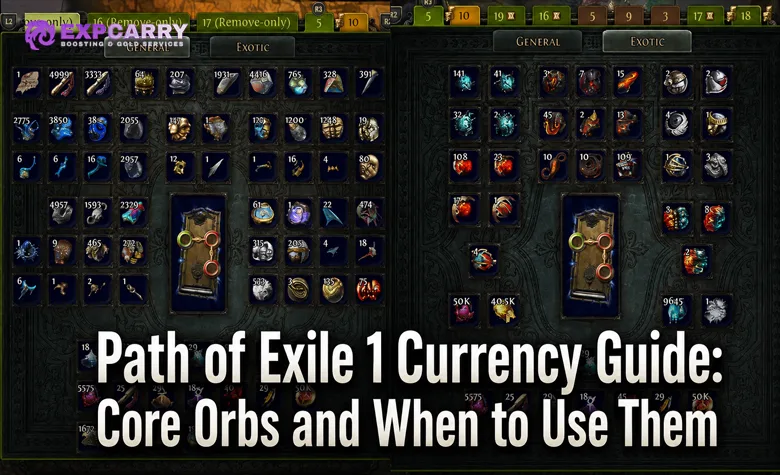
Currency in Path of Exile 1 is more than money. Almost every orb is both a crafting action and a tradable unit, which creates the same question every time one drops: should you use it now, keep it for later, or exchange it for something your character needs more?
The safest answer depends on three things: the exact result the orb can produce, the stage of your progression, and the current market value of that result. Common currency should remove immediate progression blockers. Rare currency should normally stay in the stash until the item, craft, or trade is valuable enough to justify it.
Current status: This guide covers Path of Exile 1 and was checked against the official Path of Exile 3.29 patch notes. This distinction matters because PoE 1 and PoE 2 use several currencies differently. It also reflects the 3.29 socket rework and the earlier removal of multiple Harbinger and map currencies.
PoE 1 Currency Use, Save, or Sell Quick Reference
This table gives a practical default for a fresh trade-league character. It is not an absolute price list. A valuable craft can make an orb worth using, while a guaranteed equipment upgrade can make selling the same orb the better decision.
| Currency Group | Default Decision | Use It When | Keep or Sell It When |
|---|---|---|---|
| Wisdom and Portal Scrolls | Use | You need to identify relevant items or leave an area | Keep only a comfortable working stack |
| Transmutation, Augmentation, and low stacks of Alteration | Use | You are improving flasks, maps, or a planned magic-item base | Save bulk Alterations if you do not have a defined craft |
| Alchemy, Binding, and Scouring | Use selectively | They create a real upgrade, prepare maps, or reset a useful base | Keep a mapping reserve instead of spending every copy on campaign gear |
| Jeweller's and Fusing Orbs | Use on equipment you will keep | The item is good enough to justify socket or link investment | Sell large stacks if buying a linked item is cheaper than gambling |
| Chromatic Orbs | Save for final socket optimization | A matching non-white socket provides useful gem Quality | Basic gem compatibility is already solved by white sockets in 3.29 |
| Chaos Orbs | Use for maps or trade | A map needs rolling, or one controlled reforge is reasonable | A guaranteed purchase is better than repeatedly reforging random gear |
| Exalted and Annulment Orbs | Save until the item is planned | The remaining affix outcomes and failure cost are acceptable | You are only hoping that a mediocre item becomes valuable |
| Divine Orbs | Save or sell | A finished, valuable item gains enough from better numeric rolls | The currency can buy a larger and guaranteed character upgrade |
| Fracturing, Veiled Exalted, Sacred, Awakener's, and Dominance Orbs | Save or sell | You understand every eligibility rule and the complete crafting sequence | You have no tested endgame craft for them |
| Mirror of Kalandra | Do not use casually | The target is a verified mirror-tier item and the transaction is secure | In almost every other situation |
In Solo Self-Found, replace the word "sell" with "preserve for the craft that is hardest to replace." Opportunity cost still exists even when other players are not part of the economy.
How Currency Value Works in Path of Exile 1
There is no permanent ratio between Chaos Orbs, Divine Orbs, Exalted Orbs, or specialized crafting currency. Prices change with league age, build popularity, crafting discoveries, drop supply, and whether the market is Softcore, Hardcore, or Standard. A static statement such as "one Divine always equals a fixed number of Chaos" will eventually become wrong.
Relative value is more durable when currencies are grouped by role:
- Routine utility: scrolls, quality currency, Transmutations, Augmentations, and other frequently replaced supplies.
- Mapping and progression liquidity: Alchemy, Scouring, Vaal, Regret, Unmaking, and Chaos Orbs.
- General crafting capital: Alteration, Regal, Exalted, Annulment, Divine, and Gemcutter's Prisms.
- Specialized crafting capital: Veiled Exalted, Veiled Chaos, Fracturing, Sacred, Eldritch, influence, and Tainted currencies.
- Exceptional wealth: Mirror of Kalandra and any similarly scarce item whose market price demands a live check.
Use the official Path of Exile Bulk Item Exchange or the in-game Currency Exchange to check the current market before a large conversion. Compare the rate for the correct league and platform, inspect both sides of the market, and be careful with listings that are far away from the main cluster of offers.
A simple economic rule prevents many early mistakes: if selling an orb buys a guaranteed upgrade worth more than its likely crafting result, sell it. If the orb fixes a specific blocker more cheaply than trading for a replacement, use it. If neither is true, save it.
Basic Currency and Campaign Priorities
The campaign rewards speed and reliability, not perfect items. Most equipment will be replaced quickly, so spend common currency to solve movement, resistances, sockets, links, flasks, and weapon damage. Avoid investing rare currency into a base that will be obsolete two acts later.
| Currency | What It Does in PoE 1 | Campaign Decision |
|---|---|---|
| Scroll of Wisdom | Identifies an unidentified item | Use on relevant bases, rares, uniques, and upgrades; do not stop for every low-value item |
| Portal Scroll | Creates a portal to town or hideout where portals are allowed | Use freely while keeping a small reserve |
| Orb of Transmutation | Upgrades a normal item to a magic item | Use on useful flasks, strong early bases, and maps that should remain magic |
| Orb of Augmentation | Adds an explicit modifier to a magic item that has room for one | Use after a good one-mod magic roll when a second modifier is helpful |
| Orb of Alteration | Rerolls the explicit modifiers on a magic item | Use a few on important flasks or a defined base; save large stacks for deliberate crafting |
| Orb of Alchemy | Upgrades a normal item to a rare item | Use on a strong base or useful map, but do not alchemize every temporary item |
| Orb of Binding | Upgrades a normal item to rare with up to four linked sockets | Excellent for a campaign four-link or an early map; new sockets are white in 3.29 |
| Orb of Scouring | Removes removable modifiers and normally returns a magic or rare item to normal | Keep a mapping and crafting reserve; use to reset a worthwhile base |
| Orb of Regret | Grants one character passive refund point | Use when a planned tree correction improves the character now |
Blacksmith's Whetstones improve weapon quality, Armourer's Scraps improve armour quality, Glassblower's Baubles improve flask quality, and Gemcutter's Prisms improve gem quality. Common weapon and armour quality currency can be used during progression. Baubles are best reserved for flasks that have the right base and modifiers, while Gemcutter's Prisms should normally go into a main or permanent utility gem rather than a temporary setup.
A player following a structured PoE 1 campaign progression route should treat currency as time saved: use cheap resources when they prevent deaths or long detours, and preserve expensive resources when the item will soon be replaced.
Explore services related to this guide, selected from our Path of Exile catalog.
View All Path of Exile Services
Socket and Link Currency After the 3.29 Rework
Old socket-color advice is now one of the largest sources of misinformation in PoE 1 guides. In 3.29, gems can be placed in equipment sockets even when gem and socket colors do not match. Equipment sockets are white by default, and a red, green, or blue socket grants the socketed gem 10% additional Quality when its color matches the gem.
| Currency | Current Function | Best Default |
|---|---|---|
| Jeweller's Orb | Rerolls the number of sockets within the item's limits; added sockets are white | Use on equipment worth keeping, or compare the expected cost with buying the correct socket count |
| Orb of Fusing | Rerolls the links between sockets | Use for realistic four- or five-link goals; evaluate bench cost or a pre-linked item before chasing six links |
| Chromatic Orb | Forces one socket to become non-white while the other sockets roll normally | Save for matching-color Quality optimization, not basic gem compatibility |
| Orb of Binding | Creates a rare item with up to four linked sockets, with added sockets generated as white | Use early when both rarity and a four-link are valuable |
Chromatic Orbs are rarer in the current system and are no longer exchanged for Jeweller's Orbs by town vendors. The old bench crafts for exact red, green, or blue sockets were also removed. Current bench options instead guarantee at least two, three, or four non-white sockets for increasing Chromatic costs.
The decision order is now sockets first, links second, and matching colors last. A functional six-link with white sockets already supports any normal gem combination. Spend Chromatics only when the extra matching-color Quality is worth more than keeping or trading the currency.
Rare Item Crafting Orbs and Their Real Opportunity Cost
The normal-to-magic-to-rare crafting ladder is easy to understand, but expensive mistakes happen near the end. Always enable advanced item descriptions and inspect the item's base, item level, prefixes, suffixes, influence, fracture, implicits, and corruption status before applying valuable currency.
| Currency | Effect | Use, Save, or Sell |
|---|---|---|
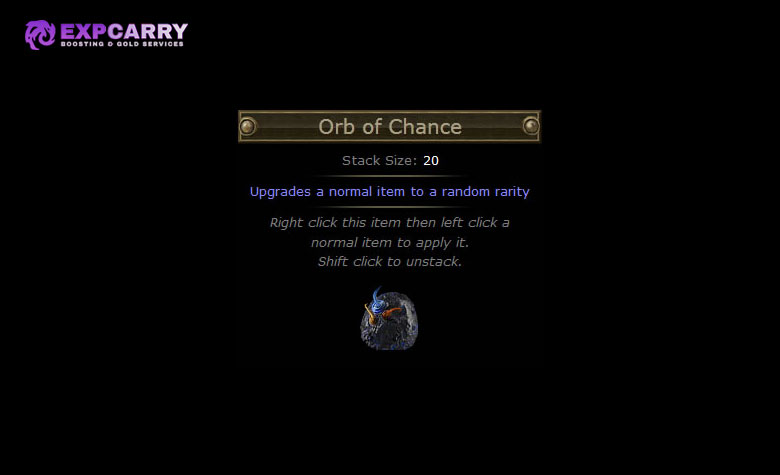
| Orb of Chance | Upgrades a normal item to a random rarity, with a restricted chance to become unique | Usually save or sell; use only on an eligible base with a deliberate target |
| Regal Orb | Upgrades a magic item to rare and adds one random explicit modifier | Save for a magic item with valuable starting modifiers and a clear next step |
| Chaos Orb | Reforges a rare item with new random explicit modifiers | Use on maps and occasional early bases; sell or trade instead of blindly spamming equipment |
| Exalted Orb | Adds a random explicit modifier to a rare item that has an open affix | Use selectively when the existing item is already strong and the possible additions justify the cost; Exalted Orbs became comparatively more common in 3.28 |
| Orb of Annulment | Removes one random modifier from an eligible item | Save for a recoverable craft; do not use just because one modifier is bad |
| Divine Orb | Rerolls numeric values within the existing explicit modifier ranges | Save or sell early; use on a finished valuable item when its rolls materially affect performance |
| Blessed Orb | Rerolls numeric values of applicable implicit modifiers | Use on a good permanent base; it also has a special guardian-map function explained later |
| Vaal Orb | Corrupts an item with irreversible and context-dependent outcomes | Use only when ordinary crafting is finished and every failure outcome is acceptable |
A Divine Orb does not turn a low-tier life modifier into a high-tier life modifier. It changes the numbers inside the tier already present. An Exalted Orb does not guarantee the stat the build needs. An Annulment Orb can remove the best modifier instead of the worst one. In 3.29, the Crafting Bench also offers Chaos-paid crafts that reroll three random modifiers on a rare item for 3 Chaos Orbs or reroll one random modifier for 8 Chaos Orbs, giving Chaos a more controlled use than a full raw reforge in some crafts. These limits and alternatives are why buying a completed item is often more efficient than gambling on a nearly good rare.
Before committing multiple high-value steps, compare the craft against the equipment goals in a complete PoE 1 league starter plan. Currency is easiest to waste when an item looks individually strong but does not solve the build's actual damage, defense, attribute, resistance, or reservation requirements.
Map Currency and Atlas Spending Priorities
Map preparation is one of the best reasons to spend common currency because it directly supports Atlas completion, experience, and loot. The exact strategy depends on build strength and Atlas goals, but the basic sequence remains consistent.
- Use Transmutation and Augmentation when a map should remain magic for safety or early completion.
- Use an Orb of Alchemy when the build can handle a rare map and the additional modifiers are worth the reward.
- Use Scouring or Chaos Orbs to replace modifiers the build cannot run. Scour and Alchemy is often the clearer reset; Chaos preserves rare status but completely rerolls the modifier set.
- Use a Vaal Orb only when corruption is required for the objective or the possible outcomes are acceptable. A corrupted map cannot be repaired with normal crafting currency.
| Currency | Atlas Function | Practical Priority |
|---|---|---|
| Orb of Unmaking | Grants one Atlas passive refund point | Save some while establishing an Atlas strategy, then use when reallocating points creates more value |
| Blessed Orb | Can reroll the specific Conqueror on a Conqueror Map or Elder Guardian on an Elder Guardian Map | Use for a missing or desired boss rather than treating a newly generated map as fixed; the function does not affect guardian maps that existed before 3.28 |
| Scrying Orb | Stores the map where it dropped and lets its Divination Card pool be scryed onto another Atlas map | Use only after selecting a valuable card pool and a map layout you intend to farm |
| Cartographer's Chisel | Legacy map-quality currency that can no longer be obtained; existing copies still work and now apply +20% Quality per use | Not part of normal current-league preparation; Standard owners should value the limited supply |
Scrying Orbs are an endgame planning tool, not a routine map reroll. Their value comes from separating a desired Divination Card pool from a map layout you may not want to run. Confirm both the stored source and the destination before consuming one.
Flask, Eldritch, and Specialized Endgame Currency
Specialized currency is valuable because it performs an action that common orbs cannot. It is also easy to misuse because eligibility rules are narrower. If the item does not satisfy those rules, the currency may not apply; if it does apply, the wrong order can still destroy the crafting plan.
| Currency | Purpose | Recommended Decision |
|---|---|---|
| Instilling Orb | Adds an enchantment that triggers an eligible utility flask when a condition is met | Use on a well-rolled final flask; use the Crafting Bench when a specific trigger is required |
| Enkindling Orb | Adds a powerful utility-flask enchantment, with the flask unable to gain charges during its effect | Use when stronger individual uses matter more than automatic uptime |
| Eldritch Ember and Eldritch Ichor tiers | Add Searing Exarch or Eater of Worlds implicits to eligible non-influenced helmet, body armour, gloves, or boots | Use common tiers for attainable implicits; preserve exceptional tiers for endgame items |
| Eldritch Exalted, Annulment, and Chaos Orbs | Add, remove, or reroll prefixes or suffixes according to the dominant Eldritch influence | Use only after checking which influence is dominant and which affix side will change |
| Veiled Exalted Orb | Removes a random modifier and adds a random veiled modifier to a rare item | Save or sell unless the item is prepared and the removable modifier risk is controlled |
| Fracturing Orb | Fractures one random modifier on a rare item with at least four modifiers, locking it in place | Use only when enough outcomes are valuable and the base justifies failure |
| Sacred Orb | Rerolls the base defense percentile on armour | Reserve for an excellent endgame base where the defense difference is worth the rarity |
| Ancient Orb | Rerolls an eligible unique item as another unique of the same item class | Save or sell unless the eligible unique pool and restrictions make the target rational |
| Awakener's Orb | Consumes an influenced donor item to combine influence on a target item through a specialized craft | Plan the donor, target, influence modifiers, base, and item levels before use |
| Orb of Dominance | Interacts with high-tier influenced modifiers, removing one influence modifier while attempting to elevate another | Use only when the item has the required influenced modifiers and both the success and failure paths are understood |
Veiled Exalted Orbs are not world drops; they drop from Catarina and retain the old Veiled Orb function of removing a random modifier and adding a random veiled modifier. Veiled Chaos Orbs were reintroduced in 3.26 and can drop from Immortal Syndicate Safehouse leaders; they reforge a rare item with new random modifiers including a veiled modifier. Fracturing and Ancient Orbs, by contrast, entered the core drop pool when Harbinger was removed as a core league in 3.28.
Advanced crafts should be written as a sequence before the first expensive click. Record which affixes must survive, which can be removed, whether metamod protection applies, and what happens if the random step fails. If the sequence is unclear, a PoE 1 custom build review can help determine whether crafting that item is actually better than purchasing a finished alternative.
Removed and Legacy PoE 1 Currency
Old videos, item filters, and search results often recommend currencies that are no longer part of current PoE 1. The status must be described precisely because "legacy" does not always mean the same thing. Some old items remain usable in Standard, some are present but nonfunctional, and some were deleted or converted.
The official Path of Exile 3.28 patch notes removed Harbinger as a core league and made several major currency changes. The table below separates those outcomes.
| Old Currency | Former Purpose | Current Status |
|---|---|---|
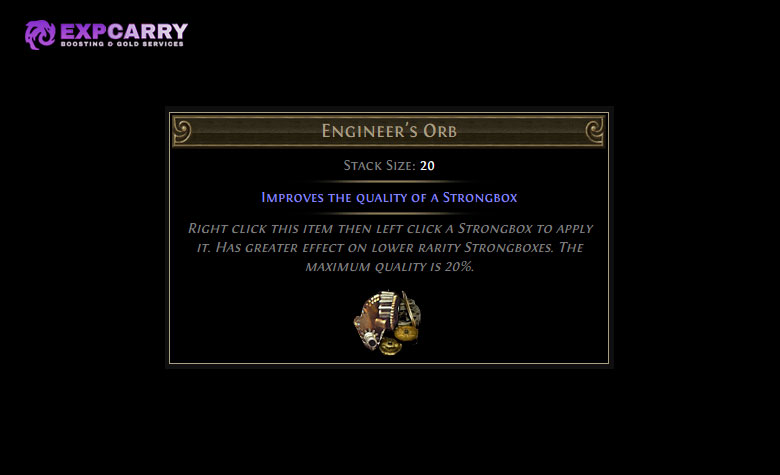
| Engineer's Orb | Improved the quality of a strongbox | No longer obtainable; existing copies no longer function |
| Harbinger's Orb | Reforged a map into a higher-tier map with a chance to create The Beachhead | No longer obtainable; existing copies no longer function |
| Orb of Horizons | Reforged a map as another map of the same tier | No longer obtainable; existing copies no longer function |
| Cartographer's Chisel | Added map quality | No longer obtainable, but existing copies still function and now apply +20% Quality per use; this is different from the three currencies above |
| Scouting Report | Rerolled Kirac missions or their offered maps according to report type | No longer obtainable; existing copies no longer function; Kirac's shop now rerolls with Gold |
| Ancient, Binding, Engineer's, Harbinger's, and Horizon Shards | Combined into their corresponding currencies | No longer obtainable, and existing copies were deleted on login after the change |
| Deregulation, Electroshock, Fragmentation, Haemocombustion, Specularity, and Time-light Scrolls | Harbinger-related currency with specialized effects | No longer obtainable |
| Awakened Sextant and Elevated Sextant | Applied limited-use modifiers through the former Atlas sextant system | Removed from normal play in 3.24; old copies were converted to Veiled Scarabs |
Do not confuse removed Harbinger currency with Ancient Orbs and Fracturing Orbs. Those two remain active and can drop from the core pool. Similarly, an old Cartographer's Chisel in Standard is limited legacy stock but is not a dead item, while an old Engineer's Orb, Harbinger's Orb, or Orb of Horizons cannot perform its former action.
Filters and stash searches should be updated accordingly. A filter that still highlights Horizon Shards or old Engineer's currency as current drops is using obsolete assumptions. A guide that recommends Horizon Orbs for Atlas completion or Chisels as a standard current-league map-preparation step is also outdated.
A Reliable Use, Save, or Sell Decision Process
When an unfamiliar currency drops, do not decide from rarity color or an old price memory. Use the following process:
- Read the current item text. Confirm that the item belongs to PoE 1, remains functional, and can apply to the target.
- Inspect the target item. Check base type, item level, rarity, affixes, sockets, influence, fracture, corruption, and implicit modifiers.
- Define the successful result. If you cannot state exactly what the orb is supposed to improve, do not use an expensive one.
- Measure the failure state. Ask whether the item remains usable, can be repaired, or becomes worthless after the wrong random outcome.
- Compare with trade. Check whether the currency itself can buy the finished item, a better base, or a larger guaranteed upgrade.
- Check the full sequence. A correct individual action can still ruin a craft if it is performed before quality, links, implicits, metamods, or another required step.
- Spend only with a reason. Use common currency to remove current blockers. Preserve scarce currency until its effect is more valuable than its exchange value.
Four quick questions are usually enough: Is the base permanent? Is the outcome controlled? Is failure affordable? Is crafting cheaper than buying? If any answer is no, saving or selling is normally correct.
Currency Priorities by Progression Stage
| Stage | Use Freely or Selectively | Usually Save or Sell | Main Goal |
|---|---|---|---|
| Campaign | Scrolls, basic quality currency, Transmutation, Augmentation, some Alteration, Binding, and selected Alchemy | Divine, Exalted, Annulment, Fracturing, Veiled Exalted, Sacred, Ancient, and Mirror | Movement, resistances, useful flasks, weapon upgrades, and functional links |
| Early Maps | Alchemy, Scouring, Regret, Unmaking, Jeweller's, Fusing, Vaal, and limited Chaos | Rare endgame crafting currency without a defined item | Atlas completion, map sustain, defense caps, and a stable main setup |
| Established Atlas | Map rolling currency, flask currency, common Eldritch implicits, and planned socket optimization | High-value currency until the final base and sequence are verified | Efficient farming, predictable map difficulty, and targeted upgrades |
| Endgame Crafting | Any currency supported by a tested sequence and acceptable failure cost | Mirror or irreplaceable specialist currency without a proven target | Finish a build-specific item without paying more than a completed alternative |
Trade-league players should keep enough liquid Chaos and Divine value to respond to upgrades instead of converting everything into slow-moving crafting stock. SSF players should keep a broader range because future drops determine which crafting path becomes available.
Common PoE 1 Currency Mistakes
- Following PoE 2 advice: similar currency names can have different functions, acquisition methods, and economic roles.
- Using Divine Orbs to change modifier tiers: Divines reroll values within existing explicit modifier ranges; they do not upgrade the tier.
- Using Chromatics for compatibility in 3.29: any gem can enter any equipment socket, so color is now a Quality optimization.
- Spamming Chaos Orbs on random equipment: a guaranteed trade upgrade is often cheaper than repeated complete reforges.
- Linking a weak base: check whether buying a linked replacement costs less than the expected Fusing investment.
- Corrupting too early: a Vaal Orb should normally be the final irreversible step, not the beginning of a craft.
- Ignoring affix sides: a rare item can be full even when it appears to need another stat, and Eldritch currency changes different sides according to dominance.
- Treating every legacy item equally: Cartographer's Chisels still work in Standard, while old Engineer's, Harbinger's, and Horizon Orbs do not.
- Trusting a fixed value chart: exchange rates change throughout every league and differ by game mode.
Conclusion
Good currency management in Path of Exile 1 is not about hoarding every orb or spending everything immediately. Common currency should solve immediate campaign and mapping problems. Liquid currency such as Chaos and Divine Orbs should be compared with guaranteed trade upgrades. Specialized currencies should be used only when the target item is eligible, the complete sequence is understood, and the failure cost is acceptable.
The most important current corrections are equally clear. Socket color no longer controls gem compatibility in 3.29, so Chromatic Orbs primarily optimize matching-color Quality. Engineer's Orbs, Harbinger's Orbs, and Orbs of Horizons are removed and nonfunctional, while Ancient and Fracturing Orbs remain active core drops. Cartographer's Chisels can no longer be obtained, but old Standard copies still work. Veiled Orb is also an outdated name: the current item is Veiled Exalted Orb, while Veiled Chaos Orb exists again as a separate currency.
When uncertain, inspect the item, define the desired result, check the current market, and compare crafting with buying. Use an orb when it creates more value than it costs, save it when a future plan is stronger, and sell it when the currency itself can purchase a safer upgrade.