
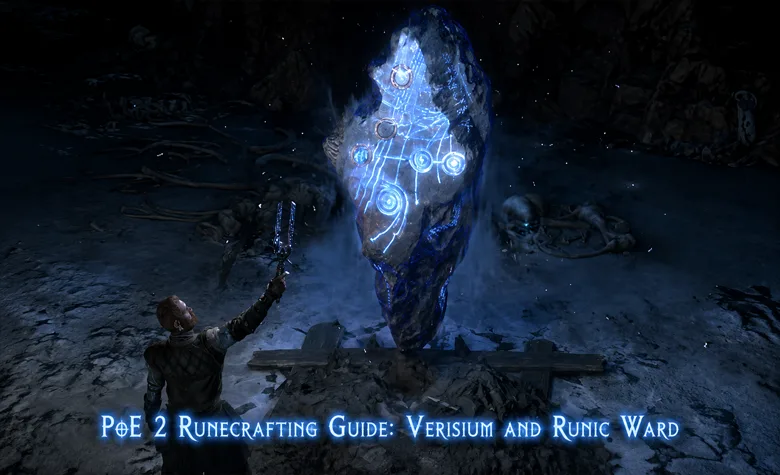
Runecrafting in Path of Exile 2 combines two related systems that serve different purposes. Remnant crafting uses Runeshapes and learned recipes to create rewards after a combat encounter, while Verisium Runeforging modifies eligible equipment at the Verisium Anvil. Understanding that distinction prevents players from wasting Verisium or expecting the Anvil to create the same items offered by a Remnant.
The equipment side of the system is built around Runic Ward and upgrades for selected Unique weapons and armour. Low-level equipment can receive unusually efficient improvements, but high-level armour may exchange part of its existing Armour, Evasion, or Energy Shield for Runic Ward. The result should always be judged from the forge preview and the needs of the build, not from the presence of a new defence alone.
Runecrafting, Runeforging and Verisium Explained
Runecrafting begins with the Remnants found throughout the Runes of Aldur league. A Remnant contains between two and ten recipe slots, with larger layouts appearing less often. Runeshapes are arranged according to an available Runic Recipe, then the encounter begins. Each additional Runeshape increases the number of enemy waves, and later waves receive additional runic modifiers. The crafted reward is claimed only after the encounter is completed.
| System | Input | Result | Main risk |
|---|---|---|---|
| Remnant crafting | Runeshapes and a learned Runic Recipe | Creates the reward specified by the selected recipe | More shapes add waves and stronger encounter modifiers |
| Verisium Runeforging | Verisium and an eligible item | Adds Runic Ward, changes base defences, or upgrades an eligible Unique base | The conversion can reduce traditional defences on high-level armour |
| Alloy crafting | An unlocked Alloy currency item and a suitable target | Replaces an existing modifier with the Alloy's stated crafted modifier | The replaced modifier is not chosen manually unless the item or craft says otherwise |
| Rune crafting | A recipe unlocked through league progression | Creates Mythical, Ancient, Runic Ward, metacrafting, or Unique-derived runes | Item type restrictions determine where the rune can be socketed |
Verisium is a stackable currency dropped by monsters raised during Remnant encounters. It is not inserted into equipment like a rune. Instead, it pays the cost shown by the Verisium Anvil when an eligible weapon or piece of armour is placed into the interface. The cost and output depend on the target, so two items in the same slot can produce different Runic Ward and defence values.
The official Return of the Ancients patch notes define the complete structure: Remnants can have two to ten slots, extra Runeshapes add enemy waves, raised monsters drop Verisium, and Farrow's campaign quests unlock additional crafting categories. This is also why recipe availability differs between characters that have reached the same level but completed different parts of the league questline.
How to Unlock the Verisium Anvil and Rune Recipes
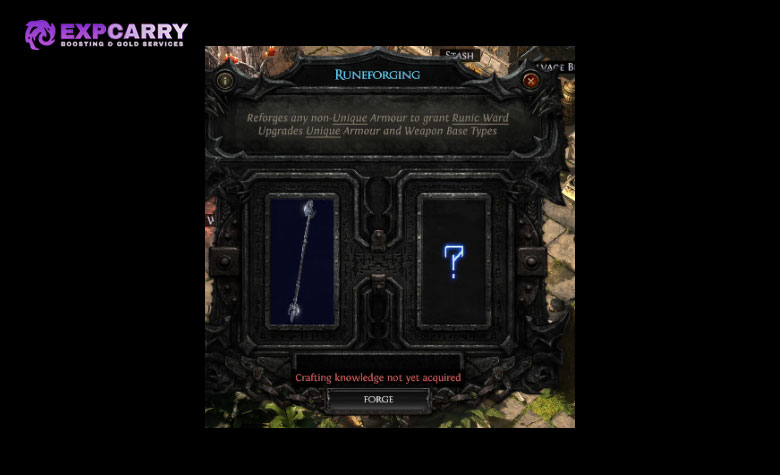
Farrow introduces the system through a four-part campaign questline. Reaching a later act does not automatically grant every earlier recipe or Anvil function. Complete Farrow's objective in each act and interact with the relevant Runic Knowledge when the quest sends you to it. If the forge reports that crafting knowledge has not been acquired, check the quest progression before assuming that the item itself is invalid.
| Campaign stage | Progression unlock | What becomes available |
|---|---|---|
| Act 1 | Initial Farrow quest | Verisium Runeforging and the ability to add Runic Ward to eligible armour |
| Act 2 | Second Farrow quest | Access to 13 Alloy types that can then be unlocked through Remnant encounters |
| Act 3 | Unique Runeforging quest step | Base-type upgrades for eligible low-level Unique weapons and armour, plus special interactions for Kalguuran Uniques |
| Act 4 | Final campaign quest step | Access to 13 Ancient Rune recipes that can be discovered through Remnant encounters |
Completing an act quest opens a category; it does not necessarily place every recipe from that category into the crafting list immediately. Continue completing Remnants and following Farrow's objectives when a particular recipe remains unavailable. A large Remnant may have enough slots for a valuable recipe, but it cannot bypass missing crafting knowledge.
The broader official Return of the Ancients overview places the Anvil within the Runes of Aldur progression rather than the game's ordinary currency crafting. Owning Verisium does not grant missing Runic Knowledge. The character must still complete the required quest step and unlock any specialised recipe before the Anvil can perform it.
How Runic Ward Protects Your Character
Runic Ward is a separate defensive pool positioned below Life in the normal damage order. Damage reduces the character's other applicable pools and Life first. When Life would fall below 1, it stops at 1 and the remaining damage is removed from Runic Ward. The character dies if Runic Ward is exhausted and further damage reaches that final point of Life.
For example, a character with 1,000 Life, 500 Runic Ward, and no other damage pool who takes 1,200 damage after mitigation loses 999 Life and 201 Runic Ward, ending at 1 Life and 299 Ward. Runic Ward therefore provides time to recover Life, move away, use a defensive skill, or finish an enemy. It does not keep Life full and should not be evaluated as if it were Energy Shield placed above Life.
| Runic Ward property | Practical meaning |
|---|---|
| Activates at 1 Life | It is an emergency pool rather than the first defence damaged in combat |
| Regenerates constantly | Its default regeneration is 5% of maximum Runic Ward per second and is not interrupted by taking damage |
| Recovers independently of Life | Life recovery and Runic Ward recovery solve different parts of the survival problem |
| Can be spent by skills | Kalguuran skills and Supports may consume Ward, reducing the amount available to prevent death |
| Contributes to Trial preparation | Maximum Runic Ward is added to starting Honour in the Trial of the Sekhemas |
Runic Ward is strongest when the build can quickly restore Life after it activates. Life Flasks, regeneration, leech, recovery on kill, and skills that create a safe window can turn the Ward pool into a real second chance. A character that remains at 1 Life while standing in repeated damage may lose the entire Ward pool before its regeneration matters.
Some Kalguuran skills intentionally spend Runic Ward for damage, minions, recovery, or defensive effects. Treat those costs like an additional reservation against the survival pool. A build with 800 maximum Ward but a rotation that repeatedly spends 500 does not have an 800-point emergency buffer during that rotation.
If the build cannot comfortably complete the campaign encounters needed for Farrow's progression, a single contextual PoE 2 campaign boost can help reach later crafting unlocks. It does not decide whether a Runeforging conversion is good for the build, so the item preview and defence comparison still need to be checked personally.
Explore services related to this guide, selected from our Path of Exile 2 catalog.
View All Path of Exile 2 Services

Adding Runic Ward to Normal Armour
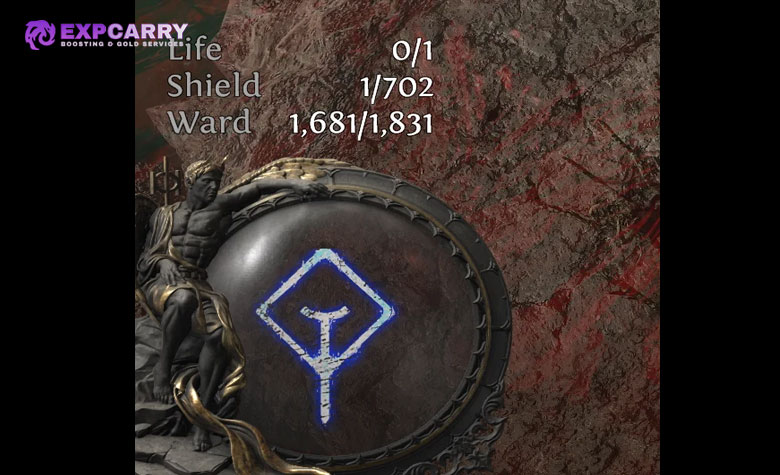
Verisium Runeforging behaves differently according to the armour's base progression. Armour from below the level 55 threshold gains Runic Ward without surrendering its normal base defences. This makes the system especially efficient during the campaign, when a modest Ward value can prevent a lethal hit without weakening Armour, Evasion, or Energy Shield.
High-level armour trades a portion of its regular base defences for Runic Ward. The exact exchange is displayed in the Anvil. It is not automatically an upgrade: an Armour build may lose valuable physical mitigation, an Evasion build may become easier to hit, and an Energy Shield build may sacrifice a pool that normally protects Life before Runic Ward is reached.
| Armour target | Runeforging result | Decision rule |
|---|---|---|
| Campaign armour below the threshold | Adds Runic Ward without reducing normal base defences | Usually efficient if the item will remain equipped long enough to justify the Verisium cost |
| High-level Armour base | Gains Ward while losing part of base Armour | Compare the physical mitigation loss with the emergency pool gained |
| High-level Evasion base | Gains Ward while losing part of base Evasion | Avoid weakening an avoidance build unless Ward solves a specific lethal-damage problem |
| High-level Energy Shield base | Gains Ward while losing part of base Energy Shield | Remember that Energy Shield is normally damaged before Life, while Ward waits below Life |
| Hybrid armour | Converts part of multiple listed base defences | Evaluate the complete defence panel rather than only the largest number on the item |
Current values are more favourable than the original high-level conversion. Grinding Gear Games later reduced the defence lost on high-level non-Unique armour while leaving the Runic Ward gained unchanged. Old launch-week screenshots and calculators can therefore show a harsher trade than the current Anvil preview.
Do not compare Ward and a traditional defence point for point. Their value depends on the build's mitigation, recovery, maximum Life, Energy Shield, and whether any skills spend Ward. The best test is whether the conversion prevents the deaths the character actually suffers without creating a new weakness in ordinary combat.
How Unique Item Upgrades Work
Unique Verisium Runeforging unlocks during Farrow's Act 3 progression. It targets low-level Unique weapons and armour whose special modifiers may remain useful after their original base damage or defence has fallen behind. Eligibility is tied to the Unique and its base progression, not simply to the item level printed on a particular dropped copy.
| Unique item category | Possible result | What to inspect |
|---|---|---|
| Eligible low-level Unique weapon | Upgrades the base type to provide higher base damage | Final damage range, attack speed, critical chance, requirements, and any granted skill |
| Eligible low-level Unique armour | Upgrades base defences and adds Runic Ward | Final Armour, Evasion, Energy Shield, Ward, requirements, and implicit property |
| High-level Unique armour | Adds Runic Ward by reducing part of its other base defences | Whether the Unique's build-enabling effect is worth the defensive exchange |
| High-level Unique weapon | Does not receive the general low-level base upgrade | Check for a specific Kalguuran interaction or crafting knowledge instead |
| Unique jewellery | Is not part of the standard weapon and armour base-upgrade rule | Use only a separately described recipe or system that explicitly accepts it |
| Kalguuran Unique | May have an additional Runeforging property or specialised outcome | Required crafting knowledge and every line of the displayed result |
A higher base does not guarantee that every number on a Unique becomes better. Requirements, implicit values, base attack properties, defence distribution, and granted skills can depend on the resulting base or item version. Read the complete before-and-after preview. If the forge lowers a property essential to the build, cancel the craft even when the headline damage or defence is higher.
The strongest candidates are Uniques whose special modifier still defines the build while weak base statistics are their main limitation. An attack weapon that enables a distinctive interaction may benefit greatly from higher base damage. A caster weapon used only for modifiers may gain little from stronger weapon damage. Likewise, Unique armour is a good target when its effect is irreplaceable and the new defence profile still matches the character.
Do not confuse Unique Runeforging with Runic Recipes that consume a Unique item to create a rune carrying some of its properties. The first system improves an eligible item placed in the Anvil; the second destroys its ingredient to produce a different item. The distinction is part of the current official Path of Exile 2 crafting rules, so read the selected recipe before committing a valuable Unique.
Runeforging should be completed before corruption. A corrupted item normally cannot be modified at the Verisium Anvil, and corruption can also prevent later quality, socket, or rune adjustments. The safe order is to inspect the Anvil outcome, finish normal item improvements, add the intended Runeforging result, verify the finished item, and only then accept corruption risk.
A Safe Runecrafting and Runeforging Workflow
Efficient use of the system begins with a specific goal. Remnant crafting should target a known recipe, while Verisium should solve a weakness on an item that will remain equipped. Spending either resource simply because the interface is available produces expensive upgrades with no place in the build.
- Finish Farrow's available quest step: unlock the correct crafting category before searching for an item or recipe that the character cannot yet use.
- Select a known Remnant recipe: verify the required Runeshapes and make sure the character can survive the number of waves created by the chosen layout.
- Farm Verisium from manageable encounters: adding shapes is worthwhile only when the character can complete every wave and claim the result.
- Choose an item with a defined role: avoid spending on temporary campaign gear unless the no-downside Ward gain meaningfully improves progression.
- Read the entire Anvil preview: compare damage, requirements, implicit properties, granted skills, all base defences, and maximum Runic Ward.
- Check the character after conversion: inspect total Armour, Evasion, Energy Shield, Life, Ward, and the cost of any skill that spends Ward.
- Finish ordinary modifications before corruption: quality, sockets, runes, and other legal crafting steps should be planned around the final Runeforged item.
- Stop when the craft solves the intended problem: do not replace a balanced defence profile merely to display a larger Runic Ward number.
Common mistakes include confusing Remnant recipes with Anvil crafts, overlooking an unfinished Farrow quest, assuming every Unique is eligible, converting high-level armour without checking lost defences, and valuing Ward without accounting for skills that spend it. Another frequent error is copying an old conversion result instead of trusting the current in-game preview.
Final Thoughts
Use Remnants to create something you already intend to use, and spend Verisium only when the Anvil preview fixes a measurable weakness. Runic Ward is most valuable on characters that can recover Life after it activates, while Unique Runeforging is strongest when a valuable special effect is held back by an outdated base. If the preview removes a defence or property the build relies on, keeping the original item is the better craft.