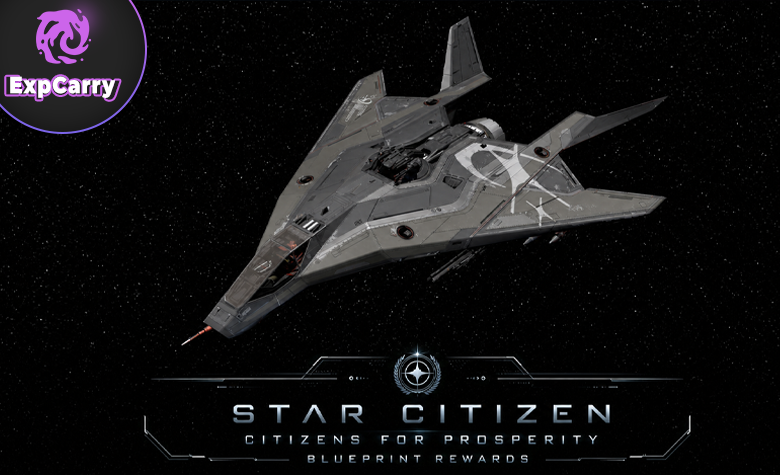

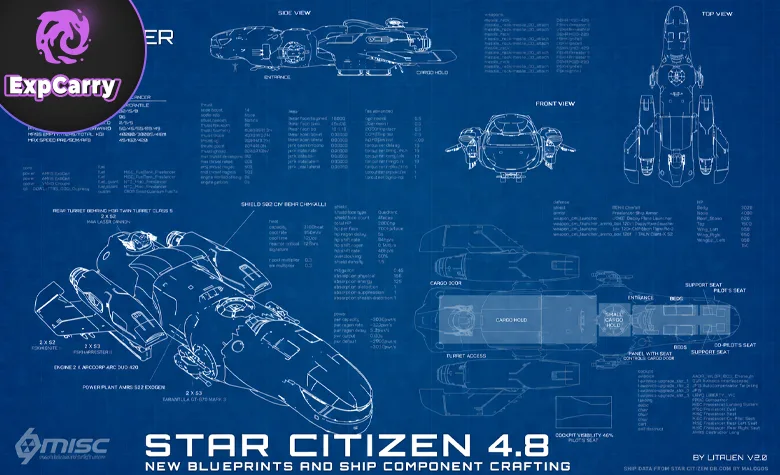
Star Citizen ship component blueprints let players manufacture selected power plants, shield generators, coolers, and quantum drives using the Item Fabricator. Instead of relying entirely on equipment purchased from shops, players can unlock crafting recipes through missions and use materials of different qualities to produce components with potentially improved statistics. In Alpha 4.10.2 LIVE, blueprint availability, material requirements, and equipment balance must be checked against the current game. Earlier Alpha 4.8 previews introduced many of these component categories, but their proposed bonuses are not universal values for the modern crafting system. This guide focuses on obtaining and using ship component blueprints, choosing worthwhile upgrades, preparing resources, and protecting crafted equipment.
Short answer: Unlock the appropriate ship component blueprint through its current mission reward pool, obtain an Item Fabricator, and manufacture the component using the materials and quality requirements shown in the recipe. Prioritize equipment that improves your existing ship loadout rather than assuming every high-quality blueprint provides the same percentage bonus.
How Ship Component Blueprints Work in Star Citizen
A blueprint is a reusable crafting recipe, not a finished component. It determines which equipment can be manufactured, what ingredients are required, and how material quality affects the result. After unlocking a blueprint, players can manufacture additional copies by supplying the necessary resources. Losing a finished component does not automatically remove the corresponding blueprint from the account.
Crafting itself was introduced in Alpha 4.7, while subsequent updates expanded the blueprint catalog and available equipment. CIG's Alpha 4.7 release notes establish the Item Fabricator, mission-based blueprint rewards, material quality, and the underlying manufacturing process. For the general system covering armor, ammunition, FPS weapons, and dismantling, see the Star Citizen Crafting and Blueprints Guide.
Ship component crafting concentrates on systems that directly influence vehicle performance. Each family has different equipment characteristics, and a valuable blueprint for one ship may be irrelevant to another because of component size, compatibility, or operating requirements.
| Component | Primary Function | What to Evaluate Before Crafting |
|---|---|---|
| Power plants | Supply power to the ship's systems. | Available output, component size, and actual power requirements. |
| Shield generators | Provide defensive shielding and associated protection statistics. | Shield performance, compatible slots, and the intended combat or survival role. |
| Coolers | Support the ship's thermal management. | Cooling characteristics and whether the loadout is limited by heat. |
| Quantum drives | Determine important quantum travel characteristics. | Travel performance, fuel requirements, and compatibility with the ship. |
Radars, ship weapons, and specialized industrial equipment require separate consideration. A radar or weapon existing in the ship equipment catalog does not automatically mean its crafting recipe is obtainable. The first check should always be the actual unlocked blueprint or a current, verified mission reward source.
Where to Find Ship Component Blueprints
Blueprint farming starts with identifying the exact item you want to manufacture. Missions can have different reward pools, and some contracts require reputation, certifications, or completion of earlier objectives. Unlocking access to a faction's contracts is not the same as receiving every blueprint associated with that faction.
Several important reward systems developed around the Alpha 4.8 release. The official Alpha 4.8 patch notes confirm additional blueprint rewards for refueling nozzles, while the Alpha 4.8.1 Defend Location update introduced blueprint rewards for higher-tier contract completions. These are documented reward categories, but they do not establish that every power plant, shield generator, or quantum drive comes from those activities.
| Activity | Confirmed or Relevant Information | What to Check |
|---|---|---|
| Mission blueprint pools | Qualifying contracts can unlock recipes associated with their designated reward pools. | Exact blueprint, contract name, system, and reputation requirements. |
| Higher-tier Defend Location contracts | Blueprint rewards were officially added for higher-tier completions in Alpha 4.8.1. | Current mission availability and the specific reward pool. |
| Refueling contracts | Alpha 4.8 introduced blueprint rewards for refueling nozzles. | Whether the desired item is refueling equipment rather than a conventional ship component. |
| Tactical Strike Groups and event activities | Some activities have valuable equipment and progression rewards, but older PTU reports do not establish a permanent universal blueprint source. | Current event availability and documented rewards for the exact activity. |
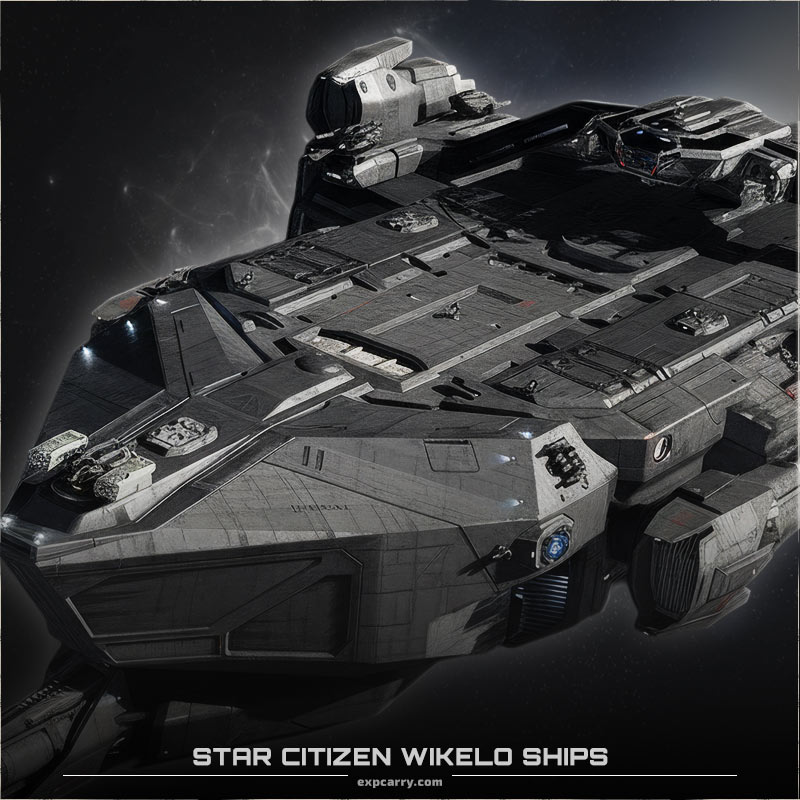
| Wikelo contracts | Selected contracts offer ships or equipment with upgraded loadouts. | Whether the reward is a finished item, an upgraded ship, or an actual crafting blueprint. |
Return to XenoThreat was discussed in earlier Alpha 4.8 testing material, but an old event reward reference is not a dependable farming instruction for the current LIVE build. The same caution applies to extracted blueprint records: a recipe appearing in game files does not prove that its associated contract is active or that the recipe can presently be earned.
For a specific component, work backward from its name and size to a current mission source. Confirm the contract in the mobiGlas Contract Manager, complete any required introductions or reputation progression, and verify that the blueprint appears in the Fabricator after receiving the reward. Faction advancement is a separate objective also covered by Star Citizen reputation progression; reaching a higher rank does not bypass a blueprint's individual reward conditions.
How to Craft and Equip Ship Components
After unlocking a component blueprint, you need the Item Fabricator and its required resources. CIG introduced the Fabricator as a physical deployable workstation sold through participating Kel-To and Dumper's Depot locations in Stanton and refinery-related shops in Pyro. It can be placed in a suitable hangar or on a sufficiently large compatible ship cargo grid.
The safest manufacturing process checks the recipe, material quality, output statistics, and equipment compatibility before committing valuable resources.
- Choose the component: Identify the exact model and size that fit your ship, and confirm that its blueprint is available in your Fabricator.
- Prepare the workstation: Place an Item Fabricator where it has enough space for operation, material handling, and finished-item delivery.
- Inspect the blueprint: Open the recipe and review every required material, quantity, minimum-quality threshold, and affected statistic.
- Assign resources: Add compatible materials manually or use the available automatic assignment options. Check the selected quality before confirming.
- Compare the predicted result: Evaluate the crafted component against the equipment already installed on your ship. Higher quality is useful only when it improves relevant characteristics.
- Start manufacturing: Select a suitable delivery destination, confirm the job, and monitor the Fabricator's crafting queue.
- Collect and install: Retrieve the finished component, equip it in a compatible ship slot, and verify the loadout's actual behavior.
The Fabricator handles equipment manufacturing rather than complete ship construction. A blueprint also does not override normal component compatibility: an item with the wrong size or unsupported attachment requirements remains unsuitable for the intended vessel.
Before investing in several identical copies, test one finished component. Confirm that its statistics, power demands, thermal behavior, and ship compatibility provide the improvement you expected. This is particularly important for expensive equipment whose recipe consumes scarce high-quality materials.
Explore services related to this guide, selected from our Star Citizen catalog.
View All Star Citizen Services

How Material Quality Changes Component Statistics
Material quality is important because crafting inputs influence particular statistics rather than providing one universal upgrade to an entire item. Each blueprint contains material slots with their own effects. Two components made from the same blueprint can therefore have different performance characteristics when their ingredients have different quality values.
Current crafting databases commonly represent resource quality on a scale from 0 to 1000, with Q500 used as a neutral calculation reference for many modeled recipes. This is useful for comparing predicted outcomes, but it is not a guarantee that every component uses the same thresholds or receives identical bonuses. Individual recipes may also require a particular minimum quality before an ingredient is accepted.
| Component Family | Relevant Performance Direction | Important Limitation |
|---|---|---|
| Power plants | Quality-dependent power or output characteristics where supported. | Actual improvement depends on the component and its current balancing. |
| Shield generators | Supported shielding and component-integrity characteristics. | Do not assume identical shield capacity bonuses for every recipe. |
| Coolers | Supported thermal-management or cooling statistics. | Additional cooling may have limited value if the ship is not thermally constrained. |
| Quantum drives | Supported travel-performance and fuel-related characteristics. | Improvements must be checked against the drive's actual configuration and intended routes. |
Older Alpha 4.8 preview tables circulated figures such as approximately 20% more component health, shield capacity, cooling, or quantum speed. These figures should not be presented as guaranteed bonuses in Alpha 4.10.2. The same applies to claims about universal fuel savings or precise extra power pips at a particular quality band. Check the current blueprint's material slots and projected statistics rather than applying those percentages to every item.
Power Plant Blueprints and Ship Power Management
Power plants are particularly attractive crafting targets when a ship's equipment demands exceed the available power budget. A useful improvement can provide more flexibility for operating demanding weapons, defensive systems, and other installed hardware. However, the value of a power plant depends on the whole loadout rather than its crafting quality in isolation.

Earlier component blueprint research highlighted possible additional power pips at high quality levels. Those previews are historical evidence of the intended design direction, not a fixed current formula for every power plant size. The correct comparison uses the existing installed unit, the proposed crafted output, and the ship's actual power allocation options.
A combat pilot with insufficient power for the preferred weapon and shield configuration may benefit substantially from a compatible upgrade. A ship already operating comfortably within its available power budget may gain little practical advantage from investing rare materials in another power plant. Before farming a difficult blueprint, establish which specific limitation the new component would solve.
Component integrity also matters once ship damage and engineering affect the reliability of individual systems. However, increased component durability must not be confused with additional hull health or an automatic increase in the ship's overall survivability. These are distinct characteristics that need to be evaluated separately.
Shield, Cooler, and Quantum Drive Blueprints
Shield generator blueprints are relevant to combat ships, escorts, and players who regularly operate in dangerous areas. The useful outcome is improved defensive performance for the intended loadout, but shield capacity alone is not the whole picture. Regeneration, resistance behavior, power requirements, and compatibility also affect the value of a component.
Quantum drive blueprints appeal to players who spend considerable time moving between systems, stations, and mission destinations. Depending on the supported modifiers of an individual recipe, a crafted drive may improve travel characteristics or fuel efficiency. A drive that is attractive for short journeys is not automatically ideal for long-distance operations, so route length and practical fuel requirements should influence the choice.
Cooler blueprints serve a different purpose. They become valuable when the ship's power-intensive systems create thermal pressure that the existing setup cannot manage effectively. Improving cooling characteristics can support a demanding combat or utility configuration, but it is unnecessary to prioritize a cooler merely because a high-quality blueprint is available.
For a balanced general-purpose ship, identify the weakest part of the installed equipment before choosing a blueprint. If travel time is the main problem, investigate the quantum drive. If survival in combat is insufficient, compare shields and the wider defensive setup. If weapons and systems are limited by power or heat, examine power plants and coolers before spending resources on less relevant upgrades.
Ship Weapons, Radars, and Industrial Blueprint Differences
Ship weapon blueprints should be evaluated separately from conventional ship components. Selected cannons, repeaters, and other weapon families appear in current crafting records, and their material-quality effects can differ from those of power plants or shields. Older Alpha 4.8 information suggesting that weapon modifiers had been removed should not be reused as a general description of the modern crafting catalog.
Weapon usefulness depends on the installed hardpoint, size, damage profile, fire rate, capacitor behavior where relevant, and the actual crafted result. A weapon with a promising damage modifier can still be a poor choice if it does not suit the ship's intended combat role. Blueprint ownership alone does not guarantee that a specific model is currently craftable or that it outperforms existing equipment.
Radar equipment requires additional caution. Star Citizen expanded radar models and adjusted aim-assist characteristics, but those changes do not prove that every radar has an obtainable crafting recipe. Treat radar upgrade availability, shop purchases, and blueprint unlocks as separate questions until the exact recipe is verified in the current Fabricator and mission data.
Industrial equipment has also progressed beyond the incomplete state described in older 4.8 previews. Alpha 4.10 introduced additional mining-related blueprint progression through Recco Battaglia, including mining modules and ore-pod designs. The official Alpha 4.10 notes provide the broader update context. Those industrial recipes are useful for specialized activities, but they are not interchangeable with a ship's core power plant, shield generator, cooler, or quantum drive.
Materials to Gather for Ship Component Crafting
The correct crafting materials depend on the exact blueprint. Components can require several mineral or industrial inputs, and individual materials may occupy different slots that influence separate statistics. This makes a recipe-based gathering plan more effective than collecting every expensive ore without checking whether it is actually needed.

Mining and refining are important supply methods because mineral quality can influence finished equipment. CIG's crafting system preserves quality through supported refining processes, allowing players to select ore based on more than resale value. A high-quality batch of a necessary material may be more useful for crafting than a larger quantity of an unrelated valuable commodity.
Prepare a resource checklist for each intended component. Record the required material names, quantities, quality requirements, and which attributes each input affects. Keep especially valuable resources separate from ordinary crafting stock so an automatic material selection does not consume them on a low-priority project.
Material requirements may also affect the cost of upgrading an entire fleet. A single high-quality component could be practical for one frequently used ship, while producing several identical components may require substantial resource collection. Players comparing resource supply options can review Star Citizen mining resources by material type, while players gathering resources themselves should use the current recipe to determine which ores are worth targeting.
Do not assume every shield generator requires rare gemstones or every quantum drive uses the same metals. These were common generalizations in early crafting speculation, but real production depends on the current recipe. Once all required ingredients are available, compare the predicted improvement before manufacturing rather than treating material quality as valuable regardless of its effect.
Best Ship Component Blueprints to Farm First
The best blueprint depends on your ship, preferred activities, and existing equipment. A general-purpose hauler may benefit more from practical travel improvements, while a combat pilot might place greater value on power distribution or defense. Crafting priorities should reflect measurable weaknesses in the installed loadout rather than a universal ranking of component families.
The following recommendations are based on gameplay usefulness, not guaranteed drop rates or a claim that one particular blueprint is the strongest in every patch.
| Playstyle | Blueprints to Evaluate | Main Reason |
|---|---|---|
| General-purpose solo pilot | Quantum drive, shield generator, power plant. | Improve travel convenience, basic protection, and system reliability. |
| Combat pilot | Power plant, shield generator, cooler. | Support a demanding combat loadout and address defensive or thermal limitations. |
| Hauler or courier | Quantum drive, shield generator. | Prioritize route efficiency and protection during cargo operations. |
| Miner or salvager | Quantum drive, power plant, cooler. | Support travel and utility equipment while keeping industrial requirements in mind. |
| Organization fleet | Compatible power plants, shields, coolers, and drives for commonly used ships. | Standardize useful equipment and plan repeatable material requirements. |
Before committing to a long farming session, ask whether you already own a comparable component, whether the desired blueprint can be earned from an active contract, and whether the resulting upgrade justifies its materials. A theoretically powerful item is less valuable when the required ship cannot equip it or the improvement does not address an actual gameplay limitation.
Budgeting also matters. Fabricators, replacement equipment, travel, repairs, and material logistics involve different resource costs. These considerations relate to aUEC availability, which is a separate topic from blueprint acquisition and the Star Citizen aUEC economy. Possessing more credits does not automatically unlock a mission-exclusive crafting recipe.
Blueprint Persistence, Item Recovery, and Common Problems
Unlocked blueprints are account-bound under the crafting system introduced in Alpha 4.7. CIG also explicitly preserved earned blueprints during the major Alpha 4.8 wipe, even though ordinary economic progression and many acquired assets were reset. This establishes how that particular wipe was handled, but it does not guarantee identical treatment in every future reset.
Finished components are different from blueprint unlocks. A crafted shield or power plant is physical equipment, so players need to manage installation, storage, and recovery. Alpha 4.8 introduced the ability to save vehicle loadout snapshots through ASOP terminals. Under the published system, an insured loadout claim can restore registered equipment according to its conditions and aUEC costs, while a manufacturer-default claim does not simply recreate every custom upgrade.
After installing an expensive crafted component, confirm that the intended ship loadout has been saved at the ASOP terminal. The recovery system has exclusions and specific rules for registered equipment, and it should not be treated as protection against every bug, claim problem, or future wipe. Keeping the blueprint unlocked provides the separate ability to manufacture another copy when materials are available.
Players may also encounter confusing stat displays. CIG's Alpha 4.10.2 Known Issues confirms that crafted item bonuses may not display correctly while an item remains unequipped in inventory. The documented workaround is to equip the item and inspect its description again. A missing inventory bonus display does not necessarily prove that the manufacturing process failed.
If a blueprint appears in a community database but not in your Fabricator, first verify whether it requires a mission unlock and whether that mission is available. If the Fabricator rejects resources, inspect the exact ingredient identity, processed form, quantity, minimum quality, and inventory availability. Repeating unrelated missions or substituting a different mineral will not resolve a recipe-specific requirement.
Star Citizen Ship Component Blueprints FAQ
These answers address the most common uncertainties about component recipes, quality bonuses, and availability.
Can I craft ship components in Star Citizen LIVE? Yes. The Item Fabricator supports selected ship component recipes, including equipment from major categories such as shields, power plants, coolers, and quantum drives. The exact craftable models depend on the available blueprints and current game build.
Where can I farm a specific shield or power plant blueprint? Start with the exact model and its current mission reward pool. Some contracts require reputation or prior progression, and a generic high-tier mission is not guaranteed to award the particular blueprint you want.
Does Q1000 material quality guarantee a 20% component bonus? No. Material slots, supported statistics, and individual recipe rules determine the outcome. Historical percentage figures should not replace the current Fabricator preview or verified crafted-item statistics.
Can every ship radar and weapon be crafted? No. Existing equipment, datamined blueprint records, and actually obtainable recipes are different categories. Confirm the specific item, its unlock source, and its availability before gathering materials.
Will an insured ship claim always restore my crafted components? Recovery depends on the registered loadout, saved snapshot, applicable claim conditions, and current system behavior. Save the equipped configuration at ASOP and remember that blueprint ownership and physical component recovery are separate systems.
Choosing the Right Ship Component Blueprints
Ship component crafting is most useful when the blueprint solves a real limitation in a ship you regularly fly. Identify the exact recipe and its current unlock source, compare compatible equipment, and gather materials whose quality affects the statistics you actually need. Power plants, shields, coolers, and quantum drives each support different goals, so no single category is automatically the best investment. Verify live recipe availability and finished-item performance before committing rare resources, and protect valuable installed components through the available loadout recovery system.