Valorant Patch 13.04 is small enough to read in a minute, but it changes ranked more than its size suggests. There are no agent buffs, weapon nerfs, or sweeping economy changes here. Instead, Riot has pulled Breeze out of Competitive and Deathmatch and brought Abyss back in, which means the real adjustment happens in agent select, opening routes, and the habits players carry from one map to another.
Abyss does not reward the same loose, long-range spacing that made Breeze comfortable for some teams. It asks for sharper mid control, cleaner utility timing, better flank awareness, and more discipline around the sites. Carry a Breeze mindset into 13.04 and the round can get away from you quickly.
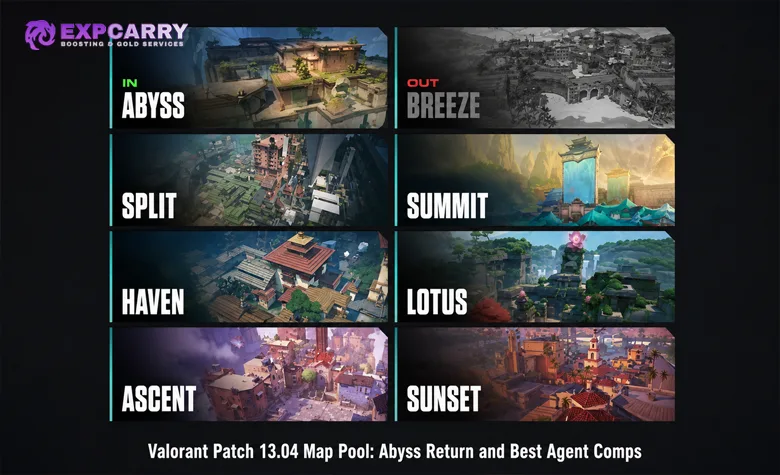
Valorant Patch 13.04 Trades Breeze for Abyss
The headline change is straightforward. Riot's official Valorant Patch 13.04 notes put Abyss into Competitive and Deathmatch while removing Breeze from both queues. The patch also fixes a handful of issues involving Cypher, Viper, Deadlock, Clove, and transforming melee skins, but none of those fixes amounts to an agent balance pass.
For ranked players, that distinction is important. There is no new damage breakpoint to memorize and no suddenly overpowered ability forcing a fresh tier list. The map is the balance change. Agents that can gather information across long lanes, control rotations, protect deep flanks, or create a clean first contact become more valuable because Abyss asks those jobs from a team every round.
The 13.04 Competitive pool is now Ascent, Abyss, Haven, Lotus, Split, Summit, and Sunset. That list is the result of two recent rotations: Patch 13.00 brought Summit and Sunset in for Fracture and Pearl, then 13.04 swapped Abyss for Breeze. If Summit still feels new and Abyss feels rusty, this is an unusually knowledge-heavy pool. You can easily enter agent select with good mechanics and still be behind before the barrier drops.
Patch 13.00 still matters to the current meta more than 13.04 itself. Riot strengthened several Sentinels, reduced signature cooldowns for Sova, Fade, Skye, Breach, and KAY/O from 60 to 50 seconds, and shortened Gekko's reclaim cooldown from 20 to 15 seconds. Patch 13.01 then improved Iso's weapon equip speed after Double Tap and extended Yoru's Gatecrash beacon from 15 to 20 seconds, while 13.02 raised Phoenix's ultimate cost from 6 to 7 points. All of those changes are live when Abyss returns. In other words, 13.04 is best read as a new map test for an agent meta shaped by the previous patches rather than as a fresh balance pass of its own. Our earlier Valorant Patch 13.00 breakdown covers the largest part of that balance context in detail.
Abyss Changes the Rhythm of the 13.04 Map Pool
Breeze encouraged patience across enormous sightlines. Abyss is also large, but it creates pressure differently. Its three-lane structure makes Mid a real route rather than background space, and the lack of conventional outer boundaries means positioning mistakes can end a fight before the opponent even needs a clean headshot. The map constantly asks whether your team owns enough information to move safely.
The most important habit to drop is the automatic five-player funnel. A direct site hit can work, especially when your utility is coordinated, but repeating it turns the defenders' job into a simple read. A good Abyss attack shows presence, forces a response, and then decides whether to finish the hit, cut through Mid, or punish the rotation. Even in ordinary ranked games, one player holding the opposite push and one piece of recon before the commitment can turn a chaotic execute into a favorable fight.
The B side deserves extra attention because Riot has already reworked Abyss around site play. In Patch 11.08, the developers adjusted B with the stated goal of improving initial defensive holds, making planted-spike positions more playable from the site, and making safe B Main post-plants less dominant. The Mid hallway toward B Main was also changed to improve routing. That history matters in 13.04: do not return to Abyss expecting an old lineup-heavy post-plant to solve every attack round.
On defense, the same logic works in reverse. You do not need to die proving that you own every inch of Main. Use early information, delay the first wave, preserve a player for the retake, and make attackers spend utility before they know where the second defender is. Abyss becomes much easier when the defense still has recon, a smoke, or a trap available at 35 seconds instead of dumping the entire kit into the opening duel.
If you want to rebuild map comfort without putting RR behind every experiment, customs and Deathmatch are the cleanest practice tools. Players who also need non-ranked account progression can use the Valorant Unrated Matches service as a separate option while keeping their own serious practice focused on learning the returning map.
Abyss Best Agents for Ranked Right Now
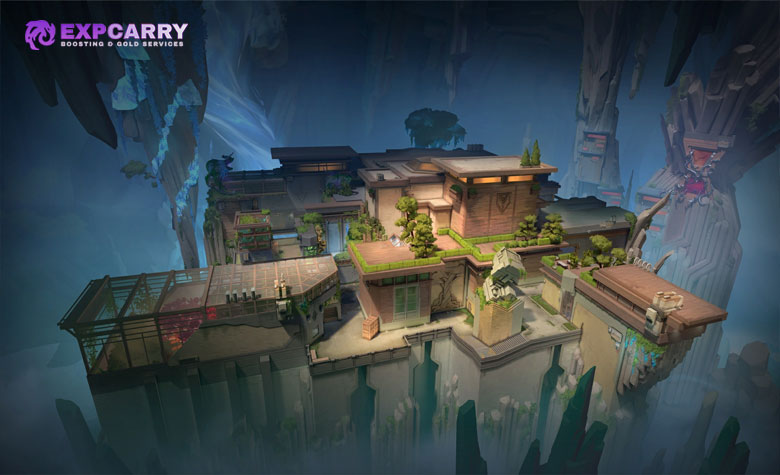
The first week of a returning map always produces noisy data, so raw win rate should guide a pick rather than dictate it. As of August 26, Current Patch 13.04 Abyss tracking covers 17,733 competitive matches. Neon leads the recorded win rate at 55.3%, followed by Clove at 54.9%, Iso at 54.3%, Vyse at 53.7%, while Jett and Sova sit at 52.3% and 52.2% with much larger samples than most of the early leaders. The useful signal is the pattern: self-sufficient entry power, reliable information, and utility that survives imperfect ranked coordination.
Duelist: Jett is the safest all-purpose choice, while Neon is the tempo pick. Jett can challenge exposed lanes, escape after first contact, and turn an Operator into a real defensive tax. Neon is better when the team wants to collapse space quickly and keep defenders from comfortably repositioning. Current 13.04 data has Neon at 55.3% win rate on a 2.8% pick rate, while Jett sits at 52.3% with a 14.7% pick rate. That gap is a good reminder to weigh sample size and comfort instead of treating the leaderboard as a mandatory pick order.
Initiator: Sova fits Abyss naturally. Long sightlines and layered entrances reward recon that tells the duelist where the first fight is actually coming from. His current pick rate on Abyss is high enough to make the sample meaningful, and the 50-second Recon Bolt cooldown introduced in 13.00 gives disciplined teams a better chance to get a second information cycle in longer rounds. KAY/O is a strong partner when your team communicates flashes and suppression, while Fade is a more forgiving alternative for clearing close pockets and following pressure through tighter spaces.
Controller: Clove is the ranked-friendly answer. Clove currently combines a strong Abyss win rate with a healthy pick sample, and the appeal is easy to understand. The smoke role remains covered without demanding the same level of global planning that Astra wants, and Clove can keep contributing after an aggressive fight goes wrong. Omen and Astra are still playable, especially in coordinated groups, but current ranked numbers are weaker and their value depends more heavily on timing and teammates using the space they create.
Sentinel: Cypher and Vyse solve different problems. Cypher is excellent when your team keeps getting punished by lurks or loses track of rotations. The Trapwire windup buff from Patch 13.00 also gives his setups a little more bite. Vyse is a more active site-control option and has started the 13.04 Abyss sample well. Neither pick should be treated as mandatory. The better Sentinel is the one whose utility your team will actually play around instead of abandoning on the floor after ten seconds.
The practical lesson is simple: an Abyss best agents list should start with jobs, not five isolated win rates. You need a player who can enter, a player who can find the first layer of defense, reliable smokes, and enough information or stall to stop the map from becoming a permanent flank simulator. Once those boxes are checked, comfort matters more than squeezing one extra percentage point out of a public dataset.
Explore services related to this guide, selected from our Valorant catalog.
View All Valorant Services
Three Abyss Team Comps That Make Sense in Ranked
Balanced ranked comp: Jett, Sova, Clove, Cypher, KAY/O. This is the safest starting point for a five-stack or a reasonably communicative solo-queue lobby. Jett gives the team a clean entry and Operator option, Sova handles long-range information, Clove keeps the smoke role functional even in messy fights, Cypher protects the map behind the attack, and KAY/O gives the execute a flash and suppression layer. The comp does not require perfect set plays to work, but every agent has a clear job.
On attack, let Sova or Cypher establish information before Jett commits. KAY/O should not throw every flash at the first choke. Save one for the moment the defense tries to re-peek or for the post-plant. Clove's smokes should cut the next dangerous sightline, not simply cover the first two spots everyone already expects. On defense, Cypher can anchor or watch the weak side while Jett keeps a mobile first-contact role.
Fast pressure comp: Neon, Sova, Clove, Vyse, KAY/O. This version trades Jett's vertical escape and Operator comfort for speed. Neon can turn a small information advantage into a site collapse before defenders have time to rotate through the enormous map. Vyse adds stronger local control, while Sova and KAY/O give Neon enough information and disruption to avoid sprinting into five unknown angles.
This is a good ranked comp when your team hates slow defaults but still wants structure. The mistake is using Neon as permission to rush every round. Run one or two explosive hits, then show the same early pressure and stop. If the defenders start over-rotating, the space they surrender elsewhere becomes more valuable than another heroic slide into a stacked site.
Coordinated utility comp: Jett, Sova, Astra, Cypher, KAY/O. Astra is not the easy ranked recommendation right now, and current Abyss statistics should make that clear. This composition is for a group that already communicates. Global utility lets Astra influence a fight without being glued to the execute, and Gravity Well can create nasty timing windows around planted spikes and constrained site positions. In random matchmaking, the same setup can feel slow and disconnected if teammates refuse to wait half a second for the utility.
The common thread between all three Abyss team comps is not the exact fifth agent. It is role coverage. A composition with five individually strong picks can still be terrible if nobody can safely gather information or if the only smoke player is uncomfortable with the role. Ranked rewards the comp your team can execute repeatedly, not the comp that looks most impressive in a screenshot.
Winning Abyss Starts With Mid, Not Hero Plays
Abyss becomes much more manageable when Mid is treated as leverage instead of a duel you either win or ignore. Attackers who threaten Mid force defenders to respect more than two obvious lanes. Even if you never finish through the middle, the possibility of a split slows rotations and makes site anchors less certain about where the second wave will appear.
Do not confuse Mid control with sending one player to die alone. Use recon, a flash, or a smoke to take the first safe layer, then decide whether the space is worth keeping. The value is information as much as territory. If the defenders dump two pieces of utility to stop one probe, the eventual site hit has already become cheaper.
On attack, a clean basic round can be as simple as this:
- Show controlled pressure on one Main lane without committing the spike.
- Use recon or a flash to claim a safe portion of Mid.
- Leave Sentinel utility or a disciplined lurker to watch the push behind you.
- Commit only after you have forced a rotation, found a defender, or created a timing advantage.
- Plant for positions your team actually controls instead of automatically retreating to Main.
Defense works best when it refuses to give attackers a free answer. Change which player takes the first Mid contact. Sometimes fight for information, sometimes give space and hold the next choke, and occasionally use Sentinel utility to make the attack think a lane is occupied when it is not. Predictability is more dangerous on Abyss than giving up a few meters.
The same discipline applies after the spike goes down. Riot's previous B changes were designed to encourage more on-site play and make distant Main post-plants riskier. If four attackers instantly abandon the site, defenders get a much cleaner retake path. Keep at least one player in a position that can punish the first defuse tap or trade the teammate playing farther back.
For players already pushing a specific rank during the new rotation, the biggest practical risk is learning Abyss by donating several Competitive games in a row. Focus your own queue sessions on one or two repeatable protocols first. If you prefer outside help with the climb itself, ExpCarry's Valorant Rank Boost is the relevant rank-focused service rather than trying to force every unfamiliar-map game into a must-win session.
Best Agent Comps Across the Valorant Map Pool 13.04
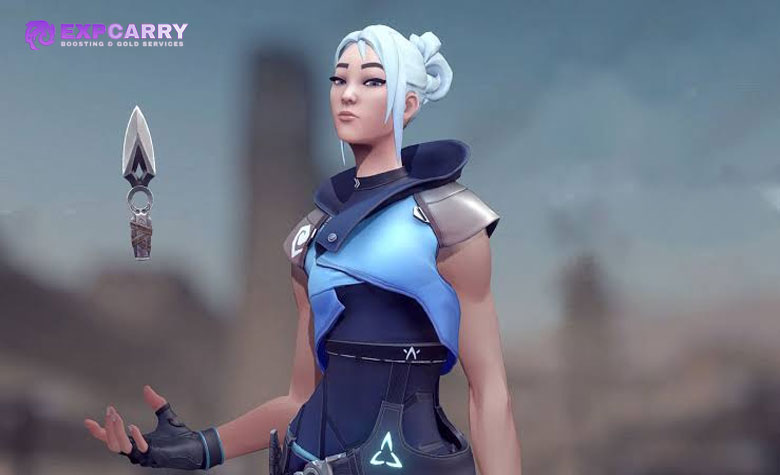
Abyss is the new problem, but it is not the whole queue. Patch 13.04 leaves a seven-map pool where flexibility beats one universal five-stack. The table below is a practical ranked starting point, not a claim that every map has one solved composition.
| Map | Ranked Comp Starting Point | Core Idea |
|---|---|---|
| Abyss | Jett, Sova, Clove, Cypher, KAY/O | Information, flank control, and a clean first entry |
| Ascent | Jett, Sova, Omen, Cypher, KAY/O | Mid pressure, strong site executes, and reliable defensive info |
| Haven | Jett, Sova, Omen, Cypher, Breach | Fast rotation support across three sites and strong retake utility |
| Lotus | Raze, Fade, Omen, Vyse, Gekko | Close-space clearing, flexible utility, and repeated site pressure |
| Split | Raze, Fade, Omen, Cypher, Viper | Layered choke control and enough utility to fight for Mid |
| Summit | Neon, Fade, Omen, Cypher, Viper | Fast lane pressure with flexible control on a newer map |
| Sunset | Neon, Sova, Omen, Cypher, Sage | Mid control, defensive information, and stable site holds |
There are two useful patterns in that list. First, Sova, Fade, and other information-heavy Initiators remain valuable because Patch 13.00 reduced signature cooldowns and the current pool contains several maps where a second information cycle can decide a late round. Second, Cypher and other Sentinels are no longer just passive flank alarms. The 13.00 Sentinel buffs were explicitly aimed at making repeated, low-information five-player hits easier to punish.
That does not mean you should force Cypher or Sova on every map. A strong Raze player on Split is worth more than a first-time Jett copying a template, and a controller who knows every Omen timing is usually more useful than someone locking Clove because a website currently shows a better win rate. Treat the composition as a shape: entry, information, smokes, map control, and enough utility to survive the retake.
Breeze leaving the pool also changes how much specialization you need. Players who maintained Viper, Harbor, or long-range setups primarily for Breeze no longer have to spend every ranked session preparing for that one extreme sightline test. Those agents still have real uses elsewhere, but the map pool now rewards transferable utility habits more than Breeze-specific lineups.
Breeze Habits to Drop Before Your First Abyss Queue
The easiest mistake in Patch 13.04 is treating Abyss as another giant map and carrying over the same instincts. Both maps can produce long fights, but the decision-making is different. Breeze often allowed teams to stretch the round across huge exterior lanes. Abyss punishes players who spread without information because Mid, deep rotations, and exposed transitions can turn a harmless gap into a fast collapse.
Stop taking every long duel just because the map gives you room. Stop planting automatically for the farthest possible post-plant. Stop assuming a lurker is useful simply because they are far from the team. A good lurk controls a timing or cuts a rotation; a bad lurk leaves four players executing without the utility they needed.
Most importantly, stop building comps around one player's favorite highlight agent. The current Abyss data is useful but still young enough to move, and the community discussion around Patch 13.04 is visibly split between players happy to lose Breeze, players who miss it, and players tired of rotations altogether. The ranked answer is less dramatic: learn the map in queue and build around jobs your team can perform.
If your goal is simply to secure more Competitive wins during the transition rather than rebuild a full map notebook immediately, the Valorant Wins service is another ExpCarry option tied specifically to match wins. For players handling the climb themselves, the better investment is still a short Abyss routine before queueing: refresh your smoke placements, pick one default attack, one fast hit, one defensive setup, and one retake plan.
Conclusion
Valorant Patch 13.04 is not a balance patch disguised as a map update. Riot has made a clean rotation change: Abyss returns to Competitive and Deathmatch, Breeze leaves, and the agent meta continues under the balance changes already established in earlier patches. That makes preparation unusually straightforward. You do not need to relearn damage numbers; you need to relearn space.
For most ranked teams, Jett or Neon gives Abyss reliable entry pressure, Sova is the strongest general information pick, Clove is the easiest controller to convert into solo-queue value, and Cypher or Vyse can keep the map from collapsing behind you. A balanced Jett, Sova, Clove, Cypher, KAY/O composition is an excellent baseline, but it is a template rather than a rule. Comfort and role coverage still beat five agents selected from a win-rate chart.
The fastest way to adapt is to make Mid control intentional, stop relying on automatic Main post-plants, and keep enough utility for the second half of the round. Breeze specialists lose one familiar map, but the new 13.04 pool rewards transferable fundamentals: information, timing, clean entries, and disciplined rotations. Learn those first and Abyss stops feeling like a giant collection of dangerous angles and starts feeling like a map you can actually control.