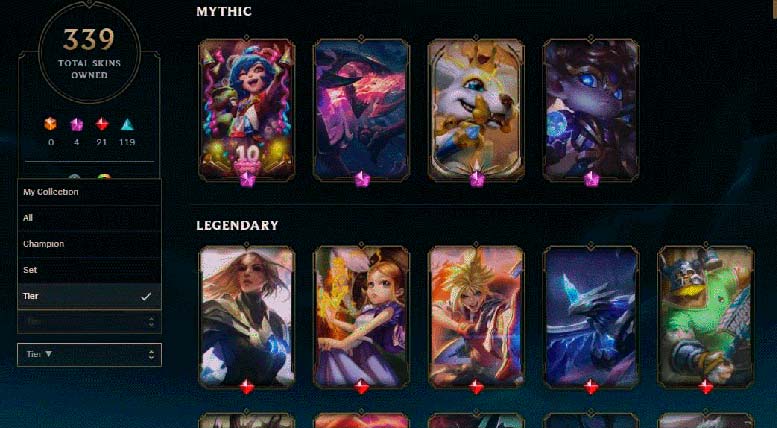
There is something uncomfortable about opening your League of Legends collection and realizing how much of your life is sitting behind it. The skins remind you of champions you once played every day. Your match history is full of games you barely remember, and your account level keeps climbing even when your rank doesn't. Eventually, a perfectly reasonable question starts bothering you: how much time and money have I wasted on LoL? The word "wasted" makes it sound like we already know the answer. I'm not sure we do.
Some nights in League are genuinely fun. You laugh with friends, pull off a ridiculous comeback, or finally learn a champion that seemed impossible a week earlier. Other nights, you lose three games, queue up for a fourth because you refuse to end on a defeat, and wonder why you didn't just go to bed. I think that's what makes this question interesting. Counting the hours and purchases is fairly straightforward once you know where to look. Deciding how you feel about them is the difficult part.
Short answer: Use a League playtime calculator or match-history estimate to check your hours, and request your spending information through Riot Player Support. Neither number tells you whether playing League was worth it, but seeing them together can change how you think about the game.
How Much Time Have I Spent on League of Legends?
League doesn't give you a convenient lifetime hours-played counter in the client. That seems almost funny for a game people can return to for a decade or more. We can inspect individual matches, compare seasons, and obsess over tiny changes in win rate, yet answering "How long have I actually been here?" takes a little detective work. The best available options are third-party estimates and calculations based on match history, and I would treat either as a starting point rather than a final verdict.
Use the LoLValue Time Wasted Calculator
LoLValue League of Legends time wasted calculator
The quickest way to confront the number is to visit the LoLValue time wasted calculator. Enter your current Riot ID, including the #tag, choose your region, and look up your account. The tool can display hours and days associated with your League activity, which is sometimes easier to understand than a huge number of matches. I suspect "2,000 hours" feels very different from "thousands of games," even though one is simply another way of describing the other.
There is a catch worth remembering before you start regretting your life choices. LoLValue distinguishes between time estimated from available match history and a broader account-lifetime estimate based partly on progression. Neither is a perfect recording of every minute you've ever spent in League. If you played heavily in older seasons, changed regions, or spent most of your time in modes that are poorly represented in the available data, take the result with a healthy amount of skepticism.
Use OP.GG to Check Your Match Activity
I like the idea of checking OP.GG alongside a time calculator because it shows something a single total cannot: what you actually did with those hours. Search for your account using the current Riot ID format, GameName#TAG, as described in Riot's official Riot ID guide. Your ranked statistics, recent matches, champion choices, and seasonal activity can paint a surprisingly familiar picture. Maybe there was a season when you played almost nothing but one champion, or a period when ARAM quietly replaced ranked altogether.
OP.GG isn't a complete archive of your League career, so don't add up the visible games and assume you've found every match since you created the account. Still, reviewing those patterns can be more revealing than the total. I would rather know whether I spent my last hundred games improving, having fun, or mechanically pressing Play Again. If you're serious about learning, even a few focused sessions or some League of Legends coaching can make you look at those matches differently. More games and better games aren't automatically the same thing.
Calculate Your League Playtime Manually
Sometimes I'd rather do the math myself. A calculator can hand you a number, but working it out makes the scale easier to understand and lets you see exactly what assumptions you're making. All you need is an estimated match count and a reasonable average duration for the modes you played. If you have better data for individual seasons or queues, use that instead of pretending every League match lasted exactly the same amount of time.
Estimated hours played = total matches × average match duration in minutes ÷ 60.
For example, 3,000 matches averaging 30 minutes come to 1,500 hours. That's a substantial amount of time, but the figure still leaves out everything that happened before and after each game. For a more useful estimate, work through your modes separately:
- Count the Ranked Solo/Duo matches you can reliably identify and estimate their average duration.
- Repeat the calculation for Ranked Flex, normal games, and ARAM.
- Include other modes only when you have usable match counts or records.
- Add the results together, keeping in mind that older matches may be missing.
Don't Forget Queue and Champion Select Time
This is the part that makes me pause. A 30-minute match is rarely just 30 minutes of your evening. You might spend several minutes finding a game, another stretch in champion select, and more time waiting through loading screens or a dodged lobby. Then there's the post-game conversation, checking someone's build, and that familiar negotiation with yourself about whether you have time for one more.
If you want to estimate the time League occupied rather than just the time recorded inside matches, consider adding:
- Queue times and repeated queues after dodges.
- Champion select and loading screens.
- Post-game screens, statistics, and discussions.
- Practice Tool sessions and time spent planning builds.
- Watching guides, esports, or League streams, if you're measuring your wider League hobby.
Five extra minutes across 3,000 games would add another 250 hours. That's only an illustration, not a universal queue-time average. It also raises an awkward question: when does time spent enjoying a hobby become time you wish you'd used elsewhere? Watching a great match with friends doesn't feel the same as staring at a queue because you're chasing back the LP you lost an hour ago.
Why Your League Playtime Estimate May Be Inaccurate
Before comparing your result with someone else's, remember that two calculators may be measuring different things. One might rely on available matches, while another estimates older activity from account progression. That matters because account level isn't a clock, and even actual match history doesn't include every moment you spent thinking about or waiting for League. I wouldn't worry if two tools disagree, but I would want to know why.
- Older matches may be unavailable to public trackers.
- Region transfers and Riot ID changes can complicate account lookups.
- Remakes, short games, and temporary modes distort a single average duration.
- Progression-based estimates can be affected by XP boosts and other assumptions.
- Time in queues, lobbies, or the client is usually excluded from match-based totals.
The estimate is useful when it makes you reflect, not when you treat it like a courtroom exhibit. Some players measure the cost of a ranked season in hours; others mainly remember the climb itself. There are also people who look at the time involved in chasing ranked wins and decide the reward isn't worth another evening. Whatever your reaction, the number becomes more meaningful when you connect it to your habits.
How Much Money Have I Spent on League of Legends?
Money feels different from time because you can usually put a price on it. The trouble is that League purchases rarely happen as one dramatic decision. A skin for your main feels reasonable. An event pass seems harmless because you're playing anyway. Then there's a chroma, a bundle, or some RP left over from the last purchase, and suddenly you've built a collection without ever sitting down and deciding what you wanted to spend in total.
I've seen players approach this question from completely opposite directions. One regrets buying cosmetics for champions they no longer touch; another divides years of entertainment by the money spent and feels perfectly happy with the result. Both reactions make sense to me. The first step, though, is finding the real total, because the amount you remember spending isn't necessarily the amount you actually paid.
Use Riot Games Support to Check Your Total Spending
The old instant spending checker mentioned in many outdated guides is no longer the method Riot recommends. In 2026, Riot's official spending help page directs players to submit a Player Support ticket. That is the route I'd trust over any website offering to calculate your lifetime spending from the skins visible on your profile. A cosmetic collection isn't a bank statement, and third-party match trackers don't have access to your private purchase records.
Here's how to make the request:
- Open the Riot Games Support ticket submission page and sign in to the relevant account.
- Under Product, select League of Legends.
- Under Category, choose Account Management, Data Requests, or Deletion.
- Select the platform requested by the form.
- Under the first inquiry field, choose Formal Personal Data Request.
- Under the next inquiry field, select I want to know how much money I've spent with Riot Games.
- Complete the subject and description, then submit the ticket.
Riot Games account spending and support
It's worth checking what you're actually asking Riot to report: spending on one game, one account, or Riot products more broadly. Those aren't always interchangeable. And if your total is higher than expected, give yourself a moment before deciding what it means. Spending money on entertainment isn't automatically irresponsible, but repeatedly paying for something you no longer enjoy is a different conversation.
Request Your Full Riot Account Data
If the total raises more questions than it answers, you can request your full account data instead. Riot's official data-request guide says League records can include store transactions and monetary purchases. The formal process also involves identity verification and can take up to 30 days, so this isn't something to expect instantly. But if you genuinely want to understand years of purchases, a detailed record is more useful than guessing from the Collection tab.
Depending on the information provided for your account, you may be able to review:
- Store transactions for skins and other League content.
- Monetary purchases recorded by Riot.
- Account information and relevant account activity records.
Looking at the transactions chronologically may tell you more than the grand total. You might notice that spending increased during a particular event or when you were playing more intensely. You may even realize that the real cost wasn't a few favorite skins, but a habit of making small purchases without thinking about them. It's the same question I'd ask about any paid shortcut, cosmetic, or rank boost: did I consciously choose to pay for it, and was I happy with the result?
How Much Is My League of Legends Skin Collection Worth?
This question is tempting because opening a large skin collection can make an account look expensive. But "How much did I spend?" and "How much would all these cosmetics cost at their listed prices?" aren't the same thing. Some skins came from crafting or rewards, some were gifts, and others may have been purchased at a discount. There's also a sentimental side that no calculator can price: the skin you associate with your first favorite champion might matter more to you than several Legendary skins you rarely use.
Estimate Your Skin Collection by RP Value
League of Legends account and skin collection
For a rough replacement-cost estimate, sort the standard skins you own by their original RP price tiers. Multiply the number of skins in each group by that tier's price, then add the results. This is not the money you've actually spent, and it isn't an offer to buy the collection. It is simply a way to visualize the amount of store-priced content associated with the account.
| Skin Price Tier | Typical Category | How to Calculate |
|---|---|---|
| 520 RP | Older lower-priced skins | Number owned × 520 RP |
| 750 RP | Older skin tier | Number owned × 750 RP |
| 975 RP | Older skin tier | Number owned × 975 RP |
| 1,350 RP | Common Epic skin price | Number owned × 1,350 RP |
| 1,820 RP | Common Legendary skin price | Number owned × 1,820 RP |
| 3,250 RP | Traditional Ultimate skin price | Number owned × 3,250 RP |
Imagine a collection with 40 skins originally priced at 1,350 RP, ten at 1,820 RP, and two at 3,250 RP. The calculation is (40 × 1,350) + (10 × 1,820) + (2 × 3,250) = 78,700 RP. Seeing a total like that might be surprising, but converting it directly into a dollar or euro amount would be misleading. RP bundles, regional pricing, purchase dates, discounts, and content obtained for free all affect what the player actually paid.
What About Mythic, Prestige, and Limited Skins?
League of Legends Mythic skins collection
This is where the neat spreadsheet stops being neat. Prestige, Mythic, event, and limited cosmetics don't always have a normal RP price. Some are associated with Mythic Essence, event progress, rotating availability, or other acquisition systems. Giving all of them an invented cash value would make the calculation look more precise than it really is, especially when rarity and the effort needed to obtain a cosmetic have changed over time.
I'd keep chromas, borders, icons, emotes, bundles, and special cosmetics in a separate category rather than forcing them into the standard skin table. A rare-looking collection may feel valuable to its owner without having a meaningful cash resale price. And personally, I think that's part of the appeal and the trap of digital collections: they preserve memories, but they can also make you feel obligated to keep collecting long after the excitement has faded.
Money Spent vs. Account Value: What's the Difference?
Whenever someone describes a League account as being "worth" thousands, I want to know which definition they're using. Are we talking about money paid to Riot, the original RP prices of owned cosmetics, or what a third party claims the account might fetch? Mixing those figures makes an already emotional subject even more confusing. They measure different things, and only the first one answers the question about your actual spending.
| Metric | What It Actually Means |
|---|---|
| Money spent | Real-money purchases recorded for the relevant Riot account or games. |
| Collection cost | Estimated RP pricing of owned cosmetics, regardless of how they were obtained. |
| Unofficial resale estimate | A third-party guess, not an official cash value assigned by Riot. |
There is another important detail. Riot's Terms of Service prohibit selling or transferring accounts and explain that virtual content is licensed rather than owned as transferable property. In other words, a collection's calculated RP price doesn't represent money you can simply withdraw from League. That can be a strange realization after years of buying skins, but I think it makes the question clearer: what you purchased was the experience of using those cosmetics, not a savings account.
Frequently Asked Questions
Once you start looking at the numbers, a few practical questions usually come up. These are the details I'd want straight before drawing any conclusions about my own time or spending.
Can I See Exactly How Many Hours I've Played League of Legends?
Not through a simple lifetime counter in the League client. Third-party tools and calculations based on available matches can estimate your playtime, but older records and time spent outside matches may be missing.
Does OP.GG Show My Total League Playtime?
No. OP.GG is useful for match history and seasonal statistics, but its visible data should not be mistaken for a complete record of every hour since your account was created.
How Do I Check How Much Money I've Spent on League?
Submit a Player Support ticket using Riot's spending-request option. Riot can check purchase information that public League trackers cannot access.
Does Riot Account Data Include League Purchases?
Yes. Riot's account-data documentation lists League store transactions and monetary purchases among the information available through a formal data request.
Is My League Skin Collection Worth the Amount I Spent on It?
Not necessarily. Free rewards, gifts, discounts, and special cosmetics can make the RP price of your collection very different from your actual spending, and neither figure is a guaranteed resale value.
What's the Best Way to Calculate My League Account Collection?
Count standard skins by their original RP price tiers, calculate those groups separately, and keep Prestige, Mythic, limited, and other special items outside the basic total. It's an estimate of collection pricing, not a statement of cash value.
Final Thoughts
Finding out how much time and money you've put into League can sting, but I don't think the number alone decides whether it was wasted. Hours spent laughing with friends and learning something difficult aren't automatically worthless because they happened in a video game. At the same time, if the calculation reminds you of evenings you didn't enjoy or purchases you barely remember making, it's probably worth listening to that feeling. You can't get those hours or payments back. You can decide what the next game, the next skin, and the next evening are worth to you.