
An effective AION 2 Kinah farm starts with one important distinction: regular Kina and Kina (Bound) do not serve exactly the same purpose. NCSOFT calls the currency Kina, although players often search for Kinah or gold. Global servers have been live since October 5, 2026, so the old pre-launch advice based mainly on Korean patches and the September test is no longer enough. Current Global progression offers repeatable dungeon rewards, level-45 gathering, crafting and a player Market, but the amount you can earn depends on currency type, reward limits and Market access.
Short answer: Farm Kina (Bound) through quests, Duties, eligible Exploration rewards and NPC sales for character expenses. For regular Kina, prioritize eligible Conquest or Transcendence reward cubes and other confirmed sources, then use gathering, crafting or Market sales if your character meets the live restrictions. Check the daily Kina acquisition limit before starting a long farming session.
| Source | Currency or value | What to check before farming |
|---|---|---|
| Monster hunting | Regular Kina from eligible enemies and drops | Daily acquisition restriction, actual drop value and combat expenses |
| Odyle Energy Cubes | Regular Kina in eligible Conquest, Transcendence and Sanctuary rewards; bound Kina in Exploration | Difficulty, reward cube, Energy cost and remaining reward opportunities |
| Quests and Duties | Primarily Kina (Bound) | Displayed reward, daily availability and whether the payout is one-time |
| Sealed Dungeons and Strongholds | Bound Kina and other progression rewards | First-clear status, available entries and actual reward counter |
| NPC item sales | Kina (Bound) | Vendor price and whether the item has a better crafting or progression use |
| Gathering and crafting | Potential regular Kina from completed sales of tradeable items | Level 45, 1,000 daily gathers per server, Market access, item restrictions and demand |
Global economy note: NCSOFT first detailed the regular-versus-bound currency sources in its March 25 Korean update. The distinction also matters on Global, but current dungeon difficulty, the October gathering restrictions and the November Exploration changes must be checked against Global rules rather than copied from an older regional guide.
Regular Kina vs Kina Bound and Why the Difference Matters
Gold farming in AION 2 has two different goals: earning currency for everyday character expenses and building the regular Kina balance used for Market transactions. If you add both together as though they were interchangeable, a farming route can look much more profitable than it really is. Check whether the reward tooltip says Kina or Kina (Bound) before recording the income.
| Currency | Main earning sources | Planning purpose |
|---|---|---|
| Regular Kina | Eligible monster drops, Conquest, Transcendence and Sanctuary reward cubes, plus completed Market sales | Keep enough for Market purchases and other transactions that require regular Kina. |
| Kina (Bound) | Quests, Duties, NPC sales, Sealed Dungeons, Strongholds and Exploration reward cubes | Use for eligible character upgrades, crafting and NPC expenses without consuming Market-ready Kina. |
NCSOFT explained the revised currency system in its March 11 economy announcement. In the Global client, costs labeled Kina (All) can draw on both balances, with bound Kina used first where that spending rule applies. Market purchases require regular Kina, so a large bound balance does not mean you can afford an expensive player listing. The reverse is also useful: bound rewards can cover many upgrades while you preserve regular Kina for purchases that cannot use the bound currency.
Current Global client data also identifies a daily acquisition limit of 1,000,000 regular Kina associated with an Item Drop and Obtain Restriction. This is not a universal cap on every kind of currency or every reward. Watch the restriction shown by your client; once it applies, continuing to kill monsters for regular Kina can waste time. Do not assume that the cap, reward-cube counters and Market settlement limits all work as one shared system.
Best AION 2 Kinah Farming Methods
The most reliable approach is to clear useful limited rewards first, then move to repeatable activities that still pay under your current restrictions. The Global launch is over, so you can evaluate actual dungeon rewards instead of guessing from the old test client. There still is no honest, universal Kina-per-hour number: clear speed, Odyle Energy, server prices and remaining reward opportunities change the result.
1. Monster Farming for Regular Kina
Monster hunting remains a source of regular Kina when the selected enemies provide eligible drops and your character is not affected by the daily acquisition restriction. This makes open-world farming useful between scheduled activities, but it does not make every monster camp profitable. A fast kill on an enemy with poor rewards may be worth less than a slower fight that reliably drops useful materials.
- Choose enemies your character can defeat consistently without expensive recovery or repeated deaths.
- Record the regular Kina earned during a measured session, separately from bound Kina and items that have not sold.
- Subtract repair, travel-related and consumable costs actually paid during that session.
- Check whether Item Drop and Obtain Restriction is active before continuing a long route.
- Move when competition, travel time or weak drops make another activity more worthwhile.
Do not copy a Korean farming location or a claimed million-Kina-per-hour route and assume it will perform the same way on your Global server. Test a short route, check the loot and then decide whether repeating it makes sense. If you have reached the regular Kina acquisition cap, switch to appropriate bound-currency progression rather than waiting for ordinary monster drops to become profitable again.
2. Odyle Energy Cubes and Dungeon Rewards
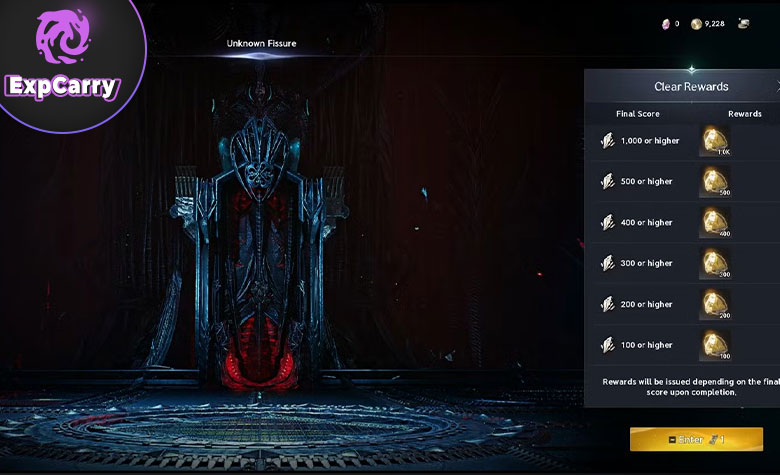
Odyle Energy Cubes are one of the most important sources of regular Kina in the Global endgame. The main distinction is which difficulty you are running: Exploration rewards commonly provide bound Kina, while eligible Conquest, Transcendence and Sanctuary cubes provide regular Kina. A dungeon clear and an opened reward cube are separate events, so completing more runs does not automatically mean you claimed more currency.
Current Global client reward tables show higher total regular Kina from the three main Conquest pairs as their Item Level requirements rise. The early Krao Cave and Draupnir pair is followed by Urugugu Canyon and Vakron Sky Island, then Fire Temple and Ferocious Horn Den. The amounts depend on the eligible boss cubes you actually open, not simply on entering the dungeon. A full set of eligible Conquest boss rewards can represent roughly 200,000, 300,000 or 400,000 regular Kina across those successive tiers in the current client data; check each cube, your Energy and the applicable restrictions before treating that as your personal payout.
NCSOFT's May 13 Korean update previously increased regional Expedition Kina rewards and introduced Crobahki's Secret Depository as a separate currency activity. Those regional changes are historical context, not evidence that the same dungeon is available in the current Global rotation. For Global, use the Expedition, Transcendence and Daily Dungeon menus that are actually open. If your goal is a particular Expedition dungeon clear, its tier and selected difficulty determine which reward pool you are targeting.
- Prioritize eligible boss cubes with useful regular Kina and equipment rewards.
- Check the Odyle Energy cost and remaining claims before comparing two activities.
- Separate bound Exploration payouts from regular Conquest income in your farming records.
- Move to another activity when reward claims, daily restrictions or clear difficulty reduce the value of further runs.
The November 4 Global update also improved rewards in Draupnir, Vakron Sky Island and Ferocious Horn Den on Exploration. They now provide more bound Kina and materials, with certain rewards matching Normal quantities but remaining untradeable. That makes them worth reconsidering for upgrade expenses, even though they should not be counted as a source of Market-ready regular Kina.
3. Quests and Duties for Bound Kina
Quests and Duties are dependable ways to collect Kina (Bound), particularly when you are still developing your first level-45 character. Duty rewards are useful because they support the routine expenses that otherwise eat into your regular Kina. Story quests, however, are generally finite: their one-time rewards should not be included in a repeatable daily income estimate.
Before picking optional tasks, compare the time needed with the actual reward and the character goals you already have. Check the Duty interface for available missions and reset information rather than assuming every task refreshes daily. The November 4 Ludra Conquest Check-In also offers large amounts of Bound Kina on specific login reward days, but those are event rewards, not repeatable Kinah farming activities.
4. Sealed Dungeons Strongholds and NPC Sales
Sealed Dungeons, Strongholds and sales to NPC merchants can provide bound Kina. They are especially useful while leveling or clearing content that you have not completed before. The mistake is treating every first-clear reward as an endlessly repeatable source of income. Once the one-time reward is collected, check whether the activity offers another eligible payout before returning.
Selling unwanted items to NPC merchants is also a way to turn inventory clutter into bound Kina. Before doing so, check whether the item is needed for crafting, enhancement, collection or a future upgrade. A useful crafting component may be worth more than its vendor price, while an ordinary item with no other purpose can be sold without much hesitation. Keep these NPC proceeds separate from regular Market income.
Gathering Materials for Kinah
Gathering can generate regular Kina through sales of tradeable materials, but collecting a resource does not automatically turn it into currency. Its tooltip must allow the relevant sale, your account must be eligible to use the Market, and another player must actually buy it. Since Global has been live for more than a month, you can check real server listings instead of relying on September test prices. Those listings still do not guarantee that an item will sell at the advertised price.
The gathering requirements have changed significantly. NCSOFT raised the minimum gathering level to 45 in its January Korean anti-bot update, and Global later introduced the same minimum in the October 28 patch. On Global, gathering now requires character level 45 and is limited to 1,000 gathering actions per server per day, with the published daily reset at 00:00 PDT / 08:00 CET. This is a server-wide allowance, not 1,000 extra gathers for every alt on that server.
- Identify a material used by recipes that are available in your current Global build.
- Confirm that the harvested item can be listed and that your character meets the Market restrictions.
- Measure the actual collection time, including travel, competition and your remaining daily gathering allowance.
- Compare completed net sale proceeds with the value of using the material in your own crafting.
- Change routes when congestion or low demand makes another resource more profitable.
The October restrictions also mean that a low-level gathering alt is not a workaround for the minimum level, and several characters on one server do not create unlimited extra gathering capacity. Some gathered-material Market listings can also be restricted according to account or gameplay history. Check that the item can actually be listed before spending your daily allowance on it. For the profession progression behind these routes, the AION 2 gathering and professions progression page covers the corresponding skills and requirements.
This section covers gathering as a currency source rather than a complete node map. Your best route depends on the current server Market, the recipes players are crafting and how quickly you can collect materials without wasting the daily allowance.
Explore services related to this guide, selected from our Aion 2 catalog.
View All Aion 2 Services


AION 2 Professions and Crafting for Kinah
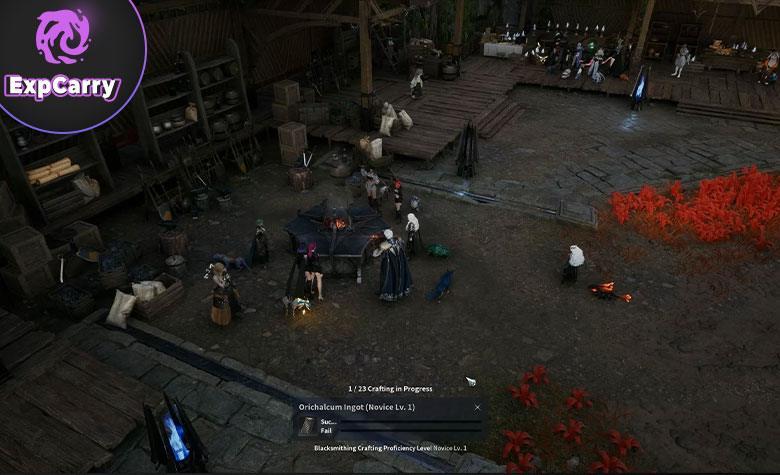
Crafting is profitable only when a completed sale earns more than the full cost of producing the item. That includes vendor ingredients, gathered materials, processing, recipe expenses and any relevant Market charges. A recipe can still be excellent for personal progression even if selling the finished item would bring in less than selling its ingredients separately.
| Crafting lane | Candidate output | Profit check |
|---|---|---|
| Alchemy and Cooking | Tradeable consumables with current buyer demand | Ingredient value, crafting expense, item binding and net completed sale |
| Equipment crafting | Weapons, armor or accessories permitted by the live Market | Full recipe cost, competing dungeon drops, crafting outcome and demand |
| Intermediate components | Processed materials required by available recipes | Whether processing adds more value than selling the raw inputs directly |
Start with a small batch, check completed sales and only increase production when buyers continue to appear. The November Global update added guaranteed-success recipes for certain True Dragon and Star Dragon gear. Those recipes produce Bound items and cannot trigger a COMBO or Great Success, so they should not be mistaken for a new source of tradeable Market stock. The older recipes remain relevant when your goal is a potentially tradeable result, but their success conditions and full costs must be considered.
The AION 2 professions guide covers profession levels, recipe progression and crafting systems separately. For Kinah farming, the important question is simpler: would you earn more by selling the raw materials, processing them into components or crafting the finished item? Calculate all three outcomes using actual Global prices before committing expensive dungeon materials.
How Market Selling Works for Global Kinah Farming
Global trading rules matter because obtaining an item and converting it into regular Kina are separate steps. In its September post-test notice, NCSOFT confirmed that direct player-to-player trading is disabled as an anti-bot measure. The player Market remains the main trading system. On the live Global version, Market access opens at Level 45 and the current Special Quai Membership conditions restrict buying and listing. Check that your membership is active on the server where you intend to trade before planning a gathering or crafting business around Market income.
Important: The September Launch Scale Test had the Market disabled, but that test is no longer the relevant economy reference. On live servers, compare completed transactions and current server listings, check whether the item is tradeable and review the listing fee and settlement conditions shown in the Market. Older membership descriptions that mention personal trading should not be used to bypass the Global direct-trade restriction.
Regular Kina is the balance used to purchase eligible player listings; bound Kina does not replace it for that purpose. A Market listing may also be blocked by item binding, account restrictions or trading eligibility. There is no reason to gather hundreds of units for sale until you know that your character can list them and that buyers are actually completing transactions. The server Market and any future cross-server trading features must also be treated separately rather than assuming all regions share one price.
How to Calculate Real Profit
Calculate profit from completed sales, not asking prices. For a crafted item, compare net sale proceeds against the cost of ingredients, processing and any actual crafting expenses. If you gathered the ingredients yourself, their potential sale value is an opportunity cost: using them in a recipe means giving up the Kina you could have earned by selling them directly. Do not count that opportunity cost a second time as cash you actually spent.
| Record | Include | Reason |
|---|---|---|
| Regular Kina earned | Eligible gameplay currency and collected proceeds from completed Market sales | Listed but unsold items are not currency income. |
| Kina (Bound) | Track separately from regular Kina | It can cover many expenses but cannot replace regular Kina for Market purchases. |
| Costs | Actual repair, consumable, recipe, processing and applicable Market charges | Gross income can make a poor route look profitable. |
| Time | Farming, travel, crafting, listing and collecting sales | Comparing only combat duration hides part of the work. |
| Inventory | Unsold tradeable items and their quantities | Potential sale value is not realized profit. |
Regular Kina per hour is the regular Kina you actually gained minus the expenses paid from that balance, divided by the full time spent. Keep bound Kina in another column rather than adding incompatible balances together. If the Market interface already shows a payout after deductions, do not subtract the same charge twice. Similarly, a daily acquisition cap or a settlement restriction can make your practical income lower than the theoretical value of your drops.
A Practical Daily and Weekly Kinah Routine
Plan your routine around rewards that are currently available, the kind of Kina you need and the restrictions that have not yet reset. There is no benefit to following a fixed route from an older region if your Global character has different dungeon unlocks, reward counters or Market access. This sequence is suitable for adjusting to your current level and equipment.
- Check your regular and bound Kina balances, the daily acquisition restriction and the upgrades you need to fund.
- Complete eligible Duties, quests and remaining first-clear activities that provide useful bound Kina.
- Use available Conquest, Transcendence or other reward cubes when the regular Kina and equipment justify their Odyle Energy cost.
- Test a manageable monster route only while eligible regular Kina drops remain available.
- If you are Level 45, check your remaining server-wide gathering allowance before harvesting materials for sale or crafting.
- When Market access is available, inspect tradeability, compare actual prices, list only worthwhile items and collect completed sales.
- Review the next daily and weekly resets, then repeat activities whose rewards remain valuable instead of assuming every limit refreshes together.
As part of the current November events, NC is also distributing extra Odyle Energy through in-game mail for a limited period. That can help you claim additional eligible dungeon rewards, but it does not eliminate every reward counter or currency restriction. If your real problem is that your Item Level is too low for better-paying Conquest tiers, a sensible AION 2 Item Level progression route may improve your long-term dungeon options more than another hour of farming weak monsters.
Common AION 2 Kinah Farming Mistakes
Most avoidable losses come from measuring the wrong currency, ignoring new Global restrictions or treating items in your inventory as though they were already sold.
- Counting Kina (Bound) as if it were interchangeable with regular Kina for Market purchases.
- Assuming Exploration and Conquest cubes award the same type of Kina.
- Using Korean or Taiwanese income figures as guaranteed Global Kina per hour.
- Valuing an unsold item at its asking price instead of the proceeds of a completed transaction.
- Ignoring repairs, consumables, crafting materials and applicable Market charges.
- Trying to gather before Level 45 or ignoring the 1,000-per-server daily gathering allowance.
- Planning around direct player trading even though it is disabled on Global.
- Continuing to farm regular Kina after the relevant daily acquisition restriction applies.
- Assuming the November Exploration reward increase makes those materials tradeable when the patch explicitly makes them Bound.
AION 2 Kinah Farming FAQ
These questions cover account access and currency handling rather than repeating the farming methods above.
Can free-to-play players earn Kina without Special Quai Membership?
Yes. Regular gameplay rewards and Market access are different systems. Free players can earn Kina and Kina (Bound) from content available to their characters. However, the current Global membership conditions restrict listing and purchasing on the player Market, and direct player-to-player trading remains disabled. If you want to rely on Market sales, check the active Special Quai Membership and account eligibility requirements first.
Can Kina (Bound) be converted into regular Kina?
The two balances are separate, and the Global client does not provide a general direct conversion that turns bound quest rewards into Market-ready regular Kina. Bound Kina can cover eligible character expenses, while Market purchases require regular Kina. Kina Chests and the Kina–Quna Exchange concern regular currency and their own conditions; they are not a way to exchange any amount of bound Kina into regular Kina at a guaranteed rate.
Conclusion
The practical way to farm AION 2 Kinah on Global is to separate regular Kina from Kina (Bound), use your valuable dungeon rewards first and measure actual returns. Quests, Duties and Exploration can fund character expenses, while eligible Conquest and Transcendence cubes are important for regular Kina. Gathering and crafting become additional options at Level 45, subject to the daily gathering allowance and Market restrictions. Build your routine around the current client, completed rewards and real costs rather than old Korean income estimates or speculative hourly figures.