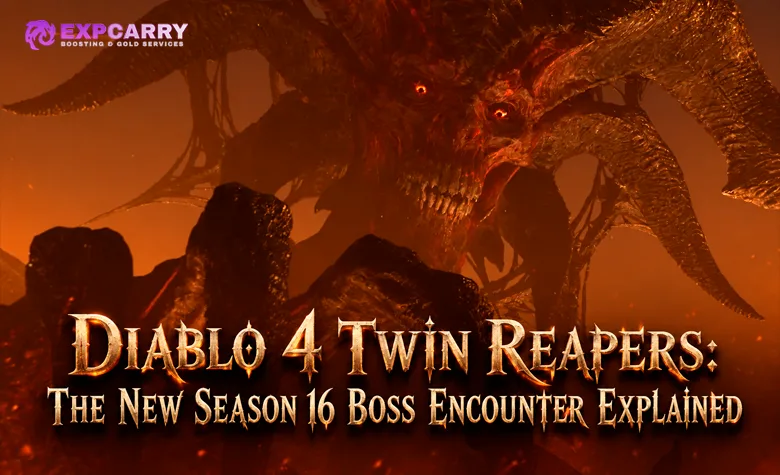
Diablo 4 Season 16 is bringing the Corrupted Reaper back with a dangerous partner. The Fractured Reaper joins the encounter, and Blizzard says their abilities will work together rather than behave like two completely independent boss fights. That changes the central challenge: recognizing one enemy's attacks may no longer be enough if the other Reaper changes where and when it is safe to move. The new confrontation is being tested in patch 3.3.0, but its final attack patterns, access requirements, and rewards are not fully documented yet. This guide explains what Blizzard has confirmed, what players have reported from the Public Test Realm (PTR), and how to prepare for a fight built around two cooperating threats. It also covers positioning, solo and group tactics, and the questions worth checking before spending valuable endgame resources.
Short answer: The Twin Reapers encounter pairs the returning Corrupted Reaper with the new Fractured Reaper in Diablo 4 Season 16. Blizzard confirms that their powers combine, making this more than a standard two-boss fight. The best preparation is to prioritize visibility, movement, defensive cooldowns, and controlled damage windows, while treating detailed PTR reports as provisional until the live version is finalized.
What Makes the Twin Reapers Encounter Different?
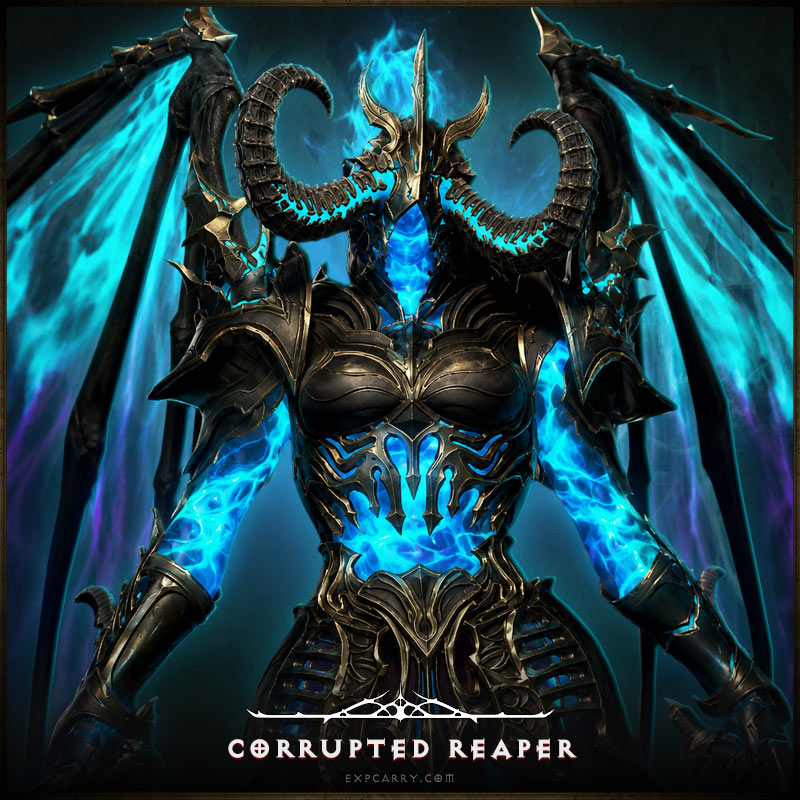
The Corrupted Reaper was already a major Lair Boss during Season of Death Awakening. Season 16 adds the Fractured Reaper, but the important detail is how the pair interacts. In its official patch 3.3.0 PTR preview, Blizzard describes the two Reapers combining their abilities and working together. The announcement does not provide a move-by-move breakdown, so it would be misleading to claim that every attack, phase transition, or safe spot is already established.
This creates a different tactical problem from fighting a single Lair Boss. A player may correctly identify a dangerous attack from one Reaper but still need to account for the other enemy before committing to an escape direction. The challenge is therefore not necessarily twice the health or twice the damage; it is the possibility that two mechanics interact and reduce the time available for a safe response. Until the final encounter is documented, players should prepare for that coordination without assuming a particular attack sequence.
Why the Original Corrupted Reaper Guide Is Not Enough
Learning the older fight remains useful because it establishes the Corrupted Reaper's identity and the general expectations of a demanding Lair Boss. However, the Season 16 version introduces another enemy whose abilities can change the practical meaning of familiar cues. A movement decision that worked during a solo encounter may become risky when a second mechanic is active. Our existing Corrupted Reaper guide is useful historical context, but its older mechanics and farming requirements should not be copied directly into a Twin Reapers strategy.
What the Season 16 PTR Actually Shows
The patch 3.3.0 PTR runs from October 27 to November 3, 2026, giving players an opportunity to inspect the encounter before release. Blizzard's announcement confirms the paired Reapers and their combined abilities, while an independent PTR guide reports additional details visible in the test build. Those two categories of evidence need to stay separate because a PTR observation can change before the season launches. The distinction matters most for access requirements, arena behavior, and reward claims.
| Feature | Current information | Status |
|---|---|---|
| Boss pairing | Corrupted Reaper returns with Fractured Reaper as a partner. | Officially confirmed |
| Combined abilities | Blizzard says the Reapers' powers work together rather than functioning as two isolated fights. | Officially confirmed |
| Encounter name | A community PTR guide identifies the fight as Reaper Council. | PTR report; final name unconfirmed |
| Arena behavior | The same guide reports that the Reapers move between multiple platforms. | PTR report; final sequence unconfirmed |
| Quest and hoard | The guide reports a quest called The Reapers Reborn and a hoard opened with one Superior Lair Key. | PTR report; live requirements unconfirmed |
| Rewards | Blizzard promises valuable loot without publishing a complete drop table or exact probabilities. | General reward promise confirmed; specifics unknown |
The independent D4Guides PTR overview is the source for the reported Reaper Council name, platform movement, quest, and key cost. These are useful leads for players exploring the current test build, not guarantees about the finished Season 16 encounter. In particular, neither the number of arena transitions nor the timing of individual attacks is established by Blizzard's published preview. Any definitive rotation or damage-threshold chart would require repeatable direct testing.
The Real Threat: Reading Two Reapers at Once
A coordinated two-boss encounter increases the amount of information a player must process. It is tempting to focus on whichever Reaper is currently taking damage, especially when a build depends on maintaining a short burst window. That approach becomes unreliable if the second enemy can influence positioning or timing. The safer principle is to treat the entire arena as the encounter, not just the health bar under your cursor.
Watch Both Enemies Before Committing to Damage
Keep both Reapers within your field of view whenever the arena allows it, and avoid spending long periods attacking from a position where the second enemy is obscured. If the fight includes the platform changes reported on the PTR, regain visual awareness after each transition before restarting a full damage rotation. A short pause to identify the next safe movement direction is usually less costly than losing a run to an avoidable hit. This is a general positioning recommendation, not a claim that the bosses use a particular synchronized attack on a fixed timer.
Preserve an Escape Route
Positioning near the edge of a dangerous area can make a straightforward dodge fail if another threat appears in the same direction. Favor locations with more than one potential exit, and avoid cornering yourself simply to maintain damage uptime. When a telegraph appears, choose movement that keeps options open rather than automatically moving toward the nearest empty space. The principle is especially important if the final fight uses multiple platforms, although their exact layouts and transition rules remain subject to PTR changes.
Do Not Spend Every Defensive Tool at Once
Boss fights often punish players who use mobility, damage reduction, and emergency recovery on the same manageable attack. Against two cooperating Reapers, that mistake could leave no answer for the next overlapping threat. Try to solve ordinary movement problems with positioning first, then use defensive cooldowns when a safe path is limited or a mistake has already occurred. The precise timing will depend on the final abilities, so the goal during PTR testing is to discover which moments genuinely require a defensive commitment.
Explore services related to this guide, selected from our Diablo IV catalog.
View All Diablo IV Services

Best Preparation for Solo Players and Groups
The most useful build adjustment is not automatically stacking more damage. A character that survives the encounter consistently will have more opportunities to learn its mechanics and complete the fight. Prioritize reliable mobility, reasonable durability, and damage that can be delivered without standing still for too long. If your character is underprepared for difficult boss content, improving glyphs and general progression through activities such as Diablo 4 Pit runs may be a more practical investment than forcing repeated attempts immediately.
Solo Strategy: Control the Pace
Solo players must handle both damage and threat recognition without a teammate calling out changes. Begin with a learning attempt focused on identifying visual cues, arena boundaries, and moments when it is safe to attack. Keep enough resources available to move or defend rather than committing every cooldown to your opening burst. Once the encounter's actual rhythm is clear, increase damage during verified safe windows instead of gambling on an assumed phase skip.
Group Strategy: Divide Attention, Not Assumptions
A group can make the encounter easier to read by assigning one player to call out developments involving each Reaper. Short, consistent callouts are more useful than several people reacting to the same visual effect at once. Players should agree on how to regroup after arena transitions and avoid spreading so far apart that support becomes difficult. There is currently no confirmed Twin Reapers mechanic requiring a specific tank assignment, split-party formation, or kill order, so groups should not treat those ideas as mandatory.
For players considering help with difficult endgame encounters, ExpCarry's Diablo 4 boss services provide an overview of existing boss-related support. The presence of a Corrupted Reaper service does not, by itself, establish that a Season 16 Twin Reapers clear is included. Check the precise service description and the live encounter requirements before making that assumption.
How to Find the Encounter and Prepare Access Materials
The original Corrupted Reaper was associated with the Pandemonium Threshold entrance in Zarbinzet. Blizzard documented that location in the Season 14 patch 3.1 PTR notes, along with access rules and reward materials that applied to that older version. Those details explain the encounter's history but do not prove that the two-Reaper version uses the same unlock quest or currency. Players should distinguish historical information from the current test build before farming.
According to the community's Season 16 PTR report, the combined encounter is tied to The Reapers Reborn at Pandemonium Threshold, with one Superior Lair Key required to open its hoard. Blizzard has not independently confirmed that complete combination of quest, location, and cost in its Season 16 announcement. On the PTR, the vendor Mrak can provide Lair Keys and other testing materials, making repeated experiments easier without a normal farming loop. For live-game key preparation more generally, the Diablo 4 Lair Keys farming service covers boss-key progression, but the final Twin Reapers payment requirement should be checked in-game after release.
PTR access warning: Do not spend time farming an exact Season 16 summoning recipe based solely on Season 14 guides or early community screenshots. First verify the quest, entrance, required materials, and hoard interaction in the current build. These details can change independently of the boss's combat mechanics.
Twin Reapers Loot: What Rewards Can You Expect?
Blizzard describes the new fight as rewarding but has not supplied a complete Season 16 loot table, a guaranteed Mythic Unique reward, or an exact drop percentage. An independent PTR report suggests that the Reaper Council hoard has an increased chance for Mythic Uniques, but that claim should be treated as test-build information until confirmed. The original Corrupted Reaper had its own reward economy in Season 14, which should not be assumed to carry over unchanged. A player deciding whether the encounter is worth farming should compare confirmed live costs and average rewards, not promotional wording alone.
The encounter may also become relevant to broader endgame routing. Blizzard's Lord of Hatred War Plans overview confirms that Lair Bosses are one of the activity categories supported by War Plans. The community PTR report additionally mentions a War Plan variant for the combined Reaper encounter, but its final availability and rewards remain unverified. Players already organizing their endgame activities can review Diablo 4 War Plans progression while waiting for confirmed Season 16 farming routes.
How to Test the Fight During the Season 16 PTR
The best way to understand a new boss is to change one variable at a time. A single successful attempt might hide a dangerous interaction because high damage prevents a mechanic from appearing. Repeated runs with controlled positioning reveal more about the encounter than an isolated fast clear. Use the PTR's generous testing tools to gather observations before drawing conclusions about the live version.
- Record the first attempt. Focus on identifying when each Reaper becomes active, where visual warnings appear, and whether the arena changes. Do not try to establish a perfect damage rotation immediately.
- Compare movement patterns. Repeat the encounter while deliberately choosing different safe positions. Note whether a mechanic follows the player, targets a fixed location, or appears to interact with the other boss's ability.
- Test defensive timing. Save a mobility or defensive cooldown for a suspected overlap and compare the result with a run where it was used earlier. This helps separate unavoidable damage from positioning mistakes.
- Check the reward screen independently. Record the exact name and quantity of materials used to open the hoard, then inspect the resulting items. A few drops are evidence of possible rewards, not proof of a guaranteed item or stable drop rate.
If a test reveals inconsistent behavior, capture the encounter conditions before reporting it. Blizzard's PTR announcement explains that players can submit feedback through the in-game reporting interface and PTR forums. Include the difficulty, character build, relevant transition, and what happened before the suspected bug. A reproducible report is more useful than a general claim that the fight is overtuned.
Common Mistakes to Avoid Against the Twin Reapers
Even without a finalized attack list, several habits are clearly worth avoiding in a coordinated boss encounter. Most of them involve assuming that the fight behaves like an older solo version or sacrificing awareness to maintain damage. Correcting these habits early makes PTR learning more efficient and should remain useful if Blizzard adjusts the encounter before launch. The exact punishment for each mistake will depend on the mechanics present in the final build.
- Tunnel-visioning one Reaper: Keep track of the second enemy before committing to a long attack animation or burst sequence.
- Using mobility immediately: Preserve a way out when an ordinary movement adjustment is sufficient.
- Assuming a fixed kill order: Do not build a strategy around defeating one Reaper first until testing confirms how their health and phases interact.
- Copying Season 14 instructions: Treat older Corrupted Reaper routes, currencies, and attack descriptions as historical information.
- Overstating PTR rewards: A reported high-value drop is not a published guarantee or a reliable farming rate.
Diablo 4 Twin Reapers FAQ
The most common questions concern whether this is a completely new boss, how the two enemies work together, and what players should farm in advance. The current answers reflect Blizzard's 3.3.0 preview and clearly identified community PTR observations. They should be checked again when the final Season 16 patch notes become available.
Are Fractured Reaper and Corrupted Reaper fought together?
Yes. Blizzard confirms that the Fractured Reaper joins the Corrupted Reaper and that their abilities combine in the Season 16 encounter. That establishes a coordinated fight, but it does not reveal whether both enemies remain simultaneously vulnerable during every moment. The exact sequence of active phases needs direct testing or final documentation.
Is Reaper Council the official boss name?
Reaper Council is the name reported by an independent guide covering the Season 16 PTR build. Blizzard's own preview calls the feature Pandemonium's Dual Threat and describes the two cooperating Reapers. Until the final game client or patch notes establish the encounter name, Twin Reapers is best understood as a convenient descriptive label rather than a confirmed official UI title.
Do I need a Superior Lair Key for the rewards?
A community PTR report lists one Superior Lair Key as the hoard-opening cost. Blizzard has not confirmed that exact price for the final Season 16 version in its published overview. Check the live hoard interface before purchasing or farming materials specifically for this encounter.
Does Twin Reapers guarantee a Mythic Unique?
No published Blizzard statement guarantees a Mythic Unique from every Twin Reapers clear. The PTR community report suggests an improved chance, but does not establish a verified final drop percentage. Players should wait for confirmed reward information and compare the cost per attempt with other endgame farms before committing substantial resources.
Final Verdict: Prepare for Coordination, Not Just More Damage
The defining feature of Diablo 4's Season 16 Twin Reapers encounter is the interaction between Fractured Reaper and Corrupted Reaper. Blizzard has confirmed their cooperation, but the detailed attack patterns, access costs, and reward rates remain partly unverified during the 3.3.0 PTR. For now, the strongest practical approach is to maintain visibility, leave room to reposition, conserve defensive tools, and test the encounter methodically. When the live version arrives, those fundamentals will provide a better starting point than an invented phase chart or a copied Season 14 farming route.