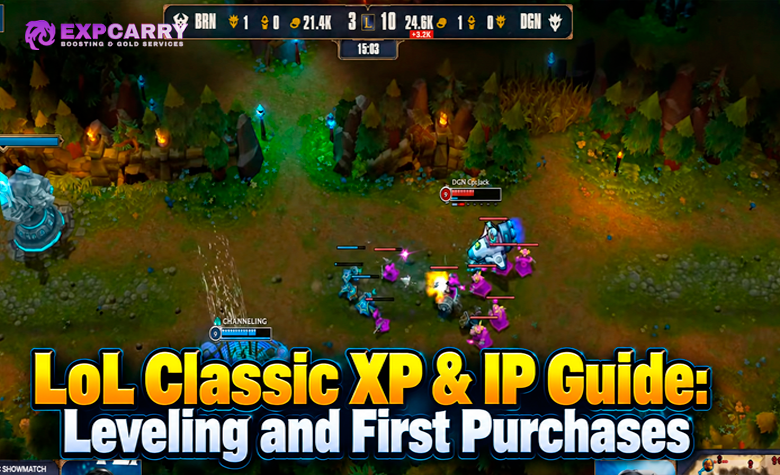
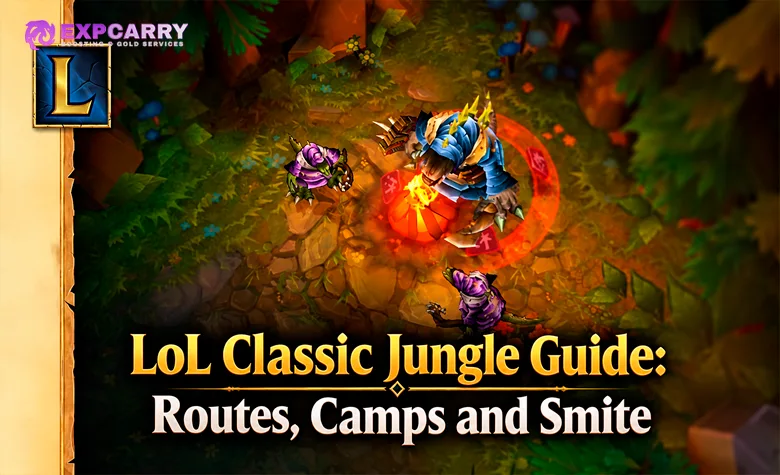
Jungling in League of Legends Classic requires a different approach from modern Summoner's Rift. The first jungle clear is more punishing, Health and mana management matter more, and the older camp layout includes Wraiths, Golems and a separate Wight camp. A practical first route is Blue Buff → Wolves → Red Buff → evaluate a gank or recall, provided your champion can complete it safely. Red-start alternatives suit junglers seeking early combat pressure, while farming-oriented champions can extend their clear before looking for fights. Classic uses older Smite mechanics, Hunter's Machete, Madred's Razors and Spirit Stone item paths instead of modern jungle companions. Patch 26.16 increased later-game monster durability without changing the first clear, and Patch 26.17 revised Wriggle's Lantern and Feral Flare. This guide explains safe routes, jungle income, ganking, camp tracking and Dragon or Baron control using the mechanics available in Classic through Patch 26.20.
Short answer: Start with Hunter's Machete, Health Potions and Smite, then choose a Blue- or Red-start route based on your champion, team position and intended lane pressure. Clear only as many camps as your Health and resources permit, plan your Smite usage, and prioritize efficient farming, realistic ganks and safe objectives instead of blindly following a fixed full-clear route.
How League Classic Jungle Differs From Modern League
League Classic restores a more demanding jungle economy and older item systems associated with early League of Legends. Camps can be dangerous during the opening clear, and a failed gank may consume enough Health, mana and travel time to put you behind. Successful jungling therefore depends on planning your first route, preserving resources and recognizing when farming, ganking or recalling offers the better outcome.
Classic is not an exact reproduction of one historical patch. Riot describes it as a combination of early League systems, and its jungle includes 2013 monster tuning alongside selected mechanics from other periods. For example, Classic includes the Wight camp and the 2014 Feral Flare item. Riot explicitly acknowledged this combination in the Patch 26.17 notes, so historical Season 3 jungle guides should not be treated as complete descriptions of the current mode.
| Feature | League Classic | Modern League |
|---|---|---|
| Starting equipment | Hunter's Machete and consumables | Modern jungle companion item system |
| Jungle camps | Blue, Red, Wolves, Wight, Wraiths and Golems | Different monster names, layouts and jungle systems |
| Early clearing | More demanding Health and mana management | Companion-supported clearing and modern monster tuning |
| Jungle upgrades | Madred's Razors, Spirit Stone and legacy jungle items | Modern jungle progression and itemization |
| Runes and masteries | 30 rune slots and 30 mastery points | Modern rune trees and keystones |
| Major objectives | Classic Dragon and Baron-centered objective play | Additional modern objective systems |
| Map information | Older pathing and vision decisions, with selected modern conveniences | Modern objective interface and vision systems |
The most important difference is that your first route must respect your champion's ability to survive it. A route that looks efficient in modern League may be unsafe with older abilities, different jungle items or weaker early sustain. Classic also retains ward trinkets and other selected conveniences, so it should not be approached as a completely unchanged historical map.
Why the First Jungle Clear Is More Punishing
Classic monsters can deal substantial damage before you acquire defensive items or enough ability ranks to clear comfortably. Champions with natural sustain, damage reduction or strong area damage handle camps differently, so one universal opening route is unlikely to be optimal. The difficulty depends on the champion, rune page, leash assistance and how efficiently you use attacks and abilities.
A failed clear has several consequences. You may need to recall before purchasing a useful item component, lose the opportunity to influence a nearby lane or become vulnerable to an enemy jungler who preserved more Health. Learning which camps your champion can clear safely is therefore more valuable than imitating the fastest route designed for another champion.
Why Your First Route Matters So Much
Your opening path determines three things: which buffs you obtain, where you appear after the clear and how much Health and mana remain for your next action. Starting on the wrong side for your intended gank creates unnecessary travel time, while taking an additional camp at low Health can leave you unable to contest the next objective or defend against an invasion.
Before the first camp, decide whether your immediate goal is an early gank, efficient farming or a safe first recall. That goal should influence your starting buff, camp sequence and Smite usage. Reassess after each camp rather than treating the planned route as mandatory.
All League Classic Jungle Camps Explained
League Classic has six regular jungle camp types on each side of the map: Blue Buff, Red Buff, Wolves, Wight, Wraiths and Golems. Dragon and Baron Nashor are separate epic neutral objectives rather than ordinary farming camps. Some camps contain several monsters, and fully clearing them matters when tracking their next spawn.
Several names differ from modern League, and Wight is particularly important. It is a separate single-monster camp, distinct from the multi-monster Wraith camp. Wight occupies the area associated with the modern Gromp camp, but its monster, stats and clearing behavior belong to Classic. Understanding these distinctions prevents confusion when adapting a historical route or reading a modern jungle guide.
| Camp | Main Feature | Practical Clearing Consideration |
|---|---|---|
| Blue Buff / Ancient Golem | Grants the Blue Buff | Useful for champions relying on mana regeneration and repeated spell casts |
| Red Buff / Lizard Elder | Grants the Red Buff | Supports early dueling and ganking through its combat effects |
| Wolves | Multi-monster camp | A common intermediate camp on Blue-start routes |
| Wight | Separate single-monster camp | Provides extra farming but can be demanding early because of its durability |
| Wraiths | Multi-monster camp corresponding broadly to modern Raptors | Area damage can improve clearing efficiency |
| Golems | Multi-monster camp corresponding broadly to modern Krugs | Can be demanding for champions with limited early sustain |
Do not confuse the Ancient Golem that grants Blue Buff with the separate Golems camp. Likewise, Wight is not the large monster inside the Wraith camp. Blue and Red Buff camps also contain smaller accompanying monsters, so consider the entire camp when tracking clears and respawns.
Blue Buff vs Red Buff: Which Should You Start?
Blue Buff is a natural opening for champions whose clearing depends heavily on mana and repeated ability use. Amumu and Fiddlesticks are examples of champions that can benefit from mana support while fighting jungle monsters. Blue starts can also lead into a straightforward route through Wolves toward Red Buff.
Red Buff is attractive when a champion wants early combat pressure or benefits from its attack effects during a gank. Lee Sin, Jarvan IV and other aggressive junglers may prefer routes that preserve Red Buff for an early fight or finish near a vulnerable lane.
The decision is not determined by champion identity alone. Your team's starting side, the risk of an enemy invasion, lane matchups and available leash assistance all affect which route is safer. Blue-team side and Red-team side describe map position, while Blue-start and Red-start describe the buff you clear first. These terms should not be confused.
What Is Wight in League Classic?
Wight is a separate single-monster jungle camp included in Classic's mixed historical setup. It provides an additional farming opportunity and can fit into longer clears or routes that avoid a risky early gank. It is the historical predecessor associated with the modern Gromp camp location, not another name for Wraiths.
However, Wight should not be added automatically to every opening. Its value depends on travel time, its durability, your champion's remaining resources and the next planned action. A champion with weak single-target clearing may struggle to defeat it efficiently. If a realistic lane opportunity is available, detouring for Wight can cost more than the additional gold and experience are worth.
When practicing, compare the Health and mana remaining after a Wight-inclusive route with a shorter route. If taking it consistently prevents you from ganking, defending a buff or recalling safely, postpone the camp until a later part of your clear.
Best First Jungle Clear Routes in League Classic
A practical first clear should finish at a useful location with enough resources for the next action. Prioritize survival and efficient movement over clearing the maximum possible number of camps. The following sequences are flexible route templates, not guaranteed fastest clears for every champion or starting side.
Camp availability and exact timing should be checked in the live Classic client. Route durations vary with champion abilities, rune pages, leash assistance and Smite usage. These routes therefore avoid unsupported clear-time promises and guaranteed level breakpoints.
| Route | Camp Order | Primary Objective | Good Starting Situation |
|---|---|---|---|
| Blue-start early gank | Blue Buff → Wolves → Red Buff → evaluate a gank | Reach a nearby lane with both buffs | Mana-reliant jungler with a realistic early gank target |
| Red-start early gank | Red Buff → Wraiths → Blue Buff → evaluate a gank | Preserve early dueling pressure and reach the opposite side | Early-game fighter with useful crowd control or mobility |
| Safer farming continuation | Blue Buff → Wolves → additional safe camps according to Health and position | Build experience and gold before committing to a fight | Champion that benefits from another level or item before ganking |
| Wight-inclusive clear | Appropriate starting buff → nearby camp → Wight when efficient → continue or recall | Collect extra camp income while preserving a safe exit | Champion with sufficient single-target damage and sustain |
The first two routes provide concrete opening sequences. The other two are decision-based alternatives because the best remaining camps depend on your champion and the current game state. If an enemy invades your second buff or you are too low to finish it safely, adapt rather than following the table into a predictable death.
Blue Start: Blue Buff → Wolves → Red Buff
This route provides a straightforward way to begin with mana support and finish near the opposite side of the jungle. It is a useful baseline for champions that rely on abilities to clear or have effective ganking tools after a short opening. The route must still account for your team's map side and any enemy movement.
- Prepare at Blue Buff: Confirm your starting item, consumables and Smite. Request a suitable leash if your opening clear benefits from assistance.
- Clear Blue Buff: Use basic attacks and abilities efficiently. Avoid dragging the camp too far and causing a reset.
- Move to Wolves: Clear the camp while monitoring your remaining Health, mana and potion availability.
- Approach Red Buff: Check whether the enemy jungler could be invading and whether Smite will be available if the camp is contested.
- Evaluate nearby lanes: Look for an exposed enemy, allied crowd control and an accessible approach route.
- Choose the next action: Gank when conditions are favorable; otherwise, continue farming or recall to recover and spend gold.
The route should not automatically end with a gank. If nearby lanes are pushed toward the enemy turrets or your allies cannot follow up, approaching them may only reveal your position and waste time. Collecting another camp, placing useful vision or recalling can be more productive.
Red Start: Red Buff → Wraiths → Blue Buff
The Red-start route emphasizes early combat utility while moving toward the opposite side of the map. It can suit champions that benefit from Red Buff in early duels or whose first useful gank becomes available after a short clear.
Begin by defeating Red Buff with an appropriate leash or a safe solo clear. Move toward Wraiths, using area damage if your champion has an effective ability against multiple targets. Then approach Blue Buff while considering whether the enemy jungler may know your route or threaten the camp.
After the third camp, reassess your position and resources. If you have enough Health, useful abilities available and an overextended enemy nearby, a gank may be worthwhile. If the opponent is protected by a large minion wave or your teammate cannot contribute, continue farming rather than forcing the engagement.
This opening does not guarantee a successful level-three gank. Experience gains, available abilities and the actual lane situation determine whether fighting is worthwhile. Some champions may prefer an additional camp or an earlier recall.
Farming Route: When You Should Clear More Camps Before Ganking
Some junglers benefit more from reaching an important ability rank or completing an item component than from attempting a weak early gank. Warwick can farm safely with sustain and becomes more threatening once Infinite Duress is available, while attack-speed-oriented junglers may benefit from uninterrupted camp income and appropriate item progression.
After your first buff, clear camps that fit naturally into your path and allow you to preserve Health. Do not force a complete tour of the jungle when another difficult camp would leave you unable to survive an invasion. Recall when your resources are low or when an important purchase can improve your following clear.
A farming route should still respond to obvious opportunities. If an opponent is overextended near an ally with reliable crowd control, ignoring the situation solely to complete a predetermined camp sequence can waste a favorable gank.
When Should You Change Your First Clear?
The correct route can change before the first camp dies. An enemy invasion, an unexpected leash, low Health or an early lane fight may make the original plan inefficient or dangerous. An enemy jungler appearing on one side of the map can also reveal which camps are safer to contest or farm.
When adapting, prioritize staying alive, protecting an important buff when realistic, preserving useful farm and moving toward a favorable opportunity. Do not cross the entire jungle simply because a historical guide specifies the next camp on the opposite side.
Explore services related to this guide, selected from our League of Legends catalog.
View All League of Legends Services

How Smite Works in League Classic
Smite is the central summoner spell for Classic junglers. It deals true damage to eligible monsters and helps secure camps and neutral objectives. Because Classic does not use modern jungle companion upgrades, Smite and legacy jungle items play a particularly important role in early clearing and objective control.
Classic-specific client-data references list Smite at 490 true damage at Level 1, increasing by 30 damage for each additional champion level to 1,000 at Level 18, with a 70-second cooldown. These values come from specialist records of Classic client data rather than a separate numerical confirmation in Riot's Patch 26.20 notes. Check the live spell tooltip if subsequent updates change its behavior. Do not substitute modern upgraded Smite damage values.
When Should You Use Smite on Your First Clear?
Decide how you intend to use Smite before the first camp. It can finish a dangerous buff, reduce incoming damage by shortening the encounter or remain available for a second buff that the enemy might contest. The best decision depends on your leash, champion and expected route.
If teammates provide a strong leash at the first buff, saving Smite for another difficult camp may be reasonable. If you are clearing alone and losing Health quickly, using Smite earlier can be safer. Neither approach is universally correct.
Do not hold Smite indefinitely while losing enough Health to become vulnerable to a camp or invasion. Conversely, do not spend it on an easy small camp immediately before a major objective the enemy jungler can contest. Track its cooldown as part of your route planning.
How to Use Smite on Dragon and Baron
Before starting a major objective, check whether Smite is available and whether the enemy jungler can reach the objective pit. Watch the monster's remaining Health and coordinate your team's damage so that Smite can secure the final portion. Recheck the displayed Smite damage as your champion levels up.
Smite does not guarantee control if the enemy has vision, crowd control or a stronger team nearby. Securing an objective depends on positioning, lane priority and control of the surrounding entrances as well as the final hit.
If the enemy jungler is alive and nearby, avoid starting Baron or Dragon automatically. Establish vision first and consider whether your team can prevent an opposing Smite attempt or win a fight if enemies enter the area.
Classic Jungle Starting Items, Runes and Masteries
Classic junglers generally begin with legacy jungle equipment rather than modern companion items. The common Hunter's Machete and Health Potion opening provides a foundation for clearing, but exact purchases, rune choices and mastery allocations depend on champion mechanics and the intended route.
The objective of your starting setup is to survive the opening camps and remain useful afterward. An aggressive page offering slightly more damage may be worse than a defensive setup if it forces an early recall or leaves you unable to gank.
Hunter's Machete and Health Potions
Hunter's Machete with five Health Potions is a documented Classic starting baseline for many junglers. The item supports early clearing against monsters, while potions help you recover Health between camps. They are particularly valuable for champions with limited natural sustain. Check your starting gold and purchases before leaving the fountain.
Use potions before your Health becomes critically low, but avoid wasting them when an upcoming ability or attack can restore enough Health naturally. Also monitor mana and other resources: surviving a route with almost no mana may still leave you unable to gank or defend against an invasion.
Do not replace this opening with modern jungle pet items or assume that a current League jungle build provides an accurate Classic shopping path.
A Practical Classic Jungle Rune and Mastery Setup
The legacy rune system contains 30 slots: nine Marks, nine Seals, nine Glyphs and three Quintessences. A generic attack-based jungle page can emphasize clearing speed and mobility, while spell-focused junglers may benefit from different offensive statistics. Classic also uses 30 mastery points distributed across Offense, Defense and Utility rather than modern keystones.
| Component | Practical Starting Option | Reason |
|---|---|---|
| Marks | 9 Attack Speed Marks | Improve repeated basic attacks during camp clearing |
| Seals | 9 Armor Seals | Reduce physical damage taken from camps |
| Glyphs | 9 Scaling Magic Resist Glyphs | Improve resistance to later spell damage |
| Quintessences | 3 Movement Speed Quintessences | Reduce travel time and improve gank approaches |
| Masteries | 9/21/0 defensive tank baseline | Prioritize clear safety and survivability |
| Summoner spells | Smite + Flash | Monster control and flexible movement |
Tank-oriented junglers should examine Defense masteries such as Tough Skin and Bladed Armor. Aggressive physical junglers that already clear safely can consider a more offensive allocation. Magic-damage junglers should not copy Attack Speed Marks automatically when their clearing pattern benefits more from another statistic. The table is an example setup, not a universally optimal build.
For the full rune-stat reference and all mastery nodes, see the League Classic Runes and Masteries Guide. This article focuses on how those choices affect clearing and ganking, rather than repeating every available rune and mastery.
How Jungle Gold and Experience Work in Classic
Jungle economy depends on clearing camps efficiently, preserving Health and spending gold at useful times. Monsters provide gold and experience, but travel, unsuccessful ganks, recalls and enemy interference determine how efficiently you collect that income. Different camps also require different amounts of time and resources.
Classic intentionally makes early advantages more significant than in modern League. Riot adjusted passive gold income in Patch 26.16 to offer more comeback potential, but those changes do not replace the importance of farming. A jungler who repeatedly leaves available camps untouched while attempting unlikely ganks can fall behind in levels, items and map influence.
Why Failed Ganks Are Expensive
A gank has an opportunity cost even when nobody dies. Moving into a lane and waiting for an attack consumes time that could have been spent collecting camp income, establishing vision or influencing another part of the map. If the gank fails while the opposing jungler clears camps or takes an objective, the economic difference can grow further.
Before abandoning your route, consider whether the target can escape, whether your ally has enough Health and abilities to contribute, and whether the enemy jungler can countergank. If these conditions are unfavorable, farming is often the more productive choice.
This does not mean every risky play should be avoided. A realistic chance to eliminate an important enemy, secure Dragon or protect a threatened lane can justify delaying some farm. Evaluate the potential reward rather than assuming all ganks are automatically worthwhile.
When Should You Recall for Your First Jungle Purchase?
Your first recall should improve your ability to clear, fight or survive the next stage of the game. If you are low on Health or mana, attempting another camp can be dangerous even when a valuable item is almost affordable. Returning safely and purchasing a useful component may preserve more resources than risking a death.
Look for a natural reset after clearing a group of camps or when nearby lanes offer no realistic gank. Compare what you can purchase immediately with the benefits and risks of completing another camp. A jungler who returns with an effective upgrade may clear subsequent camps faster and create more opportunities across the map.
Madred's Razors, Spirit Stone and Jungle Item Paths
Classic jungle items branch according to champion mechanics rather than following one universal upgrade path. Attack-oriented junglers can develop Hunter's Machete into Madred's Razors and Wriggle's Lantern, while other champions may prefer Spirit Stone and its upgrades for durability, physical damage or spell-based clearing.
| Item Path | General Purpose | When to Consider It |
|---|---|---|
| Madred's Razors | Early attack-based jungle progression | Champions that benefit from repeated attacks against monsters |
| Wriggle's Lantern | Attack Speed, sustain and jungle utility | Attack-based junglers progressing toward Feral Flare |
| Spirit of the Ancient Golem | Durability-oriented jungle development | Tanks and initiators needing stronger frontline survivability |
| Spirit of the Elder Lizard | Physical-damage-oriented jungle development | AD junglers seeking offensive ability and combat pressure |
| Spirit of the Spectral Wraith | Spell-oriented jungle development | Magic-damage junglers benefiting from AP and spell-related statistics |
Detailed costs, components and item statistics are covered in the League Classic Items Guide. For jungle pathing, the key is purchasing an upgrade that improves your next clear or fight rather than delaying useful power for an unrelated late-game item.
Wriggle's Lantern and Feral Flare After Patch 26.17
Patch 26.17 significantly changed attack-based jungle itemization. Riot converted Wriggle's Lantern and Feral Flare from Attack Damage-oriented items into Attack Speed-oriented items while preserving their other statistics. This makes the item path more attractive to champions whose damage and sustain benefit from repeated basic attacks.
Wriggle's Lantern now builds from Madred's Razors and Recurve Bow instead of Madred's Razors and Vampiric Scepter. Its total cost remains 2,000 gold, while 25 Attack Damage was replaced by 30% Attack Speed. Feral Flare received the same offensive-stat change. Wriggle's Lantern can transform into Feral Flare through its monster-kill and champion-takedown stacking mechanic; Classic-specific item records describe a 30-stack requirement. Confirm the live item tooltip rather than assuming every historical version uses the same transformation rules.
This matters because sustained-attack champions may benefit more from the revised item than ability-focused physical junglers. A historical build that still lists Vampiric Scepter as the current Wriggle's Lantern component is outdated. The transformation mechanic also rewards sustained farming, but it should not make you ignore favorable fights or objectives.
Riot confirmed the item changes in the official Patch 26.17 notes.
How to Gank Lanes in League Classic
Ganking means leaving the jungle to create an advantage in a lane. A successful gank can produce a kill, force an enemy summoner spell, enable a favorable recall or help your ally gain control of the minion wave. A kill is not always necessary, but the result should justify the time and resources invested.
Classic includes older champion kits and many forms of reliable crowd control. These mechanics can create powerful early ganks, but positioning, vision and coordination remain essential. A technically strong ganking champion will still struggle if the target is protected by a turret or the allied laner cannot assist.
How to Identify a Good Gank Target
Look for a lane where the enemy is exposed and your ally can realistically contribute. An opponent positioned far from their own turret without a reliable escape is generally more vulnerable than one farming safely near that turret.
Before moving into the lane, check the minion wave, ally Health, enemy summoner spells, available crowd control and possible countergank routes. Favorable wave positioning and reliable allied follow-up often matter more than the target's missing Health alone.
How to Approach Without Revealing Your Position
Use brush and jungle paths to approach from an angle that restricts the target's safe retreat. Avoid walking through obvious warded entrances when another route is available. Classic combines older map and warding decisions with selected modern conveniences, including trinkets, so anticipating likely ward placements is important.
Do not spend every movement ability before reaching the target. If your champion needs a dash, stun or slow to prevent an escape, preserve it until the ability can reliably contribute to the engagement.
Should You Gank Before Level 6?
Some Classic junglers have effective basic crowd control and can gank before unlocking their ultimate. Lee Sin, Jarvan IV and Rammus are examples of champions whose mobility or control abilities can create early opportunities.
Other champions become substantially more threatening after reaching Level 6. Warwick's original targeted Infinite Duress is a clear example of a powerful ultimate-based gank tool. However, waiting for Level 6 should not be an absolute rule when an unusually favorable earlier opportunity appears.
The correct question is whether your champion currently has the abilities and resources required for an effective gank, not whether a generic guide categorizes the champion as an early or late ganker.
How to Counter-Jungle and Track the Enemy Jungler
Counter-jungling means entering the opposing jungle to steal camps, establish vision or interfere with the enemy's resource collection. Because Classic clears can consume considerable resources, a well-timed invasion may force an opponent into an inefficient route or early recall.
However, invading also creates risk. Entering enemy territory with low Health, limited vision or no nearby allied support can allow opponents to collapse on you. Successful counter-jungling begins with reliable information, not the assumption that every available enemy camp should be stolen.
When Is an Enemy Jungle Camp Safe to Invade?
Look for evidence that the opposing jungler is elsewhere, such as a visible gank on the opposite side of the map. Check whether nearby allied lanes can move to help and whether your champion can defeat the intended camp quickly enough to escape.
A useful invasion should have a clear target and retreat path. If you cannot estimate where the enemy jungler is or how nearby opponents might respond, farming your own available camps may be the safer economic decision.
How Camp Respawns Affect Counter-Jungling
Classic camp tracking distinguishes between killing the largest monster and clearing every monster belonging to a camp. For multi-monster camps such as Wolves, Wraiths and Golems, leaving a small monster alive prevents the normal full-clear respawn countdown from beginning. This is different from the modern jungle behavior players may be accustomed to.
That distinction can be used strategically to deny enemy resources, but it also complicates accurate timing. Do not assume a camp's respawn started when only its largest monster died. Wight is different because it is a single-monster camp and therefore has no small monster that can be left alive.
For your own farming, fully clearing a camp generally makes future availability easier to plan. In enemy territory, decide whether taking the entire camp, leaving a small monster to delay its respawn or simply establishing vision offers the best result. The denial is not worthwhile if it exposes you to an unfavorable fight.
How to Track Classic Jungle Respawn Timers
Classic-specific client references list five-minute respawns for Blue and Red Buff. They also list 75 seconds for Wolves, Wraiths and Golems after every monster in the camp dies, and 50 seconds for the single-monster Wight camp. These values come from specialist client-data references rather than an exhaustive timer table published in Riot's Patch 26.20 notes, so they should be rechecked if the mode receives further changes.
Record the time an entire multi-monster camp is cleared, not merely when its main monster dies. For Wight, use the single monster's death. The same principle applies when estimating enemy camp availability, although an unknown enemy clear time will always leave some uncertainty. Do not import modern Dragon or Baron respawn values without confirming Classic's own objective timers.
League Classic Council Poll 1 approved adding modern jungle timers that remain visible on the minimap, but Riot's published notes through Patch 26.20 do not confirm that this feature has already shipped. Treat the vote as an approved future change rather than assuming the timers are available in every Classic match.
Dragon and Baron: Classic Jungle Objective Control
Classic objective play centers on Dragon, Baron Nashor and the structures your team can take after winning fights. These objectives reward coordinated positioning and well-timed Smite usage, but they can also become costly mistakes if you engage without sufficient damage, Health or nearby support.
Do not copy a modern jungle guide focused on Void Grubs, Rift Herald or Dragon Soul progression. Classic has a different objective environment, so evaluate the available rewards and timing within the mode itself. River vision, nearby lane priority and the enemy jungler's position are more useful than blindly following a modern objective schedule.
When Should Your Team Take Dragon?
Dragon is a valuable objective when your team can control the river and safely commit enough players to defeat it. A successful bot-lane gank or favorable mid-lane wave can create an opening, especially when nearby enemies have recalled or been eliminated.
Before starting, check whether the enemy jungler can contest, whether your allies can assist and whether you have enough Health, mana and damage to complete the encounter. Use vision to reduce the risk of being surprised while fighting the monster.
If the enemy has more players available nearby or your jungler is dangerously low, delaying Dragon may be better than gambling on an objective fight that could also give the opposing team multiple kills.
How to Prepare Baron Nashor
Baron is a major commitment that can provide the advantage needed to break through enemy structures. The safest attempts usually follow a favorable teamfight, a successful pick or strong control of the surrounding jungle and nearby lanes.
Clear enemy vision where possible, keep important abilities and Smite available, and avoid starting Baron when multiple opponents can easily enter the pit. Even if your team deals damage quickly, the risk of an opposing Smite attempt or an unfavorable teamfight remains.
After securing Baron, use the advantage to pressure structures with teammates rather than immediately separating into unrelated fights. The purpose of securing Baron is to turn its benefits into meaningful progress toward winning the match.
How to Convert a Gank Into an Objective
A kill becomes more valuable when it leads to lasting map progress. After a successful gank, check whether your ally can safely push the wave, attack a turret, establish vision or help secure a nearby neutral objective.
Sometimes the best continuation is to help correct the wave position and return to farming. Remaining in lane too long can cost jungle income and reveal your position without producing another advantage.
Which Classic Junglers Fit Different Clear Strategies?
Jungle champions differ in sustain, mobility, crowd control and ability to clear several monsters efficiently. Those differences determine which openings are practical and how early they can influence lanes. The following examples describe playstyles rather than ranking champions by their current strength.
For complete champion rankings and current draft priorities, consult the League Classic Tier List. This section focuses on why specific junglers approach farming and ganking differently.
| Champion | Main Jungle Strength | First-Clear Priority | Main Limitation |
|---|---|---|---|
| Warwick | Sustain and targeted ultimate control | Efficient farming and safe progression toward useful gank tools | Limited early approach options against cautious lanes |
| Rammus | Defensive clearing and crowd-control ganks | Preserve Health, obtain buffs and find a useful approach angle | Less effective against certain magic-damage or disengage compositions |
| Amumu | Area damage and strong teamfight crowd control | Use mana efficiently and survive opening camps | Can struggle when invaded or interrupted early |
| Lee Sin | Mobility and early skirmishing | Reach a realistic lane or jungle combat opportunity | Requires mechanical execution and efficient follow-up |
| Jarvan IV | Early engage and ally-assisted ganks | Path toward a lane with useful crowd-control follow-up | Failed early movements can cost camp income |
| Fiddlesticks | Spell-based clearing and crowd control | Manage mana, Health and access to safe camps | Vulnerable to interruptions and poorly planned invasions |
| Shyvana | Farming and sustained fighting | Collect camps efficiently and reach stronger combat windows | Fewer reliable early control tools than dedicated gank specialists |
Warwick vs Rammus: Different Ways to Survive Classic Jungle
Warwick uses sustain to remain healthy while farming and becomes particularly threatening when Infinite Duress is available. His original abilities differ substantially from modern Warwick, so current modern jungle combos and builds should not be copied directly.
Rammus relies more on defensive statistics, movement and crowd control. His route should preserve enough Health to make Powerball and Puncturing Taunt effective when he reaches a lane. A successful Rammus gank can create a strong advantage without requiring high personal damage.
Riot reduced Warwick's base Attack Speed in Patch 26.16 and nerfed his Attack Speed, passive, Hunter's Call and Infinite Duress in Patch 26.18. These changes affect expectations based on launch-era Classic guides. Neither champion should be assumed to clear at exactly the same speed as in earlier patches.
Early Gank Jungler vs Farming Jungler
An early gank jungler should identify where the first useful fight can happen before beginning the clear. A farming jungler should prioritize an efficient camp sequence and treat ganks as opportunities rather than mandatory stops.
The distinction is not absolute. Lee Sin can continue farming when nearby lanes offer no realistic targets, and Warwick can punish an overextended opponent before Level 6. Effective jungling comes from responding to the map while maintaining a coherent economic plan.
Recent Classic Jungle Changes That Affect Your Route
League Classic has received several jungle-related adjustments since its July 2026 launch. These changes affect monster durability, itemization and the performance of certain jungle champions. They demonstrate why current Classic patch information is more reliable than copying old Season 3 strategies without checking which systems Riot actually included.
| Patch | Change | Practical Effect |
|---|---|---|
| 26.16 | Non-epic monster maximum Health scaling increased from 250% to 315% | Later camps become 5–25% tougher; Riot explicitly stated the first clear is unaffected |
| 26.16 | Warwick's base Attack Speed reduced from 0.679 to 0.644 | Earlier clear-speed and attack-based assumptions require review |
| 26.17 | Wriggle's Lantern and Feral Flare changed from AD to Attack Speed items | Attack-based jungle builds and Wriggle's recipe changed |
| 26.18 | Warwick received further Attack Speed and ability nerfs | Reduced parts of his fighting and sustained-damage potential |
| 26.18 | Players voted to introduce modern jungle timers | Approved future feature; implementation not confirmed through Patch 26.20 notes |
| 26.20 | Nautilus's Titan's Wrath gained damage, shield scaling and duration improvements | Improves aspects of his durability and combat in jungle, top and support roles |
These changes are documented in Riot's official Patch 26.16, Patch 26.17, Patch 26.18 and Patch 26.20 notes.
Patch 26.16 is particularly easy to misinterpret: Riot specifically stated that the monster Health scaling adjustment does not affect the first clear. It increases the durability of non-epic monsters later in the game, rather than increasing every opening camp's starting Health. Do not abandon a reliable first route solely because of this late-scaling change.
Common Classic Jungle Mistakes and How to Avoid Them
Many unsuccessful Classic jungle games begin with poor resource management or route planning. A jungler may attempt too many camps without enough Health, spend Smite before an important objective or repeatedly gank lanes that are not realistically vulnerable.
These mistakes are easier to correct when you identify what the next action should accomplish and whether your champion has enough resources and information to execute it safely.
- Copying modern jungle routes: Learn Classic camp names, older items and current monster behavior.
- Ignoring Wight: Recognize it as a separate camp and decide whether its durability and location fit your route.
- Forcing a complete clear while low: Recall before another camp becomes a realistic death or invasion risk.
- Using Smite without a plan: Consider whether the next buff or major objective requires it.
- Ganking every lane immediately: Check enemy positioning, allied follow-up and the farm you are sacrificing.
- Invading without lane priority: Enter enemy territory only when information and escape options support the attempt.
- Buying outdated jungle components: Remember that Wriggle's Lantern changed its recipe in Patch 26.17.
- Following a fixed camp timer from an old video: Distinguish historical timers from current Classic client data and full-camp respawn conditions.
- Taking objectives without vision: Check whether the opposing jungler or nearby enemies can contest.
Correcting one repeated decision is generally more useful than completely changing champions or routes after every unsuccessful game. A stable opening provides a baseline that makes the effects of each adjustment easier to evaluate.
A Practical Training Plan for Your First Classic Jungle Games
The most effective way to learn Classic jungle is to repeat a manageable route and gradually introduce additional decisions. Begin by practicing survival and basic camp movement, then add gank selection, enemy tracking and objective preparation.
The following sessions are suggested exercises rather than mandatory Riot progression requirements. Repeat a session if necessary before moving to more complicated decisions.
| Session | Main Goal | What to Review |
|---|---|---|
| 1 | Learn all regular camps and complete a safe first route | Health, mana and ability usage after each camp |
| 2 | Repeat the same opening and improve the first recall | Whether you returned with a useful purchase and avoided wasted movement |
| 3 | Identify realistic early ganks | Wave position, enemy escape tools and allied follow-up |
| 4 | Track the enemy jungler and identify safe invasions | Known enemy location, nearby lane support and retreat path |
| 5 | Prepare Dragon and Baron opportunities | Vision, Smite availability, team position and objective follow-up |
During the first session, do not measure success only by your final score. Record whether you completed the opening without unnecessary deaths or emergency recalls. In later sessions, evaluate whether your movements created useful advantages instead of merely counting attempted ganks.
Your First-Clear Checklist
Before the jungle camps spawn, establish a simple plan. This makes it easier to adapt if the opposing team invades or a nearby lane creates an unexpected opportunity.
- Confirm the game mode: Use Classic mechanics rather than modern jungle items or objectives.
- Check your setup: Equip appropriate runes, masteries, Smite and starting equipment.
- Choose the first buff: Decide whether Blue or Red best supports your champion and map position.
- Plan the next camps: Identify the intended order and whether Wight belongs in the route.
- Assign Smite: Decide which encounter most needs its damage or objective security.
- Check the exit: Identify the lane you might gank or the point at which you should recall.
- Reassess after each camp: Monitor Health, mana, available abilities, enemy movements and the next camp's risk.
A good first clear is one that leads to a useful next action. It does not need to be the longest possible route or the fastest sequence advertised by an old jungle guide.
LoL Classic Jungle FAQ
These answers address additional questions about the Classic jungle layout, opening routes and older monster systems.
Does League Classic have Gromp, Raptors and Krugs? Classic uses older monster names and systems, including Wight, Wraiths and Golems. Wight occupies the area associated with modern Gromp, while Wraiths and Golems broadly correspond to modern Raptors and Krugs. They are not necessarily identical in stats or clearing behavior, so follow the Classic map and mechanics.
Should I always start Blue Buff? No. Blue supports mana and ability-based clearing, while Red can improve early combat pressure. Champion mechanics, starting side, enemy threats, leash assistance and intended ganks determine the better opening.
Should I gank immediately after three camps? Only when the opportunity is favorable. If nearby enemies are safe, the route leaves you too low or your champion lacks useful abilities, continue farming or recall instead.
Is League Classic jungle identical to Season 3? No. Riot combines older monster tuning with selected later systems, including Wight and Feral Flare. Classic also receives its own balance updates, so archived Season 3 mechanics, camp timers and item recipes must be checked against the current mode.
Conclusion
Successful League Classic jungling begins with a safe first route, deliberate Smite usage and efficient camp management. Choose Blue or Red based on your champion's needs, recognize Wight as a separate farming option and recall when another camp would create unnecessary risk. Once your clearing is reliable, add realistic ganks, enemy tracking and objective preparation. Use the current Classic item changes, camp mechanics and patch notes rather than outdated Season 3 or modern League assumptions, and turn the resources you earn into meaningful map advantages.