



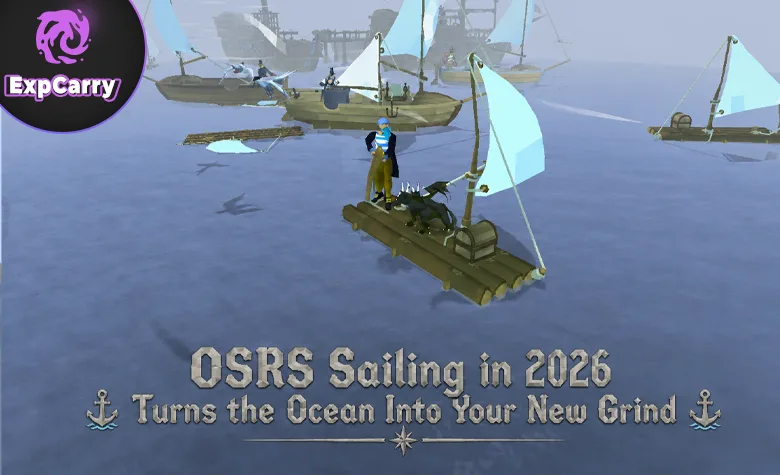
Sailing is the first new skill in Old School RuneScape, and in 2026 it is no longer just a launch novelty for players who wanted to finally use the ocean for something besides scenery. It is now a full progression system built around ships, port tasks, sea charting, shipwreck salvaging, Barracuda Trials, Deep Sea Trawling, bounty tasks, ship upgrades, crew members, and new routes across Gielinor's waters. The skill feels different from traditional bank-standing skills because your ship is not just a training prop. It is your movement tool, your upgrade platform, your combat base, your storage problem, and occasionally your floating reminder that you forgot materials again.
This OSRS Sailing Guide 2026 focuses on the practical route: unlocking Sailing, building the right early ship upgrades, choosing between relaxed and fast XP methods, using Barracuda Trials properly, understanding salvaging, adding Deep Sea Trawling when it becomes worthwhile, and avoiding the early traps that make the skill feel slower than it should. The best Sailing progression is not one straight line from level 1 to 99. It is a route that mixes quests, port tasks, sea charting, salvaging, trials, ship upgrades, and higher-level activities at the right time.
OSRS Sailing Guide 2026 Starts at Port Sarim
Sailing begins with the Pandemonium quest at Port Sarim. This introductory quest teaches the basic controls, gives access to your first raft, and opens the Sailing skill properly. There are no harsh combat requirements here, which is helpful because the early lesson is not fighting. It is learning how ship movement, ports, tasks, sea charting, upgrades, and ocean interaction fit together without immediately turning the sea into a repair bill with scenery.
After Pandemonium, your early Sailing levels come from port tasks, movement, early charting, and entry-level activities around The Pandemonium and nearby ports. The early game can feel slow if you ignore upgrades, so the first real priority is not rushing into distant water. It is getting enough levels, materials, and ship parts to make your boat feel like a tool instead of a floating apology.
Pandemonium and the first ship unlock
Pandemonium works as the skill tutorial. It introduces the sea map, ship control, port interaction, and the first steps of the Sailing loop. Once finished, you can begin training through port tasks and early sea activities. Every account planning to train Sailing should complete it immediately because it unlocks the foundation of the skill and gives you the first vessel needed to start moving through the ocean layer.
The first raft is enough to start, but it is not enough to carry you smoothly through the skill. Sailing progression depends heavily on your hull, mast, sails, helm, keel, cargo space, hooks, facilities, and later crew members. Treat the first ship like a starter pickaxe. It gets you moving, but clinging to it for too long is just self-sabotage with planks.
OSRS Sailing Training Methods That Shape the 2026 Route
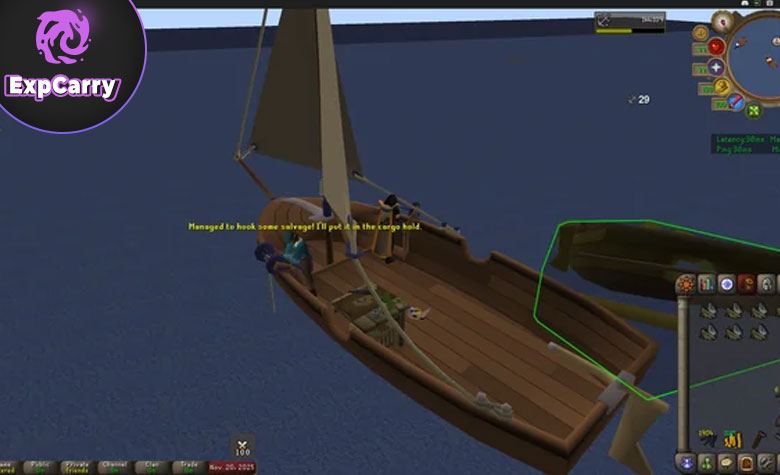
Sailing has five main training styles, and each one fills a different role. Port Tasks are the basic structured method. Sea Charting gives one-time exploration XP. Shipwreck Salvaging is the relaxed AFK-style lane. Barracuda Trials are the fastest active route for focused players. Deep Sea Trawling becomes a hybrid Fishing and Sailing method later in the skill and can be useful for players who care about profit as well as XP.
The best 1-99 Sailing route mixes these methods instead of forcing one activity forever. Early levels are better with quests, port tasks, and charting. Level 15 opens salvaging. Level 30 opens Barracuda Trials and the first real fast XP route. Level 50 brings the Sloop milestone. Level 56 opens Deep Sea Trawling. Level 72 gives access to Gwenith Glide, the strongest high-level active lane. A good route uses each unlock when it starts paying off instead of pretending one method solves the whole ocean.
| Training method | Main use | Player type | Main weakness |
|---|---|---|---|
| Port Tasks | Early and steady Sailing XP, delivery routes, bounty routes | Players who want structured active training | Can feel slow before ship upgrades and better ports |
| Sea Charting | One-time exploration XP and account progression | Players who want early boosts and map discovery | Not a repeatable 1-99 method |
| Shipwreck Salvaging | Relaxed AFK-style XP and useful drops | Players who want low-attention training | Much slower than trials for fast 99 routes |
| Barracuda Trials | Fast repeatable Sailing XP | Players who want high-effort training | Click-intensive and punishing with weak upgrades |
| Deep Sea Trawling | Hybrid Fishing and Sailing training with profit potential | Players who want money and mixed-skill progress | Unlocks later and needs the right ship setup |
Port Tasks keep early Sailing moving
Port Tasks are the first reliable training backbone. You take tasks from notice boards at docks, move cargo or complete assigned routes, and earn Sailing XP for finishing them. Early on, they teach routing, ship handling, loading, unloading, and port-to-port movement. They are not glamorous, but early OSRS skilling rarely is. This is the same game where people have chopped trees for decades and called it culture.
The useful habit is taking efficient routes and avoiding wasted movement. When possible, stack tasks that move in the same direction or can be finished along one route. Upgrading your ship early makes these tasks feel much better because speed, cargo, and handling improvements reduce dead time. Port Tasks can stay viable far beyond the first levels, especially once higher-level ports, better routes, and bounty tasks become available.
Sea Charting gives important one-time Sailing XP
Sea Charting is not a repeatable grind like Barracuda Trials or Salvaging, but it matters because it gives large one-time Sailing XP across the account. The activity sends you to points of interest around the seas, where you complete exploration objectives and fill out your charting progress. Completing all charting activities adds a large chunk of XP, so skipping it makes the early and midgame route worse for no good reason. OSRS players can turn even free XP into an argument, but this one is not complicated.
Sea Charting is best used as a bridge between early port tasks, quests, and the first stronger unlocks. It also gives you a practical reason to learn sea routes instead of staring only at XP rates. Use charting whenever nearby objectives line up with your current port route or when you need a cleaner push into the next Sailing milestone.
Shipwreck Salvaging is the relaxed Sailing lane
Shipwreck Salvaging unlocks at level 15 and becomes the main lower-attention method. You install a salvaging hook, sail to a shipwreck, collect salvage, and either sort or drop it depending on your setup and goal. The method is slower than active trials for fast 99 routes, but it is useful because it lets players train Sailing without constantly steering through timed courses like the ocean owes them rent.
Salvaging improves heavily as you unlock better hooks, better wreck tiers, better ship upgrades, crew members, and the salvage sorting station. It also has unique value because useful drops, cosmetics, and utility items can come from salvaging. Even players who prefer Barracuda Trials should spend enough time salvaging to understand the method and chase key unlocks.
Barracuda Trials are the fast route for focused players
Barracuda Trials become one of the most important fast XP methods once unlocked at level 30. These are ship obstacle courses built around movement, route optimization, crate collection, rank timers, and time pressure. They are much more active than salvaging, but they reward cleaner execution with much stronger XP. This is where Sailing starts feeling less like transport and more like Agility stole a boat and developed an ego.
The three main Barracuda Trials currently scale through the skill: Tempor Tantrum at level 30, Jubbly Jive at level 55, and Gwenith Glide at level 72. Each one rewards learning the layout, improving ship parts, and shaving mistakes from each run. If you want fast Sailing XP in 2026, trials are not optional background content. They are the main active lane.
Deep Sea Trawling adds Fishing, profit, and late-route variety
Deep Sea Trawling unlocks later than the early Sailing methods and works as a hybrid Fishing and Sailing activity. You install the required trawling setup on your ship, navigate to trawling areas, and train while catching valuable fish. It is not the cleanest pure Sailing XP path compared with Barracuda Trials, but it matters for players who want a money-making route and Fishing progress alongside Sailing.
This method belongs in a 2026 Sailing guide because it changes the value of the skill beyond raw XP. If your goal is the fastest 99, trials stay ahead. If your goal is account progression, profit, and mixed training, Deep Sea Trawling deserves a slot in the route once your level and ship setup support it.
Fast OSRS Sailing 1-99 Route for 2026
The strongest Sailing route is built around unlock timing. Early levels should be pushed through Pandemonium, Port Tasks, Prying Times, Current Affairs, nearby charting, and early salvaging. Once better ship upgrades open, improve your boat instead of dragging a weak setup into harder routes. At level 30, Barracuda Trials start giving the skill a much faster active path. Later, higher-level port routes, better salvaging spots, bounty tasks, Deep Sea Trawling, and stronger trials give you several paths depending on attention level.
Fast 1-99 Sailing through Barracuda Trials is roughly a 70-80 hour grind for efficient players. Salvaging is much more relaxed but can take roughly 160 hours. Port Tasks and bounty-heavy routes sit closer to around 100 hours depending on execution, ship setup, and route quality. These numbers are not sacred tablets from the Varrock Museum. Updates, player execution, market conditions, and ship upgrades can all move them, but they give a much better planning baseline than vague phrases like "good XP" and "fast method," which are how bad guides pretend to be useful.
| Level range | Best focus | Main activity | Upgrade priority |
|---|---|---|---|
| 1-12 | Unlock the skill and learn controls | Pandemonium, early Port Tasks, nearby routes | First raft, basic movement comfort |
| 12-15 | Early quest and charting setup | Prying Times, nearby Port Tasks, early Sea Charting | Prepare for skiff and hook progression |
| 15-22 | Stable early XP | Small Shipwreck Salvaging, Port Tasks, charting | Skiff, Bronze Hook, Iron Hook at 21 |
| 22-30 | Quest XP and better routing | Current Affairs, Catherby Port Tasks, Sea Charting, Steel Hook at 27 | Oak Hull, Oak Mast, linen sails, better helm |
| 30-55 | First fast active XP lane | Tempor Tantrum Barracuda Trial, Port Tasks, salvaging when AFK | Iron Helm, oak masts with linen sails, better keel |
| 55-72 | Midgame trial and mixed-profit routes | Jubbly Jive, bounty tasks, Deep Sea Trawling from 56, stronger salvaging | Mithril Helm, inoculation station, Sloop, cannon and cargo upgrades |
| 72-99 | High-level active or relaxed training | Gwenith Glide, high-level salvaging, advanced bounties, Deep Sea Trawling | Adamant Keel, Crystal Extractor, high-tier hooks, strong facilities |
Levels 1-30: build the ship before chasing speed
The early route should be simple. Complete Pandemonium, do early Port Tasks, complete Prying Times once available, use early Sea Charting for one-time XP, unlock salvaging at level 15, and move toward stronger hooks and ship upgrades before level 30. Current Affairs around the low 20s gives useful progression and helps the route feel less like repeatedly sailing between two docks while wondering if this is technically gameplay.
At this stage, focus on the parts that affect every later method: hull, mast, sails, helm, keel, and salvaging hook. Better movement and durability make every later activity smoother. If you plan to use trials at level 30, prepare the required ship parts before you arrive. Starting Barracuda Trials with poor upgrades is technically possible in the same way fighting Jad with panic is technically possible.
Levels 30-72: trials become the main XP engine
Level 30 is the point where Sailing changes pace. Tempor Tantrum introduces the first major Barracuda Trial, giving much better active XP for players willing to learn the course. From here, the best route depends on attention level. Focused players should prioritize trials and upgrade their ships around them. More relaxed players can rotate salvaging, port tasks, and charting while using trials when they want faster progress.
By level 50, Sloop access becomes a major milestone because a larger, stronger ship improves activity comfort, storage, crew use, and facility options. Level 55 opens Jubbly Jive, and level 56 opens Deep Sea Trawling. This is where Sailing stops feeling like the tutorial is still holding your ankle and starts becoming a real account system with distinct routes for XP, profit, AFK progress, and combat.
Levels 72-99: Gwenith Glide, high-tier salvage, and late upgrades
High-level Sailing opens the best active and relaxed options. Gwenith Glide becomes the premier high-level Barracuda Trial route, while late-tier salvaging spots give much stronger AFK-style XP than early shipwrecks. High-level Port Tasks, bounties, and Deep Sea Trawling also become more worthwhile because your ship can finally handle longer routes, stronger enemies, and heavier facility setups.
The Crystal Extractor is a major late-game facility because it adds repeatable Sailing XP while installed and used properly. High-level hooks, better hulls, stronger sails, better keels, and stronger ship facilities all matter here. The final stretch to 99 is not about one magic method. It is about using your preferred balance of speed, attention, profit, and unlock value without turning the last 20 levels into a spiritual endurance crime.
OSRS Sailing Ship Upgrades That Carry the Route
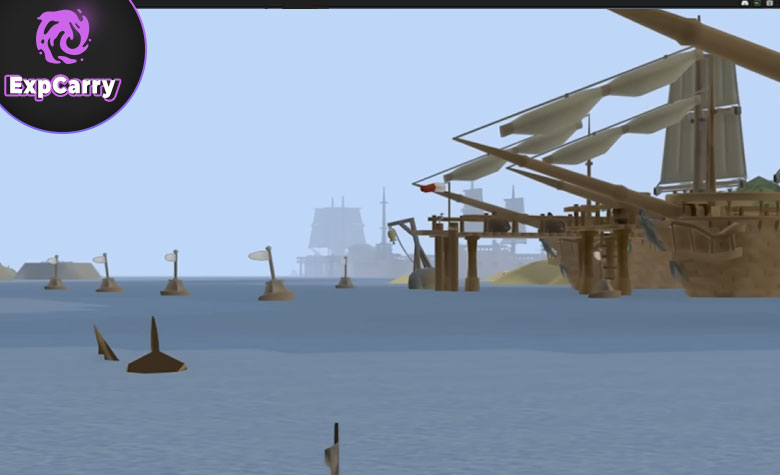
Sailing is not trained only through your character. It is trained through your ship. A weak ship makes good methods feel worse, while smart upgrades make the same methods faster, safer, and smoother. The most important upgrades are usually the ones that affect movement, durability, cargo, and activity-specific tools. The fancy parts can wait until the basics stop being embarrassing.
Hull and keel upgrades matter because they affect speed, defence, and how much punishment your ship can take. Mast and sails matter because movement and wind boosts affect almost every task. Cargo upgrades matter for Port Tasks and longer routes. Salvaging hooks matter for Shipwreck Salvaging. Cannons and combat upgrades matter for bounty tasks and sea combat. Facilities matter once you start building a ship that supports long-term training instead of merely floating.
| Upgrade type | Main benefit | Best timing | Priority |
|---|---|---|---|
| Hull | Speed, ship durability, smoother travel | Early and every major tier | Very high |
| Mast and sails | Wind boost strength, acceleration, route efficiency | Early, before longer tasks and trials | Very high |
| Helm | Access to rougher waters and better handling | Before trials and dangerous routes | High |
| Keel | Ship armour, defence, survivability | Before trials and combat routes | High |
| Cargo hold | More efficient Port Tasks and hauling | Before serious task grinding | High |
| Salvaging hook | Faster salvaging XP and better comfort | Whenever a new meaningful tier unlocks | High if salvaging |
| Cannons | Better bounty tasks and sea combat | Before combat-focused Sailing | Medium to high |
| Ship facilities | Training utility, storage, speed tools, trawling support | Midgame and high levels | High once unlocked |
Hull, mast, sails, helm, and keel define efficiency
The boring structural upgrades are the ones that make Sailing feel good. Hull, mast, sails, helm, and keel upgrades reduce friction in almost every method. Your routes become faster, your ship survives more comfortably, and your trial runs become less punishing. These upgrades are not cosmetic. They are the backbone of efficient Sailing.
If your XP feels terrible, check your ship before blaming the method. A slow boat makes Port Tasks drag. A fragile boat makes trials annoying. A weak helm or keel makes dangerous waters feel worse. This is OSRS, so the answer is often not glamorous. It is usually "upgrade the thing you ignored because it sounded boring."
Crew and facilities turn the ship into a real tool
Crew members and ship facilities become more important as your ship grows. Crew can support ship activities and reduce the burden of managing everything yourself. Facilities such as cargo holds, salvaging tools, sorting stations, trawling nets, teleport focus upgrades, wind storage, and the Crystal Extractor improve training flow and reduce wasted movement. The stronger your ship becomes, the less Sailing feels like isolated activities and the more it feels like building a mobile skilling hub.
Do not treat crew and facilities as flavor text. They are part of progression. A better ship setup can change which methods feel worth doing, especially for salvaging, Deep Sea Trawling, longer tasks, and high-level routes. The player who upgrades intelligently spends more time earning XP and less time fighting their own boat like it owes them money.
Barracuda Trials Route for Fast Sailing XP
Barracuda Trials are the strongest active training identity of Sailing. They take the movement system and turn it into timed sea courses with objectives, obstacles, crate collection, rank targets, and route pressure. The better your ship and execution, the better the method feels. The worse your steering, the more the ocean starts to look personally offended.
The three current trials create natural progression. Tempor Tantrum starts the system at level 30. Jubbly Jive pushes the midgame route further at level 55. Gwenith Glide gives high-level players one of the strongest active XP methods in the skill at level 72. Each trial is worth learning because first-time rank completions provide strong XP bursts and useful rewards, while repeat runs become the long-term fast training lane.
| Barracuda Trial | Unlock level | Training role | Preparation focus |
|---|---|---|---|
| Tempor Tantrum | 30 Sailing | First major active XP method | Iron Helm, oak masts with linen sails, stronger keel and hull |
| Jubbly Jive | 55 Sailing | Midgame active XP upgrade | Inoculation station, Mithril Helm, faster ship parts |
| Gwenith Glide | 72 Sailing | High-level active XP route | Adamant Keel, strong ship setup, clean routing, late-game facilities |
Trial performance comes from routing, not panic clicking
The best trial improvement comes from learning the course instead of reacting randomly. Memorize turns, crate paths, obstacle timing, wind boosts, and ship movement. Upgrade your speed and durability before judging the method. A bad setup makes a good method feel miserable, and a bad route makes a good setup look worse than it is.
New players should not obsess over perfect times immediately. First, complete the trial. Then improve the route. Then chase better ranks. Trying to speedrun before understanding the course is not ambition. It is just failure at a higher actions-per-minute rate.
Shipwreck Salvaging for AFK Sailing XP
Shipwreck Salvaging is the calmer side of Sailing. It starts at level 15 and scales through better wrecks, better hooks, better facilities, crew support, and higher-level sea areas. The basic loop is simple: find a shipwreck, use the salvaging hook, gather salvage, then sort or drop it depending on your method. This makes salvaging useful for players who want Sailing progress while watching something else, working on another screen, or pretending they are not still playing RuneScape in 2026.
The method is not the fastest, but it is one of the most comfortable. It also has unique drops and utility value, including important Sailing unlocks that make the rest of the skill smoother. If your goal is 99 as fast as possible, trials will take more of your attention. If your goal is steady progress without exhausting yourself, salvaging deserves a major place in the route.
| Level | Salvaging unlock | Use | Route note |
|---|---|---|---|
| 15 | Small shipwrecks and Bronze Hook | First AFK Sailing method | Slow, but useful for relaxed early progress |
| 21 | Iron Hook | Better early salvaging speed | Install it if you plan to salvage often |
| 26-27 | Fisherman's shipwrecks and Steel Hook | Stronger early-midgame salvaging | Good bridge into level 30 if you dislike tasks |
| 35 | Barracuda shipwrecks | Better wreck tier | Needs stronger ship parts for rougher waters |
| 42 | Salvage sorting station | Better AFK flow and easier sorting | Major quality-of-life upgrade |
| 64 | Pirate shipwrecks | Mid-high salvaging | Useful relaxed alternative to trials |
| 73 | Mercenary shipwrecks and Crystal Extractor access | Stronger XP and late-game utility | Crystal Extractor adds extra active XP |
| 80 | Fremennik shipwrecks | High-level salvage route | Useful drops make the method more attractive |
| 87 | Merchant shipwrecks | Top-end salvaging | Best late salvaging tier for long AFK sessions |
Hook upgrades make salvaging worth revisiting
Every meaningful hook upgrade improves salvaging comfort and speed. Bronze gets you started, iron and steel make early salvaging less miserable, and later hooks make the method much smoother. The dragon salvaging hook exists as a high-end option, but it can be expensive and is not always worth rushing if the price is inflated compared with the XP gain.
Later salvaging also benefits from ship facilities. A sorting station reduces movement and improves AFK flow. Crew members can support longer sessions on larger boats. High-level salvaging spots offer better XP and more useful rewards. This turns salvaging from an early fallback into a serious long-term option for players who prefer relaxed training.
Deep Sea Trawling in the 2026 Sailing Route
Deep Sea Trawling unlocks at level 56 and gives Sailing a route that is not just about racing, hauling, or salvaging. It combines Sailing with Fishing by using a trawling setup on your ship and working specific sea areas for fish and XP. The main appeal is not maximum Sailing XP. The appeal is mixed training, profit potential, and a route that feels different from repeating Barracuda Trials until your mouse files a complaint.
Players focused only on the fastest Sailing 99 should treat Deep Sea Trawling as optional. Players who want account progression should take it more seriously. It lets you build value while training, and it gives Sailing a money-making identity beyond salvage drops and bounty rewards. As always, check current Grand Exchange prices before calling any trawling method "best profit," because OSRS markets change faster than guide writers update their old paragraphs.
Trawling belongs after the ship is ready
Deep Sea Trawling feels better when your ship already has the right facilities, movement upgrades, and enough comfort to support longer sea activity. Do not rush into it with a weak boat and then decide the method is bad. That is not testing the activity. That is testing your patience against your own poor setup.
The clean use case is simple: use trials for fast XP, salvaging for relaxed XP, port and bounty tasks for structure and combat, and Deep Sea Trawling when Fishing XP, profit, and mixed progression matter. Sailing is broad enough that a single-method route is rarely the smartest route for every account.
Port Tasks, Bounties, and Sea Charting in 2026
Port Tasks remain the most straightforward Sailing loop. Courier-style tasks are easy to understand, scale through better ports and routes, and work well when your ship has decent speed and cargo upgrades. If you enjoy structured objectives, Port Tasks can carry a large part of your Sailing progression, especially when you learn efficient routes and avoid pointless backtracking.
Bounty tasks bring ship combat into the skill and become more relevant once your ship has stronger cannons, durability, cargo space, and crew support. Sea Charting adds exploration value and gives players a reason to move through the ocean beyond direct XP loops. Together, these methods make Sailing feel less like one minigame and more like a full travel, combat, and activity layer across the game.
Bounty tasks need ship combat preparation
Bounty tasks are not the place to ignore ship durability. Better cannons, stronger hulls, reliable keels, cargo space, and good combat support matter because your ship has to survive the encounter while dealing damage. A weak combat setup turns bounties into slow repairs and regret. A prepared setup makes them a useful change of pace from trials and hauling routes.
Use bounties when your ship is ready for them, not just when they unlock. This is the same logic as PvM gear progression on land. Unlocking content does not mean your setup is good. It means the game is now willing to let you embarrass yourself there.
Sailing Rewards That Change Your Account
Sailing rewards matter because they are not limited to XP. The skill gives access to new ships, new areas, ship facilities, crew systems, resource routes, sea activities, useful items, utility unlocks, and the Sailing pet. This makes the skill more account-shaping than a narrow production skill. Higher Sailing can improve movement, unlock training options, and open ocean-based content that did not exist before.
The most useful rewards are the ones that improve your ship or unlock better training flow. Better boats, better facilities, salvaging tools, crew options, and sea content all feed back into progression. Some rewards are cosmetic or collection-focused, but many directly affect comfort and efficiency. This is where Sailing earns its place as a real skill rather than "Agility but wet."
| Reward type | Value | Best reason to chase it |
|---|---|---|
| New ship tiers | Better movement, durability, capacity, and facility space | Improves nearly every Sailing method |
| Ship facilities | Extra utility for training and long routes | Reduces friction and improves XP flow |
| Crew members | Support for ship activities | Makes longer or more complex content smoother |
| Salvaging unlocks | Better hooks, stations, utility drops, and rare rewards | Improves relaxed training and account utility |
| Barracuda rewards | Trial progression, useful items, speed tools, and cosmetics | Supports fast active Sailing training |
| Deep Sea Trawling rewards | Fishing progress, valuable fish, and profit potential | Gives Sailing a mixed skilling and money route |
| Soup pet | Rare Sailing pet | Collection value and flex rights |
The Sloop milestone changes the skill's feel
The Sloop is one of the biggest progression milestones because it gives a larger and stronger ship foundation. More space, better durability, and broader facility use make training smoother. The skill feels much more open once you are no longer locked into early-ship limitations.
For many players, reaching the Sloop tier should be the first major Sailing target after the level 30 trial unlock. It improves comfort for trials, port tasks, bounties, salvaging, and longer routes. If the early skill feels awkward, keep pushing to stronger ship tiers before writing Sailing off completely. Early OSRS progression often feels like punishment before it becomes useful. Tradition, apparently.
Sailing Money Making and Account Progression
Sailing money making in 2026 depends heavily on method, market prices, and account level. Salvaging can produce useful materials, rare utility drops, seeds, cannon-related items, coins, and other rewards depending on the wreck tier. Deep Sea Trawling can be profitable when the fish and materials are valuable. Bounty tasks can generate combat rewards and give variety when your ship is ready. Port Tasks and sea activities can feed progression through resources, unlocks, and route access.
Players chasing GP should avoid outdated price claims. Sailing is new enough that markets can shift quickly when players discover better routes or Jagex adjusts content. Check Grand Exchange prices before committing to one money method. A guide can tell you which methods matter. It cannot protect you from blindly copying a price from three months ago like a financial fossil.
Profit comes after the ship stops being weak
Early Sailing is mostly about unlocking the system and improving your ship. Serious profit becomes more realistic once you have better movement, cargo, combat tools, facilities, and access to higher-level methods. Before that point, treating Sailing as a pure money maker can feel underwhelming because you are still building the platform that makes the skill efficient.
The smarter approach is to train Sailing as progression first and profit second. Unlock better ships, improve facilities, learn trials, understand salvaging tiers, and test trawling when your level supports it. Once your ship can handle better activities, then start optimizing for GP. It is the same logic as combat. You do not farm endgame bosses with starter gear unless your goal is content for someone else's comedy channel.
Sailing Traps That Slow Down the 2026 Grind
The biggest Sailing trap is ignoring ship upgrades. A player with bad ship parts will always feel slower, weaker, and more annoyed than someone who invests at the right milestones. The second trap is forcing one method forever. Salvaging is comfortable, but not always fast. Trials are fast, but not always relaxing. Port Tasks are reliable, but they need good routing. Deep Sea Trawling has value, but it is not a pure fastest-99 method. Use the method that fits your level, ship, and attention.
The third trap is treating Sailing like a normal bank skill. You are not standing at a furnace or cutting logs beside the same three bots for eight hours. You are moving through routes, managing a ship, upgrading parts, unlocking facilities, using crew, and choosing methods based on activity type. Planning matters more here. Bring materials before upgrades, prepare the ship before trials, and stop sailing halfway across the ocean just to remember that your required item is still in the bank, where your dignity used to be.
Materials and routes deserve planning
Before any major upgrade session, check the required materials and bring them together. Planks, nails, bars, ropes, cloth, logs, tools, and other shipbuilding materials can waste time if you forget one piece. The same applies to route planning. If you are doing Port Tasks, avoid random backtracking. If you are doing trials, prepare the ship before starting. If you are salvaging, use the best hook and location available. If you are trawling, make sure the ship setup actually supports the method.
This sounds obvious because it is. OSRS players still ignore obvious things with heroic consistency, so it needs saying. Sailing rewards preparation more than improvisation.
OSRS Sailing 2026 Route for Different Players
The best Sailing method depends on the type of player. Fast XP players should lean into Barracuda Trials and optimized Port Tasks. Relaxed players should spend more time with salvaging and low-attention routes. Profit-focused players should test salvaging, bounties, and Deep Sea Trawling against current prices. Completion-focused players should mix everything because unlocks, rewards, cosmetics, and pet chances come from different activity types. Ironmen should value utility unlocks and ship progression even more because Sailing rewards can reduce future friction across the account.
| Player type | Best Sailing route | Main priority |
|---|---|---|
| Fast XP player | Barracuda Trials, strong ship upgrades, high-level tasks | Route mastery and active training |
| AFK player | Shipwreck Salvaging with hook and facility upgrades | Comfort and steady progress |
| Profit player | Deep Sea Trawling, high-level salvaging, bounties | Current prices, valuable drops, and efficient setup |
| Ironman | Balanced route with salvaging, upgrades, charting, and unlocks | Self-sufficient materials and utility rewards |
| Casual main | Port Tasks, salvaging, occasional trials, trawling when useful | Progress without burnout |
| Collection player | All activity types across the skill | Pet, cosmetics, unlocks, and rare rewards |
If you only care about 99, train actively through trials whenever possible and use salvaging when you want a break. If you care about long-term account value, do not skip utility unlocks just because they are not the fastest XP. Sailing is broad enough that a balanced route gives better account progression than blindly chasing one number.
OSRS Sailing Updates to Watch in 2026
Sailing is still young by OSRS standards, which means the 2026 route may shift as Jagex adds more sea content, balance changes, rewards, and activity expansions. New port task types, ship combat improvements, quest follow-ups, sea bosses, player-designed island content, and future Barracuda Trial additions can all change which methods feel best at certain levels.
This does not make the current route useless. It means the strongest version of the guide should be treated as a living route, not a carved monument to patch-day assumptions. The safe foundation is still the same: unlock Sailing, train through early tasks and charting, upgrade your ship, use salvaging for relaxed XP, use trials for speed, add Deep Sea Trawling and bounties when your ship supports them, and recheck new content when major Sailing updates land.
The Best OSRS Sailing Guide 2026 Route
The cleanest OSRS Sailing route in 2026 is Pandemonium into early Port Tasks, then Prying Times and Sea Charting, then salvaging at level 15, then better port routes and ship upgrades through the 20s, then Barracuda Trials from level 30 onward. From there, build toward the Sloop milestone, keep upgrading the ship, use Jubbly Jive and later Gwenith Glide for active XP, rotate high-level salvaging when you want relaxed progress, and add Deep Sea Trawling or bounties when profit or variety matters.
The most important rule is simple: do not separate training from ship progression. Your ship is the skill. Every major upgrade affects the quality of your route. Better movement improves tasks. Better durability improves trials and bounties. Better hooks improve salvaging. Better facilities improve comfort. Better trawling setup opens hybrid profit routes. Sailing becomes much better once you stop treating upgrades as optional decorations.
OSRS Sailing Guide 2026 Conclusion
OSRS Sailing in 2026 is worth training because it gives Old School RuneScape something genuinely different: a progression system built around movement, exploration, shipbuilding, sea activities, hybrid skilling, combat routes, and account unlocks. It does not feel like another skill where you stand beside a bank and slowly become a worse version of yourself. It asks you to build a ship, use it properly, and move through new parts of the world.
The best path is not complicated. Complete Pandemonium, upgrade early, use Port Tasks, Prying Times, Current Affairs, and Sea Charting to reach the first milestones, then push Barracuda Trials once your ship can handle them. Keep improving hull, mast, sails, helm, keel, cargo, hooks, crew, and facilities as soon as they matter. By the time you reach higher levels, Sailing becomes much smoother because your ship finally supports the activities the skill wants you to do.
If you want fast XP, master trials. If you want relaxed progress, salvage. If you want profit and mixed skilling, use Deep Sea Trawling and higher-level activities when prices justify the time. If you want useful account progression, mix methods and chase ship upgrades instead of staring only at XP rates. Sailing rewards players who plan their route and maintain their ship. It punishes players who ignore upgrades, forget materials, and sail into high-level content with the nautical equivalent of a shopping cart.
The smartest 2026 approach is flexibility. Sailing will keep receiving updates, and some activities will become better or worse as routes, rewards, and market prices settle. A strong account should not rely on one frozen method forever. Build the ship, unlock the tools, learn the trials, use relaxed methods when needed, and revisit new Sailing content as it arrives. In other words, it is still Old School RuneScape. The ocean is new, but the consequences are wonderfully ancient.