
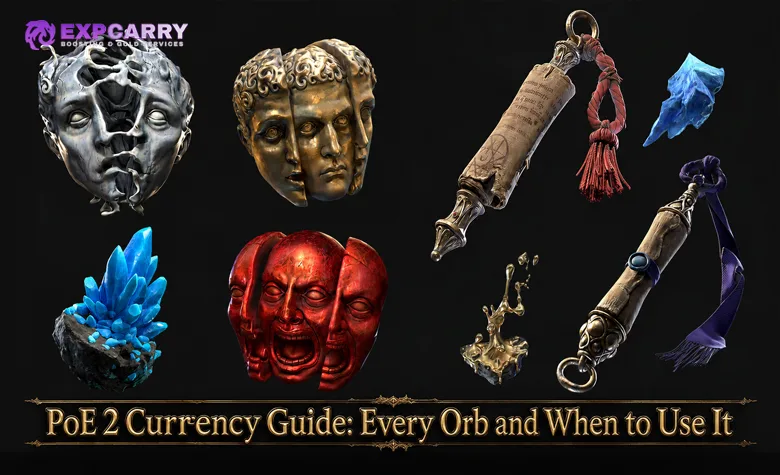
PoE 2 currency should be spent according to the value of the item receiving it. Common Orbs are useful for campaign upgrades and Waystones, while Greater, Perfect, Divine, Fracturing, and specialised corruption currencies belong on bases that could remain valuable after a successful result. A powerful Orb cannot repair the wrong base type, insufficient item level, poor socket potential, or several useless modifiers.
Before crafting, decide whether the item is disposable gear, a promising project, or a finished item needing one controlled improvement. Use cheap currency to test ordinary bases, keep rare currency until the possible result justifies its market value, and compare the item with trade alternatives before committing an irreversible step.
Check the Item Base Before Spending Currency
The base determines the item's inherent damage, attack speed, defences, requirements, and which modifiers it can roll. Item level controls access to modifier tiers, while the existing prefixes and suffixes determine which additions are still possible. Rare equipment normally supports up to six random explicit modifiers divided between prefixes and suffixes, although special items and mechanics can alter those limits.
| Check | Why it matters | Reason to stop crafting |
|---|---|---|
| Correct base type | Sets the weapon speed, damage profile, armour class, and implicit properties | A different base provides clearly better fundamentals for the build |
| Item level | Controls which modifier tiers can appear | The desired modifier cannot roll at the item's level |
| Existing modifiers | Determine whether the project already has valuable prefixes or suffixes | Several occupied slots provide no useful value |
| Open affix space | Required by additive currency such as Exalted Orbs | The item is full or only the wrong affix type remains available |
| Quality and sockets | Affect base values and the cost of finishing the item | The complete upgrade costs more than replacing the item |
| Trade value | Establishes the opportunity cost of consuming the Orb | Selling the currency buys a stronger finished item |
Attack weapons need particular care because a high percentage damage modifier cannot compensate for a weak base weapon. Armour should match the build's actual defensive layer, and jewellery should begin with an implicit the character needs. Do not use expensive currency simply because an item is Rare or has one attractive modifier.
Modifier wording and available crafting families continue to change during Early Access. The official Path of Exile 2 item changes explain the current Greater and Perfect currency tiers, guaranteed crafted-modifier rules, and other revisions that can invalidate an older crafting route.
Basic Orbs for Normal and Magic Items
The first currency group creates a foundation. These Orbs are common enough to use during progression, but the finished item should still solve an immediate problem. Stop as soon as the result is worse than a vendor, quest reward, or inexpensive trade replacement.
| Currency | Effect | Use, keep, or trade |
|---|---|---|
| Orb of Transmutation | Upgrades a Normal item to Magic with one random modifier | Use on campaign equipment, flasks, and Waystones when one useful modifier is enough to continue |
| Orb of Augmentation | Adds a random modifier to a Magic item with room for one | Use after the first Magic modifier is useful; do not spend it trying to rescue a bad first roll |
| Orb of Alchemy | Upgrades a Normal or Magic item to Rare with four random modifiers | Use on a good base or a Waystone whose complete modifier set can be checked before running |
| Orb of Chance | Either upgrades an eligible Normal item to Unique rarity or destroys it | Keep until the exact base has a valuable possible Unique outcome and losing the base is acceptable |
PoE 2 does not use an Orb of Alteration as the normal method for repeatedly rerolling Magic items. If the Transmutation or Augmentation result is poor, starting again with another base is often the correct low-cost decision. This makes clean bases worth collecting during leveling and early mapping.
An Orb of Alchemy is fast but uncontrolled. It is efficient for Waystones and replaceable equipment, yet risky on a scarce endgame base because all four starting modifiers are random. Use a staged Transmutation, Augmentation, and Regal route when seeing the early modifiers before continuing matters more than speed.
Regal, Exalted, Chaos and Annulment Crafting
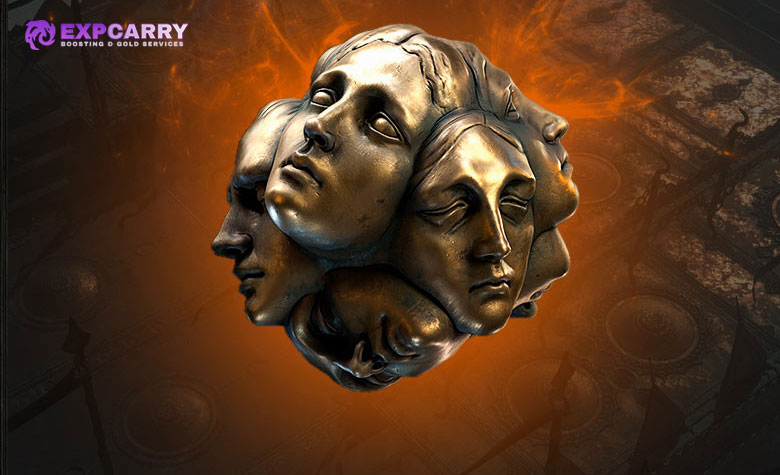
These Orbs work on Magic or Rare items and create the main decision point in conventional crafting. The correct sequence depends on whether the item needs an additional modifier, a replacement, or the removal of a bad line. None of these operations guarantees the modifier type unless another current mechanic explicitly changes the outcome.
| Currency | Effect | Best use |
|---|---|---|
| Regal Orb | Upgrades a Magic item to Rare and adds one random modifier | Continue a Magic item that already has two strong or strategically useful modifiers |
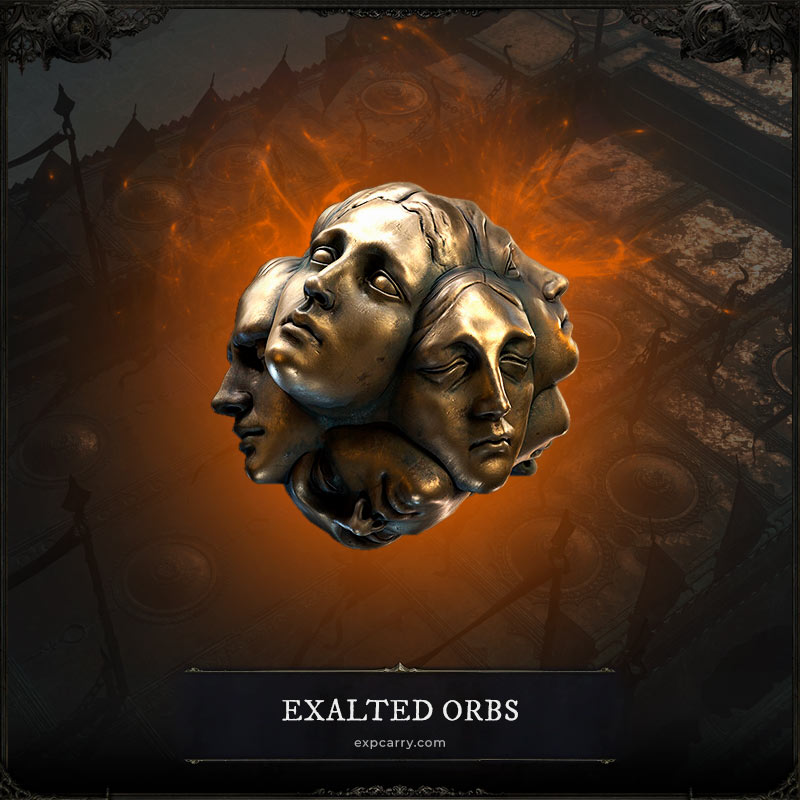
| Exalted Orb | Adds a random modifier to a Rare item with an open affix slot | Fill space on a useful item when several possible outcomes would be acceptable |
| Chaos Orb | Removes one random modifier from a Rare item and adds another random modifier | Replace a weak line only when the item can survive losing any unprotected modifier |
| Orb of Annulment | Removes one random modifier from an item | Open a blocked affix slot on a valuable project when the chance of deleting a good modifier is justified |
A Chaos Orb is not a complete reroll in PoE 2. It performs a random remove-and-add operation, so it can delete the best modifier and replace it with something worse. Use it when the project contains a clear bad line but still has enough value to continue, not as a default way to repair every Rare drop.
An Exalted Orb should be judged by the pool of possible additions. If only one rare outcome improves the item while most rolls are useless, selling or trading the Orb is normally safer. If several prefixes or suffixes would produce an upgrade, an Exalted attempt has a more reasonable practical ceiling. Players who need additional crafting or trade stock can use the specific PoE 2 Exalted Orbs option rather than a general service unrelated to the currency.
Annulment is a destructive correction, not a cleanup button. Count every existing modifier before using it and assume the Orb can remove the most valuable one. Omens can alter certain future currency outcomes when their wording applies, but the Omen, Orb, item type, and affix state must all match the planned operation.
Explore services related to this guide, selected from our Path of Exile 2 catalog.
View All Path of Exile 2 Services


Greater and Perfect Currency Tiers
Greater and Perfect versions do not choose a specific modifier. They perform the same general operation as their basic counterpart while enforcing a minimum modifier level on the new roll. This removes low-level results from the eligible pool but does not guarantee the correct stat, affix family, or highest possible tier.
| Currency family | Greater minimum modifier level | Perfect minimum modifier level |
|---|---|---|
| Orb of Transmutation | 44 | 70 |
| Orb of Augmentation | 44 | 70 |
| Regal Orb | 35 | 50 |
| Exalted Orb | 35 | 50 |
| Chaos Orb | 35 | 50 |
Use Greater currency when the base is already suitable for late campaign or early endgame crafting and a low modifier tier would waste the attempt. Perfect currency belongs on high-item-level projects with strong existing value. The minimum modifier level matters only to the modifier being added; it does not upgrade the item's old modifiers or prevent the random removal performed by a Greater or Perfect Chaos Orb.
Do not spend Perfect Transmutation or Augmentation currency on an item that cannot roll the desired modifier because of its base type or item level. The currency filters the tier of eligible new modifiers, but the item still controls which modifiers are eligible in the first place.
Divine, Fracturing, Vaal and Mirror Currency
The following Orbs are usually more valuable because they modify an advanced project, lock an important property, or create an irreversible result. Their use should begin with a price check and a clear stopping rule.
| Currency | Effect | When to use it |
|---|---|---|
| Divine Orb | Randomises the numeric values of an item's modifiers within their permitted ranges | Use when the modifier combination is already valuable and better values materially improve the item |
| Fracturing Orb | Fractures a random modifier on a Rare item with at least four modifiers and locks it in place | Use when one or more existing modifiers are worth preserving through later crafting |
| Vaal Orb | Changes an item unpredictably and Corrupts it | Use only when the item is finished or when every acceptable corruption outcome justifies losing normal modification access |
| Mirror of Kalandra | Creates a Mirrored copy of an item | Keep or trade unless the target is an exceptional finished item worth more than the Mirror opportunity cost |
| Hinekora's Lock | Reveals the result of the next currency operation until the item is otherwise modified | Reserve for extremely valuable projects where previewing one risky step is economically justified |
A Divine Orb does not replace modifier types or raise their tiers. It only rerolls numeric values allowed by the existing modifiers, so a low-tier Life modifier remains low-tier Life. Compare the possible improvement with the Orb's current trade value. If the item is not close to finished, save the Divine for trade or a stronger project. A specific PoE 2 Divine Orbs option is relevant only when the player already has an item worth rerolling or needs the currency for trade.
Fracturing is strongest when multiple acceptable outcomes exist. If an item has one valuable modifier and several bad ones, the random fracture is unlikely to create a good foundation. Improve the candidate pool first or sell the Orb. Current access to Fracturing Orbs can also depend on Atlas specialisation.
Corruption ends normal crafting access. Quality, sockets, modifier values, and all planned conventional steps should therefore be completed before applying a Vaal Orb unless the entire purpose is to gamble on changing an otherwise unusable item. Never corrupt gear currently holding the build together without a replacement ready.
Socket, Quality and Special Endgame Currency
Not every valuable currency changes prefixes and suffixes. Socket and quality currencies improve the structure or base values of equipment, flasks, and gems. Their value depends on whether the underlying item will remain equipped long enough to justify finishing it.
| Currency | Effect | Spending rule |
|---|---|---|
| Artificer's Orb | Adds an Augment Socket to eligible Martial Weapons, wands, staves, or Armour | Use on equipment worth keeping and only after checking the intended Rune, Soul Core, or other Augment |
| Lesser Jeweller's Orb | Sets an eligible Skill Gem or granted skill to three Support Gem Sockets | Use when three supports create an immediate functional upgrade |
| Greater Jeweller's Orb | Sets an eligible Skill Gem or granted skill to four Support Gem Sockets | Keep for the main skill or a persistent setup with a proven fourth support |
| Perfect Jeweller's Orb | Sets an eligible Skill Gem or granted skill to five Support Gem Sockets | Reserve for a final main skill because the fifth support must justify the currency and resource cost |
| Gemcutter's Prism | Improves the quality of a Skill Gem | Read the gem's specific quality effect before investing |
| Blacksmith's Whetstone | Improves the quality of a Martial Weapon | Use when higher base physical damage contributes to the skill |
| Arcanist's Etcher | Improves the quality of a wand, staff, or sceptre | Use only when the item's quality effect benefits the build |
| Armourer's Scrap | Improves the quality of Armour | Use on a stable defensive item before expensive or irreversible finishing steps |
| Glassblower's Bauble | Improves the quality of a Flask | Finish a Flask only after its base and modifiers match the intended role |
More Support Gem Sockets do not automatically improve a skill. Additional supports can raise Mana, Life, or Spirit requirements and may alter behaviour the build does not want. Plan the complete support package before consuming a Greater or Perfect Jeweller's Orb.
The current rules allow Greater and Perfect Jeweller's Orbs to affect eligible skills granted by items, including items with multiple granted skills. Confirm which skills on the item will change before applying the Orb.
Fate of the Vaal and other endgame systems add specialised currency that should not be treated like general crafting stock. These items have narrow valid targets and often destroy, corrupt, or remove part of the item being modified.
| Currency | Target and effect | Safe decision |
|---|---|---|
| Architect's Orb | Modifies a Corrupted equipment item or Jewel unpredictably and can destroy it | Use only on a replaceable target with valuable advanced outcomes |
| Vaal Cultivation Orb | Replaces modifiers on a Corrupted Vaal Unique or transforms another eligible Unique within its item class | Check the target's possible Cultivated outcomes before use |
| Orb of Extraction | Destroys equipment and returns socketed Augments that are not Socket-bound | Use when the recoverable Augments are worth more than the equipment being destroyed |
| Yaomac's Orb of Sacrifice | Upgrades a Corruption Enchantment on a Rare Weapon or Quiver and removes a random modifier | Prepare an item that can survive losing one explicit modifier |
| Kopec's Orb of Sacrifice | Upgrades a Corruption Enchantment on Rare Armour and removes a random modifier | Do not use when every current defensive modifier is essential |
| Kamasa's Orb of Sacrifice | Upgrades a Corruption Enchantment on a Rare Amulet, Ring, or Belt and removes a random modifier | Verify attributes and resistances will remain functional after any possible removal |
| Yugul's Orb of Sacrifice | Upgrades a Corruption Enchantment on a Rare Jewel and removes a random modifier | Use only when the enchantment upgrade can outweigh the lost Jewel modifier |
The four Orbs of Sacrifice were added to Atziri's reward pool in the official 0.5.4 update. Their cost includes a random explicit-modifier removal, so the correct target is not simply the most expensive corrupted item. It is an item with a worthwhile Corruption Enchantment and enough remaining strength to survive the sacrifice.
Which Orbs to Use, Keep or Trade
Currency value changes with the league economy, so fixed exchange ratios become obsolete quickly. Decide from function and replacement cost. Common progression currency is usually worth using when it creates an immediate upgrade, while rare currency should be priced before every serious craft.
| Decision | Typical currency | Rule |
|---|---|---|
| Use freely on suitable progression items | Basic Transmutation, Augmentation, quality currency, and selected Alchemy Orbs | Spend when the result solves a current campaign or mapping problem |
| Use after evaluating the project | Regal, Exalted, Chaos, Artificer's, and Lesser Jeweller's Orbs | Continue only when several possible results improve the item |
| Keep until a strong base appears | Greater and Perfect currency, Greater and Perfect Jeweller's Orbs | The base, item level, and existing modifiers must justify the filtered roll |
| Price before using | Divine, Annulment, Fracturing, Chance, specialised Vaal currency, and Hinekora's Lock | Compare the expected craft with the finished item obtainable through trade |
| Usually trade or preserve | Mirror of Kalandra | Do not consume it on an item that is merely good |
Set a budget and a stopping condition before the first click. A sensible project might stop when the Regal result misses, when an Annulment removes the key modifier, or when the next Exalted attempt costs more than a finished replacement. Continuing because currency has already been spent is how an inexpensive base consumes an endgame budget.
Conclusion
The safest currency strategy is to match the Orb to the maturity of the item. Build disposable gear with common currency, advance promising Magic items through controlled steps, and reserve high-tier or irreversible Orbs for bases with the correct item level, fundamentals, and existing modifiers. Trade is the better outcome whenever selling the currency purchases a stronger finished item than the likely craft.
Sort the stash into progression, project, and trade currency, then inspect the intended base before crafting. If the item fails the base type, item level, open-affix, or replacement-cost check, keep the Orb. The decision not to click is often the most valuable crafting action available.