



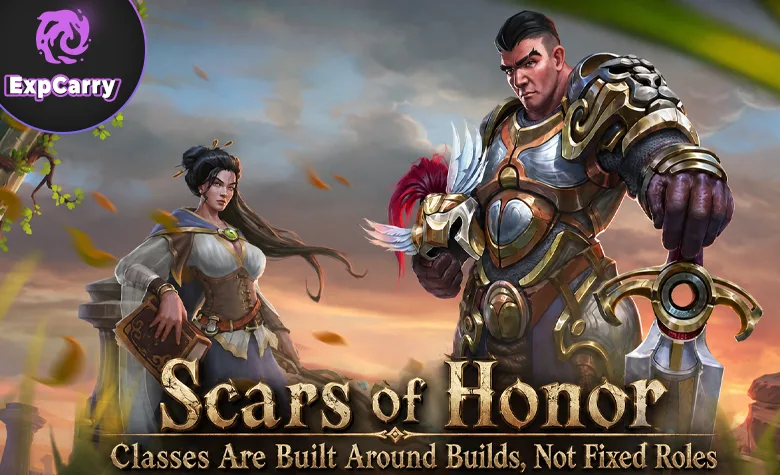
Scars of Honor is building its class system around flexible character identity rather than rigid one-button role labels. The game currently presents ten planned classes: Warrior, Paladin, Priest, Mage, Necromancer, Mystic, Ranger, Druid, Assassin, and Pirate. Each class is tied to its own combat style, weapon identity, talent direction, and personal Scars, with the wider system designed to support different builds inside the same class instead of locking every player into one narrow template.
The important warning is simple: Scars of Honor is still in development, so these classes should not be treated as finished live-game balance. The first large Steam playtest focuses on only four playable classes: Paladin, Mage, Ranger, and Druid. The other classes are part of the announced wider class lineup, but their final PvE strength, PvP balance, tuning, rotations, talent interactions, and full Scar combinations are not settled publicly yet. So the useful approach is not a fake tier list. The useful approach is a role-by-role breakdown of what each class appears designed to do in PvE and PvP based on its official fantasy, known systems, and the game's current public test structure.
Scars of Honor Classes and the Build System Behind Them
Scars of Honor uses class choice as the foundation of character identity, but the final build is shaped by talents, Scars, gear, crafting, race access, and player execution. Steam describes the game as a free-to-play fantasy MMORPG built around player choice, skill-based combat, meaningful progression, dynamic dungeons-service">dungeons-services">dungeons, crafting, PvP, and class identity. That means class is not the whole character. It is the skeleton, while talents and Scars decide whether that skeleton becomes a dungeon tank, a PvP controller, a burst assassin, a healer, or some experimental build that works beautifully until the first serious balance pass ruins everyone's private theorycrafting kingdom.
The largest confirmed build feature is the talent system. Scars of Honor advertises more than 240 talents per class, which is a major number for an MMORPG still in testing. The point is not just passive stat padding. The developer direction is to let talents reshape class behavior, alter spells, change playstyle, and create unique builds. That matters because a class like Paladin can lean into frontline protection, holy damage, or group support, while a class like Mage can lean into elemental damage, control, or a sturdier Battlemage-style route depending on how its final paths are tuned.
Permanent Scars are the second major layer. Scars are described as progression choices and powers that alter character identity beyond a normal talent setup. In theory, this gives each class deeper build expression than a talent tree alone. In practice, permanent build choices are dangerous if tuning is bad. If one Scar becomes mandatory, build variety dies. If Scars are too weak, the whole system becomes decorative. This is exactly why judging the class meta before launch would be clown mathematics with a fantasy UI.
There is also an important character creation detail: faction and race choice can affect class access. Scars of Honor is not presenting every class as automatically open to every race in every faction. That means class choice may start before the class screen itself, because race, faction identity, and available class combinations can shape the player's options from the beginning. For a game leaning heavily into old-school MMORPG flavor, that restriction makes sense thematically, but it also means players should check available race and class combinations before committing to a character fantasy.
| Class | Core identity | Likely PvE role | Likely PvP role |
|---|---|---|---|
| Warrior | Frontline melee fighter | Tank, bruiser, sustained melee damage | Frontline pressure, disruption, objective control |
| Paladin | Holy frontline hybrid | Tank, support, self-sustaining melee | Durable brawler, team protector, anti-burst support |
| Priest | Divine healer and holy caster | Healer, shield support, holy ranged damage | Backline healer, defensive support, pressure through holy damage |
| Mage | Elemental and arcane caster | Ranged DPS, AoE damage, control, possible Battlemage route | Burst caster, kiter, crowd-control threat |
| Necromancer | Death magic and summons | Summoner, drain damage, attrition DPS | Pressure caster, pet control, sustain through drains |
| Mystic | Curses, plagues, and afflictions | Damage over time, debuffs, control | Rot pressure, anti-heal style pressure, control |
| Ranger | Mobile ranged weapon fighter | Sustained ranged DPS, traps, utility | Kiting, ranged pressure, trap control |
| Druid | Nature magic, beasts, and forms | Healer, hybrid DPS, shapeshifter, possible tank route | Flexible support, mobility, off-healing, pressure |
| Assassin | Stealthy burst melee | Single-target damage, priority target killer | Burst opener, backline threat, hit-and-run pressure |
| Pirate | Blade, pistol, tricks, and poison | Hybrid melee/mid-range DPS, pressure damage | Unpredictable skirmisher, disruption, sustained pressure |
Scars of Honor Tank and Frontline Classes for PvE and PvP
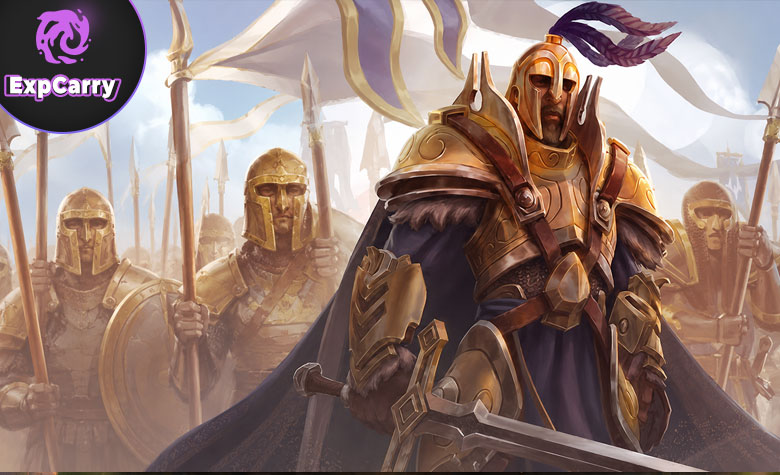
The main frontline classes in Scars of Honor are Warrior and Paladin, with Druid potentially joining that space through shapeshifting or defensive talent paths if its final role support allows it. Warrior and Paladin should not play the same. Warrior is the direct martial class: weapons, endurance, heavy contact, and pressure in the thick of combat. Paladin is the holy hybrid: durability, self-sustain, group support, fire or holy damage, and defensive utility. In PvE, these are the classes most likely to stand closest to dungeon bosses and absorb pressure. In PvP, they should be the players who make space, protect allies, disrupt enemy setups, and force fights around objectives.
Warrior PvE and PvP Identity
Warrior is the cleanest frontline fighter in the class lineup. Its fantasy is built around weapon discipline, resilience, and close-range combat. In PvE, Warrior should naturally fit tanking, bruiser damage, and sustained melee pressure. If the talent system supports multiple paths properly, Warrior can split between a more defensive frontline role, an aggressive damage route, and a utility build that improves mobility, weapon control, or group value.
In PvP, Warrior should be strongest when it can stay connected to targets. In the currently advertised Arena and 5v5 Battleground structure, equalized gear makes this especially important because raw item level should not carry bad play. A good Warrior will likely matter through uptime, pressure, interrupts, crowd control, and forcing enemies to move. The weakness is predictable: ranged classes, roots, slows, and kiting can punish any melee that lacks gap closers or defensive timing. If Warrior mobility is undertuned, it becomes a training dummy with opinions. If it is overtuned, it becomes the usual melee problem every caster complains about until the next patch.
Paladin PvE and PvP Identity
Paladin is the more supportive frontline option and one of the four classes available in the first large Steam playtest. Its identity combines holy power, fire, self-sustain, protection, and group utility. In PvE, that gives Paladin a natural place as a tank, defensive support, or durable melee damage dealer. The Paladin is likely to appeal to players who want to survive mistakes, protect allies, and still contribute damage instead of choosing between being useful and being alive.
In PvP, Paladin should be valuable because defensive utility tends to scale well in coordinated modes. Arenas and 5v5 Battlegrounds reward classes that can stop enemy burst windows, peel for healers, survive focus, and stabilize fights. A Paladin that can shield, heal, cleanse, or punish enemy aggression will have obvious value. The danger is that hybrid classes are hard to tune. Too little damage and they become passive support furniture. Too much sustain and damage together, and everyone else gets to enjoy the ancient MMO tradition of complaining about Paladins.
Scars of Honor Healer and Support Classes in PvE and PvP
The clearest support classes are Priest, Druid, and Paladin, with Mystic and Necromancer potentially adding debuff or sustain support depending on final talents. Scars of Honor does not appear to be designing support builds as helpless background characters. The official class direction emphasizes dynamic combat and meaningful build choices, which suggests healers and support builds should still interact actively with combat. That is the right direction. Nobody wants to spend a dungeon staring at health bars like a spreadsheet developed feelings.
Priest PvE and PvP Identity
Priest is the most direct divine support class in the announced lineup. Its expected identity is healing, shielding, blessing, and holy damage. In PvE, Priest should be the safest pick for players who want a traditional healer role once the class becomes available for broader testing. It can support dungeon groups through direct healing, defensive tools, and possibly damage windows when healing pressure drops. If talents allow a more offensive route, Priest may also support a holy damage playstyle for players who want to punish enemies instead of only repairing party mistakes.
In PvP, Priest should be a priority target and a fight stabilizer. A strong Priest can keep allies alive through coordinated pressure, but that also means enemy teams will try to interrupt, crowd control, or collapse on the Priest first. Its PvP strength will depend on mobility, instant casts, defensive cooldowns, and whether shields or blessings can stop burst quickly enough. If Priest has strong tools against crowd control and burst, it becomes a top support candidate. If not, it becomes a very holy victim.
Druid PvE and PvP Identity
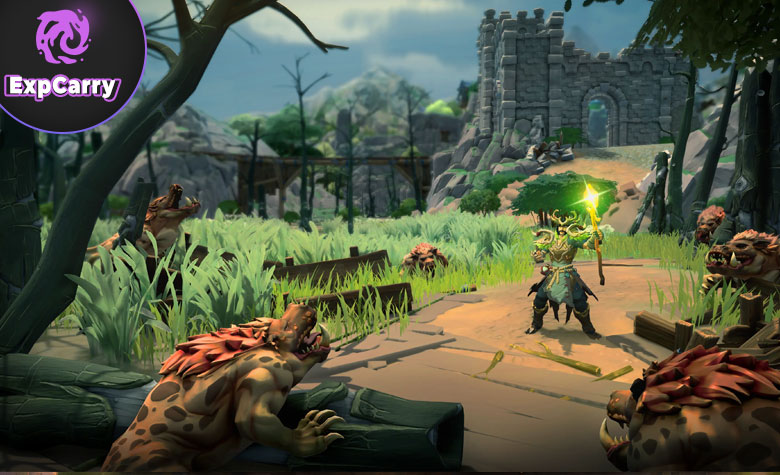
Druid is the flexible nature class and one of the first four playable classes in the Steam playtest. Its identity includes healing, summoning beasts, elemental force, and shapeshifting. In PvE, Druid is likely to become one of the most versatile classes because it can reasonably support healer, hybrid damage, form-based combat, and possibly tank-oriented play depending on final talent support. The risk with Druid is always the same in MMO design: flexibility must not make every specialist irrelevant. A good Druid should adapt. A broken Druid does everything better than everyone else, and then balance forums turn into compost.
In PvP, Druid flexibility should be valuable in both Arenas and 5v5 Battlegrounds. Mobility, off-healing, summons, forms, and nature control can make the class hard to pin down. A Druid should be strongest when it can rotate between pressure, survival, and support rather than winning through raw burst. Its likely weakness is specialization. If a Druid splits too hard between healing, damage, tankiness, and control, it may lose to classes with cleaner win conditions. That makes talents and Scars especially important for this class.
Scars of Honor Ranged DPS Classes for Dungeons and PvP Control
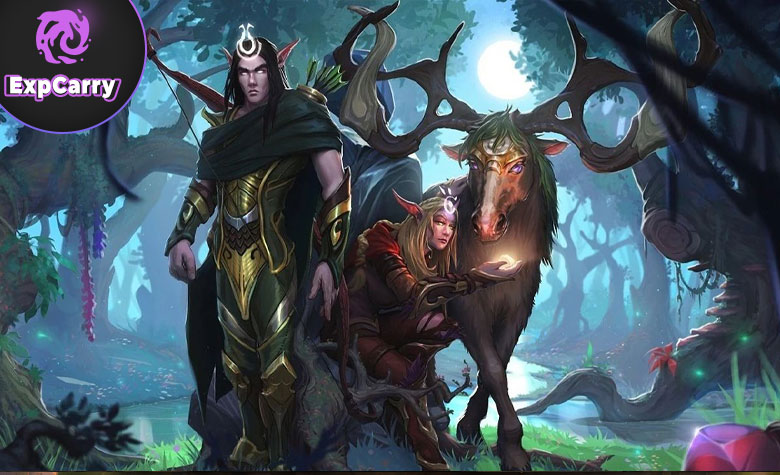
The main ranged damage classes are Mage, Ranger, Mystic, Necromancer, and Priest when built offensively. Scars of Honor's combat system is being presented around positioning, timing, decision-making, and reacting to enemy patterns, so ranged classes should not be passive turret characters. Their success should depend on spacing, cast timing, trap placement, pet management, debuff uptime, and knowing when to move instead of greed-casting into disaster like every MMO player eventually does.
Mage PvE and PvP Identity
Mage is the major elemental and arcane caster in Scars of Honor and one of the classes included in the first Steam playtest. Its identity includes fire, lightning, ice, cosmic power, battlefield control, mobility, and heavy magical damage. In PvE, Mage should be one of the strongest candidates for ranged damage, AoE clearing, and control-heavy dungeon pulls. If Evershifting Dungeons include changing layouts and modifiers, a Mage with strong AoE and control will likely be useful for managing unpredictable packs.
The Mage should not be treated only as a fragile glass cannon before final testing is done. Public class descriptions and talent direction suggest that Mage may also support a sturdier Battlemage-style route, depending on how its final talent paths and Scars work. That does not mean Mage is confirmed as a universal tank or all-purpose frontline class. It means the class should be described as a magical damage and control class with possible durability-focused build options, not reduced to one narrow caster stereotype.
In PvP, Mage should live or die by distance, cooldown timing, and control chains. Its strengths are burst, crowd control, slows, roots, and punishing enemies before they reach melee range. Its weakness should be pressure once enemies break through its control or force defensive tools early. Equalized gear in Arenas and 5v5 Battlegrounds makes this more skill-based: a Mage cannot simply outgear the problem. It has to manage spacing, cooldowns, and control properly. Tragic, really. The player may have to play the game.
Ranger PvE and PvP Identity
Ranger is the physical ranged class built around precision shots, mobility, elemental power, and traps. It is also one of the four classes available in the first large Steam playtest. In PvE, Ranger should be useful as sustained ranged damage with strong target focus and some battlefield control. Traps can be especially valuable in dungeons if they interrupt enemy movement, control dangerous packs, or create safe damage windows. Ranger should appeal to players who want constant positioning and ranged uptime without the cast-time dependence of Mage.
In PvP, Ranger should be a kiting and control class. The class fantasy points toward traps, precision, and mobility, so a good Ranger should punish predictable movement, control choke points, and wear down targets from range. In 5v5 Battlegrounds, that can be especially useful around objectives. The likely weakness is being fragile once caught. Ranger needs space. Without space, it becomes an archer having a very personal meeting with a Warrior's weapon.
Mystic PvE and PvP Identity
Mystic appears designed as a curse, plague, and affliction class. In PvE, that points toward damage-over-time effects, debuffs, and control. Mystic should be valuable in longer fights where sustained pressure matters more than instant burst. If the game supports strong debuff gameplay, Mystic may also help groups by weakening enemies, increasing incoming damage, reducing enemy output, or controlling dangerous targets.
In PvP, Mystic is likely to be a rot-pressure class. That means spreading damage, forcing healers to spend resources, weakening enemy teams, and making extended fights uncomfortable. This kind of class often becomes stronger in coordinated play than in random duels, because pressure stacks better when teammates know how to exploit it. The weakness is burst defense. If Mystic damage takes time to ramp, then fast melee or burst casters can punish it before the pressure becomes decisive.
Necromancer PvE and PvP Identity
Necromancer is built around forbidden magic, servants, vitality drain, decay, and death-themed power. In PvE, that suggests a summoner or attrition caster that can bring pets, self-sustain, and damage over time. Necromancer should be strong in content where controlled pressure and extra bodies matter, especially if pets can tank, distract, or add steady damage. It may also become a strong solo class if drain and minion tools are tuned generously.
In PvP, Necromancer should be dangerous through pressure and disruption rather than clean burst. Pets can interfere with targeting, drains can punish extended fights, and decay-style effects can make enemy healers work harder. The PvP weakness is usually control dependency and setup time. If opponents can kill pets, interrupt key casts, or avoid the Necromancer's pressure window, the class may struggle. Summoner classes are always a balancing nightmare, because their power is split between the player and the small army of problems following them around.
Scars of Honor Melee DPS and Skirmisher Classes in PvE and PvP
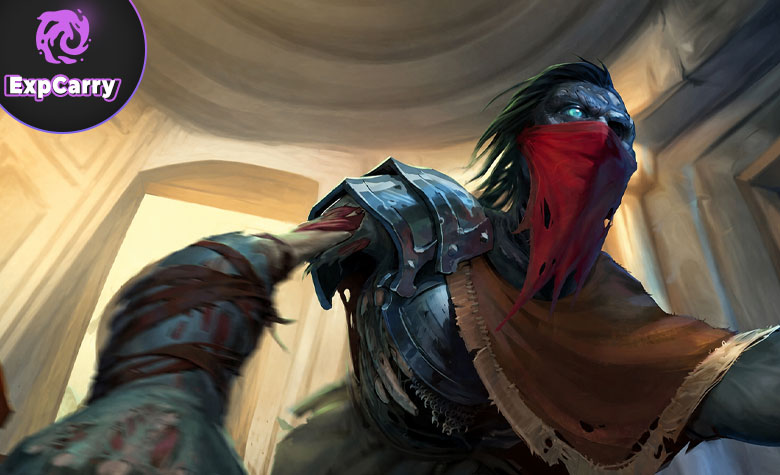
The main melee damage and skirmisher classes are Assassin, Pirate, Warrior, Paladin, and possibly Druid through shapeshifting. These classes should appeal to players who want direct engagement, target pressure, mobility, and more risk than ranged classes. In PvE, melee classes need boss uptime and defensive timing. In PvP, they need gap closers, burst windows, interrupts, and the ability to survive long enough to finish what they started.
Assassin PvE and PvP Identity
Assassin is the classic high-risk, high-reward melee killer. Its identity includes speed, blades, poison, lightning, stealth, and decisive execution. In PvE, Assassin should specialize in priority target damage and high single-target output. It may be especially useful in dungeon encounters where dangerous enemies must die quickly. The likely weakness is durability. If the class trades resilience for speed, mistakes will be punished harder than on Warrior or Paladin.
In PvP, Assassin should be one of the most dangerous classes for healers, casters, and isolated targets if its stealth, burst, and escape tools are tuned strongly enough. Its value comes from openers, burst windows, interrupts, and target selection. A strong Assassin can decide a fight by deleting or disabling the right target at the right time. A bad Assassin jumps in, presses everything, dies, and calls it balance. The class will depend heavily on timing, target selection, and whether Scars and talents allow enough survivability after the opener.
Pirate PvE and PvP Identity
Pirate is the most unconventional class in the lineup. Its identity includes blades, pistols, poison, tricks, parrots, and plunder. In PvE, Pirate should work as a flexible melee or mid-range damage dealer, possibly with pressure tools, mobility, and utility effects. It may become the class for players who want damage without committing to the cleaner fantasy of Assassin or Ranger. The design space is wide, which is useful, but also risky. Wide design space is where balance goes to have an accident.
In PvP, Pirate should be a skirmisher and disruptor. Pistols, poison, tricks, and unpredictable pressure suggest a class that can harass targets, interrupt plans, and pressure from awkward ranges. It may not hit as cleanly as Assassin or control as clearly as Ranger, but its strength should be adaptability. If tuned well, Pirate becomes annoying in the useful way: hard to read, hard to pin down, and good at creating chaos around objectives.
Scars of Honor Best Classes for PvE Based on Current Information
Because Scars of Honor is not released and class tuning is not final, there is no honest "best PvE class" yet. What can be judged is role fit. Paladin and Warrior look like the safest early picks for tanking or frontline play, with Druid also worth watching if its shapeshifting paths support a real defensive role. Priest and Druid look like the safest support and healing candidates. Mage and Ranger look like clean damage options for players who want ranged reliability. Necromancer and Mystic should appeal to players who prefer longer fights, summons, dots, curses, and pressure. Assassin and Pirate are more likely to reward players who enjoy high-movement DPS and target-focused play.
For Evershifting Dungeons, group value will probably depend on more than raw damage. Classes with control, utility, sustain, and flexible responses should matter because dynamic layouts, shifting encounters, and changing modifiers can punish one-dimensional builds. That makes Paladin, Druid, Mage, Ranger, Mystic, and Necromancer especially interesting on paper. Paladin brings stability, Druid brings flexibility, Mage brings control and AoE, Ranger brings traps and mobility, Mystic brings debuffs, and Necromancer brings summons and attrition.
Solo PvE may favor classes with self-sustain, pets, mobility, or defensive tools. Paladin, Druid, Necromancer, Ranger, and Warrior all look promising for that reason. Mage and Assassin may clear quickly but could be more punishing if caught or misplayed, unless their defensive talent options prove stronger than expected. Priest may be safe but slower if built heavily into healing. Pirate is harder to judge because its final combat rhythm is less clear publicly, but its hybrid melee and mid-range identity could make it strong for flexible solo play if the tools are tuned well.
Scars of Honor Best Classes for PvP Based on Current Information
Scars of Honor advertises equalized gear for Arenas and 5v5 Battlegrounds, so class value in those modes should depend more on toolkit, player skill, teamwork, and build decisions than on raw item advantage. That makes control, mobility, burst timing, healing, and defensive utility more important than simple gear scaling. In this structure, Assassin, Mage, Ranger, Paladin, Priest, and Druid all look naturally strong for different reasons, but none of them should be treated as confirmed top-tier before broader PvP testing.
Assassin should be dangerous in Arenas because burst and target isolation usually matter in small-team PvP. Mage should be strong when spacing and crowd control matter. Ranger should be valuable in both Arenas and Battlegrounds because traps and ranged pressure can control movement. Paladin and Priest should matter because defensive tools and healing often decide coordinated fights. Druid may become one of the most flexible PvP classes if shapeshifting, off-healing, mobility, and summons are all meaningful.
For 5v5 Battlegrounds, Warrior and Paladin should gain value through frontline control, while Ranger, Mage, Mystic, and Necromancer can pressure from range. Pirate could be useful as a chaos class around objectives if its tricks and mid-range pressure are strong enough. The most dangerous PvP classes will not simply be the ones with the highest damage. They will be the classes that can force mistakes, deny enemy setups, survive focus, and convert one good crowd-control chain into a kill.
Scars of Honor Class Choice for New Players
New players should avoid choosing a class only because it sounds strong. In an unreleased MMORPG, early power rankings age about as well as milk on a radiator. A better approach is choosing by preferred combat responsibility. Players who want to lead fights and survive pressure should start with Warrior or Paladin. Players who want healing and group support should watch Priest and Druid. Players who want ranged damage should look at Mage or Ranger. Players who enjoy darker magic, summons, curses, or damage over time should follow Necromancer and Mystic. Players who want aggressive melee pressure should consider Assassin or Pirate.
Paladin is likely the safest all-around early pick because hybrid durability usually helps in both PvE and PvP. Druid may be the safest flexible pick because it can cover support, summons, forms, damage, and possibly defensive play depending on final build support. Mage and Ranger are likely cleaner damage picks for players who want a readable role in the first playtest. Assassin will probably be stronger in skilled hands than in casual hands, which is normal for stealth or burst classes. Warrior is the best fit for players who enjoy frontline responsibility and do not panic when the whole enemy team decides they are the problem.
The smartest choice is the class whose mechanics match the player's patience. If someone hates pet control, Necromancer will annoy them. If they hate being focused, Priest may feel miserable in PvP. If they hate positioning, Mage and Ranger will punish them. If they hate responsibility, tanking on Warrior or Paladin is a bad idea. MMORPG class choice is not just about fantasy. It is about what kind of pressure a player can tolerate without blaming the UI, the healer, the stars, and possibly a nearby chair.
Scars of Honor Classes Still Need Final Testing
The confirmed class list is broad enough to support a real MMORPG role ecosystem, but Scars of Honor still needs final testing before anyone can speak confidently about balance. Only four classes are available in the first large Steam playtest, and several major systems are still being refined. Talents, Scars, crafting, dungeon modifiers, PvP scaling, class restrictions, racial access, economy systems, and encounter design can all affect how strong each class feels in practice.
This is especially important for PvP. Equalized gear in Arenas and 5v5 Battlegrounds sounds promising because it removes some item-level unfairness, but equalized gear does not automatically create fair combat. Class kits still need counters, weaknesses, cooldown pacing, control limits, and survival tuning. A game can equalize gear and still have one class deleting everyone because its toolkit is overloaded. MMO balance is a delicate machine, and players are very good at finding the part that catches fire.
PvE balance has its own risks. If dungeons reward only AoE burst, classes built around single-target damage or slow pressure may suffer. If bosses require constant movement, turret casters may struggle. If healing pressure is too low, support classes can feel unnecessary. If tank damage is too high, damage dealers become decorative. Scars of Honor has the pieces for varied class design, but final encounter design will decide whether those pieces matter.
Final Thoughts on Scars of Honor Classes
Scars of Honor has a class lineup that clearly wants to cover the classic MMORPG spectrum: tanks, healers, ranged damage, melee damage, pets, curses, stealth, hybrid support, and objective-based PvP roles. The promising part is not just the number of classes. It is the combination of class identity, large talent trees, permanent Scars, equalized Arena and 5v5 Battleground gear, and replayable dungeon systems. If those systems connect properly, players should have room to create builds that feel personal instead of copying the same flat template.
The safest current read is that Paladin, Mage, Ranger, and Druid are the most grounded classes because they are part of the first broad Steam playtest. Warrior, Priest, Assassin, Necromancer, Mystic, and Pirate are part of the announced wider class lineup, but their final performance needs more public testing. That does not make them less important. It just means any ranking beyond role expectations is premature.
For PvE, the best class will depend on whether a player wants to tank, heal, control packs, deal safe ranged damage, burst priority enemies, manage pets, or survive solo content. For PvP, the best class will depend on mobility, control, burst windows, support value, and team coordination rather than gear advantage in the advertised equalized modes. That is the healthiest direction for Scars of Honor. Now the game has to do the rude part: actually launch with balance, responsiveness, and enough content to make those classes worth mastering.