
Star Citizen is not a brand new release, but it is still one of the most talked about games in the world: a gigantic, crowdfunded space sim that has been evolving in public alpha for years. It already looks and feels like a cinematic sci fi sandbox, yet it is still officially unfinished, full of bugs, resets, and experiments. This is the review you need if you are staring at a starter package wondering whether it is finally time to dive in and whether the sense of wonder is strong enough to justify the rough edges.
What Star Citizen Actually Is
A persistent online space sim and MMO hybrid built around fully simulated ships, first person gameplay, trading, combat, and a shared universe. You wake up in a hab inside a huge city or station, walk through a real spaceport, physically board your ship, and fly out through atmosphere into space without traditional loading screens. From there you can run contracts, haul cargo, mine, bounty hunt, salvage wrecks, or just explore derelicts and remote outposts.
Originally pitched as a spiritual successor to classic space sims, it has grown into a massive long term project. Instead of a fixed campaign with credits, Star Citizen is aiming at a living universe that keeps expanding with new locations, ships, professions">professions, and systems for many years.
The Core Gameplay Loop (and why it can be pure obsession)
Star Citizen is open ended, but most sessions quietly fall into a simple but powerful pattern:
- Preparation at a city or station
Set your spawn point at a medical clinic, claim or retrieve your ship, equip armor and weapons, sort your physical inventory, and accept contracts on your mobiGlas. - Launch and travel
Ride the train or elevator to the spaceport, board your ship, request takeoff, climb through atmosphere, then use quantum travel to cross the system toward your target moon, outpost, station, or nav point. - Run the job and manage risk
Bounty hunts, bunker clearouts, salvage operations, mining runs, delivery contracts, or cargo hauling. Every mission is a balance between potential profit, travel time, and the risk of pirates, other players, or bugs. - Return, cash out, or respawn
If things go well you land safely, sell cargo, complete contracts, and bank aUEC. If it all goes wrong, you wake up in a clinic, file an insurance claim for your ship, and decide whether to regear for another round or cool down with a smaller task.
The moment when you are limping home in a half destroyed ship, fuel low, quantum drive barely working, cargo hold full of valuable goods, and a player bounty marker pops onto your radar is the kind of tension that keeps people logging back in night after night.
Gunplay And Movement - Where It Actually Shines
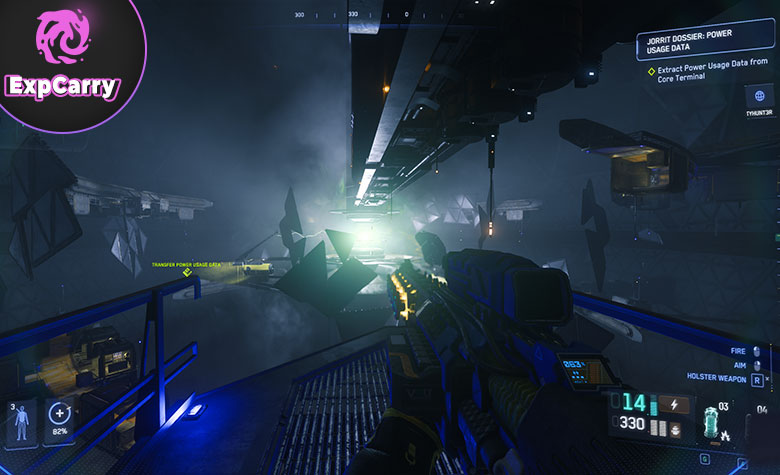
The hook is how physical everything feels. Ship flight is a blend of arcade control and newtonian behavior. You strafe, roll, and boost like a sci fi shooter, but inertia and thruster placement still matter. Dogfights around asteroid fields, stations, or canyons feel dramatic and readable, especially in small fighters where a single mistake can rip off a wing or knock out your engines.
On foot, Star Citizen is not as sharp as a dedicated competitive shooter, but it has turned into a solid, weighty FPS. Recoil and weapon handling are distinct between rifles, SMGs, and sniper rifles. Clearing underground bunkers, derelict ships, or outposts can be intense, especially when limited vision, hostile NPCs, and other players are all in the mix.
Multi crew ships turn it into something you cannot get anywhere else. One player flying, another on turrets, someone else managing shields, components, or repairs, everyone walking around the same ship while it is under fire. When it works, it feels less like a match and more like being part of a small sci fi film.
Maps And Atmosphere
Instead of separate maps, Star Citizen gives you entire star systems with hand built locations layered on top of procedural planets and moons. To make that easier to picture, think of three broad spaces you will live in most of the time:
- Major hub cities and stations
Huge landing zones with shops, clinics, hangars, and spaceports. These are your social hubs and main starting points. - Wilderness planets and moons
Vast surfaces with outposts, caves, mining spots, crash sites, and mission locations scattered across deserts, forests, snowfields, and rocky plains. - Orbital infrastructure and derelicts
Space stations, refineries, comm arrays, wrecked capital ships, and abandoned platforms hanging in orbit or drifting in deep space.
Atmosphere is where Star Citizen is already in a league of its own. Cities have trains, traffic, and animated crowds. Planets have weather, day and night cycles, and extreme temperatures that can kill you if you step outside in the wrong suit. Walking out onto a pad above a neon soaked skyline, hearing your ship engines spin up, and then blasting through clouds into the black is still one of the best feelings in modern games.
Why Star Citizen Feels So Different From Traditional MMOs
Star Citizen does not try to be a safe, heavily guided theme park. It removes some classic MMO frustrations but replaces them with its own brand of chaos.
- Almost everything is physical. Your gear, ship, and cargo exist in the world and can be seen, stolen, or destroyed.
- Interfaces are diegetic. You use cockpit panels, ship terminals, and your mobiGlas instead of abstract menus for many actions.
- Travel takes real time. There is no instant teleport between major locations once you are in the universe. Logistics, fuel, and planning matter.
- The alpha state is part of the deal. Bugs, wipes, and broken patches can and do interrupt your plans.
You still lose time, gear, or money when something goes wrong, but the feeling when a big plan actually comes together after all those risks is what hooks people for the long haul.
Performance And Optimisation - Demanding, But Better Than It Used To Be
Star Citizen has a reputation for punishing hardware. A solid state drive and a modern operating system are mandatory, and the game really starts to feel comfortable only once you are above basic minimums.
Officially, you can get away with a mid range quad core CPU, a mid tier gaming GPU, and 16 GB of RAM for entry level play.
- CPU: modern quad core with decent clock speed
- GPU: mid range gaming card with at least 4 GB of VRAM
- RAM: 16 GB
In practice, most active players treat this as the real baseline:
- CPU: recent 6 or 8 core gaming processor
- GPU: strong mid to high tier card with 8 GB or more of VRAM
- RAM: 32 GB
On good hardware the game can run very smoothly in space and in remote areas, but big cities and crowded events can still tank frame rates, stutter, or suffer from server side slowdowns. Performance is improving over time, but you should expect uneven results depending on location, patch, and server health.
The Controversies
- Endless development
Star Citizen has been in active development for a very long time and is still officially in alpha. There is no firm release date, which makes some players excited about constant growth and others deeply skeptical. - Monetization and expensive ships
The game is funded by selling game packages and ships, some of which cost a lot of real money. Even though you can earn ships in game, the existence of very expensive pledge ships is a constant source of debate. - Bugs, wipes, and instability
Crashes, desync, broken elevators, ship bugs, and database wipes that reset progress are not edge cases, they are known parts of the experience. For some, this is an acceptable price for being in a live alpha. For others, it is an instant deal breaker.
Player Reviews And Community Sentiment
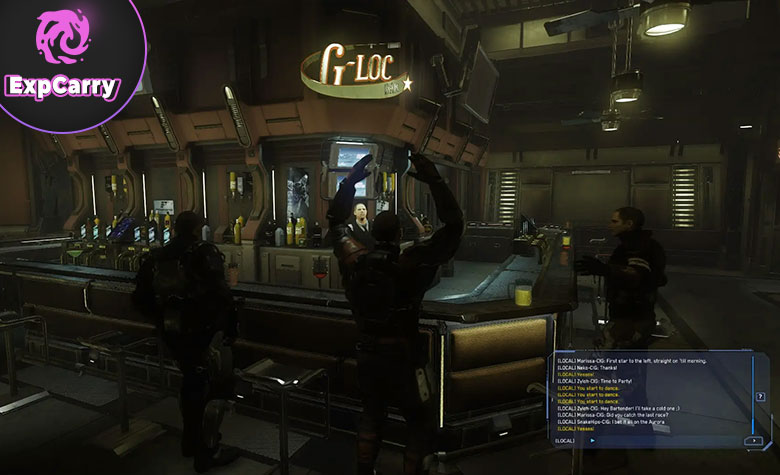
There is no simple way to sum up how players feel about Star Citizen. From the outside it is often framed as an overfunded, never ending project. From the inside it is a hobby, a second home, or a group activity that people sink hundreds or thousands of hours into despite the problems.
Fans focus on the immersion, the level of detail, and the emergent stories. Random rescues, impromptu multi ship convoys, bar meetups, and large scale org operations feel closer to tabletop campaigns than to traditional matchmaking. Critics point to persistent bugs, uneven balance, the pressure to buy ships, and the fear that the promised final version may never fully arrive.
Streamer Reactions
On streaming platforms, Star Citizen leans heavily into spectacle. Big creators run fleet battles, cargo convoys, search and rescue operations, or silly social events on station bars and capital ships. The same bugs that frustrate normal players often turn into viral clips when elevators misbehave or physics freak out.
Most streamers present it honestly: if you can tolerate crashes and weirdness, the game produces incredible, clip friendly moments. If you need something stable and predictable for every session, it will drive you mad. For viewers, it is almost always entertaining, because even disaster runs are fun to watch.
Explore services related to this guide, selected from our Star Citizen catalog.
View All Star Citizen Services
Post-Launch Roadmap: What Is Coming Next
Instead of a classic boxed release with a fixed patch plan, Star Citizen runs on rolling development. Features, locations, and ships are added gradually through major updates, with public roadmaps that show what different teams are working on.
These updates usually mix new content, new tech, and reworks of older systems. Flight and combat models get adjusted, inventory and UI are expanded, missions and events are rotated, and backend tech keeps shifting beneath everything. Alongside the online universe, the single player campaign is being developed as a separate but connected project.
Looking forward, the focus is on three broad pillars:
- More places to go
Additional systems, planets, moons, stations, and points of interest to explore and fight over. - More careers and depth
Full loops for professions like engineering, deeper salvage and repair, better cargo and trade tools, and more interesting mission types. - Better tech foundation
Server side improvements, higher player counts per shard, better persistence, and more reliable performance across the board.
The hope is that as the tech settles, wipes become rarer, and new systems come online, the universe will feel less like a testbed and more like a true long term home.
Nine Practical Beginner Tips That Will Save Your Ship, Wallet, And Nerves
- Pick a forgiving home city
Choose a starting location with decent performance and a clear layout. Learn that one place well before constantly switching spawn points. - Always set your spawn and learn the clinic
First thing in any new area: set your imprint at the medical clinic. Know where the medbeds, terminals, and exits are before you get into trouble. - Treat your first hours as testing, not grinding
Assume you will lose gear and fail missions to bugs and mistakes. Run cheap contracts, experiment with controls, and focus on learning the basics. - Respect physical inventory
Do not wear all your best armor and weapons on one risky mission. Keep backups stored at stations so one bad death does not wipe out your entire loadout. - Do not rush into big cargo runs
Large hauls are tempting, but a single crash, pirate, or mistake can erase everything. Start with small loads until you know the routes and risks. - Learn to fly and land manually
Practice takeoffs, approaches, hovering, and vertical landings in a safe area. Many beginner deaths come from bad landings, overspeed, or forgetting to request a pad. - Read mission text and watch your crime rating
Some contracts are legal, others are not. Pay attention to warnings, restricted zones, and who you are shooting. Accidentally going criminal can turn a simple mission into a nightmare. - Play with others, even casually
Joining an org or just grouping up with a couple of players makes the game far easier to learn and much more fun. A single experienced pilot can compress dozens of hours of trial and error into a short tour. - Accept the alpha and set expectations
Go in knowing that progress can reset, patches can break things, and some nights will end in frustration. If you frame it as participating in a long running project instead of buying a finished product, it becomes much easier to enjoy.
Final Verdict
Star Citizen is not a finished game and not a safe bet for someone who just wants a polished, bug free MMO to relax in after work. It is a live, messy alpha where incredible immersion and catastrophic bugs live side by side. You are buying into a long term experiment, not a boxed product with guaranteed outcomes.
If that idea makes you nervous, you are better off watching from the sidelines or jumping in only during free fly events. But if you are willing to live with wipes, crashes, and slow but steady progress in exchange for some of the most unique space sim moments available today, a basic starter package can absolutely be worth it. Just start small, fly carefully, and never forget that in this universe even the elevator can be your final boss.