
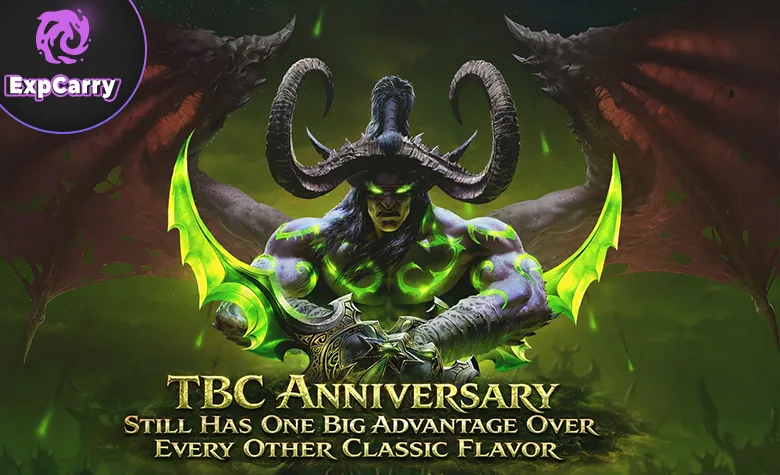
TBC Anniversary does not have every advantage. It is not the safest mode, the strangest mode, or the most static comfort-food version of Classic. Hardcore still owns tension. Season of Discovery still owns experimentation. Classic Era still owns permanence. Mists of Pandaria Classic still has the broadest late-expansion feature set. But TBC Anniversary has one advantage none of them can match right now: it is the cleanest fresh progression lane in the entire Classic ecosystem.
That sounds simple, but it matters more than players sometimes admit. TBC Anniversary is not just Burning Crusade content brought back again. It is a progression path that began on the 20th Anniversary realms, moved through fresh Vanilla progression, and then carried surviving PvE and PvP realm characters forward into Outland. That gives it something every other Classic flavor currently lacks in the same combination: a recent shared reset point, a live expansion transition, and an endgame that players already know is worth climbing toward. It feels fresh without feeling unstable, and that middle ground is exactly why it stands out now.
Why TBC Anniversary Feels Different
The key difference is not nostalgia by itself. Classic players do not all want the same thing, and TBC Anniversary is serving a very specific appetite. It offers a server environment where a lot of players came in through the same recent starting point, leveled through the same Anniversary path, and have now crossed into Burning Crusade together. That kind of synchronized progression is hard to fake once a ruleset gets older and its population spreads across established gold, raid, and guild hierarchies.
The timing also matters. TBC Anniversary is not sitting in vague future-hype territory anymore. It is live, it has already entered its first meaningful raid and PvP phase, and it is still close enough to launch that the fresh-server energy has not burned off. That gives the mode a very practical strength: players are still building reputations-farm">reputations, still forming guild cores, still shaping server economies, and still making early decisions that feel relevant instead of historical. A lot of Classic modes are easy to log into. Fewer of them feel like you are still arriving at the right moment.
The One Advantage Other Classic Modes Cannot Match
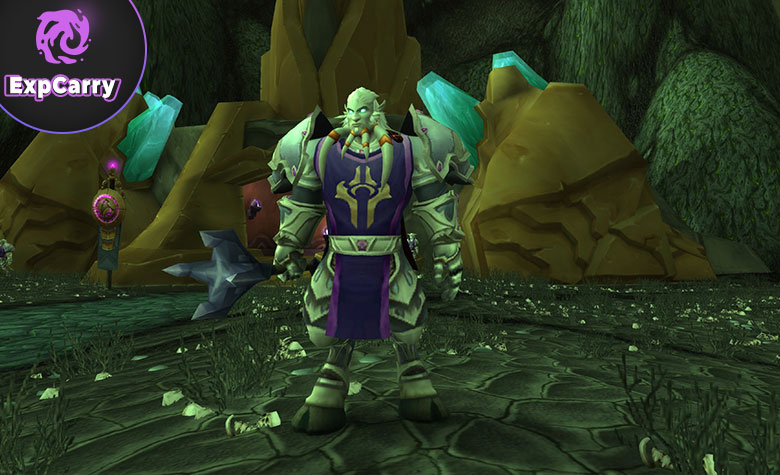
TBC Anniversary's real edge is fresh progression with real momentum. That is more important than simple freshness. Hardcore can feel fresh because death wipes your run. Season of Discovery can feel fresh because Blizzard deliberately changes class and content rules. But TBC Anniversary has progression freshness, which is a different thing entirely. Players are not only starting or restarting. They are moving into a known expansion ladder together while the economy, PvP scene, raid access, professions, and alt planning still feel open enough to matter.
That is why this mode feels stronger than a simple reroll and steadier than a seasonal experiment. It gives players the social effect of a recent reset, but attaches that reset to an expansion with a proven long tail. Outland is not unknown, but it does not need to be. The point is not surprise. The point is momentum. TBC Anniversary feels like a world that has just started going somewhere, and right now that is a bigger advantage than static familiarity or experimental novelty.
Where Era, Hardcore, SoD, and MoP Still Win
This is where people usually get lazy and start pretending every Classic mode is fighting for the same mood. It is not. Each one still wins in its own lane, which is exactly why TBC Anniversary's advantage stands out more clearly once you compare them honestly instead of trying to force a fake overall winner.
What the Other Classic Flavors Still Do Better
| Classic flavor | Its main strength | What it does better than TBC Anniversary | What TBC Anniversary still has over it |
|---|---|---|---|
| Classic Era | Permanence and familiarity | It is the best home for players who want a stable version of Classic that is not moving on. | TBC Anniversary has live forward motion instead of long-term stasis. |
| Hardcore | Tension and consequence | Nothing in TBC can match the pressure of one-life leveling and death actually mattering. | TBC Anniversary gives players a progression future that Hardcore does not carry into Outland. |
| Season of Discovery | Experimentation and remix design | It offers novelty, class changes, and a much weirder version of Classic. | TBC Anniversary is cleaner and easier to commit to if you want original-style progression instead of a seasonal lab. |
| Mists of Pandaria Classic | The broadest ongoing official progression path | It has the bigger late-expansion feature set and the longer original timeline already in motion. | TBC Anniversary feels much fresher at the realm level and gives players a more synchronized climb. |
That table matters because it kills the dumb argument that TBC Anniversary must be the best at everything to be the best choice for someone right now. It does not. Era still beats it for permanence. Hardcore still beats it for adrenaline. Season of Discovery still beats it for novelty. Mists still beats it for scale. But none of those modes currently combine recency, familiarity, and shared forward motion in the same way. That is the lane TBC Anniversary owns.
Explore services related to this guide, selected from our WoW Classic catalog.
View All WoW Classic Services


Why TBC Is the Sweet Spot for a Fresh Reset
This argument only works because Burning Crusade itself fits the reset better than some other expansions would. TBC adds enough to make a fresh progression server feel meaningfully different without blowing the game open into a completely new design era. Outland is a real destination. Flying changes travel. Arenas sharpen the PvP ladder. Jewelcrafting matters immediately. Blood Elves and Draenei reshape faction and class access. At the same time, the game still feels recognizably early WoW rather than a fully modernized expansion with layers of later-system baggage.
That makes TBC Anniversary easier to sell as a "fresh but not alien" progression home. Vanilla Anniversary got players onto a shared starting line. Burning Crusade gives that starting line a payoff instead of a static endpoint. Blizzard also helped by keeping the mode from turning into a pure museum piece. It carries enough quality-of-life to avoid some of the most pointless friction, but not so much that the whole thing stops feeling like Classic. That balance matters more in 2026, when players already have multiple other official versions competing for their time.
Conclusion
TBC Anniversary's biggest advantage over every other Classic flavor right now is not that it is objectively the best version of WoW. That would be lazy and false. Its real advantage is narrower and more useful: it is the only Classic mode currently offering a genuinely fresh-feeling progression lane that is both live and familiar. That is a powerful position to hold in an ecosystem where most alternatives are either static, experimental, brutally niche, or much further along. That edge is strongest right now because the timing is still good. The mode is early enough to feel socially and economically alive, but established enough that players can already see the shape of the climb ahead. That is exactly the kind of window that makes people commit to a server instead of merely checking it out for a week and leaving. A lot of Classic modes are easier to admire from the outside than to join at the right moment. TBC Anniversary does not have that problem right now.