



Warzone Blackout 2.0 is the nickname many players use for Black Ops Royale, the new large-scale battle royale mode added to Call of Duty: Warzone. The label spread quickly because the mode clearly pulls from the older Blackout design philosophy instead of the standard Warzone loop that has defined recent years. Black Ops Royale removes custom Loadouts, Buy Stations, and the Gulag, then rebuilds match flow around scavenging, in-match upgrades, armor management, and squad survival. That does not make it a one-to-one remake of Blackout. Black Ops Royale uses modern Warzone movement, a new map, and several newer systems that give it its own identity. The better way to describe it is simple: this is a Blackout-inspired Warzone mode where your strength is built during the match instead of being pulled from pre-made classes. That shift is what makes the mode feel different immediately.
The confirmed feature set already shows that this is more than a novelty playlist. Black Ops Royale launched through Warzone Season 02 Reloaded as a free mode on Avalon. It supports 100 players in 25 quad teams and replaces Warzone's usual power structure with rarity-based weapon progression, looted Perks, armor tiers, Redeploy Tokens, Redeploy Towers, and special map events such as Cradle Breaches. The result is a more loot-driven and survival-focused battle royale ruleset than standard Warzone.
What Black Ops Royale Actually Is
At the official level, Black Ops Royale is a free-to-play Warzone battle royale mode inspired by Blackout. Players still drop into a large map, loot, rotate through the safe zone, and fight to become the last squad standing, but the systems around that loop have been changed in major ways. Instead of racing toward cash, Buy Stations, and a custom Loadout, players begin on equal footing and build power through what they find during the match.
That design philosophy is the real reason so many players immediately compared the mode to Blackout. Ground loot matters for longer, early fights are less scripted by economy timing, and survival depends more on adaptation, map control, and squad decision-making. The mode still belongs to modern Warzone, but its pacing is clearly aimed at players who wanted a scavenging-first battle royale experience again.
Why Players Call It Blackout 2.0
The nickname exists because the mode revives the core structure that made Blackout memorable. There are no Loadouts, no Buy Stations, and no Gulag. Weapons come from the ground, utility matters more, armor has a stronger identity, and your setup is shaped by what happens in the match rather than by a menu before the drop. Those are not cosmetic callbacks. They are the systems that define how a round plays.
At the same time, Black Ops Royale is not a direct remaster of the 2018 game. It uses newer movement, updated interface design, modern Warzone map flow, and special activities that give the mode its own rhythm. So while "Blackout 2.0" works as community shorthand, Black Ops Royale is better understood as a modern Blackout-inspired branch of Warzone rather than a pure remake.
Black Ops Royale launched as part of Warzone Season 02 Reloaded and is available as a free mode inside Warzone. That matters because the mode was not locked behind ownership of a premium title. Anyone already inside the Warzone ecosystem could queue for it, which gives the playlist a much better chance to build a real audience instead of existing as a side feature for a smaller group of players.
The free-access model also makes sense for a mode built around a different battle royale identity. If Activision wants to test whether a Blackout-inspired structure can thrive inside modern Warzone, the mode needs a broad player base from the start. Wide access does not guarantee long-term support, but it gives Black Ops Royale the best possible launch position.
Avalon Map and the New Battle Royale Setting
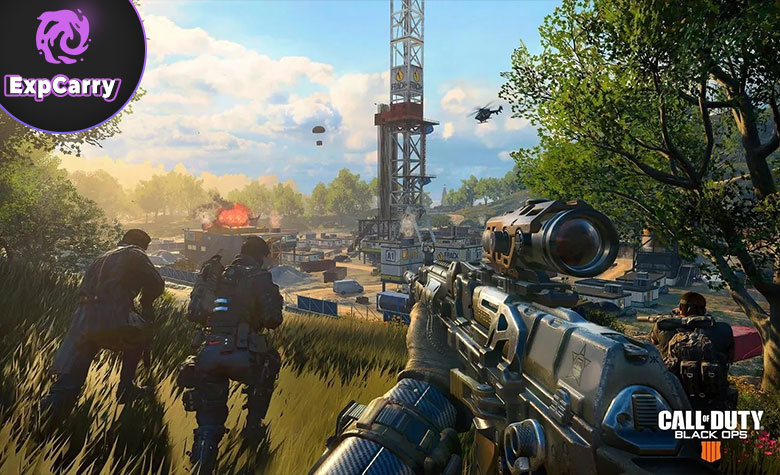
Black Ops Royale takes place on Avalon, the new large map built for this ruleset. Avalon matters because a loot-first battle royale needs more than a backdrop. It needs space for varied drops, flexible rotations, contested objectives, and fights that are not always forced into the same opening script. The map supports that with a wide spread of POIs, open travel routes, elevation changes, and water-based movement.
The official tour of Avalon points to a strong variety of locations, including Golf Club, Casino, Trinity Stadium, Winery, Fort, Pier District, Water Treatment, and Old Arsenal. That spread gives squads room to choose different approaches. Some teams will want early action and high-traffic POIs, while others will prefer safer openings and controlled rotations. That kind of map structure fits a mode where match flow depends on looting, movement, and adapting on the ground.
Why Avalon Fits This Ruleset
Avalon looks built to make movement between POIs matter again. In standard Warzone, the route between locations is often secondary to the race for economy and Loadouts. In Black Ops Royale, rotations carry more weight because your recovery options, loot quality, and late-game strength depend more heavily on what you secure during the match. A map that rewards route planning and timing is therefore a major part of the mode's identity, not just its setting.
No Loadouts, No Buy Stations, and a Different Power Curve
The biggest difference in Black Ops Royale is what the mode removes. There are no Loadouts, so there is no guaranteed shortcut to your preferred build. There are no Buy Stations, so cash is no longer the center of the early and mid game. There is no Gulag, so elimination carries more pressure and recovery has to come through the systems built into the match itself. Those changes reshape the entire pace of a round.
Without Loadouts, ground loot stays relevant far longer. Without Buy Stations, the economy loop stops dominating every early decision. Without Gulag, survival tools have to be managed more carefully and deaths feel more meaningful. That does not make the mode purely unforgiving, but it does make it more dependent on field decisions and less dependent on system shortcuts.
Why These Changes Matter So Much
These missing systems are not just checkboxes. Their removal changes how teams think from the opening minute. In standard Warzone, players usually know exactly what their first power spike will be and roughly how quickly they can reach it. In Black Ops Royale, that certainty is gone. Teams that adapt faster, loot smarter, and rotate better should feel much stronger here than teams built around rigid loadout timing.
That different power curve becomes even clearer once the weapon and equipment systems kick in. Instead of using saved classes, players find weapon Archetypes as ground loot and improve them during the match with Attachment Kits that raise weapon rarity. As weapons move up the rarity ladder, they gain stronger attachment packages and become more effective. That makes weapon growth part of the battle royale loop instead of something imported from outside the match.
This system gives ground loot real importance. In many Warzone formats, ground weapons mainly bridge the gap until a player reaches a custom Loadout. Black Ops Royale removes that gap entirely. The loot you find is the progression path, and that makes every opening route, mid-game pickup, and late-game upgrade matter more.
How Exotic Weapons, Perks, and Utility Shape Each Match
Beyond the normal rarity ladder, Black Ops Royale also includes Exotic Weapons. These are rarer high-end finds that can arrive fully upgraded and may offer additional bonuses beyond the standard rarity structure. They are designed to create meaningful mid-match power spikes and give some loot moments real weight instead of feeling like minor stat bumps.
Perks also have to be looted during the match instead of being locked into a pre-built class. That reinforces the same rule as the rest of the mode: power is assembled on the ground, not before the queue starts. The mode leans further into that identity with Blackout-style utility and survivability items, including the Grappling Hook, Sensor Dart, Trauma Kit, and tiered armor vest management. Together, these systems make mobility, information, sustain, and equipment timing more important parts of each round.
In a battle royale without custom classes, utility naturally gains value. You cannot rely on the same pre-made setup to solve every situation, so items that provide scouting, mobility, or extra survivability become a larger part of your power curve. That also makes looting more interesting, because players are not just chasing stronger guns. They are building a practical survival toolkit for different phases of the match.
Redeploy Tokens, Towers, and Match Activities
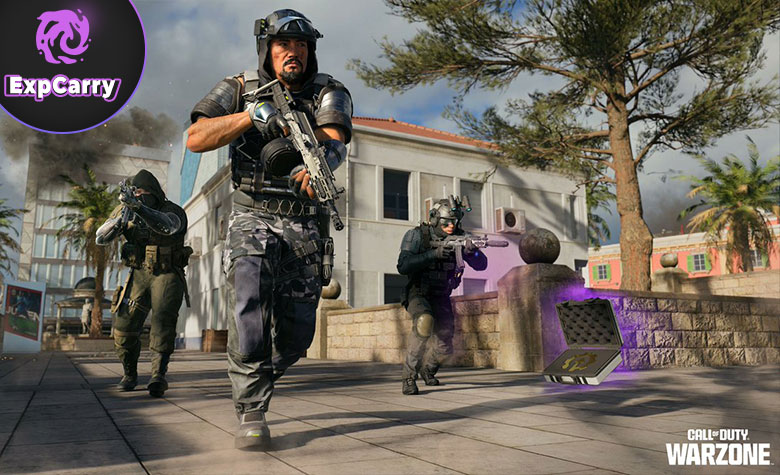
Because the Gulag is gone, Black Ops Royale uses a different recovery structure built around Redeploy Tokens and Redeploy Towers. Players begin with one Redeploy Token and can find more while looting. If a player is eliminated while carrying a token, it can be used for redeployment. Squads can also interact with Redeploy Towers to bring back eliminated teammates through a capture-based system on the map.
This approach creates a middle ground between harsh one-life battle royale and the more forgiving Warzone model. Death matters more because there is no isolated duel-based second chance. At the same time, squads are not forced into a strict one-and-done structure either. Recovery is possible, but it depends on resources, map position, and team coordination.
Why This Recovery System Fits the Mode
Gulag would have pulled the mode back toward the standard Warzone rhythm too strongly. Black Ops Royale is built around loot and map control, so it makes more sense for redeployment to stay inside that logic instead of cutting away to a separate mini-game. The result is a recovery system that feels more coherent with the rest of the ruleset and rewards organized squads more directly.
Black Ops Royale is not only defined by what it removes. Avalon also contains reward-focused activities that push teams into risk-and-reward decisions throughout the match. These include systems such as Target Uplink Station, Surprise Shipment, Surveillance Drone, Strongbox Crack, Relay Antenna, and Supply Drops. They keep the map active and force squads to decide when a reward is worth exposure.
The standout feature is the Cradle Breach. These zones cover parts of the map in red gas, fill them with hallucinated zombie threats, and hide valuable loot that can only be seen and claimed inside the breach. Teams willing to enter can fight through the event and potentially secure stronger rewards, including access to a Mystery Box and high-value gear. That gives Black Ops Royale a clear identity beyond simple Blackout nostalgia.
Why Cradle Breaches Matter
Cradle Breaches are the kind of system that helps the mode feel modern instead of recycled. Blackout-inspired pacing may attract players at first, but a mode needs unique pressure points to build its own identity. Breaches do that by creating high-risk objective zones that can shift momentum, force fights, and reward squads willing to take controlled risks instead of waiting passively for the circle.
100 Players, 25 Quads, and What Still Is Not Clear
At launch, Black Ops Royale supports 100 players across 25 quad teams. That makes it a full-scale squad battle royale rather than a smaller experimental playlist. The format suits Avalon well, because the map needs enough teams to keep rotations active and objective zones contested without making the whole match feel overcrowded from the opening minute.
The quad-focused structure also works naturally with the redeploy systems. Tokens, towers, and recovery decisions become more meaningful when team survival matters as much as individual gun skill. The current setup gives Black Ops Royale a clear squad-first identity, even if future playlist support may change over time.
What Blackout Veterans Will Recognize and What Is Still Unknown
Players who spent time in the original Blackout will recognize the influence immediately. The scavenging-first opening, the stronger role of armor and utility, the reduced dependence on system shortcuts, and the emphasis on building strength through the match all point back to the older battle royale rhythm that many players missed.
At the same time, Black Ops Royale is not trapped in nostalgia. Modern movement, newer objective design, rarity progression, and the Avalon map all help it stand as a current Warzone mode instead of a museum-piece callback. That balance between familiar structure and new systems is what gives the mode its best chance to last.
The main unknown is long-term playlist support. The launch format is clear, but it is not yet fully clear how far Activision will expand the mode into solos, duos, or trios, or how permanently visible Black Ops Royale will remain once the launch window passes. That question matters because even a strong ruleset can lose momentum if players cannot access it in the squad size they prefer.
Conclusion
Warzone Blackout 2.0, officially Black Ops Royale, is a Blackout-inspired battle royale mode that changes the foundation of Warzone's usual match flow. By removing Loadouts, Buy Stations, and the Gulag, then replacing them with loot-based weapon progression, looted Perks, armor management, redeploy resources, and map-driven objectives, the mode creates a more scavenging-focused and survival-oriented experience than standard Warzone. The confirmed features already explain why the comparison to Blackout spread so quickly. Avalon gives the mode a large battlefield built for rotations and varied drops. The 100-player, 25-quad format positions it as a serious full-scale playlist. Weapon Archetypes, rarity upgrades, Exotic loot, Cradle Breaches, and Redeploy Towers all push the mode toward match-driven progression instead of pre-built power. It is not a direct remake of Blackout, but it is the clearest Blackout-style ruleset Warzone has had in years.
The long-term question is support. The mode already has a clear identity, but its future depends on playlist visibility, balance updates, and how well Activision continues to support this branch of battle royale inside Warzone. If that support holds, Black Ops Royale could become more than a temporary throwback. It could remain a distinct alternative for players who want Warzone to reward looting, adaptation, and squad survival more than scripted loadout routines.