
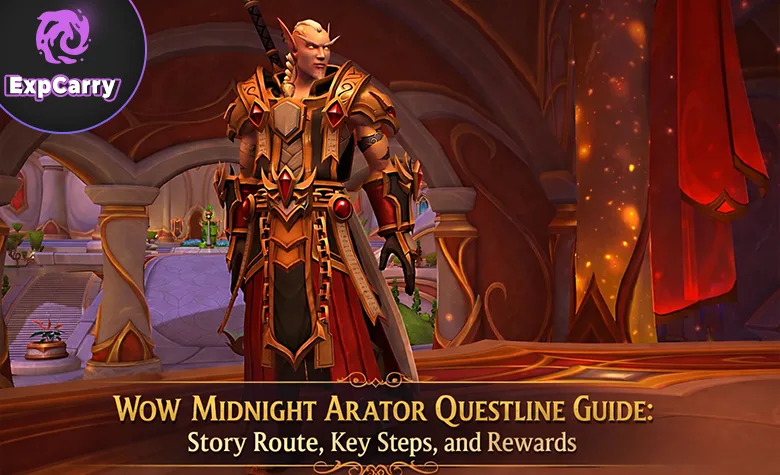
Arator's Journey is one of the three available 83-88 campaign paths in WoW Midnight, and it is one of the most story-heavy leveling routes in the expansion. You unlock it after the Eversong Woods campaign, when Midnight opens its next set of campaign choices and lets you continue through Arator's Journey, Zul'Aman, or Harandar. If you choose Arator's route, you are not taking side content. You are taking a core campaign branch built around relics of the Light, the defense of the Sunwell, and Arator's attempt to understand what kind of servant of the Light he actually wants to become.
That setup matters because this route is stronger than a normal quest chain with a famous character stapled on top. Blizzard uses the relic mission to move Arator through some of the most loaded holy and historical locations in Warcraft and gives each stop a clear role in the campaign. Light's Hope Chapel, Scarlet Monastery, Hammerfall, and Blackrock Mountain are not random nostalgia picks. Each one pressures a different part of Arator's relationship with faith, duty, legacy, and identity, and each one changes how the route reads by the time you reach the Arcantina.
This guide handles both halves of the questline. First, it covers the route, the major chapter flow, the key quest beats that matter most, and the rewards you actually unlock. After that, it breaks down what the questline reveals about Arator, why the story works, and why this campaign path lands harder than a normal leveling lane. That split is the right way to handle this route, because Arator's Journey is not only a checklist of locations and rewards, and it is not only a lore essay either.
Arator's Journey at a Glance
If you want the fast version before the full breakdown, Arator's Journey starts after Eversong Woods, begins at the Sunwell with Alonsus Faol and Arator, then moves through Light's Hope Chapel, Scarlet Monastery, Hammerfall with Sunwalker Dezco, and Blackrock Mountain before ending with your first visit to the Arcantina. This route is one of Midnight's main 83-88 campaign branches, contributes to the Arator's Journey achievement, unlocks the Personal Key to the Arcantina toy near the end, and includes the Relinquished Scarlet Charger during the Scarlet Monastery section.
That is the clean outline, but the route works because each stop has a different purpose. The Sunwell opening gives the story a real mission instead of a vague pilgrimage. Light's Hope Chapel presents the most honorable face of the Light. Scarlet Monastery shows how holy certainty can curdle into fanaticism. Hammerfall broadens Arator's understanding of paladinhood through Dezco. Blackrock Mountain forces the route into its hardest legacy questions. The Arcantina then closes the chapter without pretending Arator's story is suddenly finished.
| Route stage | Main focus | Why it matters |
| Sunwell opening | Faol recruits you and Arator for a relic mission tied to the Sunwell. | This establishes the route as a real campaign assignment, not a loose pilgrimage. |
| Light's Hope Chapel | Recover relics and defend one of the most sacred Light-aligned sites in Warcraft. | This is the route's clearest early chapter on duty, sacrifice, and service. |
| Scarlet Monastery | Push through corrupted holy zealotry and continue the relic search. | This is the route's sharpest contrast with Light's Hope and the chapter with the Scarlet Charger reward. |
| Hammerfall | Work with Sunwalker Dezco and push Arator's search for purpose forward. | This widens Arator's understanding of what a paladin can be. |
| Blackrock Mountain | Follow the legacy-heavy final stretch alongside the Sons of Lothar. | This is the emotional and thematic climax of the campaign. |
| The Arcantina | Finish the route, enter the Arcantina, and claim the key toy. | This is both the story handoff and the route's main utility unlock. |
Route, Key Steps, and How the Questline Actually Flows
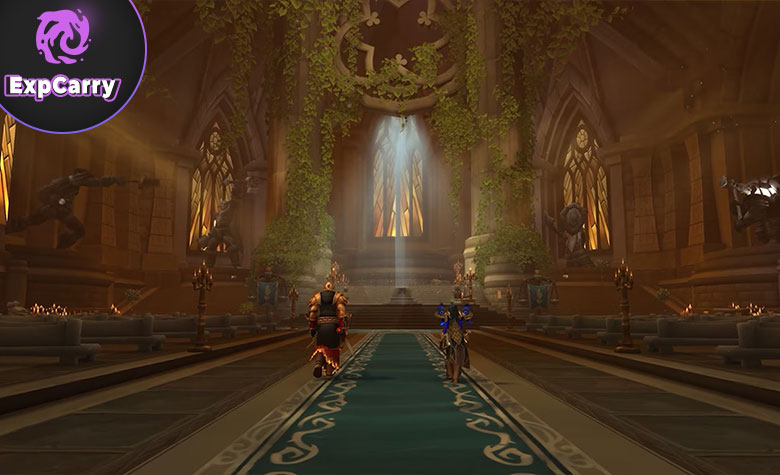
The route works best when you read it as a campaign with clear chapter turns rather than a pile of isolated quest hubs. Blizzard frames Arator's Journey as a continent-spanning relic search tied to the Sunwell, but that practical mission is only the surface layer. Underneath it, the campaign is built as a sequence of tests. Every major location adds pressure to the same core problem: is Arator going to live through inherited ideals, or is he going to decide for himself what service means.
That is why the chapter order matters so much. The campaign does not start with the most corrupted or conflicted expression of the Light. It starts with duty and sacred purpose, then moves into fanaticism, then into a broader living tradition, and only after that does it force Arator into the legacy-soaked climax around Blackrock Mountain. The story is not just taking you to famous places. It is using those places in a deliberate progression.
The Sunwell opening gives the route its backbone
Arator's Journey begins at the Sunwell through the opening setup around Arator and Meet at the Sunwell. This section matters because it prevents the chain from feeling like a random spiritual road trip. Alonsus Faol is not there for decoration. He gives the route its practical reason to exist by tying the relic search directly to the needs of the Sunwell's defenders. That makes the opening more grounded than a lot of modern WoW quest intros, because the story does not start with vague self-discovery. It starts with responsibility.
The Sunwell setup also introduces Arator in the right state. He is not presented as a fully formed holy hero just waiting for a dramatic speech. He enters the route already burdened by expectation, already useful, and already carrying the pressure of his family name. That gives the story tension immediately. The player is moving on a useful mission, but the route is quietly setting up a deeper question under it: not whether Arator can help, but what kind of man he is when he is no longer living only inside other people's legacy.
Light's Hope Chapel and Scarlet Monastery create the first real contrast
The first major stop is Light's Hope Chapel, where the route centers on relic recovery and the defense of one of the most sacred Light-aligned sites in Warcraft. This is where the campaign settles into its real identity. Light's Hope is an effective first answer to the route's core question because it shows the Light in one of its strongest moral forms: sacrifice, endurance, and service that survived horror without turning cruel. It gives Arator a vision of holy duty that deserves respect before the story drags him anywhere darker.
Then the route makes the correct turn into Scarlet Monastery. This is the moment the campaign stops being comfortable and starts being sharp. Blizzard frames this chapter around stopping those who use the Light for hateful deeds, and the story needs that after Light's Hope. The contrast is the point. If Light's Hope shows what the Light can preserve at its best, Scarlet Monastery shows what happens when holiness becomes self-righteous obsession. This section is also where the route delivers one of its cleanest named reward beats, because Relinquishing Relics awards the Relinquished Scarlet Charger. That makes Scarlet Monastery one of the strongest chapters in the whole line both narratively and mechanically.
Hammerfall turns the route away from pure nostalgia
After Scarlet Monastery, the questline moves toward Hammerfall and pairs Arator with Sunwalker Dezco. This is one of the smartest parts of the campaign because it stops the route from becoming a simple tour through old human and Alliance holy memory. Dezco changes the frame. He shows Arator that service to the Light is not owned by one cultural tradition, one institution, or one inherited heroic model. That is exactly the interruption this route needs.
The key transition here is The Sunwalker Path, and its importance is bigger than the name suggests. Hammerfall is where the campaign widens its imagination. Up to that point, Arator is mostly moving through places defined by memory, trauma, and inherited meanings. Dezco offers a living answer instead of another monument. That is what makes this chapter so important to the full story. It tells Arator that becoming a paladin does not mean becoming a replica of Turalyon or simply reenacting older holy traditions in the same armor.
Blackrock Mountain is where the questline cashes in its real conflict
The final major chapter unfolds around Blackrock Mountain, and this is where Blizzard openly frames the route as a confrontation with Arator's family legacy. The late campaign includes chapter anchors such as Still Scouting, Unstoppable Force, A Worthy Forge, and A Bulwark Remade, but the deeper point is the way this entire section changes the logic of the questline. Up to now, the campaign has been structured around recovery. At Blackrock Mountain, it stops asking only what can be preserved and starts asking what deserves to be carried forward.
The location is soaked in martial history, old wars, dead heroes, and impossible expectations, which makes it the right place for Arator's crisis to stop being abstract. By the time the route reaches its forge and bulwark language, the relic hunt has become symbolic without becoming empty. Arator is no longer just carrying history. He is being pushed to decide what kind of servant of the Light he will be once inherited greatness stops being a complete answer.
The Arcantina ends the route the right way
The campaign closes through The Arcantina and The Journey Ends, and structurally this is exactly how the route should finish. Most of Arator's Journey takes place in places crushed under old meaning: cathedrals, monasteries, battlefields, ruins, and legendary sites where history is louder than the present. The Arcantina feels different on purpose. It is a living crossroads rather than another sacred ruin, and that makes it the right location for the story to hand Arator back into Midnight's larger world.
The ending works because it does not fake a neat final answer. Arator's Journey ends as a chapter, but it does not pretend Arator is suddenly solved. That restraint helps the whole route. It gives him direction, not a full life summary. For the player, this section also matters beyond the story because it is where the route turns into an ongoing utility unlock through the Arcantina and its key toy.
What the Arator Questline Reveals About the Story
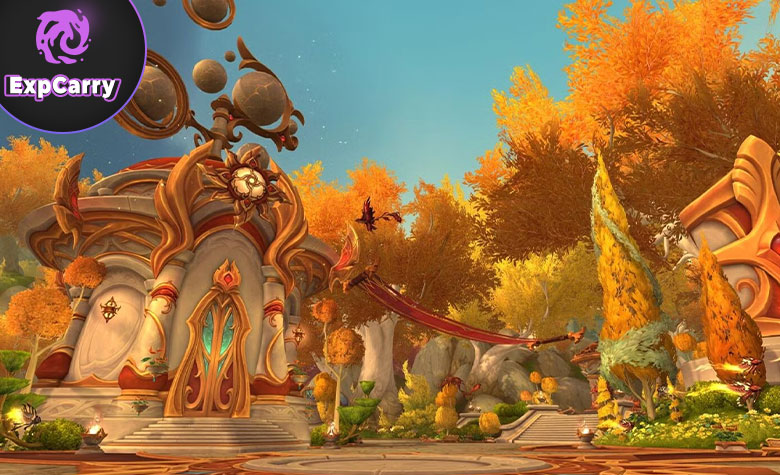
By the time the route is over, the big takeaway is not that Arator had one dramatic revelation and everything clicked into place. The stronger reading is that Blizzard finally gives him a campaign built around identity instead of ancestry. The official framing says Arator is trying to understand his relationship with both his family and the Light, and the route is strongest when you take both parts seriously. This is not only a story about doctrine or faith. It is a story about what it means to inherit ideals that are larger than a single life.
That is why the route is built through contrast instead of simple escalation. Light's Hope Chapel and Scarlet Monastery are moral opposites. Hammerfall acts as the living alternative to both frozen reverence and corrupted certainty. Blackrock Mountain then takes those competing models and forces the question inward. By then, the issue is no longer which place or institution represents the Light more purely. The issue is what Arator is going to build once he stops treating the past as a ready-made template.
Arator's real conflict is inheritance, not simple doubt
It is easy to flatten this route into "Arator struggles with the Light," but that is too shallow. The better reading is that Arator struggles with inheritance. He is the son of Turalyon and Alleria, which means he carries one of the heaviest identities in modern Warcraft before he even says a word. The questline finally uses that properly. It is not interested in whether Arator can be brave or useful. It is interested in whether he can become more than an extension of other people's greatness.
That is what gives the campaign its emotional weight. Arator's problem is not a lack of ideals. It is the danger of living entirely through inherited ideals until they become a prison. The Light matters in this story, but it matters because it is the field where that struggle plays out. The real question is whether he can serve something sacred without disappearing into the expectations built by family, legend, and memory.
The route is built on deliberate moral contrasts
The questline works because Blizzard did not just pick famous Warcraft locations at random. It chose locations that argue with each other. Light's Hope Chapel gives the Light its strongest moral image. Scarlet Monastery shows what happens when that same certainty becomes cruelty. Hammerfall widens the story and proves that the Light is not owned by a single old culture. Blackrock Mountain then strips away the comfort of institutions and turns the whole problem into a personal decision.
That is why this campaign feels more coherent than a lot of modern leveling routes. It is not just progressing geographically. It is progressing philosophically. Each stop offers Arator a different answer to the same question, and the route only lands because those answers are placed in a deliberate order.
Dezco and Blackrock Mountain stop the story from collapsing into nostalgia
Without Dezco, the route could have turned into a story trapped inside old Alliance and Silver Hand memory. Without Blackrock Mountain, it could have ended as a respectful pilgrimage without a real personal decision. Those two parts are what keep the questline alive. Dezco shows Arator a living future that is not chained to one inherited model of paladinhood. Blackrock Mountain forces him to stand close enough to legacy that he either defines himself or disappears inside it.
That combination is what makes the route memorable. It is not only about what Arator admires or rejects. It is about whether he can survive proximity to his own inheritance without becoming nothing but a continuation of it. That is a much stronger story than the usual "hero learns a lesson from famous locations" formula.
Explore services related to this guide, selected from our Character Boost catalog.
View All Character Boost


Rewards, Unlocks, and What You Actually Get
The reward structure for Arator's Journey is clean, but it works better when you separate meaningful unlocks from generic campaign loot. The usual XP and item rewards are there, but the parts that actually matter for a guide are the named progression and utility rewards tied directly to the route. Those are the things players are going to look for later when checking whether they finished the campaign properly or when deciding if the route is worth doing in full.
In practical terms, there are three reward points worth calling out. First, the route contributes to a real campaign achievement. Second, the Arcantina key is the major utility unlock and the thing that keeps mattering after the questline ends. Third, the Scarlet Charger is the cleanest named cosmetic reward inside the route itself. Everything else sits below those in importance.
The achievement confirms full route completion
Completing this path progresses the Arator's Journey achievement, worth 10 achievement points. The achievement requires the story criteria The Path of Light and Regrets of the Past. That matters because it gives you a clear completion check. If those are not done, then the route is not actually finished, even if you have seen most of the big locations.
The Arcantina key is the biggest utility reward
The most useful unlock is the Personal Key to the Arcantina, obtained near the end through The Arcantina. This is what turns the Arcantina from a one-time story destination into a practical place you can revisit. That is why it matters more than a lot of normal campaign rewards. It keeps value after the story chapter is over instead of becoming instant clutter.
The practical detail needs to be stated clearly because older launch-week descriptions are now outdated. Blizzard originally described the key as a toy that could return you to and back from the Arcantina, but as of the March 9, 2026 hotfix the current version has a 15 minute cooldown and only ports you to the Arcantina. Players who have the key also gain access to a two-way portal in Wayfarer's Rest, which is the real convenience feature after the change. If a guide leaves the old wording here, it is no longer accurate.
The Scarlet Charger is the standout named cosmetic reward
The most memorable named cosmetic reward inside the route is the Relinquished Scarlet Charger, awarded from Relinquishing Relics during the Scarlet Monastery chapter. It stands out because it is tied to one of the strongest parts of the campaign and because it arrives as a clear route reward rather than a vague side bonus. Outside of that, the questline still gives the usual campaign mix of experience and item rewards, but the achievement, the Arcantina key, and the Scarlet Charger are the rewards that actually matter in a serious guide.
Conclusion
Arator's Journey is one of the best campaign paths in WoW Midnight because it succeeds at both of the things this kind of route needs to do. On the guide side, it is clean once you know the structure: choose the Arator branch after Eversong Woods, begin at the Sunwell, move through Light's Hope Chapel, Scarlet Monastery, Hammerfall, and Blackrock Mountain, then finish through the Arcantina. On the story side, it is stronger than a normal leveling branch because every major stop pushes Arator through a different answer to the same question about faith, family, and legacy.
If you only need the practical version, remember the route order, the Arcantina ending, and the three meaningful reward points: the Arator's Journey achievement, the Personal Key to the Arcantina, and the Relinquished Scarlet Charger. If you want the full value of the campaign, pay attention to what each chapter is doing. Light's Hope shows the Light at its best, Scarlet Monastery shows it at its ugliest, Hammerfall opens a wider future, and Blackrock Mountain forces Arator to decide what kind of life he will build from everything he inherited. That is what lifts this questline above a routine leveling path.