
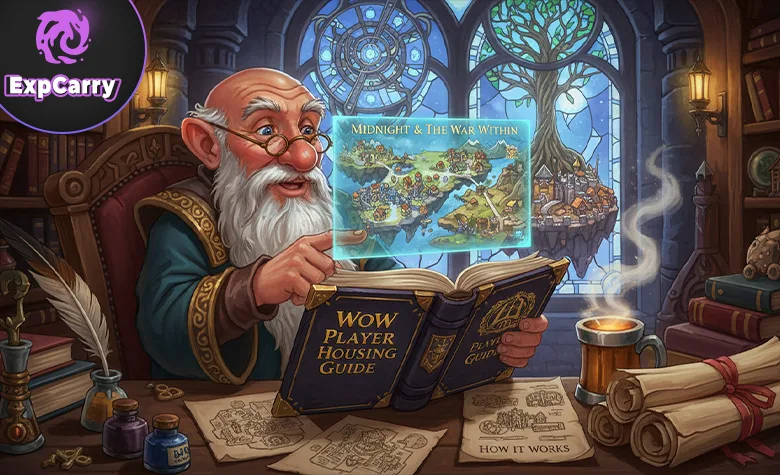
WoW player housing in World of Warcraft: Midnight is built to be a long-term, evergreen system that lets you own a home, live in a persistent neighborhood with other players, and decorate with a deep toolset that ranges from quick, beginner-friendly placement to advanced freeform design. If you want a cozy personal space, a trophy room that shows your raids and achievements, or a guild hub that feels alive, housing is meant to support that without turning into a power grind you must do.
This guide is a practical WoW player housing guide and a clear answer to "How does housing work in WoW" and "WoW housing system explained." It covers how the system works, how neighborhoods are structured, how warbands fit into ownership and collections, what progression looks like, and where decorations come from, plus a simple first-week plan so you do not waste time on the wrong steps.
What Player Housing Is in WoW
Player housing is your own instanced home and yard inside a larger shared neighborhood zone. You are not placed in a one-off personal instance that no one sees. Instead, you live near other players on a fixed set of plots, and the neighborhood is designed to be social: you can visit, host, coordinate with guildmates, and progress neighborhood activities together. Housing is positioned as an evergreen journey with ongoing additions across patches and expansions, not a system you finish in a week.
Housing is also designed around wide adoption. The goal is that if you want a house, you can have a house. That means no lotteries, no punishing upkeep, and no extreme barriers that force you to log in just to keep your home. There is still a normal in-game gold purchase for claiming an empty plot, but it is meant to be straightforward rather than a long-term tax.
A House for Everyone: Ownership, Warbands, and Shared Collections
Housing is shared with your warband. Your characters can come and go, and housing rewards are shared across your warband so your decor collection is usable regardless of which character earned it. Cross-faction access is part of the intent: a character from the other faction can use the house you own, and visiting friends and guildmates should have minimal faction friction.
That warband integration matters in practice because housing is not just a house per character. It is closer to a home base for your account, with a shared decor library. Collecting on an alt is still progress. Doing old content on whichever character is convenient still feeds your housing goals.
There is also a clear ownership limit: your warband can own one plot in an Alliance neighborhood and one plot in a Horde neighborhood. You can use both homes across characters, but you cannot stack multiple plots in the same faction neighborhood on the same warband.
Housing Early Access in The War Within and Midnight
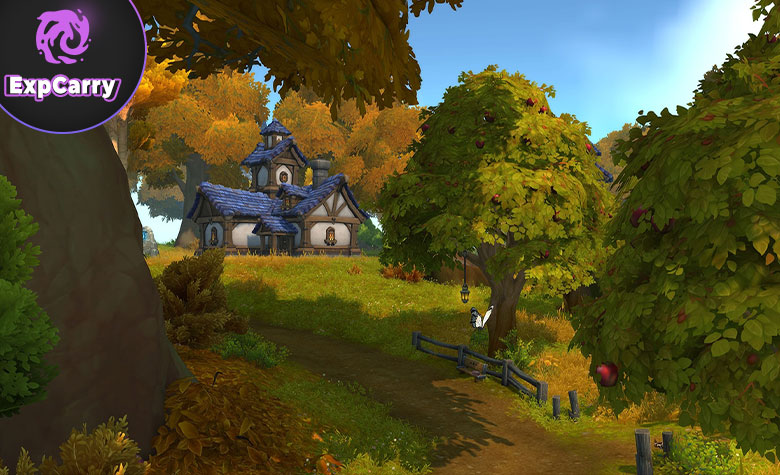
Housing arrives as early access during The War Within via the Midnight Prologue content update called "The Warning." Players who have purchased any edition of the Midnight expansion can join a neighborhood, claim a house, and start customizing during Housing Early Access.
If you do not own Midnight yet, you can still start building your housing collection by earning decor through activities and achievements or buying items from vendors across Azeroth. What you cannot do without Midnight is claim a home or join a neighborhood, even if you can visit and collect. This keeps the Midnight housing features tied to the expansion while still letting you prepare.
During early access, the game points you into a housing tutorial flow through the housing questline so you do not have to guess where to start.
Midnight has a public release date of March 2, 2026, with Housing Early Access beginning December 2, 2025 for players who own Midnight. Housing Early Access is live, but not every system is available yet. For example, Endeavors are explicitly not available until after the pre-expansion content update for Midnight.
Neighborhoods Explained: Zones, Plots, Public and Private
Housing is anchored in two neighborhood zones at launch: Founder's Point for the Alliance and Razorwind Shores for the Horde. Each neighborhood is made up of roughly 50 plots, and each plot contains a house. The zones are large by design to support yards and to prevent neighbors from colliding into each other with oversized outdoor builds.
Public Neighborhoods
Public neighborhoods are created as needed by the game servers. Anyone who meets the requirements can buy a house in them, and the game handles administration such as creation, organization, and neighborhood operations. You do not have to recruit, manage, or maintain anything to keep a public neighborhood going.
Public neighborhoods are ideal if you want minimal friction: you pick a vibe, buy a house, decorate, and enjoy seeing other players builds around you. They are also the easiest way to experiment with layouts and plots without committing to a guild or friend structure.
Private Neighborhoods: Guild and Charter
Private neighborhoods are designed to be player-owned spaces with a permission system for who manages settings and membership.
During Housing Early Access, the two neighborhood types that are available are public neighborhoods and guild neighborhoods. Guild neighborhoods are the natural fit if your guild wants a shared home base with room for many members.
Charter neighborhoods have been described as a private neighborhood option for a group of players who are not necessarily a guild, but they are not part of the currently available Housing Early Access neighborhood types. If your goal is a friends-only space without a guild structure, the practical move for early access is to start in a public neighborhood, build your decor catalog, and switch later if and when additional private options become available.
Moving, Privacy, and Permissions
Moving is designed to be low-friction. You can move by purchasing an empty plot, and your house state moves with you, including your interior and exterior decor. There is also a regret timer so you can move back if you change your mind before committing elsewhere. This prevents bad choices from feeling permanent.
Privacy is configurable at two levels. Your plot and your house have independent permissions that can allow or deny access for friends, guildmates, neighbors, or anyone. Permissions can be changed at any time, so you decide whether your home is a public showcase, a guild-only hub, or a private retreat.
Explore services related to this guide, selected from our World of Warcraft catalog.
View All World of Warcraft Services


Customization Tools: Interior and Exterior Design
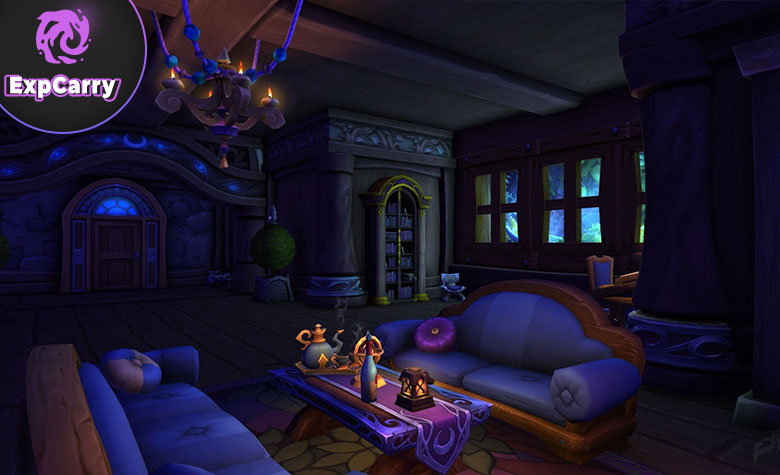
Housing customization is designed to work for two different player types. Some players want fast, clean placement with guardrails. Others want advanced tools that let them create things the developers did not explicitly build. Decoration has two primary modes, Basic and Advanced, and you can toggle between them while decorating.
Basic Mode: Guided, Fast Decorating
Basic mode aims to make decorating quick and intuitive. Objects follow rules like snapping to surfaces, aligning to floors, walls, or ceilings based on decor type, and using rotation snapping. Collision rules reduce the chance of losing items inside walls. There is also an optional grid and snapping to keep layouts neat.
This is the mode you use when you just want your house to look good fast. You can lay out furniture, lighting, and basics in a few minutes without worrying about items getting stuck or misaligned.
Advanced Mode: Freeform and Kitbashing
Advanced mode is where housing turns into a true sandbox. Advanced mode removes collision, enables 3D movement controls for precise placement including floating objects, enables free rotation on any axis, and allows scaling within limits. This is the toolset that enables kitbashing: turning one object into another via creative placement, clipping, and scale.
If you want spiral staircases made from shelves, custom arches made from fences, or floating platforms and sky gardens, Advanced mode is how you do it. It is more complex, but that complexity lets you build things far beyond the default floorplan.
Interiors, Exteriors, and House Kits
Beyond objects, interior finishing matters. Customization includes wallpaper, ceiling and flooring choices, plus partition objects that can build walls where none existed before so you can create custom room shapes. This lets you turn a default plan into a library, workshop, inn, or anything else you imagine.
Exterior customization is also part of the system. There are exterior kits that function like style presets, and they let you shift your house look toward different racial and regional themes. Faction-themed neighborhoods also keep broader architecture consistent so the neighborhood reads as a coherent place instead of a random mix.
Progression: Endeavors, Neighborhood Favor, and House Unlocks
Housing is not just place items and log out. In Midnight, neighborhoods have a neighborhood-wide activity system called Endeavors. Endeavors are planned as recurring neighborhood activities with tasks that scale with neighborhood size and activity.
It is important for planning that Endeavors are not available during Housing Early Access. If you are playing during early access, focus on learning the editor, building your decor collection, and leveling up your home through collection progress. Endeavors are expected to arrive later, after the pre-expansion content update for Midnight.
Endeavors are designed so many playstyles can contribute. Tasks span crafting, gathering, questing, dungeons, and raids, with rewards that include an Endeavor currency and Neighborhood Favor. Endeavor currency is used to buy decorations from themed vendors, while Neighborhood Favor supports longer-term housing progression and unlocks.
Progression also affects your home layout. You start from a basic floorplan and unlock the ability to add more rooms and floors as you progress. Higher progression means more space, higher placement budgets, and more room for ambitious builds.
Decorations: Sources and Collection Rules
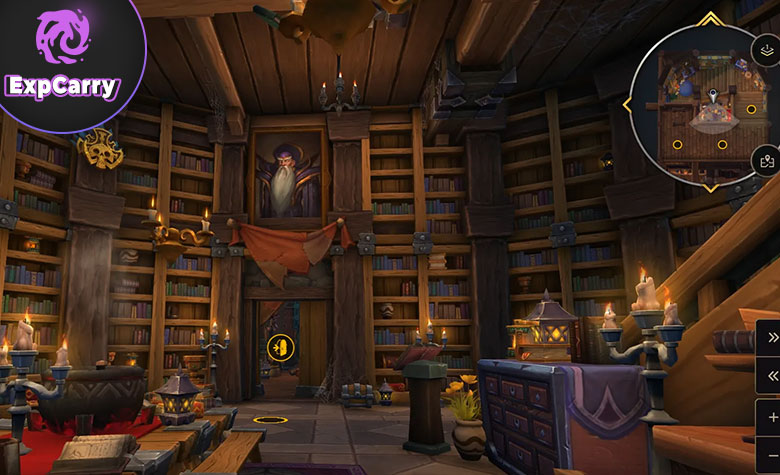
Decor is intended to come from everywhere in WoW, not from one narrow housing-only activity. The decor economy is built around three broad categories. Common decor is easy to acquire through vendors, the Auction House, questing, and normal play. Investment decor requires more time or cost. Trophy decor is tied to skillful play, cooperation, and longer commitments like raids, Mythic+, or long-term achievements.
Legacy content is meant to matter. Older reputations, professions, and achievements can grant access or rewards without starting from zero. If an older achievement now rewards a new decor piece, you can be granted that decor when the game checks your account if you already earned the achievement in the past. Housing turns your history into visible trophies.
Professions are a major pillar of decor creation. Decor is crafted by existing crafting professions rather than creating a new profession. Crafting is tied to the relevant expansion version of the profession for that decor, and it requires recipes, skill, and the materials linked to that era. Crafted decor can generally be traded or sold on the Auction House, so crafters can specialize in housing.
The collection has two important rules. First, to place multiple copies of an item, you need to own enough copies. If you want four chairs placed, you need to have collected four chairs. Second, some decor is unique and can only be placed once, even if you own multiple copies. This keeps certain items special while still letting you spam basics.
That mix of common, investment, and trophy decor is the core loop. You can make a home that looks good quickly with accessible pieces, then layer in long-term items as you play, collect, and progress neighborhood systems.
Getting Started: A Simple First-Week Plan
Start by doing the housing tutorial so you understand the placement modes and basic permissions. New and returning players are directed into this tutorial flow during early access, so you can learn the basics without hunting for guides.
Next, choose where you want to live. If you want pure convenience and minimal coordination, a public neighborhood is the path of least resistance. If you want a persistent community with shared goals and control, a guild neighborhood is the higher-commitment option that pays off socially.
Then decorate for function first, vibe second. Use Basic mode to set your main layout quickly, place big anchor pieces, and block out the flow of each room. Switch to Advanced mode only when you want to do detailed work like floating, clipping, custom building shapes, or scale tricks. This prevents you from spending hours perfecting a corner before your house even feels usable.
After you have a baseline look, focus on consistent progression. During early access, focus on building your decor catalog and learning the editor. When Endeavors become available later, participate consistently because they become a major source of themed decor and neighborhood progression.
Finally, start feeding your decor catalog from multiple lanes. Use vendors and easy commodities to fill out basics, then pick one or two long-term targets like trophy decor from content you already enjoy, or profession-based decor tied to an expansion you can farm efficiently. The best way to avoid burnout is to keep your housing progress varied and connected to activities you already like.
Common Questions and Misconceptions
Is housing a lottery like some other MMOs? Housing is positioned as no lotteries, no punishing upkeep, and a straightforward path to ownership if you want a house.
Is housing just garrisons again? No. Garrisons were primarily a gameplay power and progression feature with a personal instance. Housing is positioned as a cosmetic, social, evergreen system designed for self-expression and neighborhood community, without being required for character power. Can I move if my neighborhood is dead or my neighbors annoy me? Moving is designed to be low-friction with house packing and a regret timer, and permissions that let you control plot and house access separately. Do my old achievements and progress matter? Yes. Legacy achievements can grant decor, including cases where a decor reward is granted when the system checks your account if you already earned the achievement. Do I need Midnight to start collecting? You can begin adding to your housing collection through activities, achievements, and vendors, but you cannot claim a home or join a neighborhood without the expansion.
Fast Start Option: When You Only Want to Decorate
Housing is designed to be a long-lasting journey, and that is great if you enjoy collecting, crafting, and progression loops. But if your goal is to get to the creative part immediately, there is a practical shortcut: you can outsource the time sinks. Services like ExpCarry can help with the slow parts that block decorating, such as getting your account set up fast, pushing progression targets, and farming the content that unlocks specific decor sources, so you spend your playtime building instead of grinding.
If you treat this as a WoW housing system explained for your whole account, the pattern is simple. Learn the basics, choose the right neighborhood, build a solid decor catalog, and then either do the work yourself or get help on the grindiest pieces. Your home will keep growing across The War Within and Midnight either way.